


Overtraining syndrome is uncommon in its fully developed form, but the earlier stages are far more familiar in competitive sport. One review reported that approximately 60% of elite male and female runners had experienced non-functional overreaching during their lifetime, while a multicountry survey found that 35% of adolescent swimmers had been overtrained at least once (reviewed evidence). The practical lesson is important: overtraining prevention isn't mainly about identifying a rare final diagnosis. It's about noticing when training stress is no longer producing a useful adaptation.
The most reliable approach combines training load, performance, mood, sleep, cardiovascular response, nutrition, and life stress. No single wearable score or ratio can tell you whether to push, hold, or recover. In practice, athletes stay healthier when they use a multi-marker system, then make conservative adjustments before a short fatigue episode becomes a prolonged setback.
What Overtraining Is and How to Spot It Early
Overtraining develops along a spectrum, and the response depends on where the athlete sits on it. Functional overreaching is a planned rise in stress that causes temporary fatigue, then resolves with adequate recovery. Non-functional overreaching lasts longer, producing a performance plateau or decline without the expected rebound. Overtraining syndrome involves persistent impairment in performance and wellbeing, although precise prevalence and incidence data remain limited, as described in this clinical review.
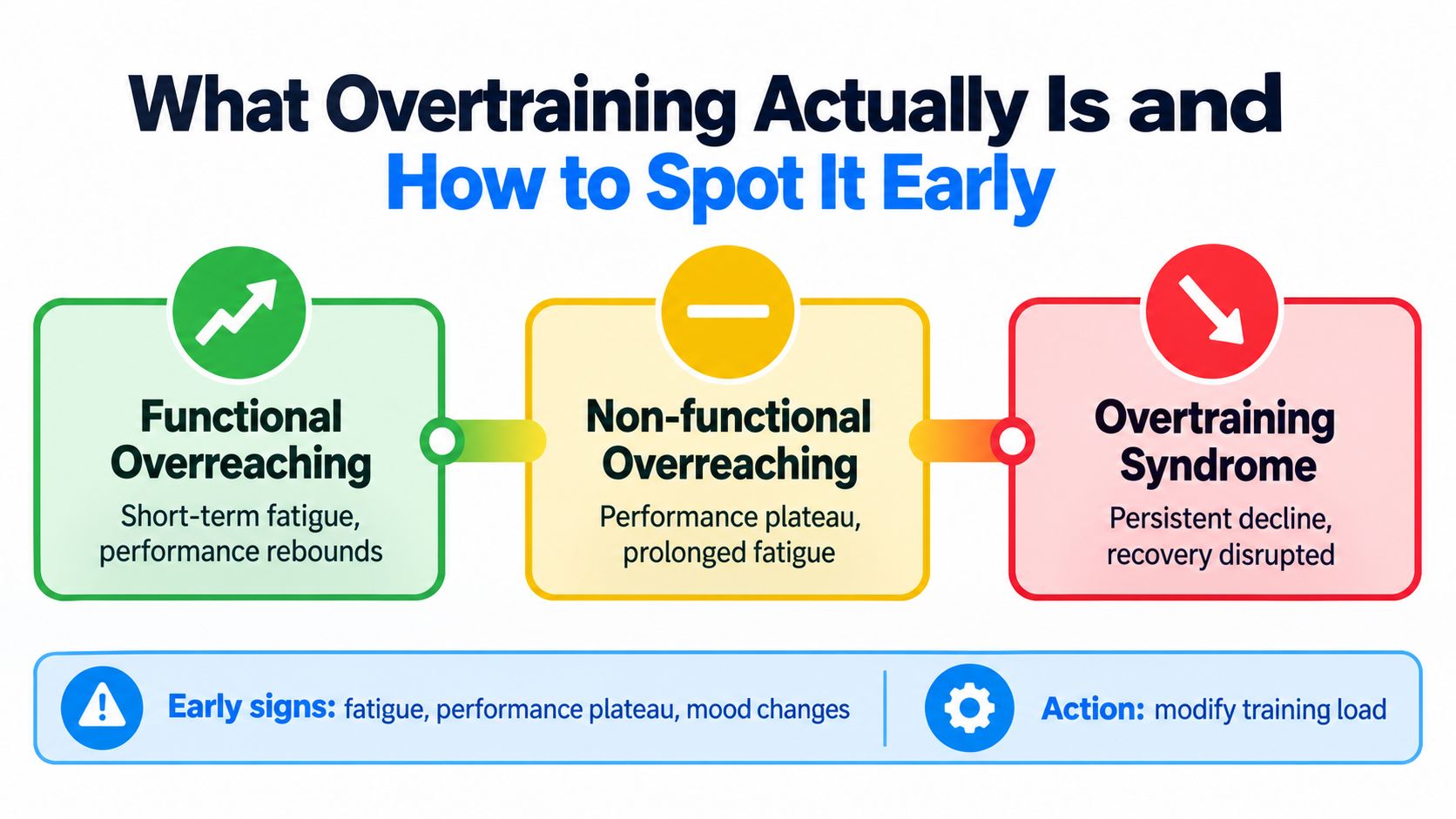
Time course separates a productive training block from a developing problem. Fatigue that settles within several days may fit normal preparation. Stagnation lasting weeks, especially while load continues to rise, calls for a different decision. The athlete may complete each session, yet familiar pace, power, technical quality, or motivation fails to return.
Early signs that deserve attention
One poor workout provides little information. A pattern across five to fourteen days carries more weight, particularly when several markers shift together.
- Performance decline: Familiar intervals feel harder, lifts lose speed, or technique deteriorates despite equal or greater effort.
- Mood disturbance: Irritability, emotional flatness, reduced competitive drive, or declining interest in training may appear before the athlete acknowledges fatigue.
- Fragmented sleep: Time in bed can remain adequate while repeated waking leaves the athlete unrefreshed.
- Appetite change: Sudden appetite loss or unusual hunger may indicate that training demand exceeds available recovery resources.
- Resting heart rate drift: Morning readings remain above the athlete's usual range without an obvious explanation.
- Unexplained soreness: Muscle soreness persists beyond what the session's volume or novelty would reasonably predict.
The practical check is: “Is my current training producing the adaptation I expected, or am I accumulating fatigue without evidence of improvement?” An unclear answer is a reason to reduce uncertainty before adding load. Persistent low mood, hopelessness, or symptoms that disrupt daily life require qualified medical or mental-health support. For hormone-testing context, this guide from Repose Healthcare may help, but no hormone result replaces clinical assessment.
Tracking Training Load Without Falling for Single Metrics
Load tracking works best when it answers two questions separately: what did the athlete do, and how hard was that work for the athlete today? External measures include GPS distance, barbell tonnage, repetitions, and interval duration. Internal measures include heart-rate response, session RPE, and perceived recovery.
The most accessible method is session RPE multiplied by duration. If an athlete rates a 60-minute session as 7 out of 10, the session load is 420 arbitrary units. A week containing sessions rated 4 for 45 minutes, 6 for 60 minutes, 8 for 75 minutes, and 3 for 40 minutes would total 1,380 units. The number isn't a universal physiological truth. Its value comes from consistent collection and comparison with the athlete's own performance and recovery.
TRIMP incorporates heart-rate response and duration, while GPS captures distance and speed demands. Barbell tonnage can describe lifting volume, but it doesn't capture technical complexity, proximity to failure, or how depleted the athlete was before the session. Foster's monotony concept adds weekly distribution by comparing average daily load with the variability of daily load. Strain then combines weekly load with monotony. Two athletes can accumulate the same weekly total, yet the athlete repeating similar stress each day may carry a different recovery burden from the athlete alternating hard and easy sessions.
| Method | What it measures | Strength | Key limitation |
|---|---|---|---|
| Session RPE × duration | Internal training load | Simple and inexpensive | Depends on consistent scoring |
| TRIMP | Heart-rate-based internal load | Reflects cardiovascular demand | Less useful for some strength and sprint sessions |
| GPS distance | External movement volume | Useful for field and endurance sports | Misses collisions, mechanical load, and internal strain |
| Barbell tonnage | External resistance volume | Easy to calculate in strength training | Doesn't show effort, velocity, or recovery status |
| Monotony and strain | Weekly load distribution | Shows why repeated daily stress matters | Sensitive to the quality of the underlying load data |
The acute:chronic workload ratio, or ACWR, compares recent load with an athlete's longer training history. It can serve as a rough sanity check, but it shouldn't become a traffic light that automatically dictates training. A 2026 meta-analysis of 41 studies involving 797 athletes found only a small-to-moderate association between a high ACWR and injury risk, with g = 0.35, 95% CI 0.16 to 0.54, alongside very high heterogeneity, I² = 95.8% (meta-analysis). The authors recommended using the ratio only as contextual information within an individualized, multi-marker system.
For practitioners comparing broader performance-support options, browse our athletic performance treatments with attention to the full clinical context rather than a single metric or product. Where hydration and steady energy are relevant to a demanding day, Tecton EDGE™ Performance Shot + Electrolytes combines liposomal R3HBG™ ketone with sodium, potassium, and magnesium. It can support an athlete's fueling plan, but it doesn't make a poorly managed workload safe.
Periodization Strategies That Prevent Accumulated Stress
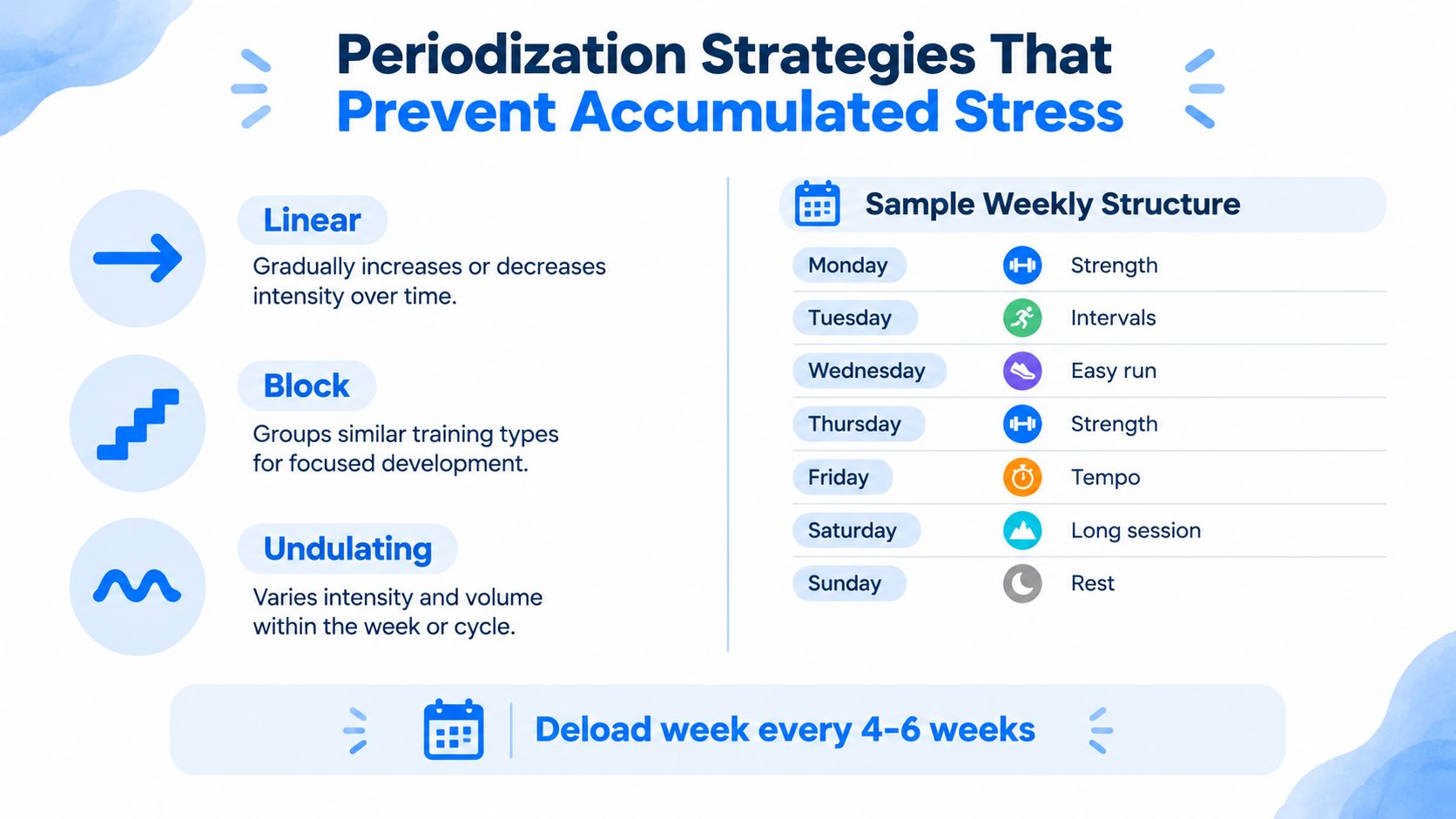
Periodization is the deliberate organization of stress and recovery. Linear periodization gradually changes volume and intensity over time. Block periodization concentrates a particular quality during a training phase. Undulating periodization varies the emphasis more frequently, such as alternating strength, speed, and endurance demands across the week.
The best model depends on the sport, calendar, training age, and life outside training. Most athletes benefit less from rigid allegiance to one model than from a plan that contains meaningful variation and scheduled recovery. The evidence doesn't define one universally proven prevention protocol, so periodization should remain individualized and responsive to trends (expert review).
Build the recovery week into the plan
A practical microcycle often uses three progressive loading weeks followed by a deload. During the deload, reduce volume first because excessive volume commonly creates more accumulated fatigue than a small amount of retained intensity. Keep technique, mobility, and sport-specific movement, then include a brief sharpening exposure if the athlete is responding well.
Mid-block adjustments should follow decision rules rather than guilt. Hold the planned load when several recovery signals deteriorate, when session execution becomes visibly worse, or when the athlete needs unusually high effort to complete familiar work. Push only when readiness markers and actual session quality agree.
The commonly proposed rule to reduce training when sleep HRV falls more than 7% to 10% for three consecutive mornings should not be treated as a universal clinical threshold. HRV varies with device, posture, breathing, illness, alcohol, sleep timing, and measurement conditions. Use it as a personal trend flag, then confirm it with performance, mood, and RPE.
Coaching rule: A recovery week isn't lost training. It's the part of the plan that allows the preceding work to become adaptation.
Quiet periodization errors include:
- Stacking hard days: Intervals, heavy strength work, and long sessions repeatedly land too close together.
- Ignoring life stress: Work pressure, travel, and emotional strain increase total stress even when the training plan stays unchanged.
- Delaying the deload: Athletes wait until performance collapses instead of reducing load when trends first flatten.
- Preserving volume at all costs: Easy sessions become filler rather than genuine recovery.
- Confusing intensity with quality: A technically poor, exhausting session isn't automatically productive.
Sleep Nutrition Hydration and Active Recovery Foundations
Recovery starts with resources, not supplements. Training creates a demand for energy, tissue repair, fluid replacement, and nervous-system regulation. If sleep, food, and hydration remain inadequate, a recovery product may change how an athlete feels without correcting the underlying mismatch.
Sleep sets the recovery ceiling
Aim for seven to nine hours when possible, keep sleep and wake times consistent, and reduce stimulating screen exposure before bed. The goal isn't to worship a wearable's sleep-stage estimate. It's to identify a pattern of delayed sleep, frequent waking, early waking, or unrefreshing rest that coincides with worsening performance and mood.
A practical threshold is trend-based: if sleep quality deteriorates across several nights and morning readiness also worsens, reduce optional training stress. Athletes should also review caffeine timing, late meals, room temperature, and evening work demands before blaming the training plan alone. The sleep architecture resource offers additional context for thinking beyond total time in bed.
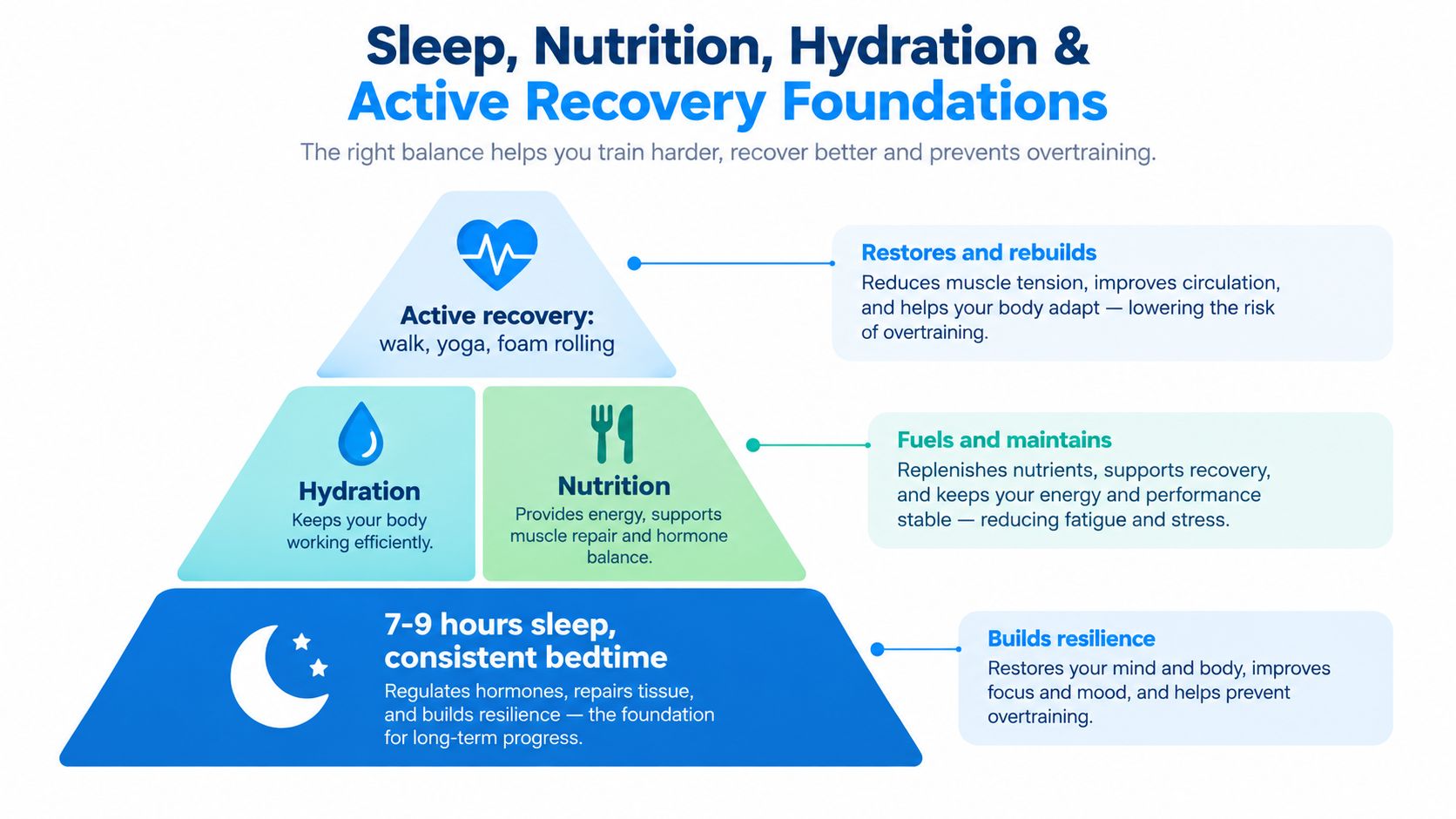
Nutrition must match the work. Total energy availability supports training adaptation, carbohydrates help restore glycogen, and adequate protein supplies amino acids for repair. Persistent under-fueling can present as fatigue, poor mood, declining performance, and slower recovery. Iron, vitamin D, and magnesium may matter when intake or status is inadequate, but supplementation should follow diet review and appropriate clinical testing rather than guesswork.
Hydration affects plasma volume, thermoregulation, and perceived exertion. Replace fluids and electrolytes according to sweat losses, environmental conditions, and session duration. Sodium needs vary considerably, so an athlete who sweats heavily shouldn't use a universal electrolyte formula without considering their individual response.
Active recovery should feel restorative, not like an undisclosed workout. Easy walking, gentle cycling, mobility, or light yoga can maintain movement and circulation while limiting additional stress. Keep the intensity low enough that breathing remains comfortable and the session doesn't impair the next key workout.
For broader programming ideas that place training, rest, and lifestyle in one plan, this guide from Gym Membership Tips provides useful general context. The hierarchy remains clear: sleep, adequate energy, hydration, and sensible movement come before exogenous ketones.
Using RPE HRV Logs and Biomarkers Together
Monitoring becomes useful when each measure answers a different question. Session RPE multiplied by duration estimates internal training load. HRV reflects autonomic variability under standardized conditions. Wellness logs capture the athlete's lived experience. Blood markers can provide periodic clinical context, but they aren't designed to make daily training decisions.
Record session RPE consistently, ideally soon after training, and note unusual factors such as heat, travel, illness, or poor sleep. A familiar external workload paired with an unusually high RPE suggests that internal strain has changed. That signal becomes stronger when performance or mood shifts in the same direction.
Morning HRV deserves trend interpretation, not emotional reaction to one reading. Day-to-day noise is normal. A sustained downward drift across roughly a week, especially alongside worse sleep, higher effort, or reduced motivation, carries more meaning than an isolated low value. Athletes can review heart-rate variability guidance to understand why standardized measurement conditions matter.
Use biomarkers as context
Mood, soreness, energy, motivation, and perceived recovery can be scored daily with a simple scale or a validated questionnaire. A combined readiness score may help coaches see patterns, but the score should remain transparent. If an athlete reports emotional flatness while the wearable looks normal, the subjective report still deserves attention.
Cortisol-testosterone ratio, creatine kinase, and ferritin are better treated as periodic checks when clinically indicated than as daily readiness switches. Results require context, and abnormal fatigue may have causes unrelated to training load. Persistent or concerning symptoms should be evaluated by a qualified healthcare professional.
| Tool | Responsiveness | Cost | Interpretation Complexity | Best Use |
|---|---|---|---|---|
| Session RPE log | Immediate | Low | Low | Daily load tracking |
| HRV trend | Daily, noisy | Low to moderate | Moderate | Recovery trend alongside other signals |
| Mood and wellness log | Immediate | Low | Moderate | Detecting psychological and subjective strain |
| Blood biomarkers | Slow and periodic | Moderate to high | High | Clinical context and targeted investigation |
A practical decision rule is layered: reduce or modify training when at least two independent markers agree, such as declining HRV plus poor sleep, or high RPE plus performance loss. One abnormal reading starts a conversation. Convergence supports action.
A product such as Locked Cognition™ Shot is formulated with liposomal R3HBG™, Alpha GPC, and Lion's Mane for mentally demanding routines. It may fit a workday or cognitively demanding schedule, but it shouldn't be used to mask fatigue that the monitoring system is already identifying.
Where Exogenous Ketones Fit Into the Recovery Stack
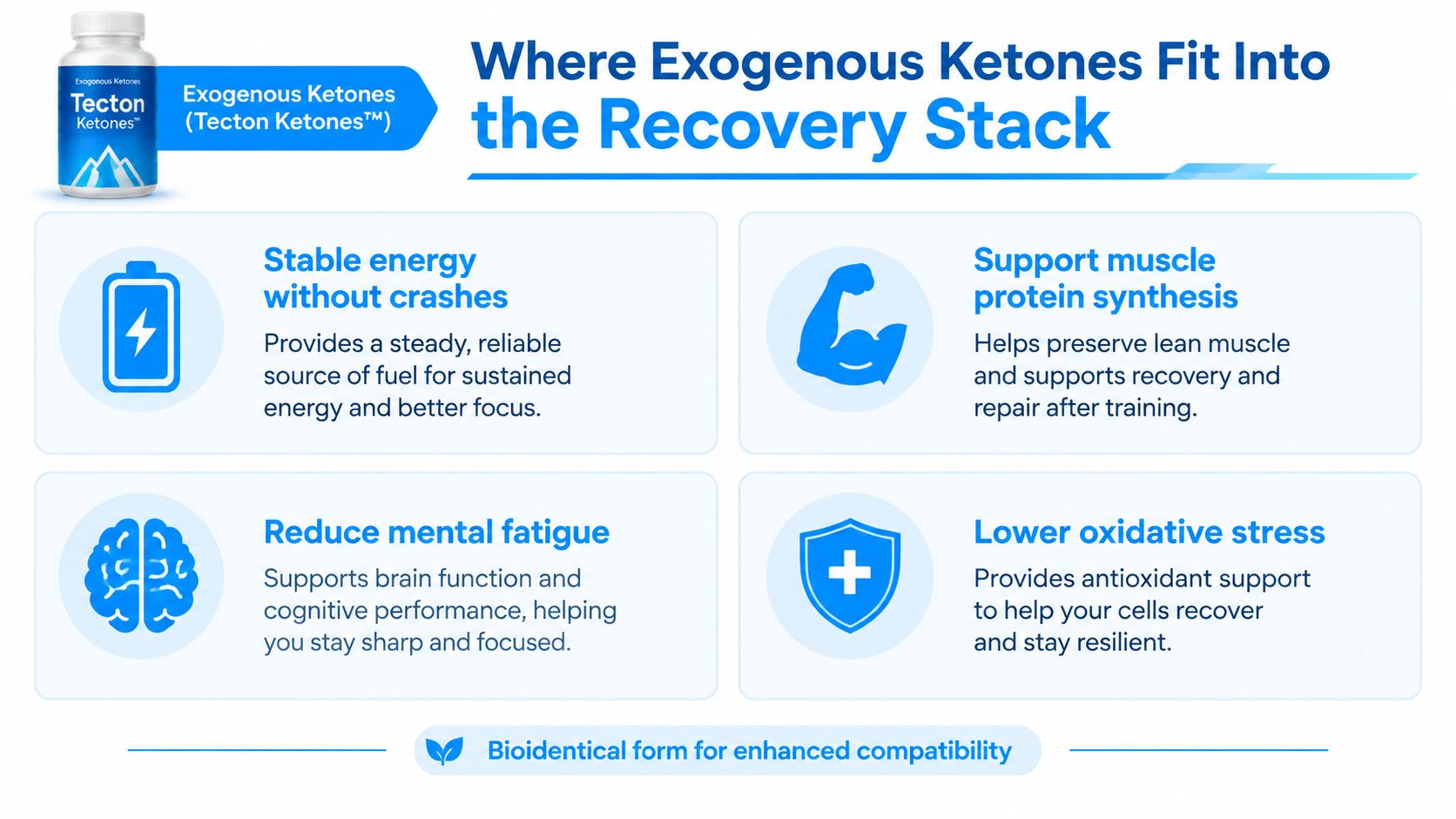
Exogenous ketones provide ketone bodies from outside the body. Nutritional ketosis comes from restricting dietary carbohydrate, while endogenous production occurs when the liver converts fatty acids into ketones. These states overlap in available fuel, but they are not interchangeable. A ketone drink can raise circulating BHB without reproducing every metabolic change associated with a ketogenic diet.
The main ketone bodies are beta-hydroxybutyrate, or BHB, and acetoacetate. BHB travels through the blood to tissues, where cells convert it into acetyl-CoA for the mitochondrial citric acid cycle. Mitochondria then generate ATP through oxidative phosphorylation. Glucose reaches mitochondrial oxidation through glycolysis, so the two fuels enter energy production differently.
Ketones supplement glucose rather than replace it. Working muscle uses mixed fuels, and high-intensity efforts often depend heavily on carbohydrate metabolism. During prolonged or energy-limited work, ketones may provide another substrate and help preserve some glycogen availability. The brain can also use BHB as an oxidative fuel. Human studies measured BHB responses to 5 g and 10 g doses in healthy adults (randomized crossover study). Formulation matters: a 10-gram active-ingredient comparison found that ketone salts, esters, and precursors produced different results and should not be treated as interchangeable (human formulation study).
Physiology before product selection
Bioidentical BHB structures are intended to match the ketone form the body naturally produces. Liposomal delivery systems aim to support dispersion and absorption, but product selection should still focus on formulation, tolerability, the BHB response, and the product's role in the wider plan. A clinical study compared a ketone ester with a ketogenic diet in relation to gastric emptying and found the ester less effective for gastric suppression. It also identified serum BHB as a strong predictive biomarker, reinforcing the difference between dietary and exogenous ketosis (clinical study).
Use this guide on how to use exogenous ketones to set timing and dose within the training plan, rather than treating the product as a recovery shortcut. Exogenous ketones may fit before or during prolonged training, a planned fasting window, or a demanding day when steady fuel is useful and meals already cover energy needs. Pairing them with carbohydrates can make sense when rapid glycolytic output is required.
They do not justify training through worsening symptoms, persistent sleep disruption, inadequate calorie intake, or unexplained performance decline. Ketones should sit inside a monitoring system that considers sleep, mood, performance, perceived effort, and other recovery markers, not above it.
People following ketogenic medical protocols, people who are pregnant, and those with relevant metabolic conditions should obtain individualized medical guidance before using ketone products. The appropriate structure-function claim is narrower: ketones can provide an alternative fuel substrate and participate in cellular signaling, but they are not a treatment for overtraining syndrome.
Weekly Template and Decision Rules for Sustainable Training
A sustainable plan needs a rhythm that an athlete can follow when motivation is high and when life becomes demanding. One practical four-week template uses two build weeks, a step-back week, and a return-to-build week. The build weeks can sit around 70% to 85% of target volume, the step-back week around 55% to 65%, and the final week resumes progressive work if recovery markers support it. These percentages are planning ranges, not medical thresholds.
For an endurance athlete, a representative week might include three key sessions, two easy aerobic days, one strength block, and one mobility or active-recovery day. The seventh day can be full rest or a 30-minute walk. Strength athletes can use the same logic by alternating demanding movement patterns, reducing accessory volume during the step-back week, and retaining selected lifts at manageable intensity. Mixed-sport athletes should avoid placing every discipline's hardest session in the same recovery window.
A simple traffic-light review
Use four inputs each morning and after key sessions:
- Green: HRV trend is stable, sleep is acceptable, mood is normal, and session RPE matches the planned work. Continue as scheduled.
- Yellow: One marker is mildly off, or the athlete feels less prepared than usual. Keep the session but reduce optional volume and reassess during the warm-up.
- Red: Performance, mood, sleep, or HRV is clearly deteriorating. Use active recovery or a reduced technical session instead of forcing the plan.
Require two reds or three yellows before downgrading planned load. This rule reduces impulsive changes while still respecting convergence across multiple signals. If symptoms persist, or if mood changes interfere with ordinary life, refer the athlete for medical or mental-health evaluation rather than trying to solve the problem with more data.
A printable checklist can stay short:
- Log duration, session RPE, and notable stressors.
- Record morning HRV and resting heart rate under consistent conditions.
- Score sleep quality, soreness, mood, motivation, and appetite.
- Compare current performance with a familiar training task.
- Review the seven-day pattern, not one difficult morning.
- Adjust volume before removing all movement.
- Protect food, fluids, sleep, and rest days.
- Use supplements only after the recovery foundation is sound.
- Rebuild gradually after a setback.
- Escalate persistent or concerning symptoms to a qualified clinician.
Overtraining prevention works when the athlete treats recovery data as part of training, not as a judgment about toughness. The plan should make sustainable performance easier to choose than repeated exhaustion.
Tecton Ketones™ offers bioidentical exogenous ketone nutrition, including formulations designed for physical performance, hydration, and cognitive endurance, so athletes can consider an alternative fuel layer without treating supplements as a substitute for recovery fundamentals. Visit Tecton Ketones™ to review the formulas and decide whether they fit your training, fueling, and monitoring strategy.


