


You eat a balanced breakfast, feel focused for a while, then hit a mid-morning slump. By afternoon, concentration fades, training feels harder than expected, and the quickest solution looks like more coffee or another snack. That pattern isn't just about willpower. It may reflect how readily your body shifts between available fuels.
Metabolic flexibility training treats fuel switching as a physiological capacity that can respond to exercise, nutrition timing, daily movement, and, in selected situations, exogenous ketone support. The aim isn't to stay in ketosis all day or force your body to burn fat during every workout. The aim is to use the fuel that best matches the demand, then transition efficiently when that demand changes.
What Metabolic Flexibility Really Means for Daily Energy
Your body does not use one fuel at a fixed rate. Metabolic flexibility is its ability to adjust between glucose oxidation and fatty-acid oxidation as exercise intensity, food availability, and energy demands change. Glucose supports rapid, high-output work. Fat oxidation contributes more during easier activity and longer periods without food. A flexible system coordinates both rather than treating either fuel as universally superior.
Daily energy can reveal how smoothly those changes occur. You might depend more on carbohydrate during demanding intervals, draw a larger share of energy from fat during an easy walk, then shift again after eating. Less efficient transitions may feel like needing frequent meals, feeling uncomfortable during longer gaps without food, or losing stamina early during moderate exercise. These sensations are not diagnostic. They are useful prompts to examine training, recovery, sleep, and meal timing.
Training gives this capacity a practical target. In a randomized study of obese adults, 7 days of exercise training increased skeletal-muscle fatty acid oxidation. The authors also concluded that training helped participants respond to a high-fat diet in a way similar to lean subjects (peer-reviewed exercise research on metabolic flexibility). The broader lesson is that fuel switching is measurable in human muscle and can change with structured activity.
Flexibility isn't the same as constant fat burning
A lower respiratory quotient, or RQ, generally indicates greater fat oxidation. A higher RQ generally indicates greater carbohydrate oxidation. Neither pattern is automatically better. A sprinter, strength athlete, distance runner, and office worker place different demands on their energy systems, so their useful fuel patterns will differ as well.
The practical test is responsiveness: does fuel use change appropriately when the task, meal pattern, or intensity changes? You can assess that phenotype through performance observations, exercise responses, and, where available, metabolic testing rather than assuming that more fat burning always means better flexibility.
Practical rule: Don't judge metabolic flexibility by whether you burn fat every minute. Judge it by whether your fuel use changes appropriately when the task, meal pattern, or intensity changes.
Discussions of keto vs carbs for performance are most useful when they match fuel choice to context. Metabolic flexibility training can combine regular aerobic movement, resistance work, occasional high-intensity efforts, sensible nutrition timing, and recovery. Targeted ketone use may add another available fuel, but it does not replace the adaptations created by training.
How Your Body Switches Fuels From Glucose to Ketones
Glucose enters cells through regulated transport and is broken down through glycolysis. The resulting carbon fragments can enter the mitochondria, where they contribute to the citric acid cycle and oxidative phosphorylation. The mitochondria use this process to create adenosine triphosphate, or ATP, the chemical energy currency that powers muscle contraction, neural activity, and many cellular functions.
When carbohydrate availability falls or energy demand changes, the body can increase fat mobilization. The liver converts fatty acids into ketone bodies, including beta-hydroxybutyrate, or BHB. BHB travels through the circulation to tissues such as skeletal muscle, the heart, and the brain, where it can be converted into acetyl-CoA and processed through mitochondrial pathways to support ATP production.
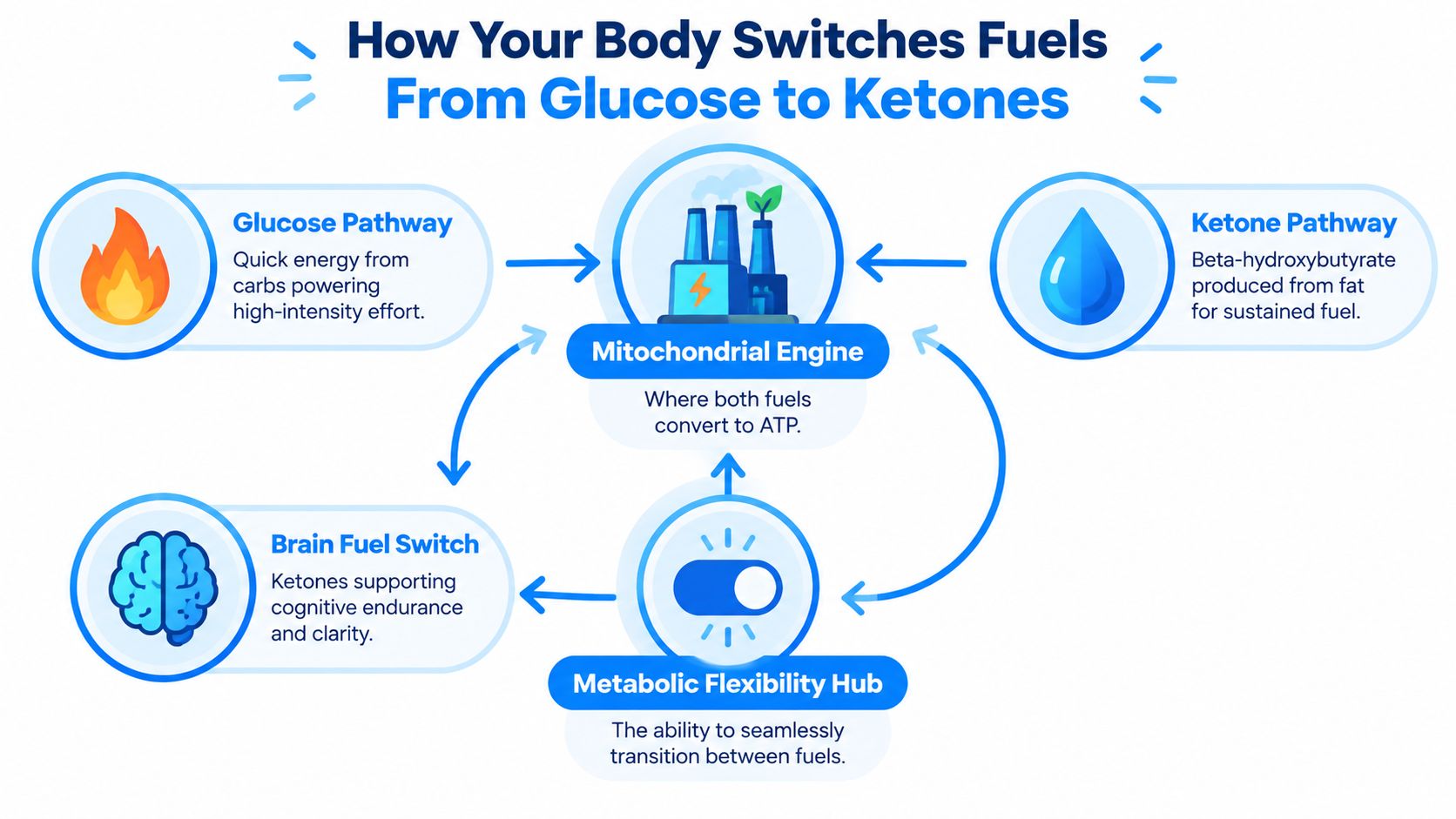
Three ways ketones enter the picture
Nutritional ketosis follows dietary conditions that lower carbohydrate availability enough to increase endogenous ketone production. Endogenous ketones are made by your own liver, primarily from fatty acids. Exogenous ketones are consumed directly, so blood BHB can rise without waiting for a ketogenic diet or prolonged fasting to produce that increase.
These states aren't interchangeable. A ketone drink can raise circulating BHB, but it doesn't automatically mean that your muscles have developed the full adaptations associated with regular training or sustained dietary ketosis. Training still determines how well tissues respond to changing demands.
A 2022 meta-analysis of 13 studies found that ketone supplementation increased blood BHB by a mean difference of 1.73 mM and lowered mean blood glucose by 0.54 mM in short-term human trials (ketone supplementation meta-analysis). The result demonstrates an acute shift in fuel handling, not proof that every person will experience the same performance response.
BHB also acts beyond its role as fuel. A PubMed-indexed review describes BHB as a brain fuel and discusses its influence on potassium and calcium channel activity, redox couples, mitochondrial reactive oxygen species, and cellular signaling (review of beta-hydroxybutyrate physiology). These mechanisms help explain why ketones are studied in relation to brain energy utilization, mitochondrial function, and endothelial or vascular signaling, although mechanistic potential shouldn't be presented as a guaranteed clinical outcome.
For readers who want a deeper explanation of how mitochondria turn substrates into usable energy, Tecton's overview of cellular energy production provides helpful background. In product terms, the Tecton EDGE™ Performance Shot + Electrolytes combines liposomal R3HBG™ ketone with sodium, potassium, and magnesium for use during training, movement, or physically demanding days.
If insulin signaling, glucose regulation, or metabolic symptoms concern you, fuel switching shouldn't become a substitute for clinical care. A medical overview of root-cause insulin resistance therapy can help place lifestyle strategies within a broader practitioner-guided evaluation.
Building Your Metabolic Flexibility Training Foundation
A useful training week teaches your body to change fuel use under different demands. Easy aerobic work supports sustained fat oxidation, resistance training increases muscle glucose disposal and force production, and short intervals practice rapid shifts when energy demand rises. The goal is not to collect exhausting sessions. It is to create repeatable signals that can be observed through performance, recovery, and, when available, measures such as respiratory quotient, or RQ.
Begin with conversational aerobic work. Use the talk test: speak in complete sentences while breathing more actively than at rest. On a perceived-exertion scale from 1 to 10, many beginners can start around 3 to 5. Adjust according to breathing, recovery, and training history. This intensity is useful for building duration without making every session depend heavily on rapid carbohydrate supply.
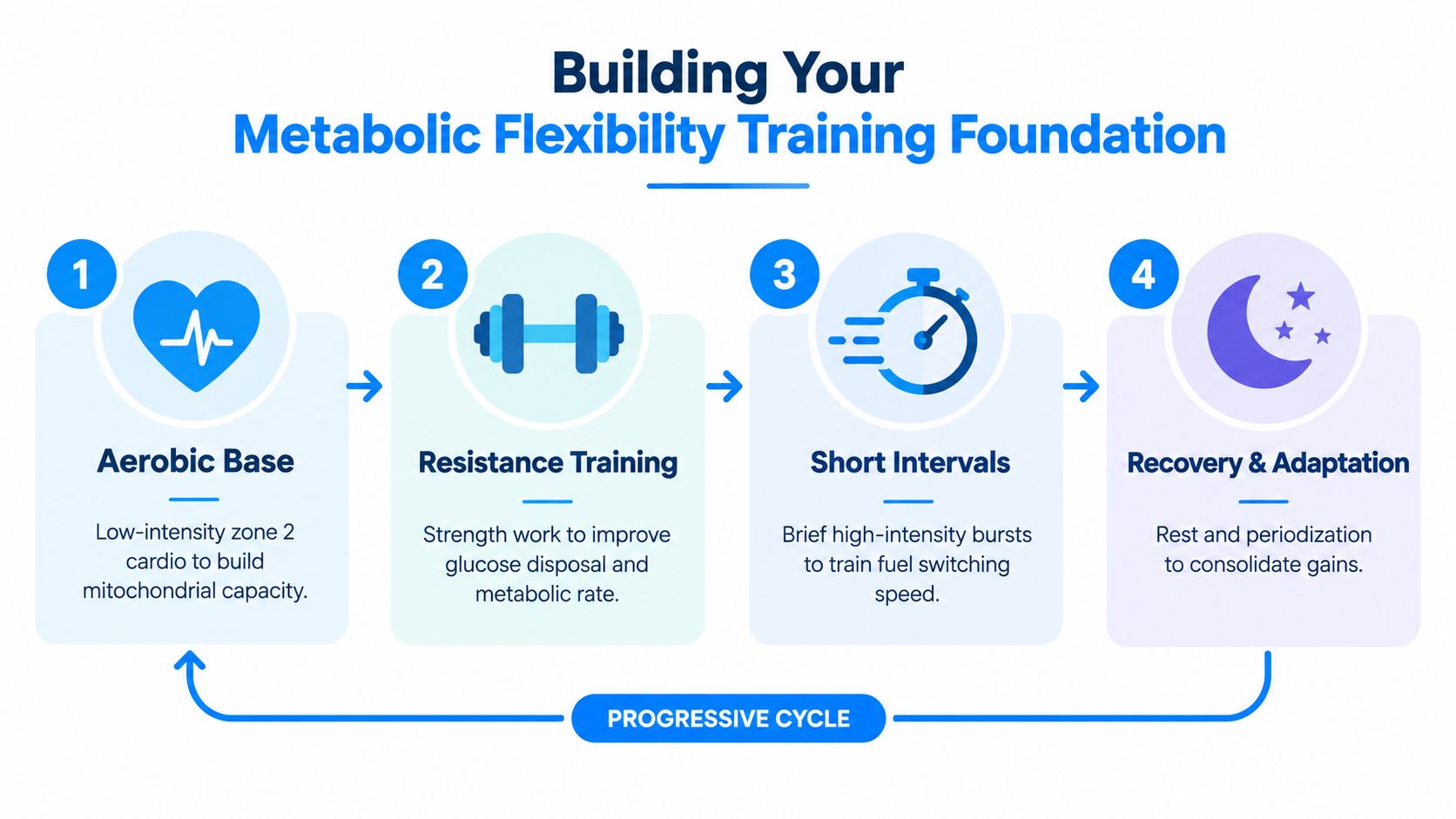
A four-part training week
Aerobic base: Choose brisk walking, cycling, rowing, jogging, or another repeatable activity. Keep the effort controlled enough to maintain technique and finish without a prolonged recovery cost. If you track fuel-use testing, this type of session can help examine whether fat oxidation is sustained at a given workload and whether RQ falls during easier, lower-glycogen conditions.
Resistance training: Use movements covering major patterns, such as a squat, hinge, push, pull, and carry. The objective is progressive strength and muscle quality, not exhaustion after every session. Track loads, repetitions, and recovery between sessions. Improvements in muscle glucose handling may appear as better work capacity and steadier performance, even when no laboratory measure is available.
Short intervals: Add brief, high-intensity efforts after regular aerobic and resistance sessions are well tolerated. Work hard enough to raise breathing substantially, then recover enough to preserve safe technique. Intervals place greater demand on carbohydrate availability and can test how quickly performance returns after a high-glycolytic effort. They are a stress test, not the main way to build daily fuel flexibility.
Recovery and adaptation: Keep low-demand movement in the week, but do not turn every day into a test. Adaptation requires a manageable training dose, sufficient food, and sleep. Record soreness, sleep, pace or power, and perceived effort. A falling pace at the same effort may signal that the dose is too high.
The research base includes more than endurance work. A Mayo Clinic review describes 24 older adults with prediabetes and obesity who completed 12 weeks of aerobic exercise, with improved metabolic flexibility measured through fasting RQ and RQ during a euglycemic-hyperinsulinemic clamp (Mayo Clinic Proceedings review)). The review also discusses resistance exercise improving metabolic flexibility in older men after 12 weeks, including changes under exercise-related and awake-sleep conditions.
Sample weekly mix
| Training Type | Phenotype or purpose | Example Session |
|---|---|---|
| Aerobic base | Examine sustained oxidation and lower-intensity RQ response | Brisk walk or easy cycle using the talk test |
| Resistance training | Improve muscle glucose disposal and force production | Full-body movements with controlled repetitions |
| Short intervals | Test rapid changes in energy demand and recovery | Brief hard efforts separated by easy recovery |
| Daily movement | Reduce prolonged sitting and support daily substrate use | Walking breaks, stairs, or light mobility |
A 2025 study reported that reducing sitting time by at least 30 minutes per day improved metabolic flexibility alongside insulin sensitivity (study on reducing sedentary time). Movement outside the gym therefore belongs in the plan. A short walk after prolonged sitting may be more sustainable than adding another punishing workout.
Use gradual progression across 1 to 12 weeks, the range in which human exercise interventions have documented measurable adaptations. Beginners should establish consistency before intensity. Trained individuals can vary interval density, resistance load, or aerobic duration, but only one major training variable should rise at a time. Compare the same marker, such as pace at a fixed effort, recovery time, or available RQ data, rather than judging progress by fatigue alone.
Nutrition Timing Strategies That Teach Fuel Switching
Nutrition timing should function as an adjustable dial, not a test of discipline. Carbohydrate availability can be higher when training requires repeated high output and lower when the day involves easier movement. Protein, fiber, fluids, and total food quality still matter, and aggressive restriction can make training and recovery worse.
An overnight fast may give some people a comfortable period with lower incoming glucose and greater reliance on stored substrates. Others may experience poor sleep, irritability, dizziness, or reduced training quality. People who use glucose-lowering medication, are pregnant, have a history of disordered eating, or manage a relevant medical condition should discuss fasting with a qualified clinician before changing meal timing.
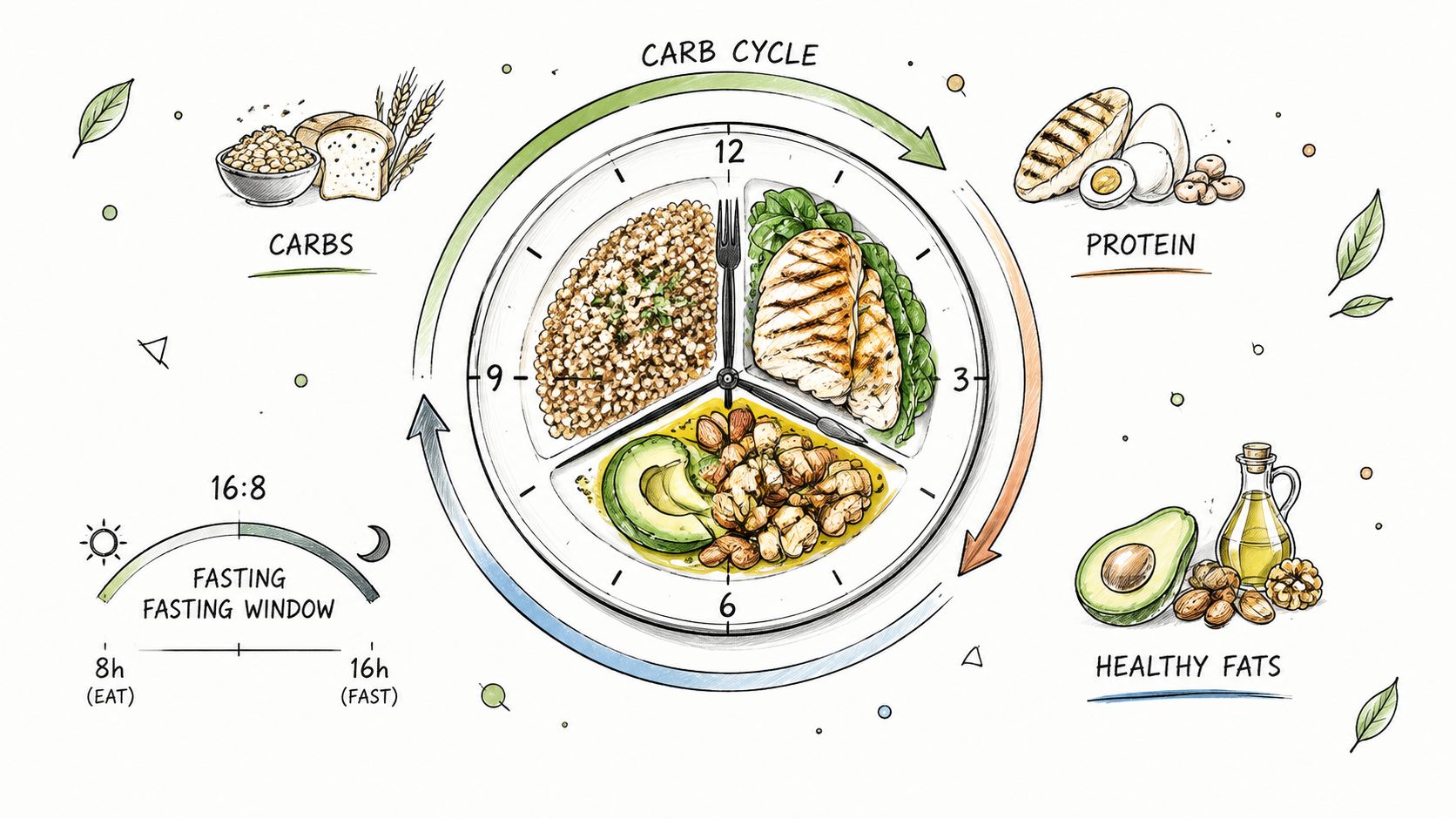
Match food supply to the session
A higher-carbohydrate meal can fit before demanding intervals, competition, or a long training session. A meal built around protein, vegetables, fiber, and a moderate amount of carbohydrate may suit an easier aerobic day. On a rest day, many people prefer meals that produce stable satiety without deliberately pushing carbohydrate as high as on a hard training day.
A simple active-day pattern might look like this:
- Before training: Choose a meal or snack that you digest comfortably, with carbohydrate scaled to the session and protein included when appropriate.
- During training: Water may be enough for an easy session. Longer or sweat-heavy work may require fluids and electrolytes.
- After training: Eat a balanced recovery meal rather than treating the workout as permission to underfuel or overeat.
- Later in the day: Return to normal meals and observe whether energy remains steady without constant grazing.
Carb cycling doesn't mean eliminating carbohydrates on every non-training day. It means allowing the fuel mix to reflect the demand. Fasting doesn't prove that your metabolism is flexible, and eating carbohydrates doesn't prove that it isn't. The response depends on baseline health, exercise status, sleep, and the measurement method.
For readers considering protein during a fasting routine, this intermittent fasting protein shake guide offers a useful discussion of how people structure that choice. Timing also matters for exogenous ketones, so review the best time to take ketones alongside your training schedule rather than treating a product as a meal replacement.
Individualization matters: If a fasting window lowers your training quality or makes eating patterns feel chaotic, shorten it or remove it. The most useful strategy is the one you can repeat without compromising recovery.
Why This Matters and How Exogenous Ketones Fit In
The practical value of metabolic flexibility is straightforward. Better fuel switching may support steadier energy, cognitive endurance, workout performance, and metabolic efficiency. Those are structure and function outcomes, not promises of disease treatment or guaranteed results.
Exogenous ketones can add circulating BHB without requiring immediate endogenous production. That may be useful before a demanding session, during a fasting window, or on a day when you want a non-caffeinated fuel option. The supplement supplies ketones, but the training foundation still teaches your body how to manage changing fuel demands.
Compare the main ketone formats
Ketone salts attach BHB to minerals. They may also deliver the L form of BHB, which human research shows is metabolized more slowly than D-BHB. Ketone esters can raise circulating ketones efficiently, but taste, tolerability, and cost can limit practical use. Precursors rely on conversion inside the body, so their effects depend on the conversion pathway and individual response.
A 2017 human metabolism study found that ketone ester drinks increased blood D-BHB more than 50% higher than ketone salt drinks, while ketone salts significantly increased L-BHB, which was metabolized more slowly (human study of D- and L-BHB). A separate 2023 human study found that 10 g of ketone monoester raised R-BHB to 2.4 ± 0.1 mM at 15 minutes, while a monoester and salt combination reached 2.1 ± 0.1 mM at 30 minutes. The 5 g doses peaked around 1.1 to 1.2 mM (human ketone formulation study).
Liposomal delivery is intended to package an active compound in lipid-based structures that may support dispersion and absorption. It shouldn't be treated as proof of superior performance unless the finished product has relevant human comparisons. Tecton describes its R3HBG™ as a bioidentical D-BHB source and uses liposomal formulations, but users should still evaluate tolerance, ingredient transparency, and personal response.
When targeted ketones make sense
Use exogenous ketones as a supporting tool, not a replacement for meals, training, or medical care. Appropriate contexts may include:
- Fasting transitions: A ketone source may help provide an alternative fuel during a planned fasting period.
- Endurance sessions: A non-caffeinated option can fit a long movement session when hydration and carbohydrate strategy are already considered.
- Cognitive demand: Some people use ketones during extended concentration, while recognizing that individual responses vary.
- Training experiments: Pair use with consistent workouts and track energy, perceived exertion, and recovery instead of assuming benefit.
Tecton Ketones™ offers bioidentical exogenous ketone products in formats intended for performance, cognition, and fasting-related routines. Its EDGE Performance + Electrolytes and GLP-1 Shot are separate catalog formats, so users should review their ingredients and intended use rather than treating them as interchangeable.
A detailed guide to using exogenous ketones can help you plan timing and expectations. Start conservatively, follow the product label, and stop if you develop unwanted symptoms such as gastrointestinal discomfort, palpitations, or unusual weakness.
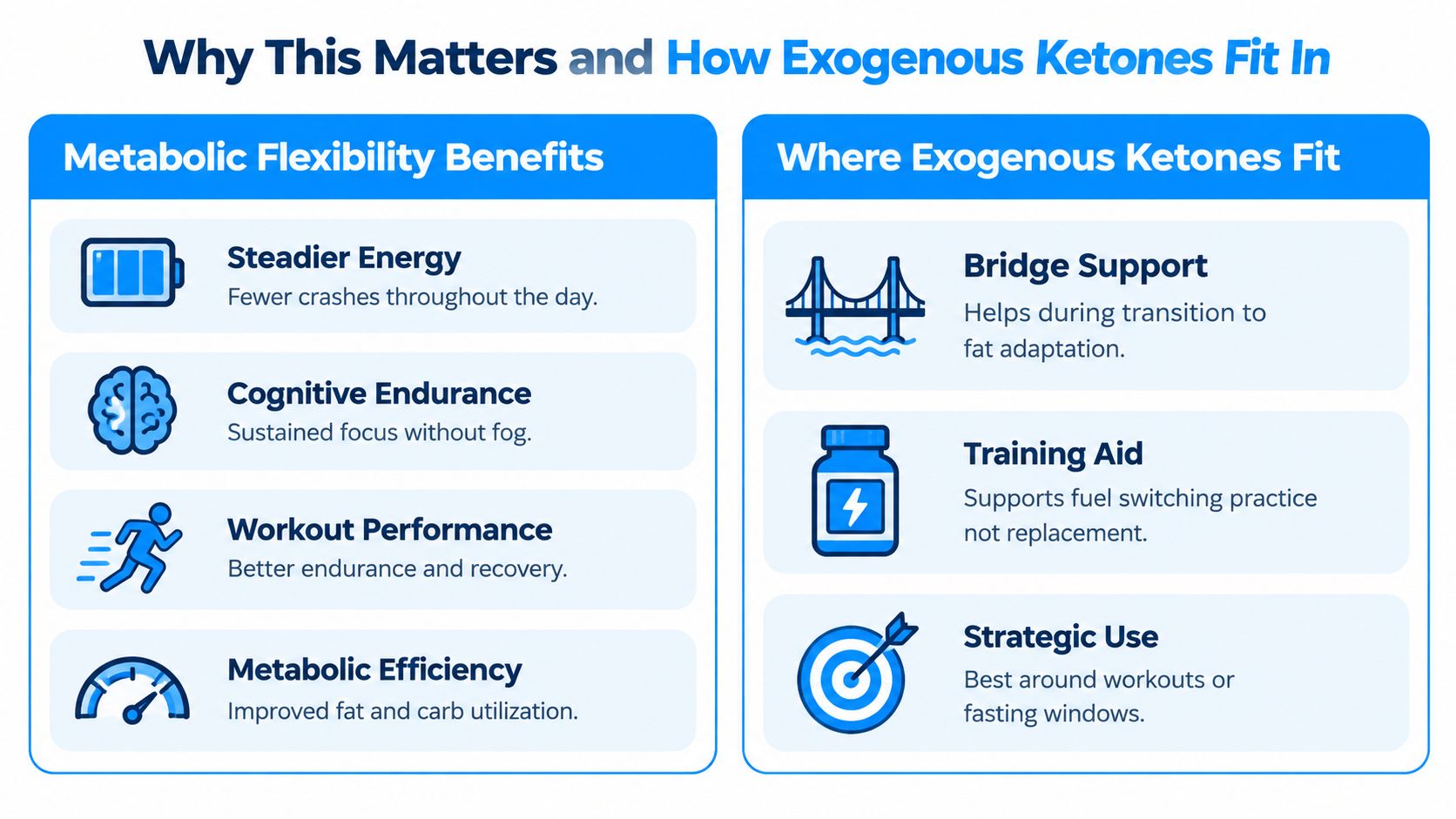
Application Framework for Your Personalized Plan
Start with the outcome you want to change, then choose measurements that can reflect it. An afternoon energy drop calls for tracking meal composition, sleep, sedentary time, and the response to easy movement. Early training fatigue points toward aerobic pacing, carbohydrate timing, hydration, and recovery. A single ketone reading cannot show whether your overall fuel switching has improved.
Start with a repeatable weekly structure
Build the week around an aerobic base session, resistance training, and carefully dosed intervals. Add brief movement breaks when work keeps you seated. Place more carbohydrate near higher-demand sessions, while lower-demand days can provide practice using mixed fuels comfortably, without forced restriction.
Keep optional exogenous ketones outside the foundation until sleep, movement, food intake, and training are consistent. Test one situation at a time, such as before training or during a fasting window. Hold other variables steady long enough to assess perceived energy, focus, exercise quality, and gastrointestinal tolerance.
Track a small set of signals:
- Energy: Record whether noticeable crashes become less frequent or less severe.
- Training: Note completed sessions, perceived exertion, and next-day recovery.
- Cognition: Observe sustained attention, while recognizing that subjective clarity does not prove a biochemical change.
- Fuel markers: Where clinically appropriate or available, compare ketone and glucose trends. Research may use RQ or ΔnpRQ, but consumer measurements do not equal clamp-based or calorimetry protocols.
- Recovery: Monitor sleep, soreness, mood, and appetite. If a strategy worsens these measures, adjust it.
Research is moving toward phenotype-based testing. A 2025 trial protocol proposes respiratory quotient and insulin-stimulated measures to examine whether metabolic flexibility predicts responses to lifestyle interventions. A related validation study suggests that overnight substrate-oxidation changes after a high-fat meal may add information that conventional methods miss (research on metabolic flexibility measurement). The practical question becomes, “Which transition am I trying to improve, and what measurement can reasonably reflect it?”
Give a routine enough time to reveal a pattern. Exercise adaptations may emerge across 1 to 12 weeks, although tolerance and baseline health affect the pace. If progress stalls, reduce complexity first. Restore consistent sleep, regular movement, manageable training, and adequate food before adding more fasting, intensity, or supplements.
Tecton Ketones™ provides bioidentical exogenous ketone nutrition, including performance-focused formats intended to support direct BHB availability during training, movement, or fasting windows. Visit Tecton Ketones™ to review the available options and choose a product that fits a measurable metabolic flexibility plan.


