


Ketones themselves don't dehydrate you. Fluid loss is more likely to come from early carbohydrate restriction or fasting, sweating in heat, or, in diabetic ketoacidosis, glucose-driven water loss in urine.
That distinction matters because a ketone reading tells you about fuel use, not your hydration status. The practical question isn't whether ketones are present. It's what caused them, what else is happening, and whether symptoms point to ordinary fluid shifts or a medical emergency.
Ketones and Dehydration Are Not the Same State
Ketosis describes a shift in fuel use, while dehydration describes a fluid deficit. The two can occur together, but one does not establish the other. When carbohydrate availability and insulin signaling fall, the liver makes beta-hydroxybutyrate (BHB) and acetoacetate from fatty acids.
Fasting or the start of a ketogenic diet can bring fluid shifts for separate reasons. As glycogen stores decline, some of the water held alongside them is released. Lower insulin also prompts the kidneys to excrete more sodium, and water follows. Glycogen works like a water-holding sponge: using the stored fuel releases some of that water. Early sodium loss often settles as the body adapts.
Early weight loss on a ketogenic diet can therefore include water, not just body fat. A ketone meter measures ketones; hydration is better assessed through thirst, urine-colour and body-mass trends.
Don't restrict fluids to raise a reading
Some older ketogenic-diet protocols restricted fluids to concentrate blood or urine ketones. A 2025 clinical review found no evidence that dehydration or deliberate fluid restriction is necessary for ketosis-related benefits. Dehydration can reduce plasma volume, impair thermoregulation, and increase cardiovascular strain. By concentrating circulating solutes, it can also make a ketone reading harder to interpret.
Practical rule: Base fluid intake on thirst, urine-colour and body-mass trends, climate, exercise duration, and sweat loss, rather than trying to raise a ketone reading.
For everyday decisions, check whether you're thirsty, whether your urine is darker than usual, and whether your body mass changes across a workout. Electrolyte or kidney-function testing belongs in clinical care when a clinician considers it appropriate. Electrolytes can support fluid retention and normal neuromuscular function, but they don't make dehydration useful or desirable. People with hypertension, kidney disease, heart failure, or diuretic use may need individualized advice before adding salt or electrolyte products.
Diabetic ketoacidosis is different: it combines ketones with dangerous metabolic disruption and dehydration and requires urgent medical care.
Ketone Ranges and the Fluid Drivers Beside Them
The same blood ketone reading can accompany different fluid needs. The cause matters: early low-carbohydrate eating can lower insulin and increase sodium loss, while a ketone shot can raise blood ketones without the same glycogen-related fluid shift. Heat and sweating create a separate source of fluid and salt loss.
| Situation | Typical blood ketones | Main fluid driver | First response |
|---|---|---|---|
| Early fasting, 12–20 hours | Ketones may become measurable during this period and rise toward about 1 mmol/L | Glycogen-bound water and lower insulin | Drink to thirst; don't restrict fluid to raise the reading |
| Ketogenic diet, steady use | BHB ranged from 0.19 to 2.98 mmol/L across 36 studies, with a median of 0.91 mmol/L (2025 systematic review) | Early sodium loss, often days 2–6, plus glycogen-associated water | If lightheaded, consider food and fluids; don't add salt automatically if you have hypertension, kidney disease, or take diuretics |
| Prolonged starvation | About 2–3 mmol/L by day 3; about 6–8 mmol/L after 24–42 days (human fasting review) | Ongoing low insulin and low intake | Don't treat prolonged starvation as a self-experiment; seek clinical supervision |
| Exogenous ketones with a normal diet | A review of 43 trials involving 586 participants found a mean BHB rise of 1.73 mmol/L; monoesters produced larger BHB and glucose changes than salts (systematic review of exogenous ketones) | Not the same insulin-and-glycogen fluid shift; ketone salts add minerals | Match fluid to sweat and heat; count the product's mineral load |
| Diabetic ketoacidosis | Blood ketones can reach about 20 mmol/L (CDC surveillance and clinical information) | Glucose-driven fluid loss in urine, vomiting, and reduced intake | Seek urgent medical care; the CDC recorded about 240,000 U.S. DKA hospitalizations in 2020 |
The early-fasting row describes a typical progression, not a clock that predicts an individual's ketone level. During the first days of carbohydrate restriction, lower insulin can increase sodium excretion; water follows sodium, and glycogen-associated water also declines. For more on this early diet-related shift, read Tecton's guide to keto and electrolyte imbalance.
The ketogenic-diet range reflects varied study interventions, not a target to chase. Exogenous ketones can raise blood BHB while a normal diet keeps glycogen available, so the reading alone does not indicate a need to drink more or take salt. Heat and sweat loss call for a separate assessment of fluid needs.
In diabetic ketoacidosis, high blood glucose causes glucose to spill into urine, pulling water and electrolytes with it. Vomiting and reduced intake can worsen the losses. Warning signs include excessive thirst and urination, vomiting, abdominal pain, deep or rapid breathing, confusion, and unusual fatigue. Ketone products and ketogenic diets aren't treatments for diabetes or ketoacidosis. People with diabetes, especially those using insulin or medicines associated with ketone risk, should get medical guidance on monitoring and sick-day fluid management.
How Ketone Salts and Esters Affect Minerals
The carrier changes what comes with a ketone dose. Ketone salts pair BHB with minerals such as sodium, potassium, calcium, or magnesium. Ketone esters link a ketone body or precursor to an organic carrier that is cleaved after ingestion. Both formats can raise blood ketones, but their mineral loads differ.
| Format | How BHB is delivered | Mineral load | Main limitation |
|---|---|---|---|
| Ketone salt | BHB bound to sodium, potassium, calcium, or magnesium | Adds minerals that count alongside dietary intake and sweat losses | Can produce a smaller free BHB rise than esters in some controlled comparisons |
| Ketone ester | Ketone body linked to an organic carrier that is cleaved after ingestion | Generally lower mineral load than salts | Can have stronger taste and more gastrointestinal complaints |
| Precursor, such as butanediol | The body converts it into BHB | Depends on the formulation; check the label | Requires conversion and isn't a direct source of D-BHB |
A systematic review of human studies found that ketone monoesters produced larger changes in BHB and glucose than ketone salts. The reviews also describe stronger taste and gastrointestinal complaints as possible limitations of esters. Check a product label for its sodium and potassium amounts, especially if you use other supplements or follow a high-salt diet. For more on the distinction, read Tecton's explanation of ketone salt supplements.
The body uses D-BHB as fuel; products with more of the L isomer are a poorer match for that pathway. A precursor must first be converted by the body. Tecton EDGE Electrolytes is described as hydration within the EDGE focused performance line.
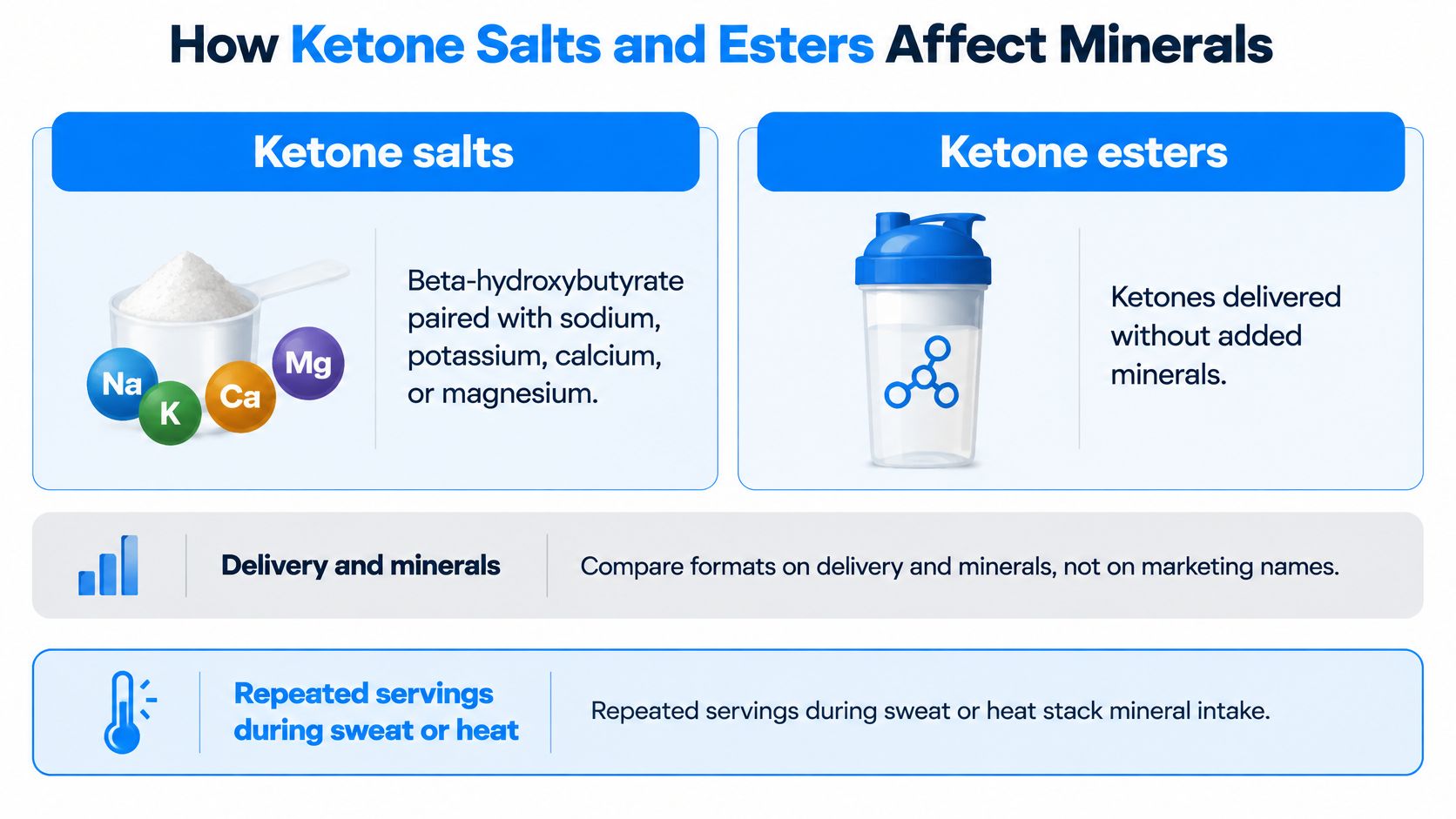
For hydration, the useful distinction is whether a product adds minerals, not whether it promises to prevent dehydration. Count a salt product's mineral contribution alongside other supplements, drinks, and food. If you take blood-pressure medicine or a diuretic, ask a clinician how those sources fit your needs.
Exercise and Heat as Separate Stresses
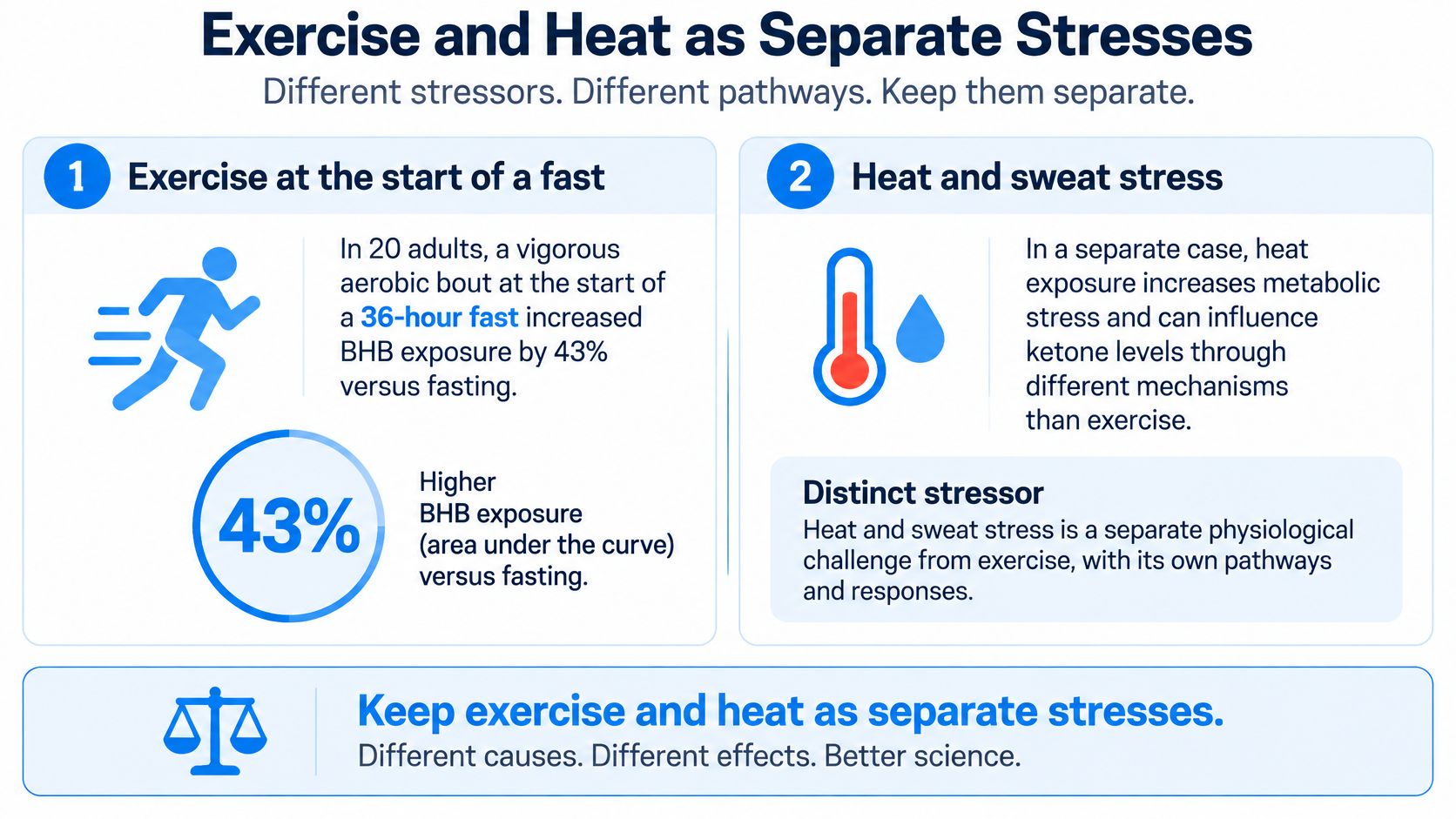
A rise in ketones during exercise does not automatically signal dehydration. In a controlled study of 20 adults, vigorous aerobic exercise at the start of a 36-hour fast increased BHB exposure by 43% compared with fasting alone and shortened the time to reach 0.5 mmol/L BHB by an average of 3.5 hours (controlled fasting-and-exercise study). Glycogen depletion and increased fatty-acid flux can help explain the faster ketone production; fluid loss is a separate process.
Heat adds another stress. In a heat-exercise study, participants did 90 minutes of loaded treadmill work at 34 °C and 45% relative humidity, then completed an exhaustion test. Water intake was standardized. The ketone monoester condition also included caffeine and was compared with an energy-matched carbohydrate control. Nine of 17 participants improved exhaustion time by more than 0.58 minutes after ketone ingestion (heat-exercise study). Because fluid intake was controlled, the result does not show that ketones prevent dehydration.
The fluid question depends on the situation:
- A fasted morning run: Fasting and exercise affect fuel availability, while sweat removes fluid and sodium. Read BHB alongside effort, symptoms, and fluid replacement.
- A hot practice after a normal-carb lunch: Heat and sweat are the main fluid concerns, even if you take a ketone serving.
- Early low-carb eating without training: Lower insulin and depleted glycogen can shift fluid balance without a workout.
During endurance exercise, substantial fluid loss can lower plasma volume and stroke volume, raise heart rate and perceived effort, and make heat dissipation harder. Match fluid decisions to sweat and conditions rather than treating a BHB reading as a hydration measure. For practical guidance on choosing drinks for training, see this guide to electrolyte drinks for athletes.
Why This Matters
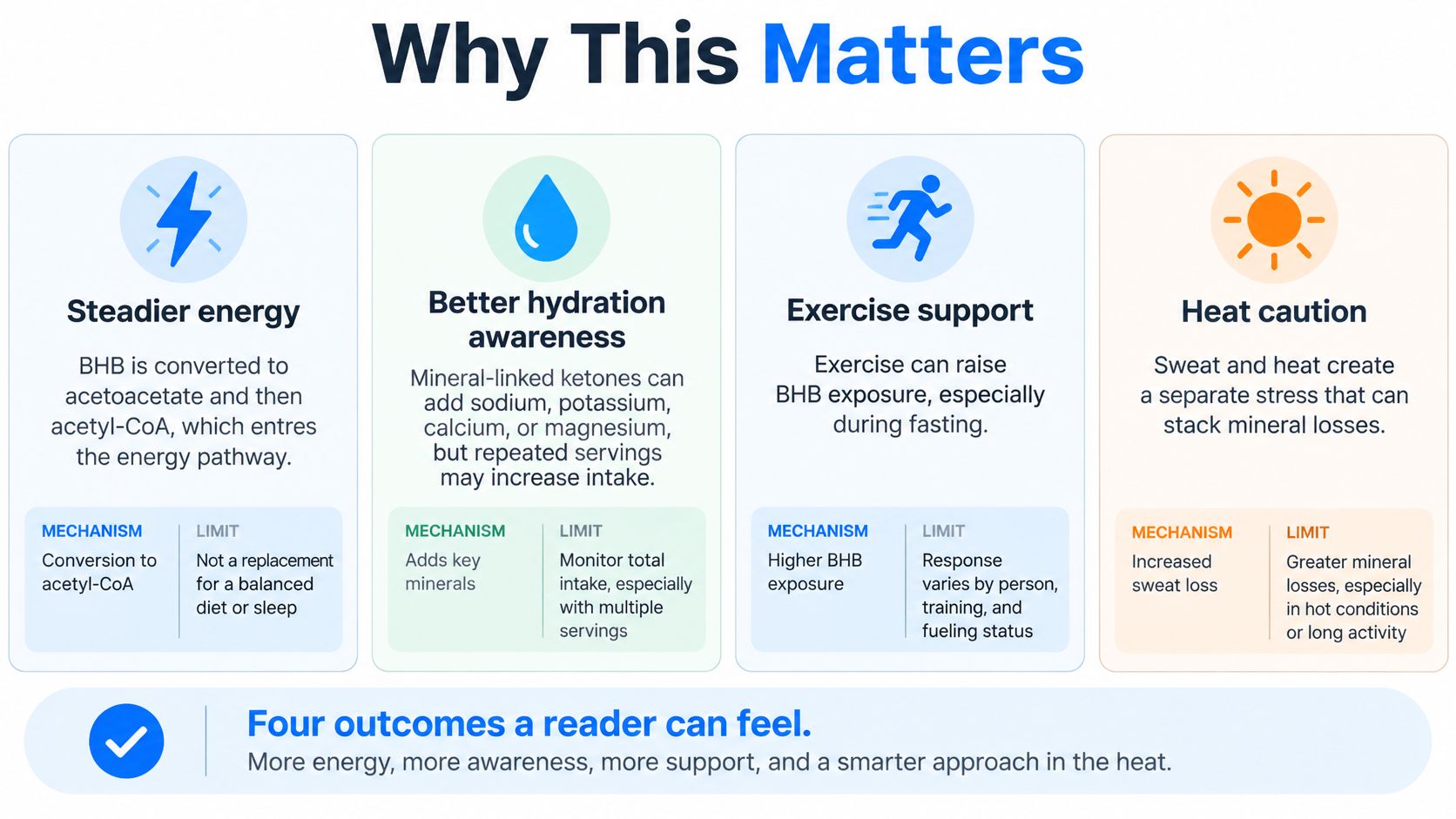
Ketones can add to the body's available fuel, but that does not explain every change in energy, concentration, or exercise tolerance. BHB is converted to acetoacetate and then acetyl-CoA, which enters the mitochondria's tricarboxylic-acid cycle. The cycle supports ATP production through oxidative phosphorylation. Using glucose and ketones as fuels is one form of metabolic flexibility.
Four outcomes, with limits
- Steadier energy: Ketones provide another route to ATP production. That describes a shift in fuel use, not a guaranteed stimulant-like effect or a promise of steadier energy for everyone.
- Cognitive endurance: In healthy middle-aged adults given intravenous BHB, cerebral glucose consumption fell while cerebral oxygen use stayed unchanged. A separate experiment summarized in the same review of human brain energy reported improved working-memory performance versus placebo infusion in people with type 2 diabetes when BHB reached about 2.4 mmol/L. These findings concern brain fuel use, not proof that ketone supplements prevent or treat neurological disease.
- Workout performance: Cox et al. reported that trained cyclists went 28% further at identical effort when ketones were available as fuel. That finding describes a specific study result, not a guaranteed personal performance gain.
- Metabolic efficiency: A short-term change in glucose after exogenous ketones can reflect a shift in fuel availability. Interpret it alongside hydration and exercise tolerance, since fluid loss can also affect glucose, acid–base balance, and how a session feels.
These distinctions help keep fuel use in perspective: ketones can contribute to brain and muscle energy, while fluid balance still depends on the factors described above.
Who Needs Clinical Input Before Using Ketones
Some people need a clinician's guidance before changing ketone or electrolyte intake. If you have diabetes, especially if you use insulin or medicines that affect ketone risk, ask how to monitor ketones and manage fluids. Follow the emergency guidance in the daily hydration framework if severe symptoms occur.
Kidney or heart disease, hypertension, and diuretic use can affect how much sodium or potassium is appropriate. Ask before adding electrolyte products, since their minerals contribute to your daily intake. Pregnancy or breastfeeding, recurrent vomiting, or unexplained dizziness also warrant personalized advice.
A short decision check
Before using exogenous ketones, consider:
- What's the context? Is there a clear training or fasting reason, or are you trying to change a meter reading?
- Can you account for the conditions? Consider heat, sweat, and fluid intake during the session.
- Does the label fit your routine? Check sodium and potassium alongside food, drinks, and other supplements.
- Do symptoms persist? Brief, mild discomfort differs from symptoms that continue or worsen. Use the emergency guidance in the daily hydration framework for red flags.
Endurance athletes, people who train fasted, and adults interested in an occasional ketone serving without a strict ketogenic diet may consider exogenous ketones. A rise in blood BHB does not guarantee better performance. If a health condition or medication affects fluid, blood-pressure, or glucose management, get clinical guidance before trying them.
Application Framework for Daily Hydration
Match your response to the likely fluid driver. Dark urine and thirst during a hot or long workout point toward sweat loss; symptoms in the early days of fasting or a ketogenic diet may reflect fluid and sodium shifts. Similar symptoms after ketones while eating normally can have other causes, including dose, gut tolerance, caffeine, or missed fluids. Symptoms alone do not confirm the cause.
A practical decision path
Start with the setting. Was it early low-carb eating or fasting, a ketone serving alongside your usual diet, or a hot session with heavy sweating? Each points to a different first step.
For heat or a long workout, drink to thirst and consider the session's sweat loss, urine colour, and body-mass trends. Dark urine with thirst can support replacing fluid. Heavy sweating may also call for sodium. A urine-specific-gravity threshold used in a research protocol is not a home hydration target, and no single water quota fits everyone.
For early low-carb eating or fasting, fluid and sodium shifts may contribute to headache, fatigue, or dizziness on standing. Have fluids with food and consider salty food if appropriate. If symptoms persist, seek care.
For symptoms after a ketone serving, consider dose, gut tolerance, caffeine, and whether you drank enough for the session. Check the product's mineral content before adding salt; a BHB reading alone does not set fluid needs.
For long or hot training, add up sodium and potassium from food, drinks, and supplements before using more. Tecton describes its EDGE Electrolytes formula as hydration within its focused performance line.
If you have any DKA warning sign (see the symptom list above), seek urgent medical care.
Hydration decisions depend on the conditions around you: heat, sweat, diet, and the minerals in your food and products. Tecton Ketones™ offers bioidentical exogenous ketone nutrition, including options with electrolytes. For details on its products, visit Tecton Ketones™.


