


The most popular advice about cardiovascular efficiency is to watch one number, usually VO₂max, and assume a higher score means the heart is working better. That shortcut misses the physiology. A person can improve oxygen uptake while vascular delivery remains limiting, or use more ketones without improving the heart's intrinsic ability to convert fuel into useful work.
A more accurate view separates cardiovascular efficiency into substrate-level, pump-level, and vascular-level performance. This matters for athletes, people managing metabolic health, and anyone considering exogenous ketones, because these layers interact but don't always improve together.
What Cardiovascular Efficiency Actually Means
Cardiovascular efficiency describes how effectively the body converts metabolic fuel into blood flow, oxygen delivery, and useful physical work. It isn't a single measurement. It's a system with three connected layers.
The three layers
Substrate-level efficiency asks how cleanly mitochondria use available fuel to produce ATP. Glucose and ketones enter different metabolic pathways, but both ultimately support mitochondrial energy production. Human muscle-cell research found that beta-hydroxybutyrate increased mitochondrial respiration, maintained ATP production, and reduced hydrogen peroxide emission, suggesting that ketones can act as fuel while also influencing cellular redox signaling (human muscle-cell research).
Pump-level efficiency concerns the heart itself. How much blood does it eject with each beat? How much blood does it move per minute? Can it increase flow during exercise without requiring an excessive rise in filling pressure?
Vascular-level efficiency describes how arteries distribute that flow to working tissue. Blood vessels must adjust resistance, widen where needed, and support oxygen delivery from the central circulation to skeletal muscle.
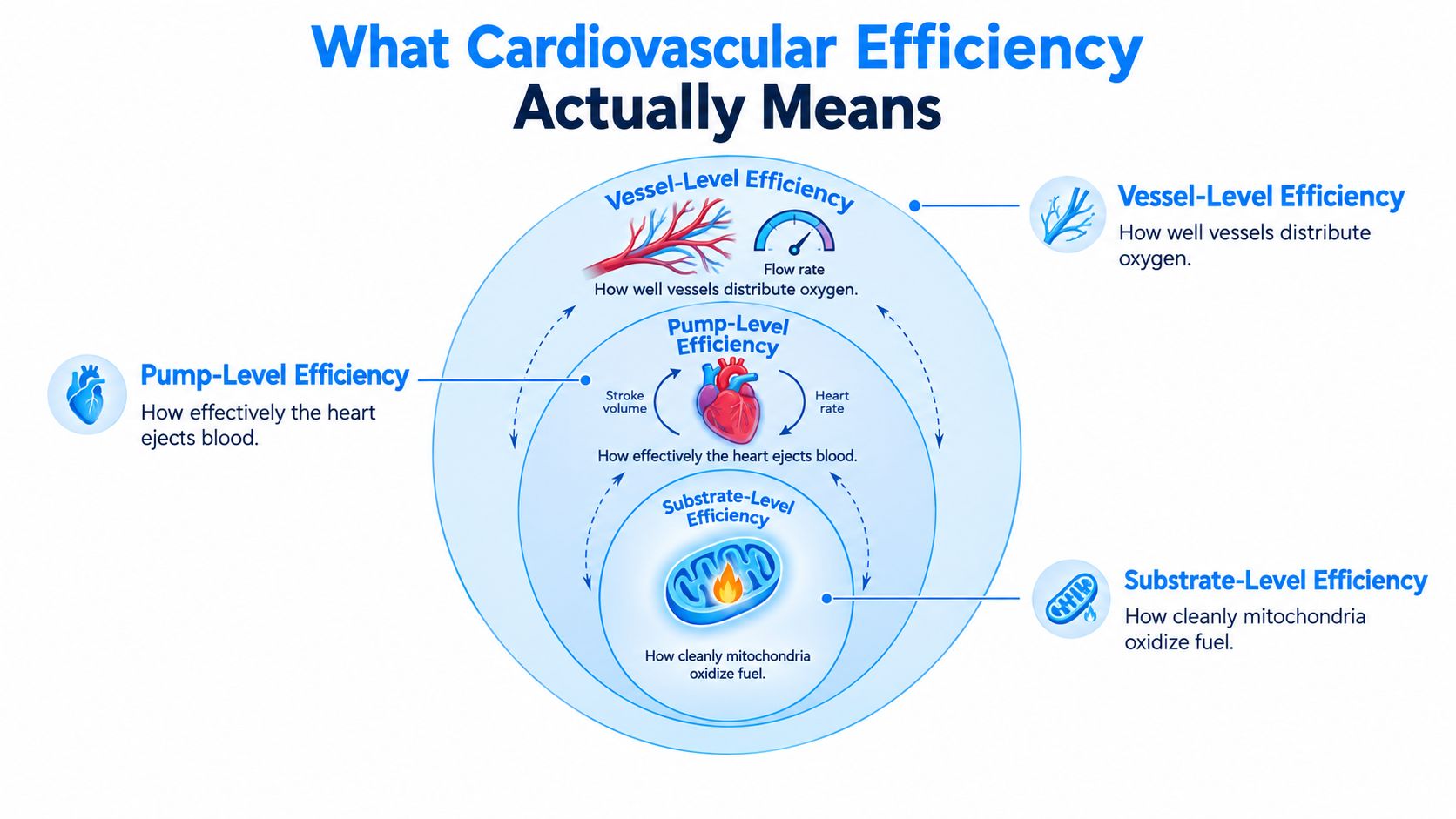
A useful analogy is a car. The mitochondria are the engine, the heart is the pump that moves fuel and power through the system, and the blood vessels are the fuel lines and roads. A highly efficient engine won't solve a weak pump. A powerful pump can't perform well if delivery routes are restricted.
Why familiar metrics can mislead
VO₂max captures the ceiling of oxygen uptake across the lungs, circulation, and muscles. Resting heart rate tells you something about cardiac demand at rest. Neither metric identifies every source of limitation.
Exogenous ketones may influence substrate availability quickly, but that doesn't guarantee a lasting change in pump or vascular function. In one controlled cardiac-tissue study, raising beta-hydroxybutyrate from 200 μM to 600 μM increased ketone contribution to energy production to over 20% in failing hearts, yet cardiac efficiency didn't improve, and some models became less efficient as ketone use rose (mechanistic cardiac study).
Practical rule: Always ask which layer changed. More fuel use, better blood flow, and better exercise capacity are related outcomes, not interchangeable ones.
The Five Metrics That Define Cardiovascular Efficiency
The five metrics below form a chain. Oxygen must enter the body, move through the heart and vessels, reach muscle, and support sustainable energy production.
1. VO₂max
VO₂max is the maximum rate at which the body can take in, transport, and use oxygen during intense exercise. Think of it as the ceiling of an oxygen pipeline. The lungs load oxygen, the heart sends it forward, the vessels deliver it, and mitochondria use it to make ATP.
VO₂max therefore spans all three efficiency layers. A low value may reflect central pumping limits, poor peripheral extraction, or inadequate mitochondrial use.
2. Stroke volume
Stroke volume is the amount of blood ejected by the heart with each beat. A larger effective stroke volume can allow the heart to maintain cardiac output with fewer beats, although the meaning depends on exercise intensity, filling conditions, and individual physiology.
Stroke volume primarily reflects pump-level performance, but it also depends on venous return and vascular conditions.
3. Cardiac output
Cardiac output is the volume of blood the heart moves per minute:
Cardiac output = stroke volume × heart rate
The equation resembles a sump pump that can move more water by pushing more with each cycle, running faster, or both. Efficient cardiac output doesn't mean a higher number. It means supplying the required flow with an appropriate combination of stroke volume, heart rate, and filling pressure.
In adults with type 2 diabetes and heart failure with preserved ejection fraction, a 2-week oral ketone ester treatment increased cardiac output by 0.2 L/min. It also reduced pulmonary capillary wedge pressure by 1 mm Hg at rest and 5 mm Hg at peak exercise, while improving the pressure-flow relationship during exercise (Circulation clinical study).
4. Arteriovenous oxygen difference
The arteriovenous oxygen difference, or a-vO₂ difference, estimates how much oxygen working tissues remove from arterial blood before it returns through the veins. Picture a sponge absorbing water. Better extraction means muscle can take more oxygen from the same delivered volume.
This is mainly a peripheral and substrate-related measure. It can improve through muscle adaptations, capillary delivery, mitochondrial capacity, and better fuel handling.
5. Lactate threshold
Lactate threshold marks the intensity at which lactate production begins to outpace clearance. It isn't a switch between aerobic and anaerobic metabolism. It's a practical marker of when the system is struggling to match energy demand with sustainable clearance.
At that point, the engine starts running less cleanly. Breathing rises, effort feels harder, and maintaining the pace becomes more difficult.
| Metric | What It Measures | Efficiency Layer |
|---|---|---|
| VO₂max | Maximum whole-body oxygen use | All three |
| Stroke volume | Blood ejected per beat | Pump-level |
| Cardiac output | Blood moved per minute | Pump-level |
| Arteriovenous oxygen difference | Oxygen extracted by tissue | Vascular and substrate-level |
| Lactate threshold | Sustainable intensity before accumulation outpaces clearance | Substrate and peripheral |
For a deeper explanation of how oxygen moves from circulation into working tissue, see this guide to oxygen delivery. A product such as Tecton EDGE™ Performance Shot + Electrolytes is positioned for active individuals seeking steady energy during training or physically demanding days, with liposomal R3HBG ketone and sodium, potassium, and magnesium.

How Cardiovascular Efficiency Is Measured
A cardiovascular efficiency score is only useful when you understand how it was produced. A laboratory test, wearable estimate, and field test can all be valuable, but they answer different questions.
Cardiopulmonary exercise testing
Cardiopulmonary exercise testing, or CPET, is the most complete option. You exercise on a treadmill or cycle while a mask measures oxygen consumption and carbon dioxide output. Clinicians may also monitor ECG signals, heart rate, blood pressure, symptoms, and, when appropriate, blood lactate.
CPET can show whether a limitation appears central, such as inadequate cardiac output, or peripheral, such as reduced oxygen extraction. That makes it especially useful when a person has unexplained exercise intolerance or needs a medically supervised assessment.
Consumer wearables
Wrist-based devices estimate VO₂max from inputs such as heart rate, movement, pace, GPS data, and personal characteristics. They're convenient for tracking trends, but the estimate can drift when heart-rate readings are poor, terrain changes, heat affects effort, or the algorithm doesn't match the activity.
Wearables are best used consistently, under similar conditions. Treat the number as a trend signal, not a diagnosis or direct measurement of cardiac efficiency. If the device is part of your daily routine, replaceable stylish Fitbit watch bands can make long-term wear more practical without changing what the device measures.
Field tests
Field tests offer an accessible middle ground. A Cooper run, 20-meter shuttle, or ramp test can estimate aerobic capacity and provide useful information about pacing and fatigue. They can't isolate stroke volume, a-vO₂ difference, or the specific reason performance changed.
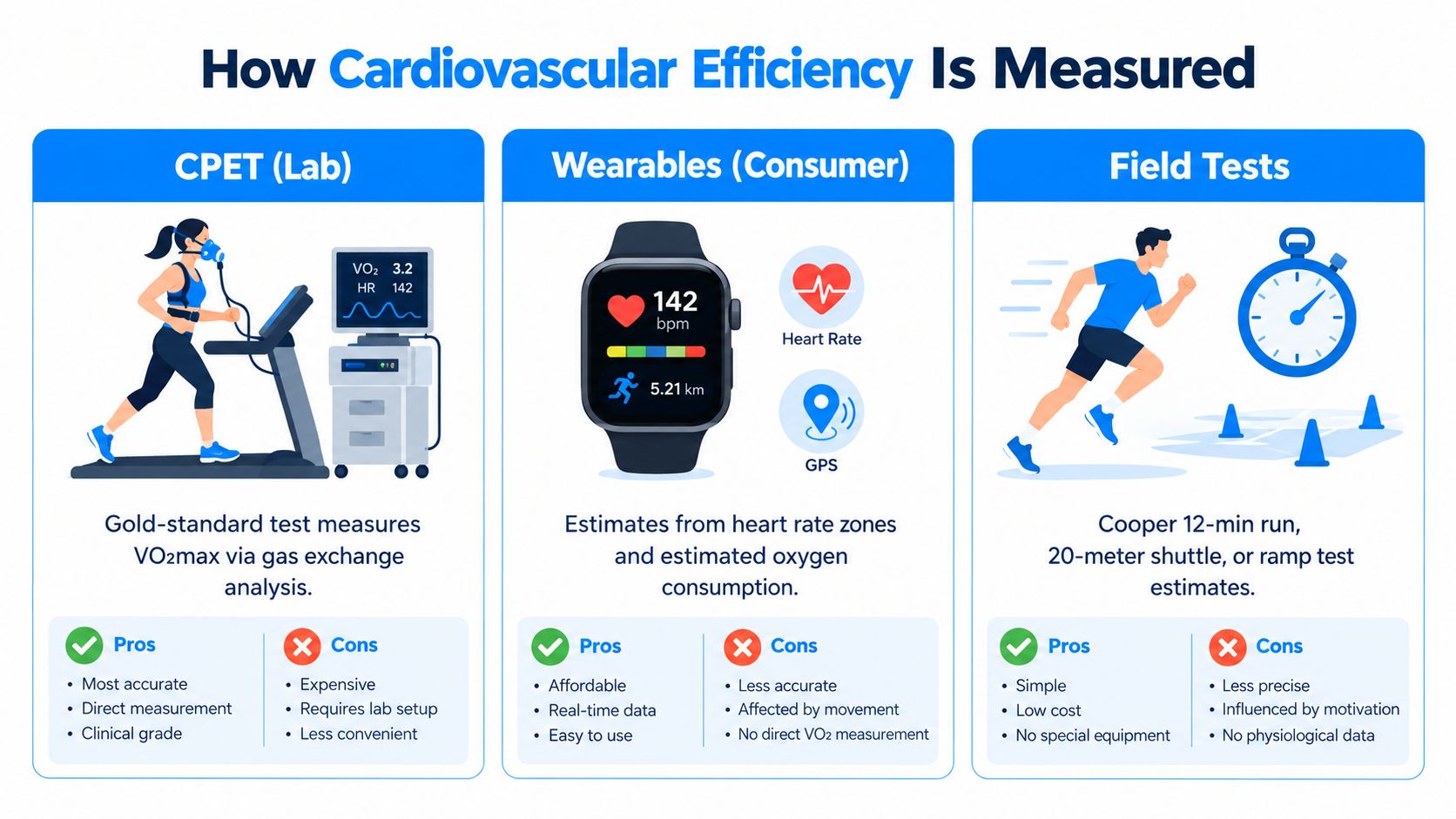
A field test works well for monitoring progress in a training plan. A wearable works well for low-friction trend tracking. CPET is the appropriate choice when you need physiological separation, clinical interpretation, or a detailed training prescription. For a practical discussion of improving aerobic capacity, review VO₂max improvement strategies.
No test replaces context. A lower wearable estimate after poor sleep may reflect temporary strain rather than lost fitness. A strong field result may still coexist with a vascular limitation that only a clinical assessment can identify.
Evidence-Based Strategies to Improve Cardiovascular Efficiency
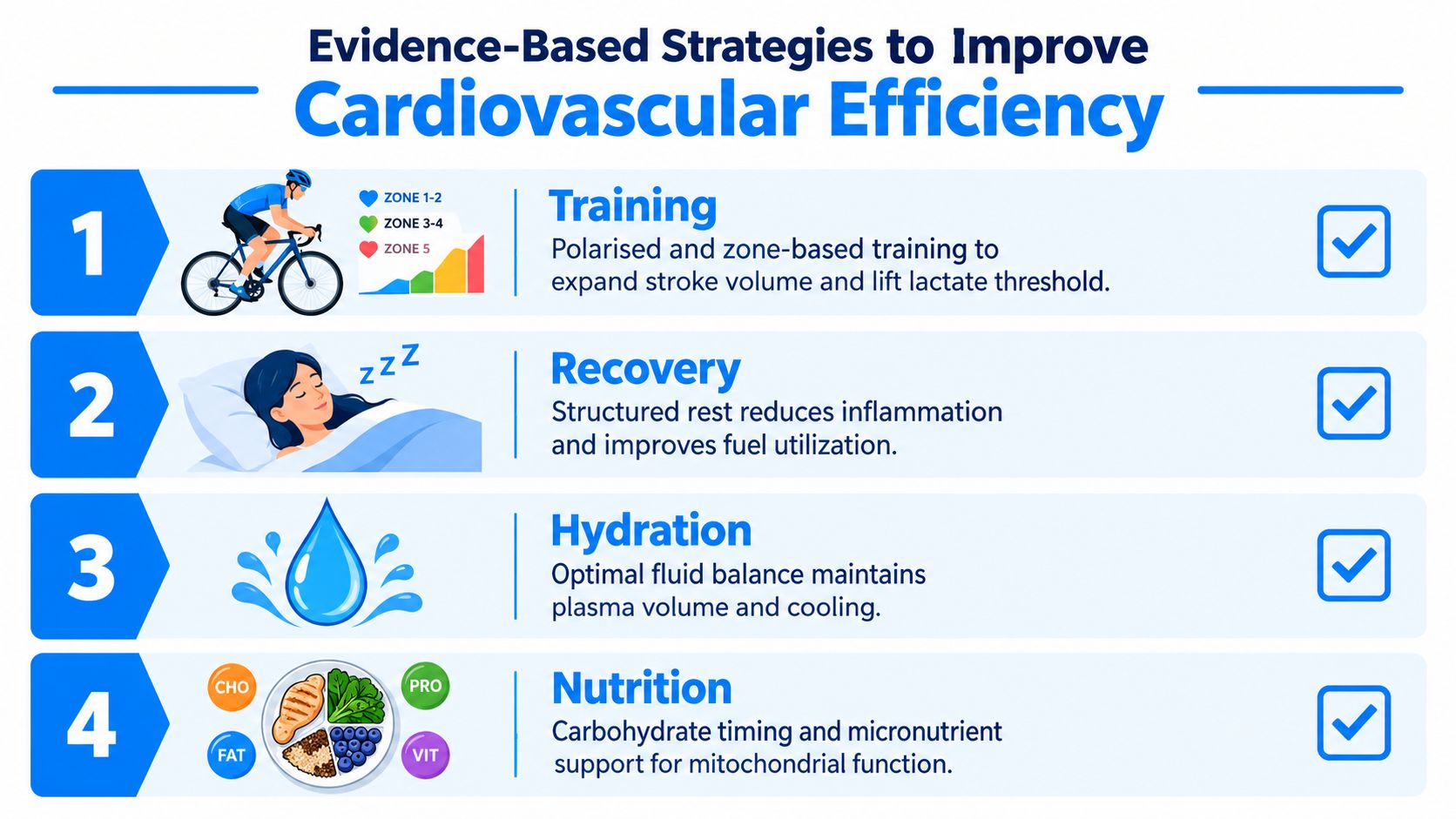
The most dependable improvements come from training and recovery, not from a single supplement. Four levers matter: training stimulus, recovery capacity, hydration, and nutrition.
Training creates the adaptation
Easy aerobic work develops the foundation. You should be able to sustain conversation while accumulating time at a manageable effort. This supports mitochondrial capacity, peripheral oxygen use, and the ability to maintain output without excessive cardiac strain.
Hard intervals provide a different signal. Shorter efforts near maximal aerobic demand challenge cardiac output and oxygen transport, while threshold sessions teach the body to sustain a demanding pace before lactate accumulation becomes limiting.
A practical structure looks like this:
- Beginner: Use several easy aerobic sessions, add basic resistance work, and introduce intensity only after movement feels consistent.
- Intermediate: Keep most training comfortable, then add a focused interval session and a separate threshold session when recovery supports both.
- Advanced: Combine sport-specific intervals, longer aerobic work, strength training, and planned easier periods rather than stacking hard sessions together.
Recovery determines whether training works
Training is the stimulus. Adaptation occurs during recovery. Poor sleep, high stress, and repeated hard sessions can raise perceived effort and reduce the quality of later workouts.
Track how you feel alongside heart rate and HRV. A persistent change in morning readings, unusual fatigue, or reduced exercise tolerance should prompt a reduction in intensity, not an attempt to force the planned session.
Recovery check: If your easy pace no longer feels easy, protect the next recovery window before adding another hard workout.
Hydration supports circulation
Fluid balance affects plasma volume, thermoregulation, and venous return. During prolonged or hot sessions, water alone may not address electrolyte losses. Sodium, potassium, and magnesium intake should reflect the activity, environment, diet, and personal medical context.
Nutrition should match the task. Carbohydrate remains useful for high-intensity work because glycolysis can supply ATP rapidly. Fat oxidation and ketone use support other conditions, especially when intensity is controlled or food intake is restricted. Adequate iron status also matters because oxygen transport depends on blood's ability to carry oxygen.
The goal isn't to eliminate glucose. Metabolic flexibility means shifting between fuels according to demand, availability, and intensity.
The Role of Ketones and R3HBG in Cardiovascular Efficiency
Exogenous ketones change fuel availability quickly, but cardiovascular efficiency requires a more careful interpretation. Beta-hydroxybutyrate, or BHB, is both a circulating fuel and a signaling molecule. Cells convert it into acetyl-CoA, which enters the citric acid cycle and supports mitochondrial ATP production.
Nutritional ketosis usually comes from a ketogenic diet. Endogenous ketone production occurs when the liver makes ketones, often during carbohydrate restriction or fasting. Exogenous ketone supplementation delivers ketones or ketone precursors from outside the body, without requiring the same dietary state.
A 2022 systematic review and meta-analysis found that acute exogenous ketone ingestion raised mean BHB by 1.73 mM and lowered mean blood glucose by 0.54 mM. The analysis also found larger effects from ketone monoesters than ketone salts (systematic review and meta-analysis).
Human research supports acute changes in cardiac and vascular physiology, but those findings don't prove chronic adaptation. In a 2025 randomized crossover trial involving adults with type 2 diabetes, ketone monoester ingestion increased cardiac index by 0.75 L·min−1·m−2, increased stroke volume index by 7.2 mL·m−2, reduced systemic vascular resistance by 420 dyn·s−1·cm−5·m−2, and improved peripheral muscle oxygenation during exercise (2025 physiology trial and review).
That same evidence base is mixed by context. Short-term supplementation improved resting cardiac energetics in type 2 diabetes, while studies in heart failure with reduced ejection fraction didn't improve resting or stress cardiac function. Healthy volunteers didn't show extra gains beyond baseline, and long-term cardiovascular outcomes remain largely unknown.
R3HBG is relevant because a bioidentical structure can provide D-BHB directly after digestion. Liposomal delivery is intended to support absorption and consistency, while ketone salts pair ketones with minerals and may impose a heavier mineral load. Esters can produce nutritional ketosis without fasting or a ketogenic diet, and a randomized study in healthy adults reported plasma R-BHB of 0.8 to 1.7 mM, with a higher peak and greater exposure after 25 g than 12.5 g (ketone ester study).
| Outcome | Acute Evidence | Chronic Evidence | Confidence |
|---|---|---|---|
| BHB availability | Consistent rise after exogenous intake | Sustained adaptation uncertain | Moderate |
| Cardiac output and filling pressure | Human signals in selected metabolic and cardiac settings | Hard outcomes unknown | Limited to moderate |
| Vascular function | Improved responses in specific glucose-challenge settings | Long-term significance unresolved | Limited |
| Mitochondrial fuel handling | Human cellular and controlled physiological support | Training adaptation not established | Moderate for mechanism |
| General athletic benefit | Plausible fuel effect, context-dependent | Athletic-population evidence remains sparse | Limited |
Vascular effects also deserve separate attention. In women with polycystic ovary syndrome, ketone monoester pretreatment reduced glucose exposure and improved flow-mediated dilation during an oral glucose tolerance test, while flow-mediated dilation otherwise fell after glucose ingestion (vascular function study). That finding supports a vascular signal in a defined setting, not a universal cardiovascular claim.
Readers interested in the fuel question during long sessions can review this discussion of ketones for endurance athletes. R3HBG should be viewed as an adjunct to training, hydration, food quality, and recovery, not as a replacement for them.
Practical Takeaway Framework for Real-World Application
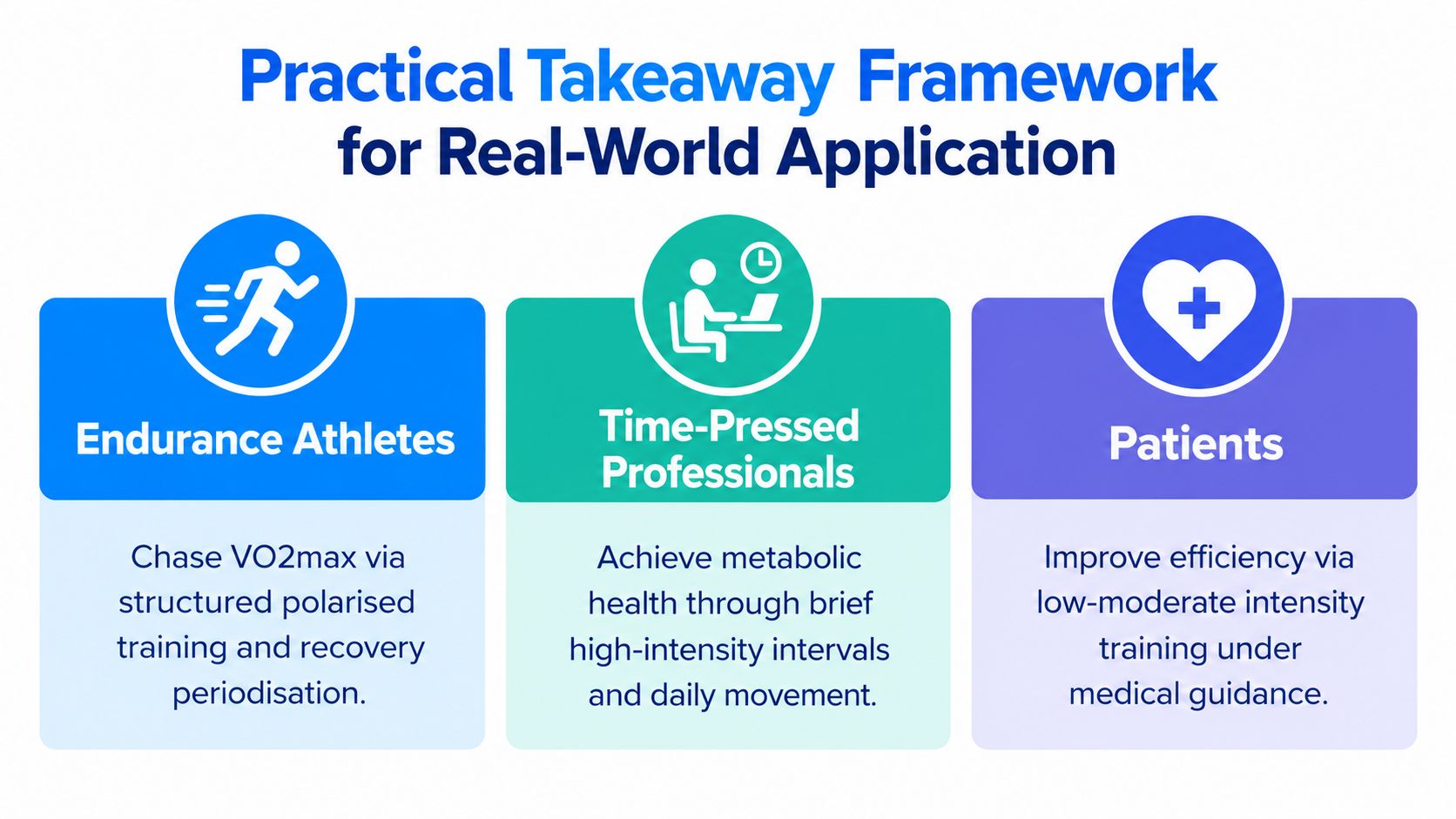
Start by identifying which layer limits you: substrate-level efficiency, pump-level efficiency, or vascular-level efficiency. These layers can improve at different rates, so one impressive metric does not describe the whole system.
Endurance athletes
Use VO₂max, lactate threshold, cardiac output, and pace or power at a given heart rate together. A rising VO₂max with a stalled lactate threshold may indicate that oxygen delivery is improving while fuel use remains limiting. A stable threshold with falling pace at the same heart rate points toward recovery, pacing, or circulation rather than a simple lack of aerobic capacity.
Ketones can help test the substrate question. Try them during ordinary training, record perceived energy and tolerance, and compare the result with sessions using your usual fuel. They should not displace carbohydrate when high-intensity output depends on rapid glycolytic support.
Time-pressed professionals
Choose measures that can be repeated under similar conditions, such as resting heart rate trends, a consistent field test, exercise tolerance, and perceived energy. Read the pattern rather than one reading. Better exercise tolerance with unchanged resting heart rate may still represent meaningful progress, while a persistent decline in both can signal that training load or recovery needs review.
Daily movement, brief intervals suited to your fitness, resistance training, and regular sleep generally deserve priority over supplementation.
People with cardiometabolic conditions
Medical guidance should precede intense exercise or exogenous ketones. Ketone-related cardiovascular findings are strongest in selected acute metabolic or heart-failure research settings. They do not establish a universal intervention for every person.
A useful decision tree asks:
- Which layer is being tested? A fuel-related experiment cannot answer a vascular or pump question by itself.
- What result would change your plan? Define the measure beforehand, such as steadier power at a given heart rate or improved exercise tolerance.
- Can you separate acute effects from adaptation? A short-term change in BHB availability does not demonstrate lasting heart, vessel, or performance remodeling.
- Do symptoms, medication, or a diagnosed condition affect the test? Discuss the plan with your clinician before proceeding.
A one-page checklist
- Substrate layer: If lactate threshold stalls while VO₂ rises, examine fuel availability and tolerance rather than assuming pump capacity is the limiter.
- Pump layer: If heart-rate response, exercise tolerance, or cardiac output remains constrained, assess recovery and medical context before adding more intensity.
- Vascular layer: If effort feels disproportionate despite stable oxygen-delivery measures, consider whether circulation and blood-pressure responses need evaluation.
- Measurement: Keep conditions consistent, and use CPET when detailed physiology is required.
- Interpretation: Separate a temporary response from a change that persists across comparable sessions.
Cardiovascular efficiency improves when fuel handling, the heart's pumping action, and vascular delivery develop together. If testing suggests substrate-level efficiency is the limiting layer, bioidentical R3HBG provides a way to examine that hypothesis directly. Tecton Ketones™ offers R3HBG-based exogenous ketone nutrition, which can be considered within a measured training, recovery, and metabolic plan rather than as a substitute for them.


