


You've had coffee for alertness, and you've used ketones for energy, but have you considered that the two may work together rather than cancel each other out? That question matters when you want steady focus, useful training output, or a fasted routine without mistaking every stimulant effect for a change in fuel metabolism.
Ketosis and caffeine influence different parts of the energy system. Ketones provide an alternative fuel, while caffeine can increase alertness and help mobilize fatty acids. Human research suggests caffeine can acutely increase ketone production, including after a standard breakfast, although the experience still depends on dose, timing, food intake, sensitivity, and the ketone format used.
Introduction to Ketosis and Caffeine Interaction
Could coffee and ketones support the same goal rather than work against each other? The answer depends on what you need: sustained focus, training output, or a fasted routine without confusing stimulation with a genuine shift in fuel use.
Ketosis and caffeine affect different parts of energy regulation. Ketone bodies offer an alternative fuel that the liver makes from fatty acids. Caffeine mainly acts through nervous-system signaling and fuel mobilization. It provides little meaningful energy itself, yet it can increase alertness and encourage fatty-acid release, giving the liver more material for ketogenesis.
That distinction corrects a common assumption. Caffeine does not automatically end ketosis. A controlled human study found that caffeine acutely increased ketone production, including after a standard breakfast. The dose-response evidence is covered in detail below.
The combination can be understood as two inputs acting on the same energy system. Exogenous beta-hydroxybutyrate, or BHB, supplies ketones directly, while caffeine may temporarily increase the body's own ketone production and sharpen alertness. Like adding fuel to a vehicle while adjusting the accelerator, the result can support focused work or endurance, but the response still depends on dose, timing, food intake, sensitivity, and the ketone format used.
Practical rule: Judge caffeine and ketones by their physiological effects, not by the assumption that every stimulant disrupts fat-based metabolism.
The useful question is whether the pairing fits the situation. It may support focused work or exercise, while the same approach may feel unpleasant during a fast, late in the day, or in anyone prone to palpitations, anxiety, or disrupted sleep. Fasting also changes context: caffeine may feel stronger when food is absent, even if ketone production is not impaired.
This guide distinguishes nutritional ketosis, the body's natural ketone production, from exogenous ketone supplementation. It also examines how caffeine affects ketone availability, why ketone salts and esters behave differently, and how timing can be adjusted for focus, endurance, fasting, and individual tolerance.
How Ketosis Powers the Body and Brain
How can the body shift between glucose and ketones without treating either fuel as universally better?
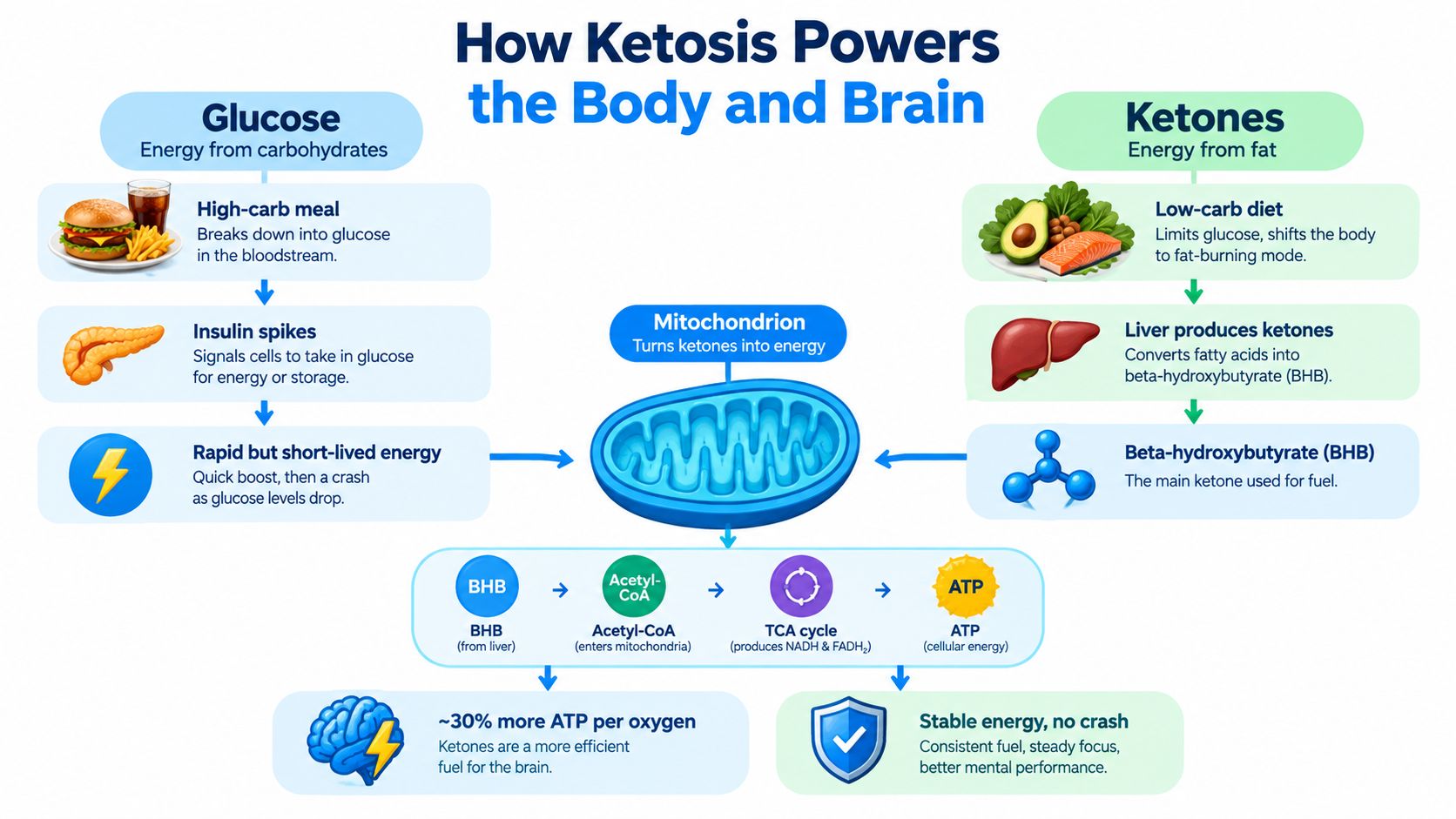
Glucose enters pathways that produce acetyl-CoA and feed the mitochondrial tricarboxylic acid cycle. Fatty acids take a different route. Through beta-oxidation, they also generate acetyl-CoA, which can enter mitochondria for energy production.
Ketones become more prominent when carbohydrate availability falls or fatty-acid delivery to the liver rises. The liver converts fatty-acid-derived acetyl-CoA into ketone bodies, including beta-hydroxybutyrate, commonly abbreviated BHB. BHB travels through the bloodstream to tissues that can convert it back into acetyl-CoA.
The fuel-system analogy is useful here. Glucose is a readily available fuel that can be used quickly. Ketones are a second fuel that becomes more prominent as the body relies more on fat oxidation. Metabolic flexibility describes the ability to shift between these fuels in response to food intake, activity, fasting, and energy demand.
BHB and mitochondrial ATP production
Inside mitochondria, BHB is converted into acetoacetate and then acetyl-CoA. Acetyl-CoA enters the tricarboxylic acid cycle, producing reducing equivalents that drive the electron transport chain and generate ATP, the cell's immediate energy currency.
This gives cells another route to energy. Its usefulness depends on context, including fasting, a low-carbohydrate diet, exercise, and use of an exogenous ketone product. Caffeine can increase alertness, while BHB provides a fuel substrate. The combination may therefore act like an accelerator paired with an alternate fuel source, rather than treating caffeine as an automatic ketosis breaker.
BHB also participates in cellular signaling. It can influence how cells respond to changing energy conditions, which helps explain its connection with mitochondrial activity, oxidative metabolism, and metabolic adaptation. A biochemical pathway alone does not establish a clinical outcome, so these effects require measured interpretation.
Why the brain can use ketones
BHB crosses the blood-brain barrier and supports neuronal energy metabolism. At 0.25 and 1.25 mmol/L, it stimulated mitochondrial metabolism and increased incorporation into glutamate and GABA, as summarized in this peer-reviewed review.
The practical meaning is simple. The brain can use ketones as an alternative fuel when ketone availability rises. Caffeine changes signaling and arousal, while BHB gives neurons a substrate they can metabolize. These effects can stack, but they remain physiologically different.
Readers who want focus support without a second coffee mid-afternoon are the natural audience for a caffeine-free ketone format. The Locked Cognition™ Shot contains liposomal R3HBG™, Alpha GPC, and Lion's Mane for workday routines where consistency and composure matter more than intensity.
How Caffeine Influences Ketone Production and Metabolism
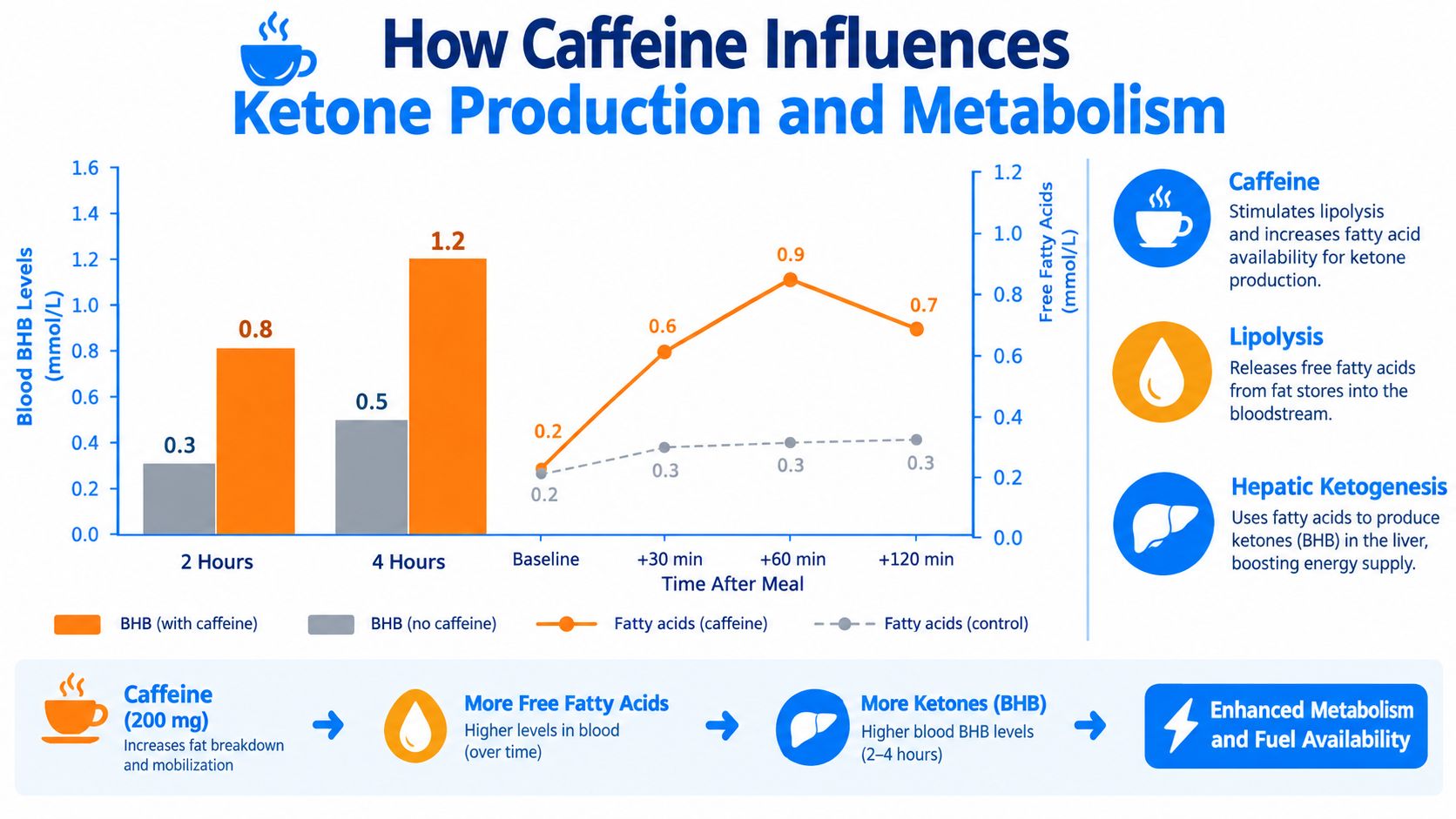
Could caffeine support ketosis rather than disrupt it? Its main effect is acute: caffeine can increase lipolysis, the release of fatty acids from stored triglycerides. Those fatty acids become available to tissues for oxidation and can also reach the liver, where they provide substrate for ketone production.
That helps explain why caffeine may raise ketones even after food intake. A meal, including one with carbohydrate, does not create an absolute metabolic barrier. Hormones and fuel flows continue to change, and caffeine can temporarily shift fatty-acid availability.
The human dose response
The clearest numerical evidence comes from the controlled 2017 human study described earlier. Researchers gave healthy adults 2.5 mg/kg and 5.0 mg/kg of caffeine with breakfast. Plasma ketone production increased by 88% with the lower dose and 116% with the higher dose within hours, showing a dose-response relationship in the study report.
A later controlled double-blind intervention examined caffeine with medium-chain triglycerides, or MCTs. The strongest ketogenic response occurred when caffeine was combined with C8, also called caprylic acid. Related human evidence found that 5 mg/kg of caffeine with a high-carbohydrate breakfast was associated with plasma beta-hydroxybutyrate around 150 to 200 μmol/L at 3 to 4 hours, compared with about 50 to 100 μmol/L after breakfast alone as reviewed in the controlled intervention literature.
The practical conclusion is narrower than “more caffeine is better.” Higher exposure may bring unwanted stimulation, poorer sleep, or a harsher fasting experience. Caffeine can amplify ketone availability acutely, but tolerance and timing determine whether that effect helps.
Caffeine can amplify ketone availability, but tolerance determines whether that amplification feels useful.
Why C8 can stack with caffeine
C8 MCT is rapidly oxidized compared with many longer-chain fats. Caffeine can increase fatty-acid mobilization, while C8 supplies a readily processed fat substrate. Together, they support ketogenesis through complementary routes.
A controlled double-blind study using MCTs plus 150 mg of caffeine found that caffeine increased β-HB and that C8 produced the strongest ketogenic response in the reported study. The finding supports an additive metabolic strategy, not a guarantee that every person will feel the same increase in energy or focus.
For coffee, roast intensity, flavor, and preparation shape the drinking experience, while caffeine remains the main variable in this metabolic question. Readers comparing roast profiles can consult this expert guide to dark roast.
Nutritional Ketosis Versus Exogenous Ketone Support
Does every rise in blood ketones mean the body has entered the same metabolic state? No. Ketosis describes several overlapping situations, and the source of the ketones changes what the state can do.
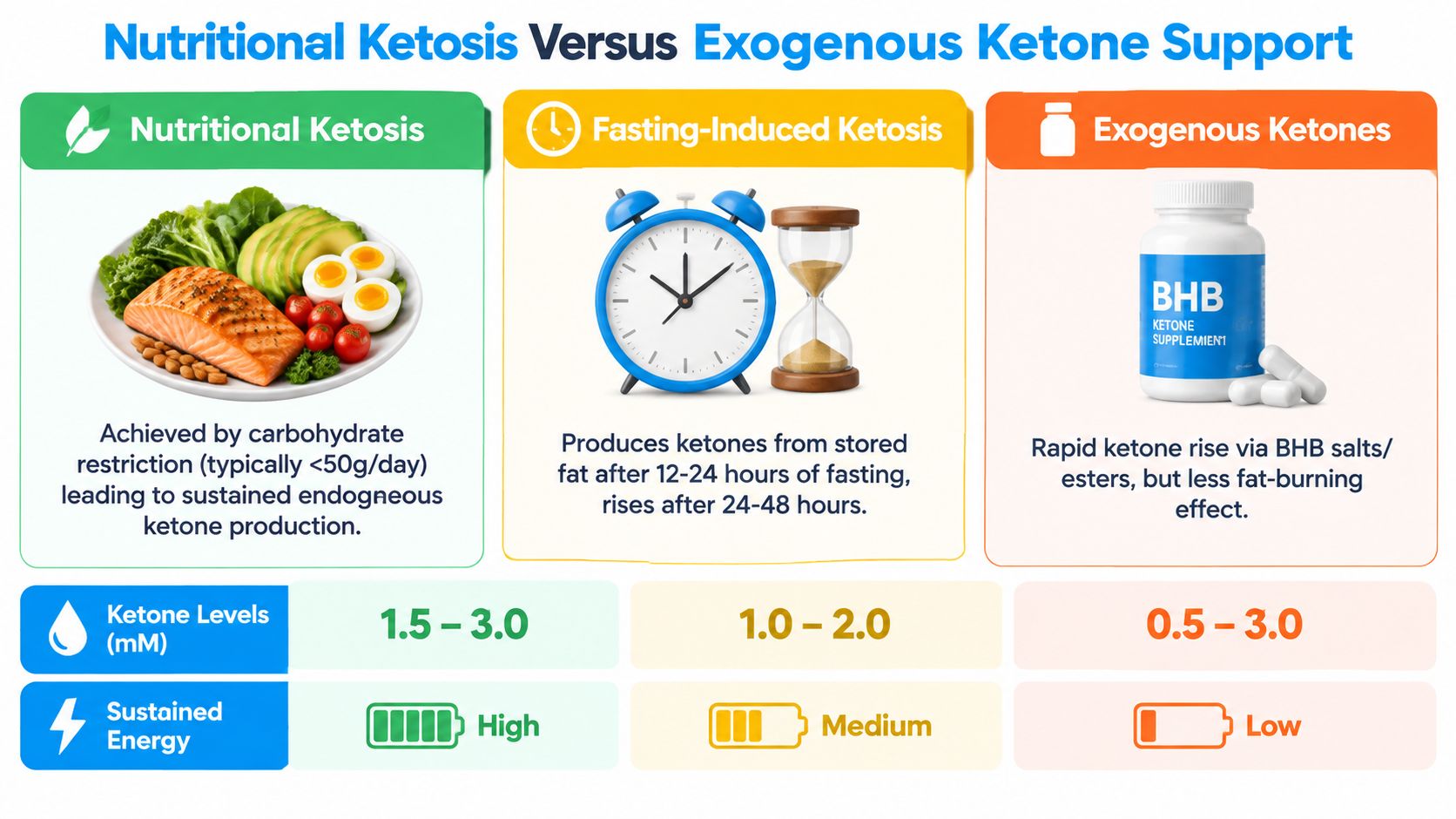
Nutritional ketosis develops through carbohydrate restriction. With less carbohydrate available, glucose becomes less dominant as a fuel, and the liver makes ketones from fatty acids. This is endogenous production because the body supplies its own ketones.
Fasting-induced ketosis also depends on endogenous production. The trigger is a period without food rather than a continuing dietary pattern. Fatty-acid release, liver ketogenesis, and tissue adaptation vary with fasting duration, previous diet, activity, and metabolic state.
Exogenous ketosis begins with consumed ketones or ketone precursors. These products can raise circulating BHB without requiring the liver to produce the full amount. They deliver ketone fuel directly, but they do not reproduce every feature of fasting or carbohydrate restriction, particularly the same level of stored-fat mobilization.
Ketone salts and ketone esters
The chemical format affects the blood-ketone response. In a human crossover study, approximately 12 g or 24 g of ketone ester raised blood D-β-hydroxybutyrate to a peak of 2.8 mM, while a comparable ketone salt dose peaked at 1.0 mM. The ester produced more than 50% higher blood D-βHB than the salt, while the salt provided more slowly metabolized L-βHB in the human crossover study.
| Feature | Ketone Salts | Ketone Esters |
|---|---|---|
| Ketone composition | Often includes D-βHB and L-βHB | Can provide a greater proportion of D-βHB |
| Mineral burden | Bound to minerals such as sodium, potassium, calcium, or magnesium | Doesn't depend on a mineral carrier in the same way |
| Blood ketone response | Lower peak in the cited crossover study | Higher D-βHB peak in the cited crossover study |
| Taste and tolerance | Product-dependent | Often more challenging in flavor and gastrointestinal tolerance |
| Delivery considerations | Conventional powder or liquid formats | Rapid delivery of exogenous ketone fuel |
Bioidentical structures aim to provide the same ketone form the body naturally produces and uses. Liposomal delivery systems package an ingredient within lipid-based structures to support dispersion and absorption. These design features may affect consistency, but they do not remove the need to assess the full formula, dose, tolerance, and evidence.
Caffeine does not automatically cancel ketosis. It may act as an acute ketogenesis amplifier, while exogenous BHB supplies ketone fuel directly. That combination can support focus or endurance when stimulation and rapid fuel availability are useful. During fasting, however, the timing and format matter because exogenous ketones provide fuel without reproducing every fasting response.
A detailed explanation is available in this guide to what exogenous ketones are.
Why This Matters for Energy Focus and Performance
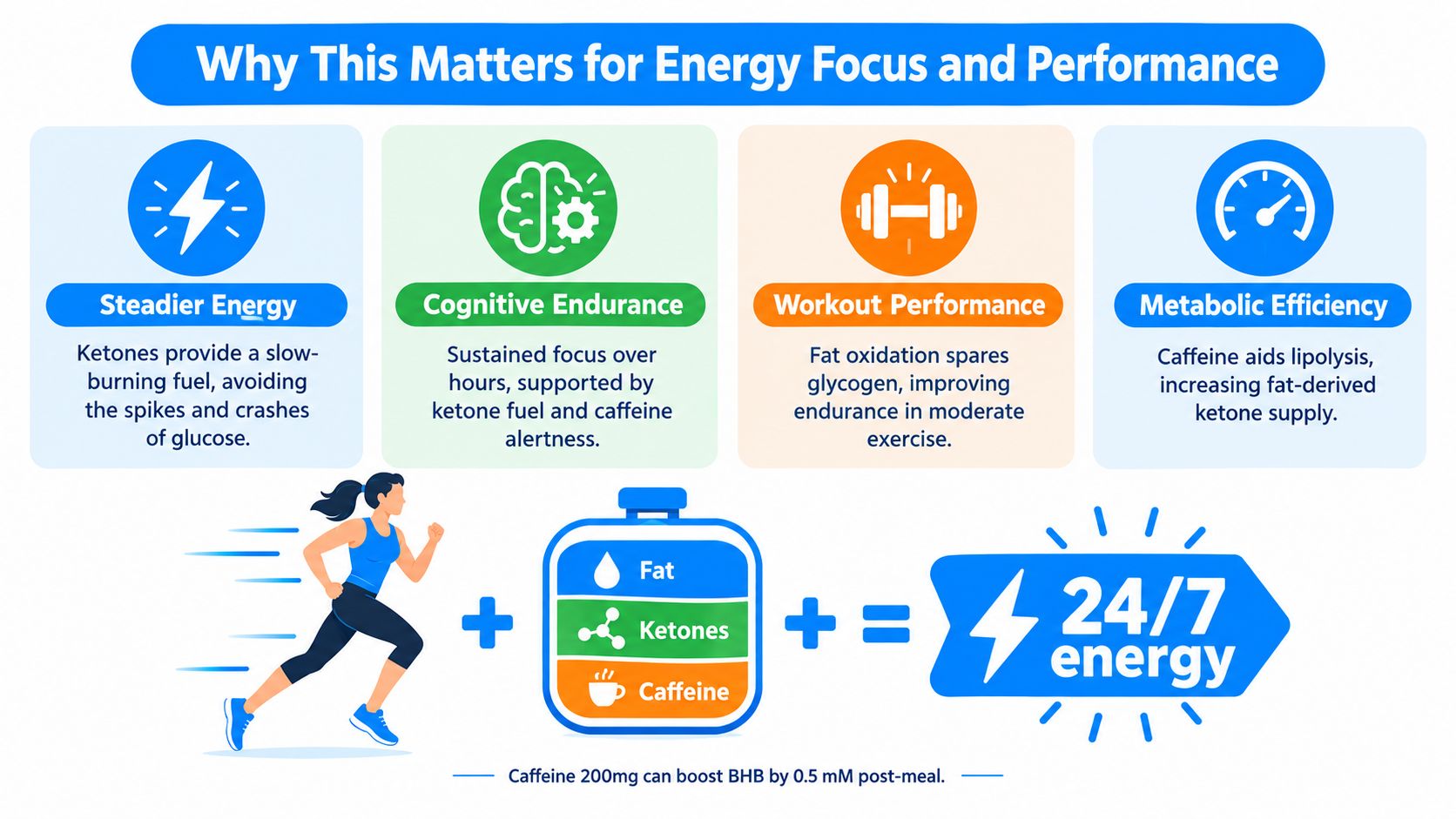
What changes when caffeine and ketones arrive together? Caffeine can raise alertness and support fatty-acid mobilization, while BHB provides an alternative fuel that mitochondria can use, including in the brain. The pairing therefore combines a stimulation signal with direct ketone availability. It may suit demanding work or exercise, but the useful effect depends on the person, task, and timing.
Steadier energy
Glucose remains an important fuel. However, meals, stress, and activity can shift energy demands throughout the day. Ketones add another oxidizable substrate, allowing tissues to draw from a wider fuel mix. That broader mix may support metabolic flexibility, although it does not guarantee perfectly constant energy.
The distinction matters. Caffeine may make someone feel more ready, while BHB supplies fuel that cells can use. Those effects overlap, but they are not interchangeable.
Cognitive endurance
After crossing the blood-brain barrier, BHB can be metabolized by the brain. Its role in neuronal mitochondrial metabolism provides a plausible mechanism for sustained cognitive work. It does not establish that every person will think more sharply or maintain focus for longer.
Caffeine contributes wakefulness and may change perceived effort. Ketones contribute substrate availability. Someone seeking focus without repeatedly increasing caffeine may begin with a caffeine-free ketone option. A broader discussion of non-stimulant ingredients and focus routines appears in this guide to a natural focus supplement.
Workout performance
Caffeine is commonly used before training because it can affect alertness and perceived effort. Exogenous ketones add circulating fuel without requiring a large meal. In the applied performance study, a ketone-salt pre-workout containing caffeine extended time to fatigue during high-intensity cycling in both keto-adapted and keto-naive participants in the applied performance study.
This finding supports a specific interpretation: caffeine may amplify the immediate ketogenesis and stimulation response, while exogenous BHB supplies ketone fuel directly. It does not mean every athlete should combine products. Training intensity, gastrointestinal tolerance, hydration, sleep, and carbohydrate availability still shape the outcome.
For a broader explanation of maintaining energy without a crash, consider how repeated stimulation differs from supplying an additional fuel source.
Metabolic efficiency
Metabolic efficiency describes the ability to use available fuels appropriately rather than relying on one pathway in every situation. Caffeine may support fatty-acid mobilization, and exogenous BHB supplies ketone fuel directly. Together, they can connect endogenous fat metabolism with exogenous energy delivery.
The combination is best framed as a structure and function strategy for alertness, fuel availability, and effort tolerance. It is not a disease treatment and does not replace individualized medical care.
Practical Timing Dosing and Fasting Considerations
Could caffeine support ketosis without ending it? In practice, caffeine is better understood as an acute ketogenesis amplifier. Exogenous BHB supplies circulating ketone fuel, while caffeine may add stimulation and support fat mobilization. The combination can suit focused work or endurance sessions, but timing and individual tolerance determine whether it helps.
Start with the goal rather than the stack. Caffeine-free exogenous ketones may be enough for calm concentration. Before demanding work or training, adding a familiar caffeine source can be reasonable if it does not disturb appetite, anxiety, or sleep.
Match the approach to the situation
- Morning focus: Pair coffee or another familiar caffeine source with exogenous ketones only if you already know how caffeine affects your appetite, mood, and sleep.
- Fasted work: Caffeine may increase fatty-acid mobilization, while an empty stomach can make its stimulating effects feel stronger. Begin conservatively and observe your response.
- Training: MCTs or exogenous ketones can provide fuel without requiring a large meal. C8 produced the strongest ketogenic response in the cited caffeine and MCT research, as reported in the controlled intervention data.
- Late-day performance: A caffeine-free ketone format may preserve sleep when extra stimulation is unnecessary.
Research doses were weight-based and should not be treated as a universal daily recommendation. Caffeine needs vary with sensitivity, medications, pregnancy, cardiovascular symptoms, and sleep patterns. Discuss use with a qualified clinician when any of these concerns apply.
The ketone format also changes what to expect. Ketone esters can produce a higher D-βHB peak than salts, while salts may provide mixed D- and L-βHB alongside a mineral load, as shown in the human crossover study. Liposomal or bioidentical formulations may appeal to people prioritizing delivery and formulation, but gastrointestinal tolerance remains individual.
A 28-day tolerability study in healthy adults found sustained exogenous ketosis with repeated ketone monoester use. Blood βHB increased from 0.1 mM to 4.1 ± 1.1 mM, without changes in body weight, fasting glucose, cholesterol, triglycerides, electrolytes, blood gases, or kidney function. Mild nausea occurred after 6 of 2,016 drinks in the human tolerability study. These findings inform tolerability in healthy adults, not a guarantee for every person.
For coffee and added fats, review this guide to MCT oil in coffee. Change one variable at a time, keep timing consistent, and track sleep, stomach comfort, perceived focus, and workout quality. Exogenous ketones can support a fasted routine, but they also change the nature of a strict fast.
Application Framework for Using Ketosis and Caffeine Together
Use this framework to keep the strategy practical:
- Steady daily energy: Begin with exogenous ketones without caffeine. Add caffeine only if you need more alertness and already tolerate it.
- Cognitive endurance: Consider a ketone-focused routine for demanding desk work, then assess whether caffeine improves focus or merely increases restlessness.
- Endurance training: Test ketones before a controlled session. If the response is comfortable, evaluate caffeine separately before combining them.
- Fasting support: Use caffeine carefully during fasted windows because an empty stomach may intensify its perceived effects. Exogenous ketones can provide fuel, but they change the nature of a strict fast.
- Tolerance testing: Introduce one product at a time, keep timing consistent, and watch for nausea, anxiousness, sleep disruption, or gastrointestinal discomfort.
- Format selection: Choose salts, esters, or bioidentical formulations based on desired BHB response, mineral exposure, taste, and delivery preferences.
The central takeaway is simple. Caffeine can act as an acute ketogenesis amplifier, while exogenous BHB can provide direct ketone fuel. Used thoughtfully, the combination may support focus and physical effort. Used automatically, it can add stimulation without solving the underlying need.
Tecton Ketones™ offers bioidentical R3HBG™ ketone nutrition in liposomal formulations, including options designed for performance, electrolytes, caffeine, and cognitive routines. Visit Tecton Ketones™ to compare the formulas and choose a clean-label ketone approach that fits your caffeine, fasting, and training goals.


