


The most popular advice about ketosis is also the part that confuses people most: you must follow a strict ketogenic diet to use ketones. That's true if your goal is to make your own ketones continuously through carbohydrate restriction. It isn't true if your goal is to raise blood beta-hydroxybutyrate, or BHB, for a defined period.
Exogenous ketones create a temporary supply of ketone fuel while you continue eating carbohydrates. That can be useful, but it isn't identical to becoming keto-adapted. The practical question isn't whether ketone drinks “replace” a keto diet. It's which effects come from having BHB available now, and which depend on weeks or longer of changing how the body produces and uses fuel.
Why You Do Not Need Keto to Get Ketones
Ketosis is a metabolic state, not a food label. Blood BHB is the useful marker, because it shows whether ketones are circulating and available to tissues. Your liver produces BHB endogenously when carbohydrate availability falls, such as during fasting, carbohydrate restriction, or prolonged exercise. An exogenous ketone supplement supplies ketone fuel from outside the body, so the blood level can rise without requiring those conditions.
A 2022 systematic review and meta-analysis found that acute exogenous ketone supplementation increased blood BHB by an average of 1.73 mM, with a 95% confidence interval of 1.26 to 2.21 mM, while mean blood glucose fell by 0.54 mM, with a 95% confidence interval of -0.68 to -0.40 mM (systematic review of exogenous ketones). The finding matters because participants didn't need to fast or adopt a ketogenic diet to produce a measurable ketone rise.
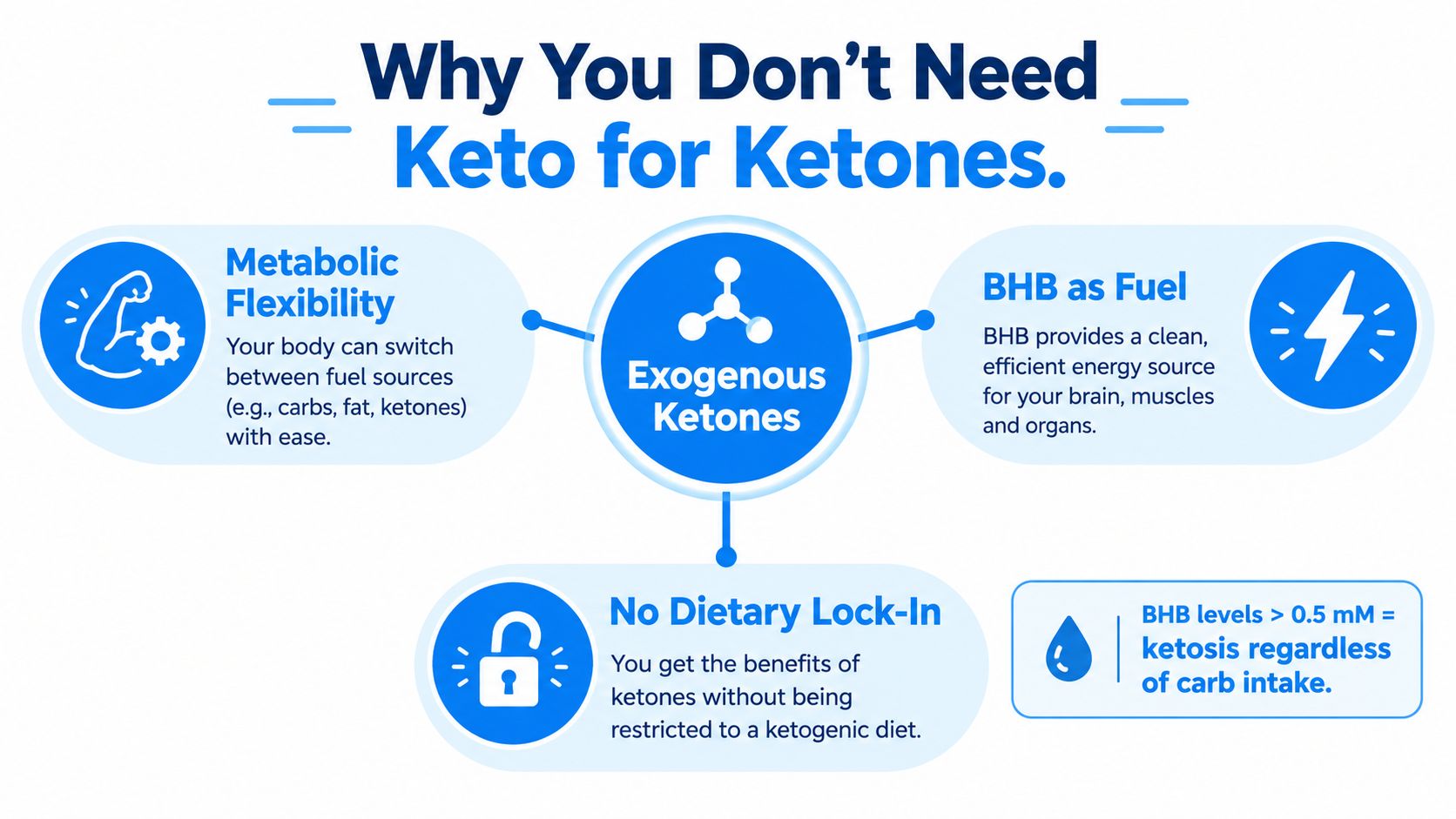
Three routes into ketosis
These terms describe related but distinct situations:
- Nutritional ketosis comes from a diet that keeps carbohydrate intake low enough to stimulate sustained liver ketone production.
- Endogenous ketone production is the underlying physiology. The liver converts fatty acids into acetoacetate and BHB.
- Exogenous ketone supplementation delivers ketones or ketone precursors directly, creating an acute rise without requiring dietary carbohydrate restriction.
Therapeutic ketosis can involve specific clinical goals and should be supervised appropriately. For readers exploring the relationship between ketogenic metabolism and mental health, this overview of the ketogenic diet for depression offers useful clinical context, but it shouldn't be treated as evidence that a supplement reproduces a therapeutic diet.
The simplest way to frame exogenous ketones without a keto diet is this: you can borrow the fuel without rebuilding the entire fuel system. For a broader explanation of this distinction, see ketosis without a keto diet.
How BHB Actually Fuels Your Cells
BHB works in two related ways. It's a mitochondrial fuel, and it's also a signaling metabolite that can influence cellular behavior. Those functions are easier to understand when you follow the molecule from the bloodstream into a working cell.
First, BHB travels in the blood to tissues that can use it. Monocarboxylate transporters, often called MCTs, help move BHB across cell membranes. Once inside, BHB is converted through acetoacetate into acetyl-CoA. Acetyl-CoA enters the citric acid cycle inside the mitochondrion, where the cell generates reducing equivalents that support oxidative phosphorylation and ATP production.
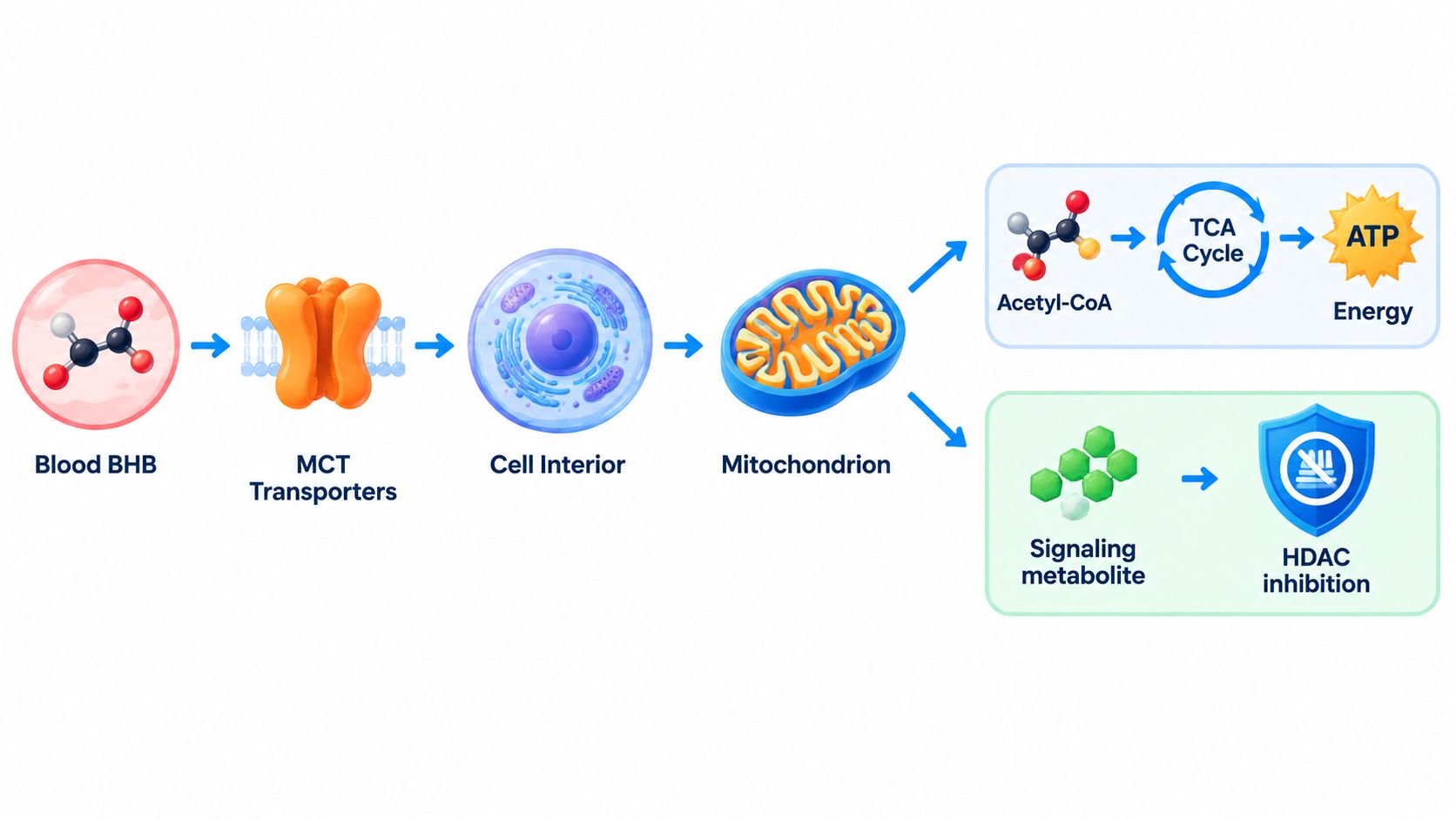
A useful analogy is premium fuel for an engine. Glucose and BHB both enter the energy system through different routes, but BHB arrives as a compact fuel that can be converted into acetyl-CoA without first being broken down through glycolysis. In some tissues and conditions, ketone oxidation can support ATP production with favorable oxygen efficiency. That doesn't mean BHB is always superior, or that every workout becomes easier. It means the mitochondria receive another usable substrate.
The brain can also use BHB because ketones cross the blood-brain barrier through monocarboxylate transport systems. That gives neurons access to an alternative fuel even when glucose remains available. The brain isn't forced to wait for a ketogenic diet before ketones can appear in circulation.
Fuel and signal
BHB also participates in signaling. Research has examined its relationship with histone deacetylase activity and inflammatory signaling, while vascular research has discussed endothelial HCAR2 signaling in relation to vascular function and metabolic adaptation during ketosis (review of ketone metabolism and vascular relevance). These mechanisms are biologically interesting, but a supplement-induced BHB rise shouldn't automatically be interpreted as a full-body reproduction of dietary ketosis.
For a product example aimed at mentally demanding work, the Locked Cognition™ Shot combines liposomal R3HBG™, Alpha GPC, and Lion's Mane in a workday-oriented formulation. That description identifies its intended use, not a guarantee of a particular cognitive response.
Endogenous Versus Exogenous Ketosis
Ketones can appear in the bloodstream without a ketogenic diet, but the route matters. Your liver makes endogenous ketones from fatty acids during fasting, carbohydrate restriction, or prolonged exercise. Exogenous ketones arrive already formed, usually as BHB in a salt or ester drink. Precursors take a middle route: the liver converts an ingested substrate, such as a medium-chain compound, into ketones.
All three routes can raise BHB. They do not create the same metabolic situation.
| Pathway | Mechanism | Onset and Duration | Diet Required |
|---|---|---|---|
| Endogenous | Liver produces BHB from fatty acids | Builds as carbohydrate availability and glycogen stores change | Usually fasting or carbohydrate restriction |
| Exogenous | Preformed BHB reaches circulation directly | Acute rise, with timing shaped by formulation and dose | No ketogenic diet required |
| Precursor | Liver converts an ingested substrate into ketones | Indirect and formulation-dependent | No ketogenic diet required |
A useful analogy is fuel delivery. Endogenous ketosis changes how the body produces and manages fuel, while an exogenous drink adds fuel to the circulation for a limited period. The second can raise the gauge quickly, but it does not automatically reconfigure the engine.
Sustained endogenous ketosis may alter enzyme activity, transport capacity, glycogen use, and tissue preference for different fuels. That broader adjustment is usually called keto adaptation. A ketone drink can reproduce the circulating BHB signal without producing the same long-term shift in substrate use. Benefits linked to having BHB available may transfer acutely, while benefits that depend on adaptation should not be assumed.
Human evidence supports this distinction. A human systematic review found that exogenous ketones reliably raised circulating BHB and reduced glucose in the short term, including among people not following a ketogenic diet. A 28-day human study in 24 healthy adults reported that 25 mL of ketone monoester three times daily raised BHB from 0.1 to 4.1 mM, with a standard deviation of 1.1 mM, without changing body weight, body composition, fasting glucose, cholesterol, triglycerides, electrolytes, blood gases, or kidney function (28-day human study).
Practical rule: A higher BHB reading confirms circulating ketones. It does not confirm the full adaptation associated with sustained nutritional ketosis.
Why This Matters for Energy and Focus
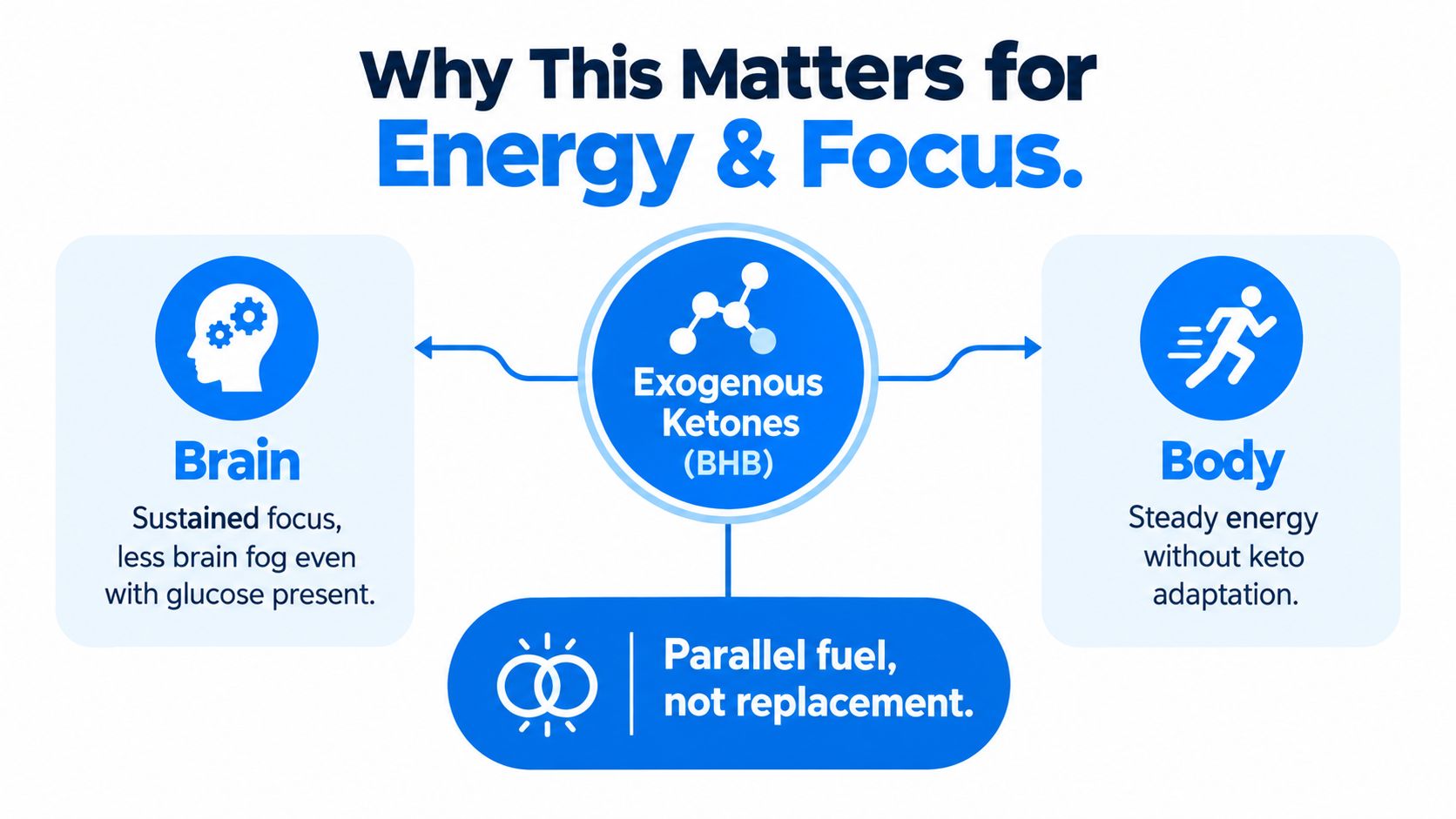
Ketones are best understood as a parallel fuel, not a replacement for glucose. On a mixed diet, glucose remains available. Adding BHB gives the brain and muscles another substrate they can oxidize, which may be relevant during a long work block, endurance training, or a period when you want energy without another stimulant.
Steadier energy
The experience, when it occurs, is more likely to resemble fuel availability than a caffeine rush. BHB doesn't stimulate the nervous system in the same way caffeine does. Its physiological role is to provide a substrate that mitochondria can convert into ATP.
For the brain, that distinction matters. Neurons can use circulating BHB even when glucose is present, so a person doesn't need to create a glucose shortage before ketones become relevant. The likely practical target is cognitive endurance, meaning the ability to stay engaged with demanding work, rather than an instant feeling of stimulation.
Exercise support
Muscle can oxidize BHB, and ketone metabolism has been studied as an alternative energy pathway during exercise. That creates a plausible role for endurance-focused use, but plausibility isn't the same as a guaranteed performance improvement. Human research remains mixed, and the value depends on exercise intensity, the formulation, gastrointestinal tolerance, and the individual's normal fuel availability.
The same distinction applies to metabolic efficiency. Exogenous ketones may let you expose tissues to BHB without changing your usual diet, but they don't automatically create the enzyme and transporter adaptations associated with long-term endogenous ketosis.
Exogenous ketones may sharpen the edges of an already functional metabolism. They don't remodel that metabolism overnight.
Ketone Salts, Esters, and Precursors Compared
The format determines how much BHB appears in the blood, how quickly it appears, and what else comes with it. Ketone salts bind BHB to minerals such as sodium, potassium, magnesium, or calcium. Ketone esters link a ketone body to another molecule that's cleaved during digestion. Precursors are converted by the liver before they become circulating ketones.
Human pharmacokinetic data show a clear separation between salts and esters. In a randomized study, ketone ester drinks produced a D-BHB peak, or Cmax, of 2.8 mM, while ketone salts reached 1.0 mM. The salts contained 50% L-BHB, which remained high for more than 8 hours but wasn't detectable after 24 hours (randomized human pharmacokinetic study).
| Format | Peak BHB | Time to Peak | Tolerability | Best Use Case |
|---|---|---|---|---|
| Ketone salts | 1.0 mM Cmax in the cited study | Depends on product and meal context | Mineral load and gastrointestinal tolerance matter | Moderate exposure when added electrolytes fit the plan |
| Ketone esters | 2.8 mM D-BHB Cmax in the cited study | Rapid compared with salts | Taste and gastrointestinal response can limit use | Situations needing a higher, direct BHB rise |
| Precursors | Product-dependent | Indirect and generally more gradual | Depends on precursor and conversion | Gentler exposure when a slower curve is preferred |
The D and L labels describe molecular isomers. D-BHB is the primary metabolically active fuel form, while L-BHB behaves differently and may have a different clearance pattern. That's why a label showing total BHB doesn't tell the entire story.
Precursors can be useful, but they shouldn't be confused with direct BHB delivery. If you're comparing the chemistry and practical tradeoffs in more detail, this guide to what ketone esters are provides additional formulation context.
Practical Protocols Without Carb Restriction
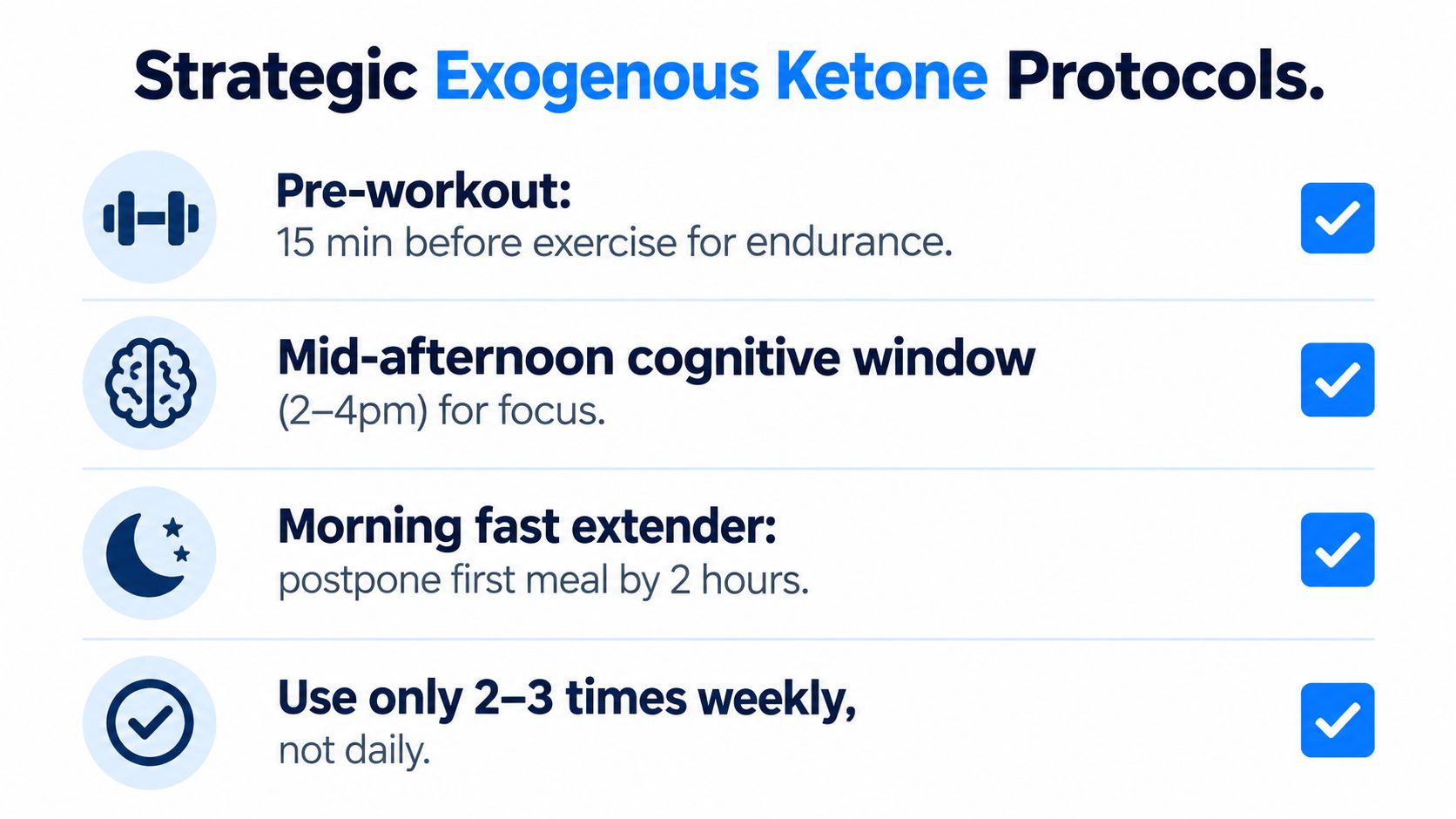
A mixed diet doesn't make exogenous ketones irrelevant. It changes the reason for using them. Instead of trying to remain in ketosis all day, choose a predictable window where an additional fuel source could be useful.
Before exercise, a ketone product may fit a training session when you want a non-stimulant fuel option. The response depends on the product, meal timing, exercise intensity, and your individual tolerance, so test it during ordinary training rather than introducing it immediately before a major event.
During a mid-afternoon cognitive window, the goal is continuity rather than a jolt. Track whether you stay engaged through a demanding task, whether you reach for caffeine, and whether the product causes stomach discomfort. A subjective response is not proof of a metabolic effect, but it can help you decide whether the routine is worth repeating.
During travel or a fasting window, exogenous ketones can provide BHB without requiring immediate dietary restriction. They may change circulating ketones even when you've eaten, but they won't recreate every adaptation associated with fasting or a ketogenic diet.
A simple testing method
- Start with one context: Use the product for either exercise, focused work, or a fasting window, rather than changing several variables at once.
- Record the basics: Note sleep, recent food, caffeine, perceived focus, exercise output, and gastrointestinal symptoms.
- Compare like with like: Repeat the same type of session so you're not comparing a rested day with a stressful one.
- Adjust conservatively: If nausea, cramping, reflux, or diarrhea appears, stop or reduce exposure according to the product's directions.
A meal can alter the shape of the BHB curve, so don't assume that a fasted response will match a fed response. Strategic, occasional use is easier to evaluate than automatic daily reliance.
Safety, Side Effects, and Who Should Be Cautious
Short-term human tolerability data are encouraging for healthy adults under study conditions. In the 28-day study of 24 healthy adults, repeated ketone monoester use produced the BHB rise described earlier without meaningful changes in body weight, body composition, fasting glucose, cholesterol, triglycerides, electrolytes, blood gases, or kidney function (28-day safety study). Mild nausea occurred with a small number of drinks in that research context.
A 2025 randomized observational study in healthy adults aged 65 and older reported that a ketone ester beverage and powder were well tolerated and induced nutritional ketosis independently of a ketogenic diet or fasting (older-adult ketone study). That supports feasibility in the studied population, not a universal safety conclusion for every older adult or medically complex person.
Common practical concerns include gastrointestinal symptoms and mineral exposure. Salt-based products can add sodium, potassium, magnesium, or calcium, so the total mineral intake matters if you already use electrolyte products or have a condition affecting fluid balance.
Consult a clinician before using exogenous ketones if you have diabetes, especially type 1 diabetes or insulin-treated type 2 diabetes; if you're pregnant; or if you have impaired kidney or liver function. Extra caution is also appropriate with SGLT2 inhibitors, alcohol use, or medications that affect glucose, fluid balance, or blood pressure.
Stop use and seek medical advice for concerning symptoms such as persistent vomiting, severe abdominal discomfort, unusual weakness, confusion, or palpitations. A practical review of exogenous ketone side effects can help you identify questions to raise with your healthcare professional.
A Clear Framework for Using Exogenous Ketones
The most useful decision lens separates acute fuel effects from long-term adaptation.
A single supplement exposure may be relevant when you want temporary BHB availability for a focused task, a training session, or a defined fasting window. It may also change short-term glucose and ketone measurements, as shown in human review data. Those effects don't establish weight loss, permanent appetite change, disease modification, or the immune effects associated with a ketogenic diet.
A sustained dietary shift is different. Endogenous ketosis changes what the liver produces and what tissues repeatedly receive. Adaptations in fuel handling, transport, and enzyme activity require ongoing metabolic conditions. A drink can create an acute ketone state without reproducing that complete environment.
Application Framework
Use this sequence to evaluate exogenous ketones without keto diet:
- Define the task. Choose one target, such as cognitive endurance, endurance training, or a fasting window.
- Choose the format. Esters generally suit a rapid, higher BHB peak. Salts may suit moderate exposure when the mineral content fits your needs. Precursors offer an indirect route with a different time course.
- Check the molecule. Look for clear information about D-BHB and total BHB, rather than relying only on a product's broad ketosis language.
- Test your response. Log focus, exercise output, appetite, sleep, taste, and gastrointestinal effects.
- Judge the whole window. Evaluate the following work period or training session, not only the first few minutes.
- Discontinue if the tradeoff fails. A measurable BHB rise isn't automatically useful if tolerability, cost, or convenience doesn't fit your routine.
Tecton Ketones™ offers bioidentical exogenous ketone formulations built around R3HBG™ and positioned for performance, cognition, and metabolic routines without requiring strict carbohydrate restriction. Visit Tecton Ketones™ to review the available approach and decide whether targeted ketone use fits your own application framework.


