


Can a daily probiotic improve gut health if the rest of your diet, sleep, stress, and energy metabolism remain unchanged? That question exposes the central problem with modern microbiome advice. The gut isn't a single organ waiting for one missing capsule. It's a dense ecosystem that responds to dietary inputs, microbial metabolites, intestinal barrier function, and whole-body physiology.
That same systems perspective helps connect microbiome support with ketone metabolism. Gut-derived short-chain fatty acids can influence metabolic signaling, while exogenous beta-hydroxybutyrate offers an alternative energy substrate for the brain and muscles. Neither strategy replaces sound nutrition or medical care, but together they clarify how dietary patterns and targeted ketone use may contribute to steadier energy, cognitive endurance, and metabolic flexibility.
What Microbiome Support Really Means
What does “microbiome support” mean if no single supplement works for everyone? Consider two people who report afternoon fatigue and digestive discomfort. One eats a narrow, low-fiber diet and sleeps irregularly. The other consumes a varied diet but reacts poorly to a specific probiotic strain. Giving both people the same capsule treats the label, not the underlying system.
Clinically, microbiome support refers to strategies that help maintain the gut ecosystem, intestinal barrier, and microbial metabolism. It can involve dietary fiber, targeted prebiotics, selected probiotics, fermented foods, movement, sleep, and stress regulation. The aim isn't to create a perfect bacterial profile. It's to support a gut environment that can process food, produce useful metabolites, and communicate appropriately with immune and metabolic tissues.
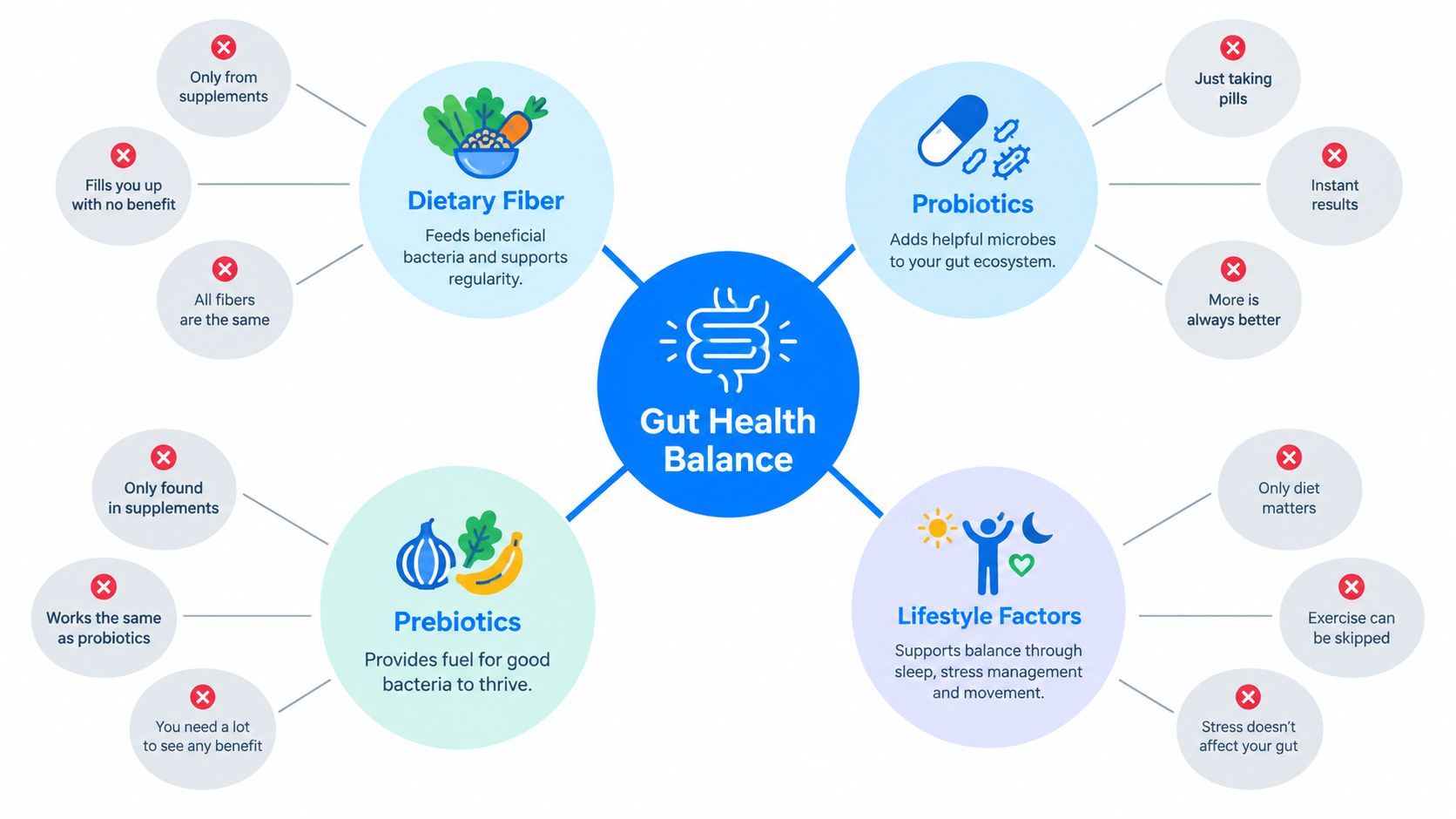
A systems definition
A practical definition has three parts:
- Ecology: supporting a diverse, resilient community rather than chasing one microbe.
- Barrier integrity: helping the intestinal lining regulate what crosses into circulation.
- Metabolic signaling: encouraging production of compounds such as short-chain fatty acids, including butyrate.
This is why meal structure matters. A person who wants to support digestion with meal planning may gain more from consistently including fiber-rich foods than from adding several overlapping supplements. The food pattern supplies substrates that microbes can use, while regular meals make it easier to observe tolerance and identify triggers.
The same reasoning applies to ketones. A gut-supportive eating pattern may improve the metabolic environment in which the body uses glucose and fatty acids, while an exogenous ketone can provide BHB without requiring immediate dietary ketosis. For a deeper discussion of the intestinal foundation, see this guide to healing your gut, while keeping the language of “healing” separate from a medical promise.
Practical rule: Treat microbiome support as an adjustable system, not a fixed product category.
The Science Behind Gut Ecology and Longitudinal Research
Why does gut ecology respond so differently across individuals? Its scale, diversity, and persistence make simple supplement claims difficult to interpret. Early metagenomic research estimated approximately 10^14 bacterial cells in the human intestinal microbiota, roughly ten times the number of human cells. It also identified at least 1,800 bacterial genera, about 16,000 species-level phylotypes, and around 36,000 strain-level phylotypes in the human gut, as described in DNA Research.
The large intestine may contain 100 billion to 1 trillion microbial cells per milliliter, according to the National Center for Complementary and Integrative Health. At that density, dietary changes can influence fermentation, gas production, stool characteristics, and microbial signaling. A capsule containing one strain therefore cannot be assumed to reorganize an ecosystem with this degree of complexity.
From cataloging to personal signatures
Research shifted from listing microbes to examining individual patterns in 2007, when the NIH launched the Human Microbiome Project. During its first five years, NIH-funded researchers studied microbiomes from 242 healthy individuals across 15 male and 18 female body sites. The project showed that microbial communities differ substantially by location, while also establishing a foundation for research on their relationship with health and disease.
Longitudinal studies added a further distinction: persistence does not equal uniformity. A Stanford-led study followed 86 people for as long as six years, collecting quarterly samples from stool, skin, mouth, and nose. Researchers analyzed 5,432 biological samples and generated 118,124,374 measurements. Personal microbiome signatures could remain stable over extended periods.
That stability describes a baseline, not an unchanging system. Each person may carry a characteristic microbial pattern, so the same diet, probiotic, or exogenous ketone strategy can produce different responses. This matters for metabolic research: gut ecology may influence how consistently someone tolerates an intervention, while ketone utilization supplies a separate question about how the body uses available fuel. Personalized testing and longitudinal observation therefore provide a stronger basis for interpretation than a single product response.
Mechanisms of Microbiome Support, Probiotics and Prebiotics
Probiotics and prebiotics work through different biological routes. A probiotic supplies live microorganisms selected for a defined purpose, while a prebiotic provides a substrate that existing microbes can ferment. Confusing those roles leads to poor product selection and unrealistic expectations.
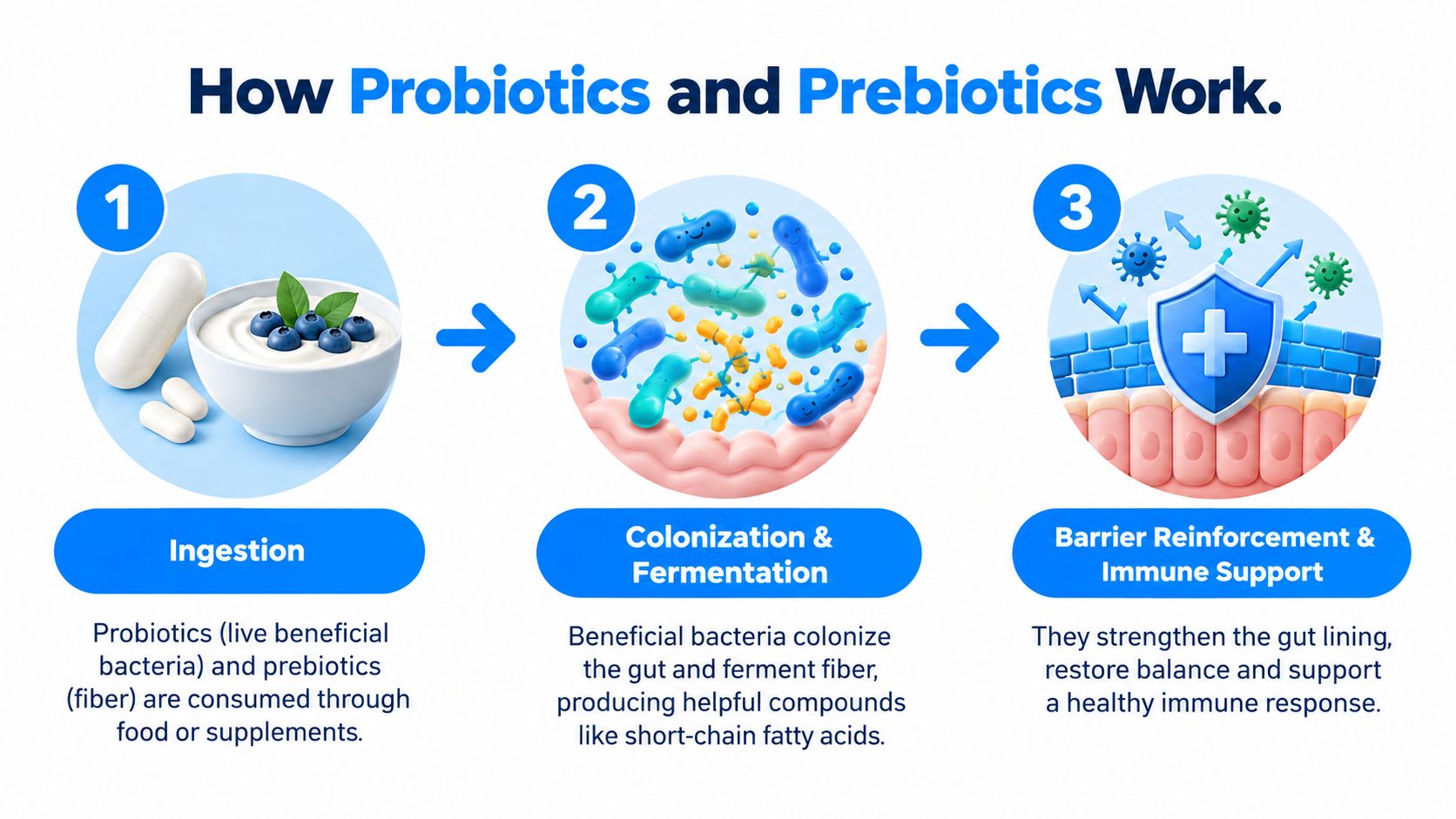
Probiotics and the intestinal barrier
The intestinal barrier is more than a passive wall. Epithelial cells connect through tight junctions, regulate permeability, and interact with microbes and immune signals. When that barrier becomes more permeable, bacterial products may cross more readily, increasing biological stress. This doesn't establish a diagnosis, but it provides a measurable physiological target.
A systematic review and meta-analysis of 26 randomized controlled trials involving 1,891 participants found that probiotics significantly improved transepithelial resistance, with a mean difference of 5.27, a 95% confidence interval of 3.82 to 6.72, and P<0.00001. The findings are reported in this peer-reviewed review and meta-analysis.
The mechanism is plausible. Selected strains may support tight-junction function, reduce epithelial leakiness, and help preserve mucosal integrity under inflammatory stress. The word “selected” matters because probiotic effects are strain-specific. A positive result for one organism or formulation can't automatically be transferred to every product labeled probiotic.
Prebiotics and fermentation
Prebiotics take a different route. Microbes ferment certain fibers into short-chain fatty acids, including acetate, propionate, and butyrate. Butyrate serves as a major fuel for colonocytes and helps reinforce mucus and tight-junction integrity, creating a direct link between fiber intake and barrier support.
Human and translational evidence summarized in this recent review of prebiotic fibers describes a randomized trial in which 10 g per day of oligofructose-enriched inulin increased total SCFAs by 31%, including acetate and butyrate. Another low-fiber adult trial found that 7 g per day of inulin-type fiber significantly increased Bifidobacterium over four weeks.
The practical lesson is not to copy a trial dose without context. It's to recognize that fiber can act as metabolic input for the microbiome. People with sensitivity may need gradual changes, and persistent symptoms warrant clinical assessment rather than escalating fiber indefinitely.
For readers considering specialized supplement questions, a resource on supplements for stimming in autism should be approached as educational material, not as a substitute for individualized medical guidance. Additional context on fiber and metabolic goals appears in this discussion of prebiotics and weight loss.
Why Supplements Alone Aren't the Answer
The most attractive microbiome intervention is often the least demanding one. A capsule promises consistency without asking the user to change meal quality, fiber diversity, sleep, or activity. Yet the evidence doesn't support treating routine supplementation as the universal foundation for healthy people.
Harvard's Nutrition Source discussion of probiotics notes that quality evidence remains limited for prebiotic, synbiotic, and postbiotic supplements as broad health tools. Scientific American's analysis reaches a similarly narrow conclusion: evidence is strain-specific and uneven, with stronger support for defined uses such as some cases of antibiotic-associated diarrhea and rare diseases than for generalized wellness.
What “worth it” depends on
A supplement may be reasonable when the question is specific:
- Indication: Is there a defined digestive or clinical reason to use it?
- Strain: Has the exact strain or combination been studied for that purpose?
- Dose and duration: Do the product's instructions resemble the tested intervention?
- Tolerance: Does the person experience worsening bloating, discomfort, or other unwanted effects?
- Clinical context: Could medication, immune status, or an underlying condition change the risk-benefit calculation?
The answer for a generally healthy person is often more modest than product advertising suggests. Diet quality and fiber diversity provide the ecological inputs that a probiotic capsule can't replace. A probiotic may transiently pass through the gut or influence barrier signaling, but it doesn't automatically establish long-term colonization or correct an entire dietary pattern.
The most evidence-based microbiome supplement may be the one you don't need every day.
Testing deserves the same skepticism. The International Microbiota Observatory's 2025 results found that only 28% of respondents said they knew exactly what the gut microbiota is. That education gap matters because a test can produce a detailed report without providing a validated action plan.
Academic reviews also describe incomplete understanding of how diet, sleep, exercise, and stress interact with gut ecology. Testing may be interesting, but interest isn't the same as clinical actionability. As a general rule, the first intervention should be a consistent, tolerable pattern that can be evaluated over time.
The Connection Between Microbiome Support and Ketone Metabolism
Gut ecology and ketone metabolism are often discussed separately, even though both influence energy availability and cellular signaling. Prebiotic fermentation produces SCFAs, which can participate in metabolic communication, while ketone metabolism supplies beta-hydroxybutyrate, or BHB, as an alternative fuel.
BHB is produced endogenously in the liver when fatty-acid oxidation rises during fasting, carbohydrate restriction, or prolonged exercise. Cells convert BHB back into acetoacetate and then acetyl-CoA, which enters the mitochondrial citric acid cycle and supports ATP production through oxidative phosphorylation. This pathway doesn't make ketones “better” than glucose in every setting. It gives tissues another substrate and helps explain metabolic flexibility, the ability to shift between fuels as conditions change.

What human brain research shows
Exogenous ketones let researchers study ketone availability without waiting for a complete diet-induced shift. In a controlled human trial, cognitively intact adults aged 55 and older with metabolic syndrome consumed 25 g of ketone monoester three times daily for 28 days. Researchers measured BHB in the precuneus using magnetic resonance spectroscopy, showing that exogenous ketones can be evaluated as a direct brain-energy intervention. The trial is indexed in PubMed.
Another single-dose nutritional ketone ester study reported lower blood glucose alongside increased BHB. Brain imaging showed a 17% reduction in glucose metabolism across regions including the frontal, occipital, and cingulate cortices, as well as the hippocampus, amygdala, and insula. The findings, available in this human ketone ester study, demonstrate a measurable shift from glucose toward ketone use in brain energy metabolism.
That shift doesn't prove improved cognition for every user. It does establish the physiological pathway. The brain can receive and use ketones, while SCFAs generated from fiber provide a separate gut-derived signal that may support the broader metabolic environment.
A product such as GLP-1 Shot is described as a metabolic support ketone shot for appetite patterns, fasting windows, or midday energy dips. Its stated formula includes liposomal R3HBG ketone, 5-HTP, and prebiotic fiber. That description supports a structured-use discussion, not a disease claim or a conclusion that ketones replace dietary fiber.
For readers exploring the relationship between medium-chain substrates and ketone use, this caprylic acid supplement overview provides additional context. The central distinction remains important: SCFAs are microbial fermentation products, while BHB is a circulating ketone body. They may converge on energy and signaling pathways, but they aren't interchangeable.
Comparing Ketosis Types and Exogenous Ketone Technologies
Which form of ketosis a product produces determines what users can reasonably expect?
Nutritional ketosis follows reduced carbohydrate availability, usually through a ketogenic diet or fasting. The liver increases endogenous ketone production from fatty-acid metabolism. This approach can create broader dietary adaptations, but it may be difficult to sustain and does not suit every person.
Endogenous ketone production describes the underlying physiology. The liver produces BHB and acetoacetate, and tissues including the brain, heart, and skeletal muscle oxidize them for energy. It is a regulated response to fuel availability, not a direct supplement effect.
Exogenous ketone supplementation supplies ketones from outside the body. It can raise circulating BHB without waiting for dietary ketosis, but the increase is temporary and does not reproduce every adaptation associated with a ketogenic diet. The distinction also matters for microbiome support: gut-derived SCFAs and circulating BHB may influence related metabolic pathways, but they come from different processes.
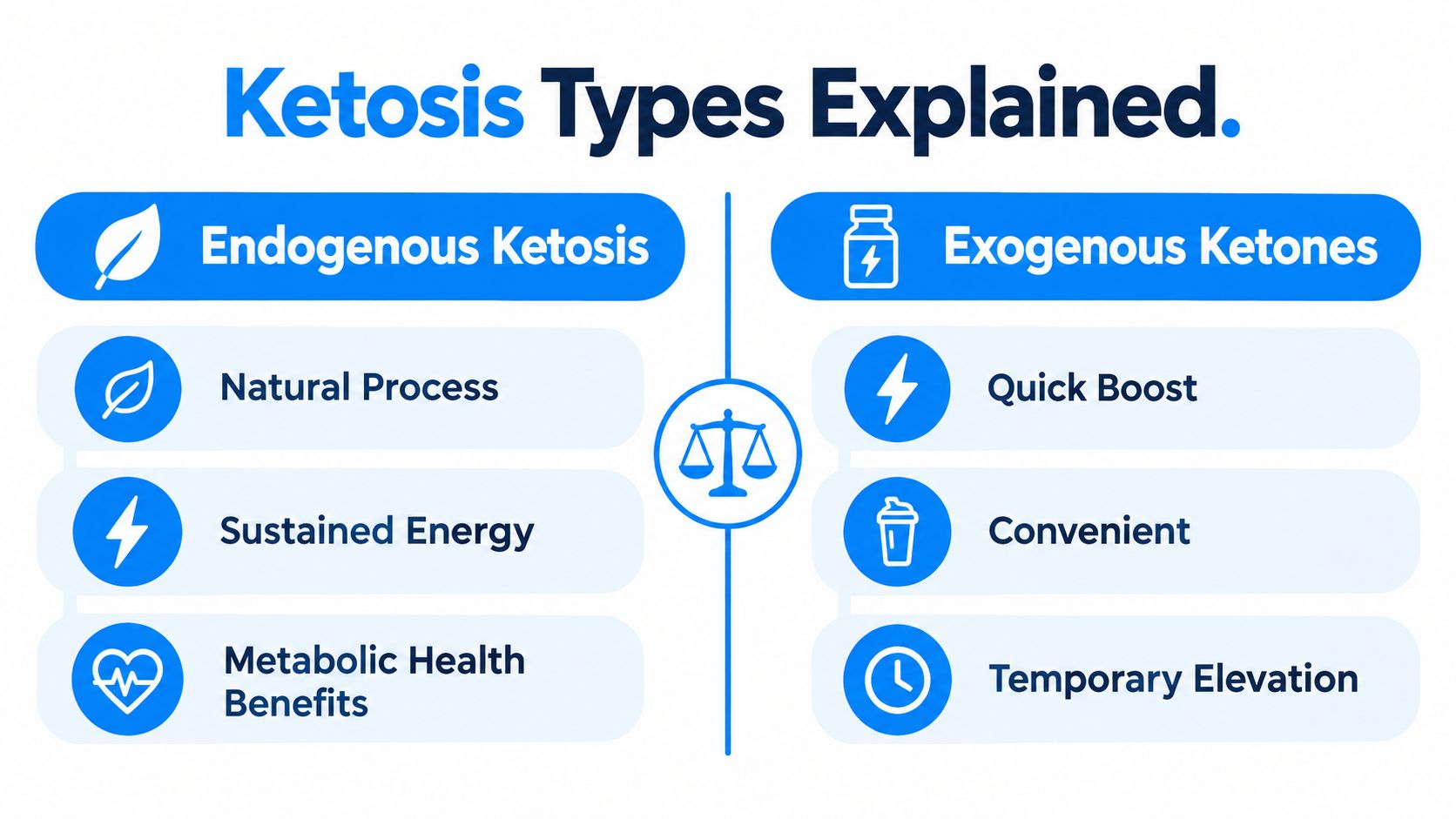
Comparing formulation classes
| Format | Main design | Primary limitation |
|---|---|---|
| Ketone salts | BHB paired with minerals | Mineral load and mixed BHB isomers can complicate dosing and interpretation |
| Ketone esters | Ketone linked to an alcohol or glycerol backbone | Often more potent, but taste and tolerability can limit use |
| Ketone precursors | Compounds converted into ketones | The body must process the precursor before BHB becomes available |
| Bioidentical R3HBG | Tecton's stated tri-ester approach, bonding D-BHB to glycerol | Product-specific technology requires formulation and safety review |
A useful comparison starts with the label, not the marketing category. A user considering a 25 g ketone monoester dose that raises BHB to 4.0 mM should compare its taste and gastrointestinal tolerability with a glycerol-based R3HBG shot providing 10 g BHB per serving, while also checking whether the product carries a mineral load. These formats can differ in dose, absorption, and practical use even when they are marketed for similar energy goals.
Published human research in the published trial protocol describes a common 25 g ketone monoester dose raising plasma BHB to 4.0 mM or more, at least eight times higher than levels achieved with other ketogenic supplements. That benchmark describes an acute blood-ketone response, not a guaranteed cognitive or metabolic outcome.
Tecton describes R3HBG as delivering 100% D-BHB bonded to glycerol, without the L-isomer or the heavier mineral load associated with salts. Its formulations also use a liposomal delivery system intended to support absorption consistency. These are formulation claims. Consumers should check the label, serving instructions, tolerability, and independent human evidence before drawing conclusions from delivery language.
Regulatory review remains part of the assessment. The FDA's New Dietary Ingredient framework requires notification at least 75 days before marketing a supplement containing a new dietary ingredient, with evidence supporting reasonable safety under labeled conditions of use.
Practical Implementation for Metabolic and Cognitive Performance
Exogenous ketones work best when they solve a clear timing problem. They can be considered before or during endurance work, during a planned fasting window, or before cognitively demanding work when a person wants an alternative fuel source without changing the entire day's diet. They shouldn't be used to conceal persistent fatigue, unexplained digestive symptoms, or inadequate sleep.
Match the format to the task
- Endurance and hydration: Tecton Edge Performance + Electrolytes is positioned for training, movement, and physically demanding days where ketone energy and electrolytes are relevant.
- High-intensity focus: Edge Performance + Caffeine is positioned for sessions where stimulation and focus are part of the intended routine.
- Appetite-pattern support: The GLP-1 formulation is positioned for fasting windows, spaced meals, and midday energy dips.
- Mental stamina: Locked Cognition is positioned around cognitive endurance with nootropic ingredients.
Tecton Ketones™ describes its No Compromise Formula as excluding R-1,3-butanediol, BPA, artificial dyes, and sweeteners. That may matter to users prioritizing daily tolerability, but formulation cleanliness doesn't establish a guaranteed performance outcome.
What to expect physiologically
BHB availability may rise, glucose use may shift, and some people may notice steadier energy or focus. Others may experience gastrointestinal discomfort, especially when trying a concentrated product for the first time. Start with the labeled serving, evaluate tolerance in a low-stakes setting, and avoid stacking multiple stimulants without understanding the complete formula.
People taking medication, managing a metabolic condition, pregnant or breastfeeding individuals, and anyone with significant gastrointestinal or immune concerns should ask a qualified clinician before using concentrated ketone products. Exogenous ketones are a nutrition tool, not a treatment for disease.
Application Framework for Integrated Microbiome and Metabolic Support
A sound plan starts with the gut environment, then adds ketones only where timing and physiology justify them.
- Build the substrate first. Prioritize a varied, fiber-containing diet that you can tolerate consistently. Increase fermentable fibers gradually if sudden changes cause discomfort.
- Use probiotics selectively. Choose a strain and dose for a defined purpose rather than assuming every probiotic supports every outcome. If the indication isn't clear, food quality usually deserves attention first.
- Protect the daily rhythm. Sleep, exercise, meal timing, and stress all interact with gut ecology and metabolic regulation. Current research still lacks a complete model of how these factors combine, so consistency and observation are more defensible than aggressive protocols.
- Add ketones for a specific demand. Use exogenous BHB around training, fasting windows, or focused work when an alternative fuel is useful. Track energy, gastrointestinal tolerance, hydration, and sleep instead of relying on a subjective “optimization” feeling.
- Review the pattern. If symptoms persist, seek clinical evaluation rather than increasing supplements. The most durable form of microbiome support is usually a repeatable lifestyle pattern, with targeted products used sparingly and intentionally.
Tecton Ketones™ offers liposomal, bioidentical exogenous ketone nutrition designed to provide direct BHB fuel for training, fasting windows, and cognitively demanding routines. If you want to evaluate a ketone option alongside a food-first microbiome strategy, visit Tecton Ketones™ and review the formulations, ingredients, and intended use cases.


