


A large can with the highest caffeine content isn't automatically the best energy drink for focus. It may increase alertness, but alertness is not the same as sustained cognitive performance. A stimulant can make you feel more awake while also creating restlessness, rebound fatigue, or sleep disruption that weakens the next day.
A better evaluation starts with three questions. What fuel is reaching the brain? How quickly and predictably does it arrive? What happens after the initial lift fades? Caffeine-based drinks and exogenous ketone drinks answer those questions through different physiological pathways.
| Focus drink type | Primary pathway | Best fit | Main trade-off |
|---|---|---|---|
| Caffeine-focused energy drink | Adenosine receptor blockade and stimulant-driven alertness | Short tasks requiring wakefulness | Jitters, tolerance, and sleep interference |
| Caffeine plus L-theanine | Stimulant alertness with a calming adjunct | Attention-heavy work for caffeine-tolerant users | Still depends on caffeine timing and dose |
| Exogenous ketone drink | Direct delivery of beta-hydroxybutyrate as an alternative fuel | Cognitive endurance, fasting windows, and stimulant-free energy | Formulation, tolerability, and individual response vary |
| Ketone drink with electrolytes | Ketone fuel plus sodium, potassium, and magnesium support | Training, movement, and physically demanding days | It isn't a replacement for sleep, hydration, or adequate nutrition |
Why Most Energy Drinks Are Not Designed for Focus
Most mainstream energy drinks are designed to create a noticeable sensation of energy. That can be useful when fatigue is the immediate problem, but it doesn't answer the harder question, which is whether you can maintain precise attention through demanding work.
The category's historical focus effect is largely explained by caffeine. Reviews report that common energy-drink formulations often contain 80 to 150 mg of caffeine per 8 ounces, a dose associated with improved alertness, memory, and reaction time in controlled research on energy-drink components. In a randomized, double-masked study involving 116 participants, both an energy drink and a caffeine-matched control improved sustained attention and alertness, suggesting that the caffeine dose, rather than the branding or proprietary blend, drove much of the result.

Stimulation is not the same as endurance
The practical distinction is between short-term arousal and stable mental output. Caffeine can reduce the subjective feeling of fatigue and improve vigilance, but a stronger sensation doesn't necessarily improve complex reasoning proportionally. If the drink also contributes to poor sleep, the apparent benefit can become a poor exchange.
Sugar creates a second consideration. A sweet drink may provide rapidly available carbohydrate, but a focus strategy based on repeated glucose-driven stimulation can feel less consistent than one built around a clearly measured stimulant dose or an alternative fuel source. The relevant issue isn't whether glucose is “bad.” The brain uses glucose effectively. The issue is whether the overall intake pattern supports the kind of work you're asking it to do.
For professionals managing long meetings, writing blocks, or screen-heavy days, focus also depends on workload design, breaks, hydration, and sleep. A practical guide to actionable focus tips for professionals can complement nutrition decisions, because no drink can compensate for an overloaded schedule and inadequate recovery.
The better question
Instead of asking which can has the most ingredients, ask whether you want:
- A rapid stimulant effect for immediate wakefulness.
- Calm alertness from a moderate caffeine and L-theanine combination.
- Direct ketone fuel for a stimulant-free approach to cognitive and physical endurance.
For readers comparing non-coffee options, this guide to healthy alternatives to coffee for energy provides useful context. The central point remains simple: the best energy drink for focus should be judged by the quality and duration of mental output, not by how forcefully it announces itself.
How Brain Energy Pathways Change Focus Outcomes
The brain can use more than one fuel pathway. Understanding the difference between glucose and ketones makes it easier to evaluate focus products without relying on packaging language.
Glucose is a readily available fuel. Dietary carbohydrate contributes to circulating glucose, and cells process that substrate through glycolysis, the citric acid cycle, and the electron transport chain to produce mitochondrial ATP. ATP is the immediate energy currency used to maintain cellular work, including the signaling activity required for attention.
Ketones provide another route. During fasting, carbohydrate restriction, or other conditions that increase fat oxidation, the liver produces ketone bodies, including beta-hydroxybutyrate, or BHB. BHB travels through circulation and can be taken up by tissues, including the brain. Inside mitochondria, cells convert BHB into acetyl-CoA, which enters the citric acid cycle and supports ATP production.
Glucose and ketones are different inputs
Glucose isn't an inferior brain fuel, and ketones aren't a universal replacement. The useful concept is metabolic flexibility, meaning the ability to use available fuels according to the situation. Nutritional ketosis, produced through diet, stimulates endogenous ketone production. Exogenous ketone supplementation instead supplies ketones directly, without requiring the user to wait for the liver to generate them through fasting or carbohydrate restriction.
That distinction matters for focus. A glucose-centered drink may feel fast because carbohydrate and caffeine can produce a noticeable immediate response. An exogenous ketone drink changes the available substrate by supplying BHB directly. It doesn't need to create the same dietary conditions that produce endogenous ketosis.
The metabolic outcome can vary by product. Human research shows that exogenous BHB supplements can raise circulating ketones while lowering glucose. In a randomized crossover pilot involving 12 healthy adults, three ketone supplements induced exogenous ketosis and produced glucose-lowering effects without distinct gastrointestinal distress in the reported human research. That finding supports a distinction between fuel availability and stimulant intensity, but it doesn't prove that every person will experience the same subjective focus response.
What delivery changes
A ketone product's behavior depends on its chemical structure and delivery system. Ketone salts attach BHB to minerals, while ketone esters connect ketone molecules through an ester bond. Precursors rely on conversion inside the body before producing ketones. These formats don't produce identical concentration curves or tolerability profiles, and human comparisons show that dose and formulation affect the magnitude and duration of R-BHB elevation in comparative ketone research.
For active people who want ketone fuel alongside electrolytes rather than caffeine, Tecton EDGE™ Performance Shot + Electrolytes is positioned as a liposomal R3HBG ketone shot with sodium, potassium, and magnesium for training, movement, and physically demanding days.
What the Research Says About Mainstream Focus Drinks
The strongest mainstream focus evidence is narrower than many product labels suggest. Caffeine has the clearest support, while the long list of added compounds rarely establishes an equally clear cognitive benefit.
A 2024 review reported that a standard 250 mL serving containing 80 mg of caffeine improved subjective alertness, concentration, and immediate recall. The same serving also improved performance during a prolonged driving task by reducing lane drifting and improving steering control over a 3 to 4 hour task. A broader acute caffeine intervention found a standardized mean difference of 0.41, with a 95% confidence interval of 0.28 to 0.55 and low heterogeneity, reported as I² = 10% in the reviewed evidence.
These findings support a measurable effect, not unlimited gains from escalating the dose. Caffeine can improve alertness and vigilance, but selection should start with a disclosed dose and a tolerable delivery pattern rather than the highest stimulant content available.
What the added ingredients actually contribute
Energy drinks commonly contain taurine, B vitamins, ginseng, glucuronolactone, and other compounds. These ingredients may serve formulation, flavor, or general nutrition purposes, yet a review of energy-drink ingredients found an overwhelming lack of evidence that many non-caffeine ingredients independently improve cognitive performance. A lengthy ingredient panel therefore does not establish a strong focus formula.
L-theanine has a more credible role as an adjunct. In one summarized human study, 150 mg of caffeine plus 250 mg of L-theanine improved alertness, reduced tiredness and headache, and improved attention, working memory, and information processing compared with either ingredient alone or placebo in the review of energy-drink ingredients. The reported combination falls within a practical range of roughly 2:1 to 1:1 by milligrams, depending on whether the intended experience prioritizes stronger stimulation or calmer attention.
| Ingredient | Focus evidence quality | Typical functional role |
|---|---|---|
| Caffeine | Strongest and most consistent in this category | Alertness, vigilance, and reduced fatigue |
| L-theanine with caffeine | Better supported than most adjunct combinations | Calmer attention and information processing |
| Taurine | Limited independent cognitive evidence | Common formulation adjunct |
| B vitamins | Weak evidence for acute focus in replete individuals | Nutritional cofactor role |
| Ginseng and glucuronolactone | Limited and inconsistent evidence for independent focus effects | Traditional or formulation-specific inclusion |
How to read a focus label
A useful label states the caffeine amount instead of hiding it inside a proprietary blend. It should also identify sugar, added stimulants, and ingredients that may affect individual tolerability. Those details help distinguish a predictable focus drink from a product whose effects are difficult to evaluate.
Practical rule: If a product makes a complex cognitive promise but won't disclose the amount of its active ingredients, treat the promise as weaker than the label suggests.
For mainstream drinks, the most defensible choice is a moderate caffeine dose, with L-theanine when a smoother experience is the priority. This approach may suit a morning work block or a short study session. It remains a stimulant strategy, so timing still matters. An afternoon dose can interfere with sleep even when the immediate focus effect feels useful.
Exogenous Ketones as a Different Path for Mental Clarity
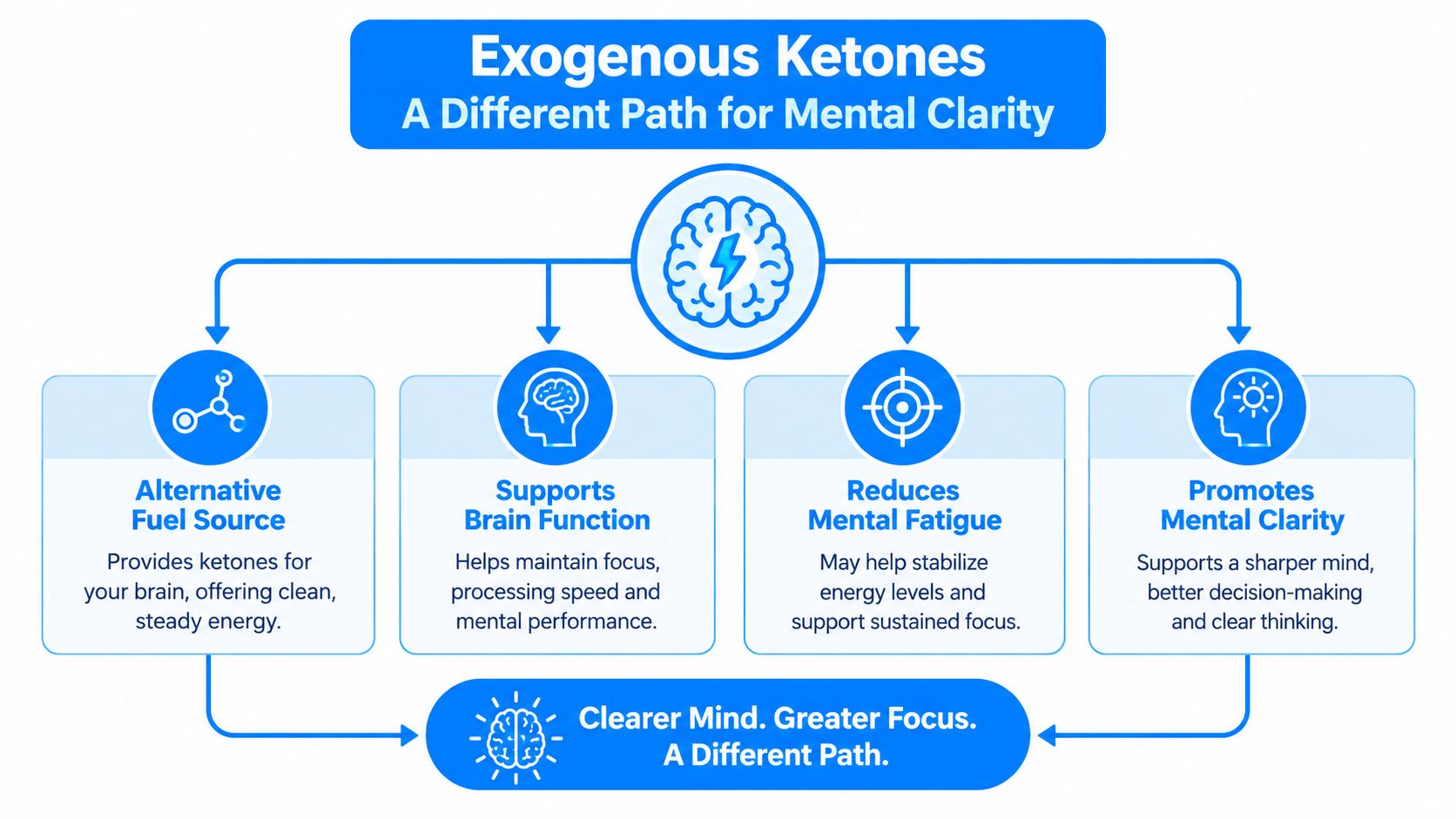
Exogenous ketones change the question from “How much stimulation can I tolerate?” to “Which fuel substrate do I want available?” They supply ketone bodies from outside the body, allowing a person to access BHB without relying entirely on nutritional ketosis or endogenous production.
This is physiologically distinct from caffeine. Caffeine primarily increases alertness by influencing adenosine signaling. BHB functions as a metabolic substrate that can enter mitochondria and support ATP production. It also participates in cellular signaling, and ketone metabolism is relevant to tissues with high energy demands, including the brain and working muscle.
The format determines the experience
Not all ketone products are interchangeable.
- Ketone salts combine BHB with minerals. They can be practical, but the mineral load and total dose affect tolerability.
- Ketone esters deliver ketone molecules through an ester bond and can raise BHB efficiently, although taste and gastrointestinal response may limit some users.
- Precursors require metabolic conversion before the body reaches the desired ketone state, so their effects don't necessarily match those of direct BHB delivery.
- Bioidentical structures aim to provide the D-BHB form used naturally by human metabolism. Molecular identity matters because different isomers and compounds can behave differently in circulation and tissue metabolism.
Liposomal delivery is another formulation variable. A liposome is a lipid-based carrier intended to surround an active compound and influence how it disperses and is absorbed. That doesn't make a product automatically superior, but it gives formulators another way to address delivery consistency, taste, and tolerability. The relevant standard is human performance and safety data, not the word “liposomal” by itself.
What human tolerance research supports
Controlled human research supports the feasibility of sustained exogenous ketosis in healthy adults. One study gave 24 healthy adults 10 g of free D-BHB daily for 4 weeks and reported that the intervention was safe and well tolerated. Another study found that 25 mL of ketone monoester taken three times daily for 28 days was safe and well tolerated in the BMJ Nutrition, Prevention & Health report.
Those findings support a measured implementation strategy, not a promise that ketones will replace sleep, meals, or medical care. Individual responses still depend on baseline diet, metabolic flexibility, activity, and gastrointestinal tolerance.
The regulatory language also deserves precision. The FDA defines a new dietary ingredient as an ingredient not marketed in a dietary supplement in the United States before October 15, 1994. Manufacturers or distributors must submit a premarket safety notification to the FDA at least 75 days before introducing a product containing such an ingredient into interstate commerce under the FDA's NDI framework. NDI status is a specific regulatory pathway, not a blanket guarantee of product quality or effectiveness.
For readers who want a broader overview of cognition ingredients, an evidence-based brain booster guide can help separate plausible mechanisms from unsupported stacks. For the ketone-specific question, Tecton's explanation of how exogenous ketones work provides a focused discussion of the fuel pathway.
Why This Matters
The biochemical distinction becomes practical in four ways:
- Steadier energy: Direct BHB availability may support energy without requiring a stimulant sensation.
- Cognitive endurance: A brain that can access ketones has another substrate available during prolonged mental demand.
- Workout performance: Ketone use may be relevant when cognitive focus and physical output overlap.
- Metabolic efficiency: Exogenous ketones can support metabolic flexibility without requiring every user to follow a strict ketogenic diet.
These are structure and function considerations, not disease claims. A rigorous product evaluation still requires transparent chemistry, appropriate dosing, tolerability information, and realistic expectations.
Best Energy Drink Types by Focus Use Case
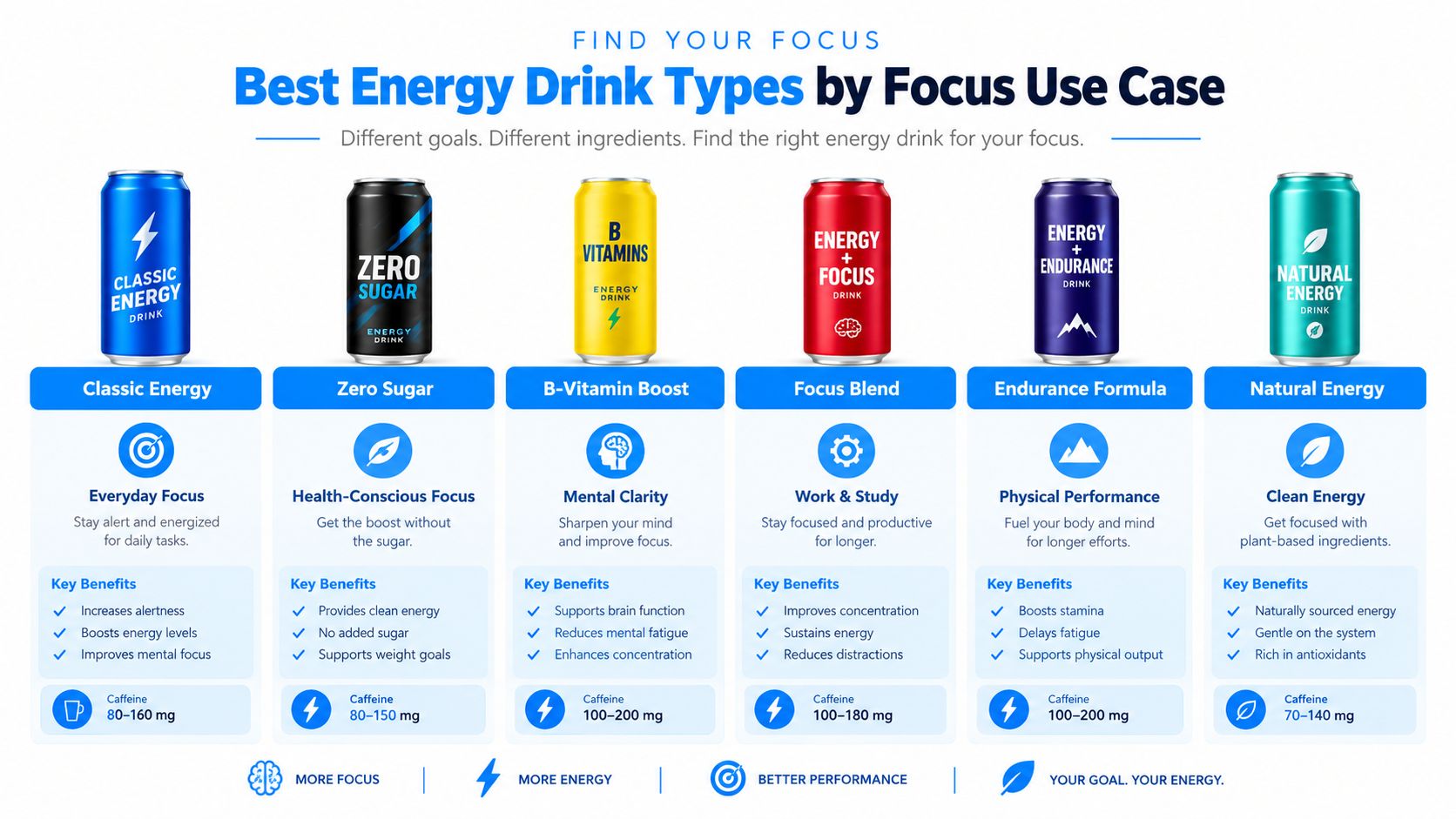
The best energy drink for focus depends on the task, the timing, and your response to stimulation. A product that works for a short deadline may be a poor choice for an evening study session or a day when sleep quality matters more than peak alertness.
For a short, demanding work block
A transparent caffeine drink is the most direct option when you need immediate wakefulness. The evidence is strongest for caffeine, so select a product that clearly states its dose rather than one built around a mystery blend. This route makes sense for a morning meeting, a brief writing session, or a task performed well before bedtime.
The trade-off is that caffeine changes arousal, not the underlying workload. If you already feel tense, increasing stimulation may reduce precision even while it increases energy.
For calm attention
Caffeine paired with L-theanine is a reasonable choice when plain caffeine feels too sharp. Human evidence supports the combination for alertness, attention, working memory, and information processing more clearly than it supports many popular add-ons. It still isn't caffeine-free, so users who are sensitive to stimulants should treat it as a stimulant formula with a smoothing adjunct.
This option often fits analytical work where you need to remain engaged without feeling physically activated. It won't eliminate the importance of dose, timing, or sleep.
For extended cognitive endurance
An exogenous ketone drink is a different choice for people who want fuel without relying on caffeine. It may fit a long workday, a fasting window, or a schedule that includes both desk work and movement. The objective isn't a sudden rush. It's to make BHB available as an alternative energy substrate.
The response will depend on the product's chemical form and delivery. A ketone ester, ketone salt, precursor, or bioidentical BHB formulation shouldn't be treated as equivalent just because each uses the word “ketone.”
For training and physically demanding days
When focus and physical output occur together, electrolytes become more relevant. Sodium, potassium, and magnesium support the broader hydration and mineral context, while the ketone component provides an alternative fuel pathway. This is a different use case from choosing a high-caffeine can before a sedentary task.
A useful decision rule is:
- Choose caffeine when immediate alertness is the priority and sleep timing allows it.
- Choose caffeine plus L-theanine when you want stimulant-driven alertness with a potentially smoother subjective experience.
- Choose exogenous ketones when you want direct BHB fuel and prefer to limit stimulant reliance.
- Choose a ketone and electrolyte format when the day combines endurance, movement, hydration demands, and mental work.
No category wins for every person. The right comparison is between the demands of the task and the cost of the product's after-effects.
How to Use Focus Drinks Safely and Effectively
Start with the smallest effective intervention. If you choose caffeine, use a clearly disclosed amount and pay attention to whether it affects anxiety, heart rate, concentration quality, or sleep. If you choose ketones, assess how your body tolerates the formulation before using it during an important event.
A practical testing process
- Define the task. Decide whether you need wakefulness, calm attention, cognitive endurance, or combined physical and mental output.
- Control the variables. Test one product at a time and keep your meal, hydration, and sleep context reasonably consistent.
- Track the full response. Note focus quality, physical sensations, gastrointestinal tolerance, appetite, and that night's sleep.
- Adjust timing. Use caffeine earlier when possible. Use ketones around the work or training window where direct fuel is most relevant.
- Stop if the response is poor. Jitters, marked anxiety, persistent gastrointestinal discomfort, or sleep disruption are signals to change the strategy rather than increase the dose.
Healthy adults in controlled ketone studies generally tolerated the tested interventions, but those results don't establish suitability for every person or every medical context. Anyone taking medication, managing a health condition, pregnant, or unusually sensitive to stimulants should seek qualified clinical advice before changing a supplement routine. For broader habit-based approaches, these ideas to improve concentration naturally are useful alongside, not instead of, nutrition planning.
For additional implementation context, review how to use exogenous ketones and begin conservatively. The goal is repeatable performance, not the strongest sensation.
Sleep disruption is a performance cost, even when the drink feels effective in the moment.
Tecton Ketones™ offers bioidentical exogenous ketone nutrition in liposomal formulations designed to provide direct BHB fuel for cognitive endurance, physical effort, and metabolic flexibility without requiring a strict ketogenic diet. Visit Tecton Ketones™ to compare its ketone-focused options and choose a format that matches your work, training, and stimulant preferences.


