


You may be dealing with a version of this right now. Your stomach feels distended by late afternoon. Your energy drops hard after meals. Your thinking feels less crisp than it should. You try probiotics for a week, cut out a few foods, then add a greens powder, then wonder why nothing is clear.
That pattern is common, and it usually fails for one reason. People treat the gut like a single symptom instead of a system.
Healing your gut isn't just about reducing bloating or getting more regular. It involves restoring digestion, calming irritation, improving microbial balance, supporting the gut lining, and giving cells reliable fuel while that repair process is underway. That last piece gets ignored too often. A stressed gut doesn't just affect digestion. It affects metabolic efficiency, brain function, and how steady you feel across the day.
Understanding the Gut Health Ecosystem
Initial signs of gut dysfunction often appear as local symptoms. Gas. Cramping. Constipation. Loose stools. Food reactions. But the gut is not a standalone tube for processing meals.
According to UCHealth's overview of gut health, the gastrointestinal tract houses roughly 70% of the body's immune tissue, and it contains trillions of microbes that help digest food, support immune defense, and help stabilize blood sugar. That changes the conversation. Gut health is not a side issue. It's central physiology.
What people usually mean by healing your gut
When people say they want to heal their gut, they usually mean one of three things:
- They want symptom relief. Less bloating, less urgency, less constipation, less discomfort after meals.
- They want a healthier microbiome. More resilience, better tolerance to foods, more regular digestion.
- They want barrier support. They suspect the gut lining is irritated and want to reduce the stress on that interface.
Those are related, but they are not identical. A protocol can improve symptoms without proving that barrier function has changed. That distinction matters because it keeps expectations realistic.
Clinical perspective: Symptom improvement is valuable, but it's not the same as confirming full repair of the intestinal barrier.
The ecosystem model works better than the quick-fix model
A more useful way to think about healing your gut is as ecosystem restoration. The system responds to what you repeatedly feed it, how well you digest what you eat, how stressed the body is, how hydrated you are, and whether the gut environment can support a more diverse, fiber-fed microbial community.
That's why the basics remain so durable. More whole plant foods, fewer processed foods, adequate hydration, exercise, and stress management keep showing up because they influence the ecosystem at multiple levels at once. If you want a practical explanation of how fibers feed beneficial microbes, this piece on prebiotics and weight loss is a useful companion.
The key shift is this. Stop asking, “What supplement fixes my gut?” Start asking, “What inputs am I giving this system every day?”
Decoding Gut Distress and Clinical Red Flags
Before you change your diet or start supplements, identify the pattern you're dealing with. Gut repair works better when the starting point is clear.

Start with the symptom pattern
Symptoms often cluster. That cluster gives you better information than any single complaint.
A practical self-check includes:
- After-meal symptoms such as pressure, reflux, gas, or fatigue
- Bowel pattern changes such as constipation, urgency, loose stools, or incomplete evacuation
- Tolerance changes where foods you used to handle now create discomfort
- System spillover such as skin irritation, poor concentration, or feeling wiped out after eating
Look for timing, not just intensity. If symptoms hit immediately after meals, digestion may be a bigger issue than microbial balance alone. If symptoms build through the day, meal composition, meal spacing, and total fermentable load may matter more.
Don't confuse scale changes with real progress
Many people judge gut progress by body weight or how flat their stomach looks that morning. That's unreliable. Changes in stool burden, hydration, sodium intake, and food volume can all change the scale quickly. If you need a clean explanation, this article on distinguishing fat loss from water weight helps separate digestive shifts from body composition changes.
That matters because early gut work often changes fullness, bowel output, and fluid balance before it changes anything else.
Know the red flags
Self-guided protocols are reasonable for mild, stable symptoms. They are not the right move when symptoms suggest something more serious.
The American Medical Association notes that a gastroenterologist advises that persistent bowel-pattern changes, pain, bleeding, or weight loss should trigger medical evaluation rather than prolonged self-treatment.
Persistent change is the signal. Not every bad day is a crisis, but ongoing symptoms deserve proper evaluation.
That's the line I want readers to respect. If symptoms are escalating, don't stay in supplement roulette.
Support the day without overstimulating it
When gut symptoms and brain fog arrive together, people often push harder on caffeine. That can make the day feel more jagged. In some cases, a structured support tool fits better. Locked Cognition™ Shot is designed for mentally demanding days and uses liposomal R3HBG™, Alpha GPC, and Lion's Mane in a format some people use when they want steadier workday support without leaning on coffee.
If digestion has changed after surgery or fat tolerance feels different, this resource on digestive enzymes after gallbladder removal can help frame what to watch for.
A Phased Protocol for Gut Restoration
Random changes create random feedback. A phased protocol gives you signal.
The most practical clinical model is simple. Remove what's aggravating the system. Replace what digestion may be missing. Reinoculate carefully. Repair while monitoring tolerance. One clinician framework described by Dr. Ruscio's gut-healing guide starts with a short 1 to 4 day pause from solid food or an elemental-style approach, followed by gradual food reintroduction and changing one variable at a time.
The sequence matters
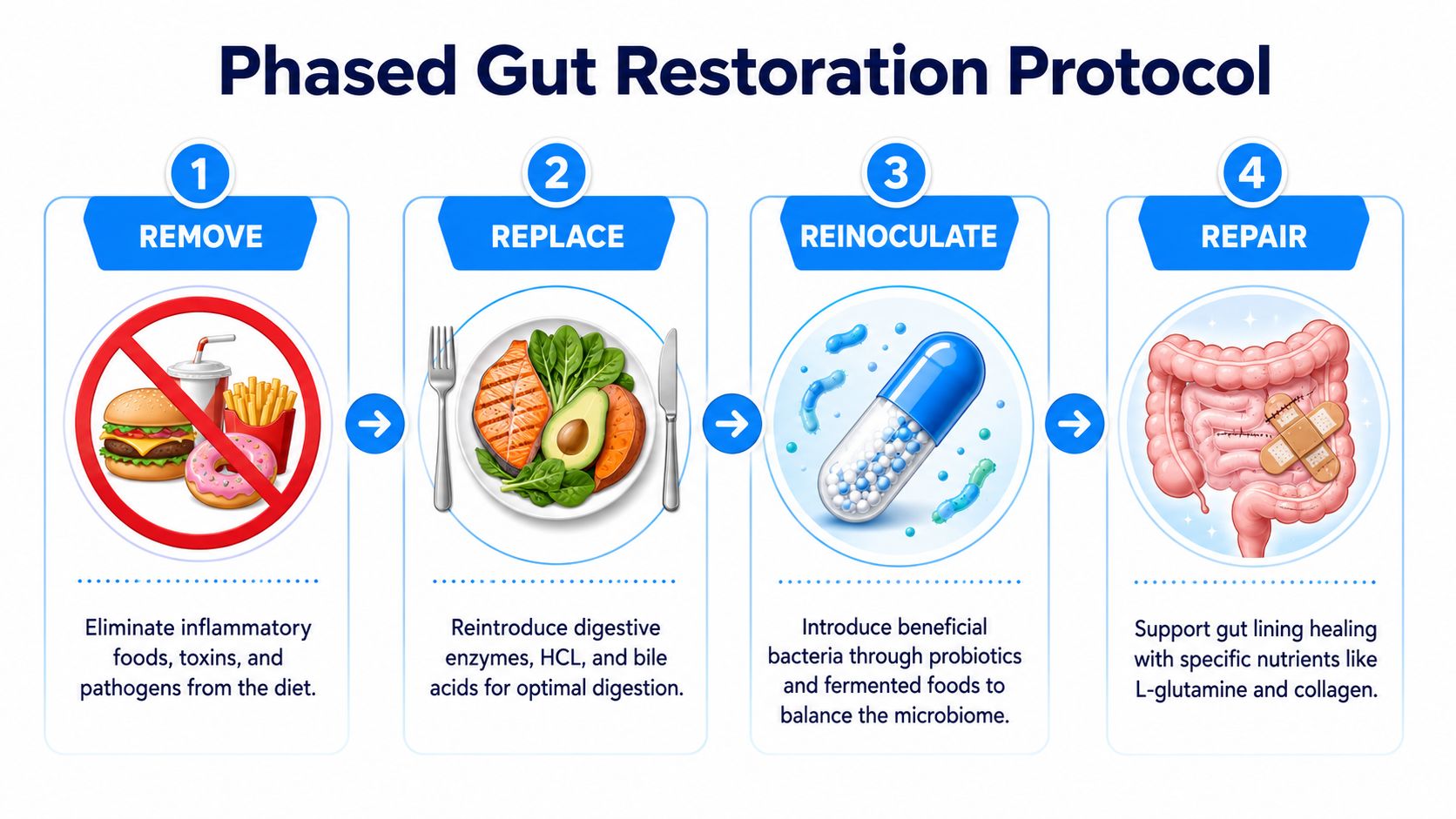
The common mistake is trying five new supplements, a full elimination diet, fermented foods, and high-fiber smoothies all in the same week. If symptoms improve, you won't know why. If symptoms worsen, you also won't know why.
Here is the structure I prefer clinically.
| Phase | Goal | Key Actions |
|---|---|---|
| Remove | Reduce immediate burden on the gut | Pull obvious irritants, simplify meals, consider a short reset if symptoms are active |
| Replace | Improve digestive function | Trial targeted support such as enzymes or other clinician-guided digestive aids |
| Reinoculate | Rebuild microbial balance | Reintroduce tolerated fibers, foods, and possibly probiotics in a measured way |
| Repair | Support resilience of the gut lining and routine | Continue tolerated nutrition, reduce reactivity, and taper only after stability |
Remove
Use this phase to lower noise in the system.
- Simplify meals: Eat foods you reliably tolerate.
- Lower the irritant load: Reduce alcohol, ultra-processed foods, and highly reactive foods for you.
- Consider a short reset carefully: In some clinical frameworks, a brief elemental-style approach or short pause from solid food is used when symptoms are flared.
This is not the time to prove discipline. It's the time to calm the environment.
Replace
Once symptoms settle a bit, support digestion itself. Some people are eating good foods but not handling them well.
This phase may include meal hygiene, slower eating, digestive support, or targeted clinician-guided tools. If you're evaluating gut lining support at the same time, this piece on the best time to take L-glutamine can help you structure that part of the plan.
Reinoculate
At this stage, many people move too aggressively.
Bring foods and supplements back in one at a time. Hold each change long enough to judge response. If you add a probiotic, fermented foods, and a fiber powder together, you've created a test with no control.
Practical rule: If you can't identify what changed your symptoms, you changed too many variables.
For readers exploring broader recovery compounds, some look at Peptide Warehouse USA's peptide research for context around investigational recovery discussions. Keep that separate from core gut work. It's not a substitute for a disciplined nutrition and symptom-tracking process.
A short visual overview can help if you want the process laid out clearly.
Repair
Repair is not one ingredient. It's what happens when the environment becomes less hostile and more consistent.
What tends to work:
- Consistent meals that don't provoke symptoms
- Steady hydration
- Sleep and stress work, because a hypervigilant system rarely heals well
- A maintenance mindset, where doses and restrictions can be reduced only after stability is obvious
What doesn't work is chasing novelty. The gut usually responds better to repeatable inputs than heroic interventions.
Targeted Nutrition and Metabolic Fuel
Once the system is stable enough to build on, food quality and fuel selection matter more than any single “gut healing” product.
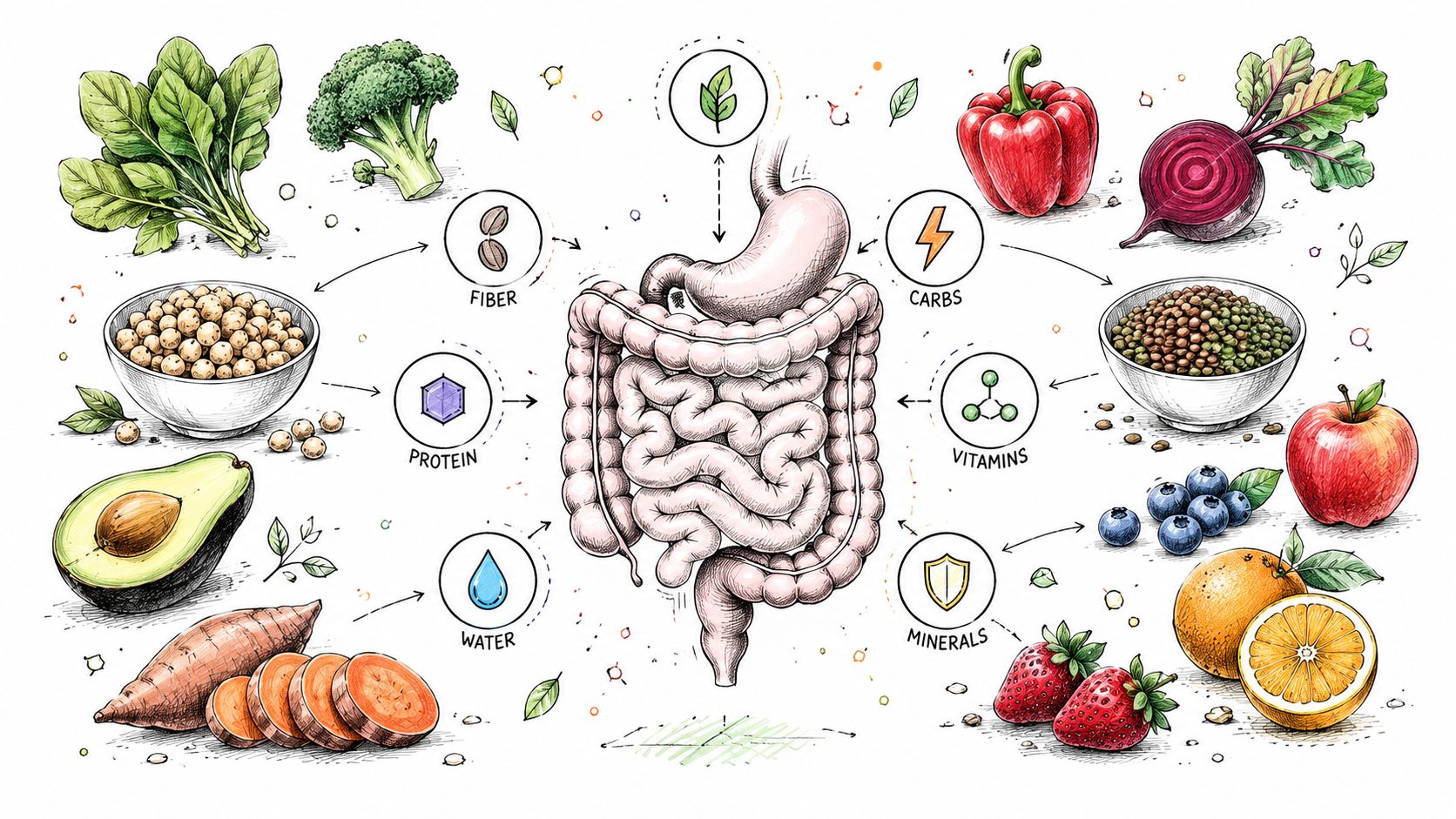
According to ZOE's review of improving gut health, significant dietary shifts toward whole foods can alter the microbiome in just a few days, and a practical target is about 30 different plant foods per week. That matters because microbial diversity is fed by diversity of inputs, not by repeating the same few “healthy” foods.
Food diversity beats supplement stacking
If you want the biggest return, build around tolerated whole foods first.
A useful foundation includes:
- Plant diversity: Herbs, vegetables, legumes, nuts, seeds, fruit, and whole grains as tolerated
- Fiber progression: Increase gradually, not all at once
- Fermented foods: Use selectively, based on response
- Processed food reduction: Cleaner inputs usually make pattern recognition easier
This is also why many supplement lists disappoint. A capsule can support the process, but it usually can't replace the daily ecology created by meals. If you want a broad consumer overview, this best gut health supplements guide is a decent reference point for comparing categories before deciding what's worth trialing.
Where ketones fit
This is the part most gut-health content misses.
A healing gut needs energy. Enterocytes and other high-demand tissues don't just need fewer irritants. They need reliable fuel. When the system is inflamed, underfed, or adapting to dietary change, energy availability can feel inconsistent. That's where ketones become relevant.
Beta-hydroxybutyrate, or BHB, is a ketone body the human body naturally uses as fuel. In nutritional ketosis, the liver makes ketones endogenously from fat. With exogenous ketones, you consume ketones directly. The physiology matters:
- BHB can serve as an alternative fuel source when glucose availability or tolerance feels less stable
- Mitochondria use ketones to help generate ATP, the cell's usable energy currency
- The brain can use ketones efficiently, which is one reason some people feel cognitively steadier when ketone availability rises
- Metabolic flexibility improves when the body can operate across glucose and ketone energy pathways instead of depending on one lane all day
That doesn't mean ketones “fix” the gut. It means they may support the broader energy context in which recovery, focus, and meal transitions happen.
Nutritional ketosis versus exogenous ketones
These are related but not identical.
Nutritional ketosis comes from a diet pattern or fasting state that increases endogenous ketone production.
Exogenous ketones deliver ketones directly, without requiring the same degree of carbohydrate restriction.
Tecton's approach centers on bioidentical R3HBG™, a form designed to deliver D-BHB, the same ketone isoform the body naturally uses. That differs from many ketone salt products, which often carry a mineral load and may not create the same user experience. It also differs from precursors that rely on conversion before usable ketone availability rises. Tecton uses a liposomal delivery system to support absorption consistency.
In practice, that means exogenous ketones can be used as a tool during fasting windows, reduced-calorie phases, cognitively heavy work blocks, or dietary transitions when you want cleaner energy support without forcing strict ketogenic dieting.
One example is the GLP-1 Shot, a metabolic support ketone shot built with liposomal R3HBG™ ketone, 5-HTP, and prebiotic fiber for people navigating appetite patterns, fasting windows, or midday energy dips.
Better gut work often comes from two levers at once. Improve the ecology of the gut, and improve the energy environment the body brings into that repair process.
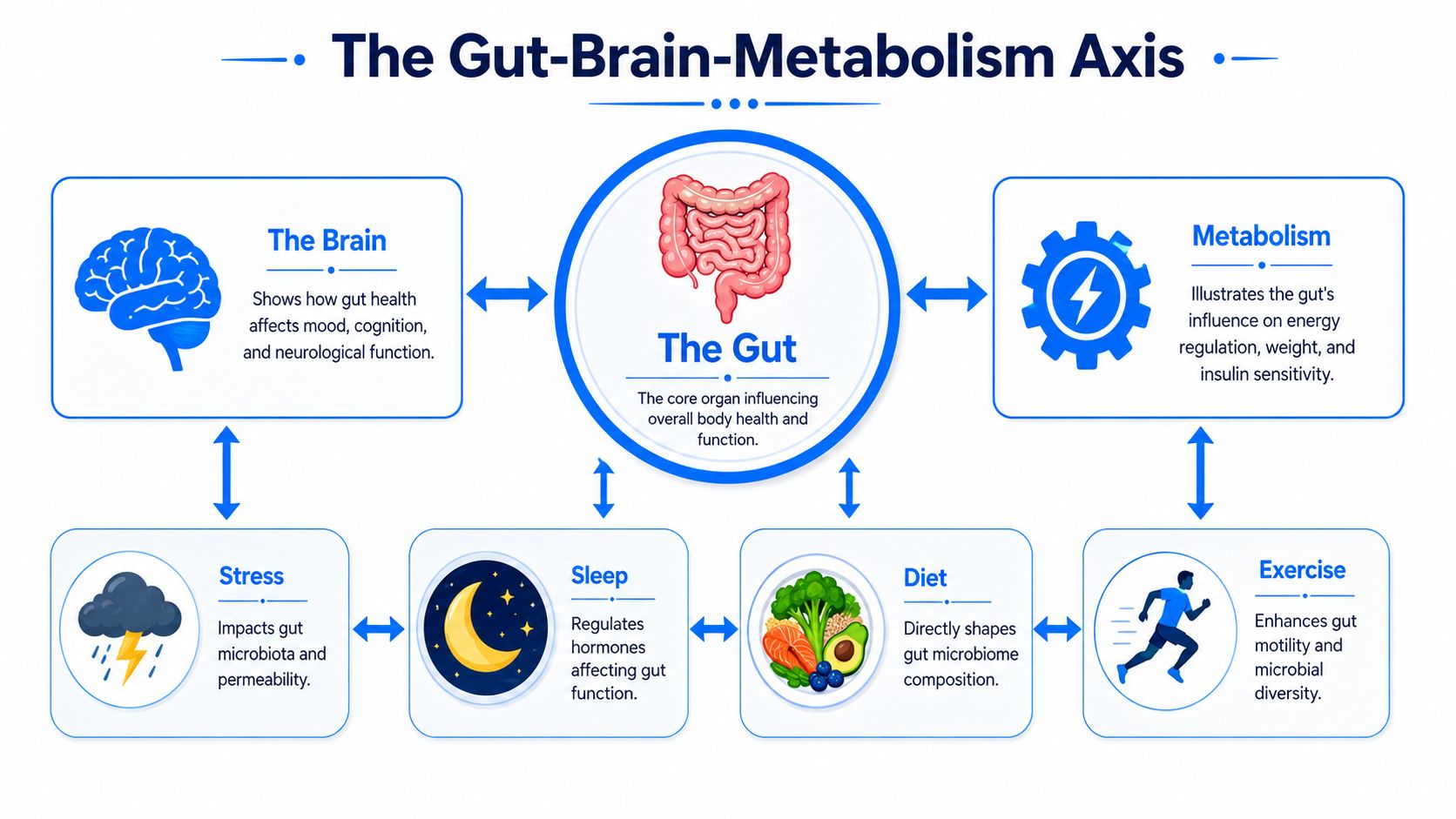
The Gut-Brain-Metabolism Axis
A gut problem rarely stays in the gut. It changes how you think, train, recover, and regulate energy across the day.
Why stress and routine matter so much
Readers often want a perfect supplement stack when what they need first is a more stable nervous system input pattern.
Poor sleep, constant grazing, rushed meals, low movement, and chronic stress all push the gut in the wrong direction. They can change motility, appetite cues, food tolerance, and how reactive the system feels. A person under heavy cognitive strain may interpret that as “digestive issues” alone, when the gut-brain-metabolism loop is the underlying issue.
The body does not separate these domains neatly. The same person can experience bloating, poor concentration, and unstable energy from the same underlying pattern of stress plus inconsistent fueling.
Why this matters
Ketone physiology becomes useful here because it translates biochemistry into function.
Steadier energy
BHB gives the body another fuel option. When meal timing is inconsistent or energy feels volatile, access to ketone fuel can make the day feel less jagged.
Cognitive endurance
The brain is energetically expensive tissue. Many people notice that when digestion is off, thinking gets less efficient too. Ketones offer a direct energy substrate that may help support mental stamina during periods of high demand.
Workout performance
For active people, metabolic flexibility matters. The better the body can move between glucose and ketone energy pathways, the less fragile energy output tends to feel.
Metabolic efficiency
A body that can use multiple fuel sources is easier to coach, easier to feed, and often easier to stabilize. That matters during fasting windows, travel, hard work blocks, or appetite disruption.
The bigger clinical point
Gut restoration is not just a digestion project. It is a systems regulation project.
If you improve food quality but ignore stress, the gut often stays reactive. If you improve symptoms but leave energy unstable, adherence usually drops. If you try to push strict nutritional ketosis when a person can barely tolerate meals, you may create more friction than benefit.
The practical target is not perfection. It's a body that digests more reliably, thinks more clearly, and has access to flexible fuel.
Application Framework for Lasting Success
The people who make progress with gut repair usually do boring things well. They track patterns. They adjust slowly. They stop reacting emotionally to every symptom spike.
Use a simple tracking system
You do not need a complicated spreadsheet. Track only what changes decisions:
- Meals eaten
- Symptoms after meals
- Bowel pattern
- Stress level
- Sleep quality
- Any new supplement or food challenge
A short log does something important. It separates a true trigger from a memorable bad day.
Build slower than you think you need to
If fiber or probiotics make you feel worse, don't assume you've failed. The more nuanced position is that one-size-fits-all gut advice breaks down quickly for people with bloating, IBS-like symptoms, or active sensitivity. As noted in this discussion of gut healing when standard advice backfires, more customized strategies can include low-FODMAP trials, specific supplement protocols, and gradual changes instead of aggressive clean-eating overhauls.
That's the maintenance mindset. You don't win by tolerating the most “healthy” foods the fastest. You win by expanding capacity without provoking chaos.
Practical takeaway
Use this sequence:
- Calm the system first. Don't layer five interventions at once.
- Support digestion before forcing food volume.
- Add diversity gradually. Aim for breadth over intensity.
- Use ketone support when it helps the day function better. Especially during fasting windows, reduced appetite, or cognitively demanding periods.
- Escalate to medical care when symptoms stay persistent or concerning.
Healing your gut usually looks less dramatic than social media suggests. It looks like better decisions repeated long enough for the system to trust the environment again.
Tecton Ketones™ offers a science-led way to use bioidentical exogenous ketones as part of that broader process. If you're working on metabolic flexibility, steadier cognitive energy, or more reliable fuel during dietary transitions, their education and product platform are worth reviewing alongside your nutrition and symptom-tracking plan.


