


How do you know you're in ketosis if you feel tired, less hungry, or notice a change in your breath? Those sensations may be compatible with ketosis, but they don't prove it. The clinically useful answer comes from measuring a ketone, preferably blood beta-hydroxybutyrate, or BHB.
That distinction matters because the word “keto” can describe a diet, a fasting pattern, a supplement, or an assumption about how someone feels. Ketosis is a measurable metabolic state, and the most reliable confirmation is a reading that shows whether ketones are present at a meaningful concentration.
What It Actually Means to Be in Ketosis
What does it mean to be in ketosis if your body still uses glucose? Ketosis begins when the liver converts fatty acids into ketone bodies quickly enough for tissues to use them as a meaningful fuel source. Glucose remains part of the energy supply, while fuel use shifts toward fatty acids and ketones. This reflects metabolic flexibility, the ability to draw on different energy sources as availability changes.
For nutritional ketosis, the practical measurement rule is a blood BHB concentration of at least 0.5 mmol/L. Normal serum ketones are generally defined as 0.5 mM or lower, while nutritional ketosis begins at or above 0.5 mM BHB (peer-reviewed review in PMC). The meter measures the state directly. Symptoms only suggest that a shift may be occurring.
A low-carbohydrate menu does not guarantee a reading above that threshold. Hidden carbohydrates, frequent meals, alcohol, high energy intake, and individual differences in fuel use can keep BHB below it. Fasting or an exogenous ketone product can raise BHB temporarily, even without a strict ketogenic diet. The number therefore answers a narrower question than “Am I following keto?” It answers whether circulating BHB has reached the commonly used range for nutritional ketosis.
Practical rule: Feeling “keto” is a clue. A blood BHB reading is confirmation.
Ketosis is a gradual state, not an on-or-off switch. Meals, exercise, sleep, hydration, and fasting can all change a reading. Guidance on the relationship between dietary strategy and obesity care and keto diet should distinguish the food plan from the measurable metabolic state it may produce.
Use symptoms to notice patterns, then test when the distinction matters.
How Ketosis Became a Measurable State
How did ketosis move from a clinical observation to a number you can check at home?
In the 1920s, fasting and ketogenic diets were used in epilepsy care, giving clinicians an early way to connect dietary restriction with changes in physiology (historical review). Patients and researchers could observe the effects, but home testing for ketones was not yet practical.
Later research clarified how glucose and fatty-acid metabolism influence fuel selection. It also showed that BHB is more than a waste product. The molecule can provide fuel for the heart, skeletal muscle, and brain, and it participates in cellular signaling.
Testing tools then turned ketosis into a measurable state. Urine strips offered an early consumer method, although they detect acetoacetate, not BHB. Breath devices estimate acetone. Blood meters measure BHB, giving a closer view of the ketone circulating in the blood at that moment.
In the 1970s, Dr. Robert Atkins introduced nutritional ketosis as a weight-loss approach, bringing the concept beyond epilepsy care and into wider dietary use, as noted in the same historical review. That broader use created a practical distinction: following a keto diet describes an eating plan, while ketosis describes a measurable metabolic state.
A useful decision rule is:
- A diet label describes what you intend to eat.
- A symptom describes what you notice.
- A ketone reading shows what is circulating when you test.
These categories can disagree. You may follow a ketogenic menu without producing a high BHB reading, or feel changes that have another explanation. A meter cannot explain every symptom, but it can answer the narrower question of whether ketones are present at the time of measurement.
The test result matters more than the label when confirmation is the goal.
The Three Ketone Molecules and Why BHB Leads
The liver produces three related ketone bodies: beta-hydroxybutyrate, acetoacetate, and acetone. They're connected, but they aren't interchangeable from a testing perspective.
BHB is the practical measurement
BHB is the dominant circulating ketone and a major transport form of ketone energy. Once it reaches a cell, mitochondria convert it through a sequence of reactions that produces acetyl-CoA. Acetyl-CoA enters the citric acid cycle, and the resulting electron carriers support the electron transport chain and mitochondrial ATP production.
ATP is the immediate energy currency used for muscle contraction, ion transport, nerve signaling, and many other cellular tasks. Glucose reaches ATP through glycolysis followed by mitochondrial oxidation. BHB enters the mitochondrial energy pathway differently, but it still ultimately supplies carbon and reducing equivalents for oxidative energy production.
The brain can use ketone bodies because they readily cross the blood-brain barrier. In normally fed adults, plasma BHB is typically around 0.1 mmol/L, contributing to less than 5% of brain metabolism before ketosis develops (NCBI Bookshelf). As ketone availability rises, the brain can use more of this alternative fuel.
Acetoacetate and acetone complete the picture
Acetoacetate is an upstream ketone body that can convert back and forth with BHB. Some acetoacetate also spontaneously breaks down into acetone. The lungs exhale acetone, which explains why some people notice a sweet or solvent-like breath odor.
Urine strips detect acetoacetate that the kidneys excrete. That reading can be helpful for a rough trend, but it doesn't directly show current blood BHB. As your body adapts and uses ketones more efficiently, less acetoacetate may spill into urine even while blood ketone use is active.
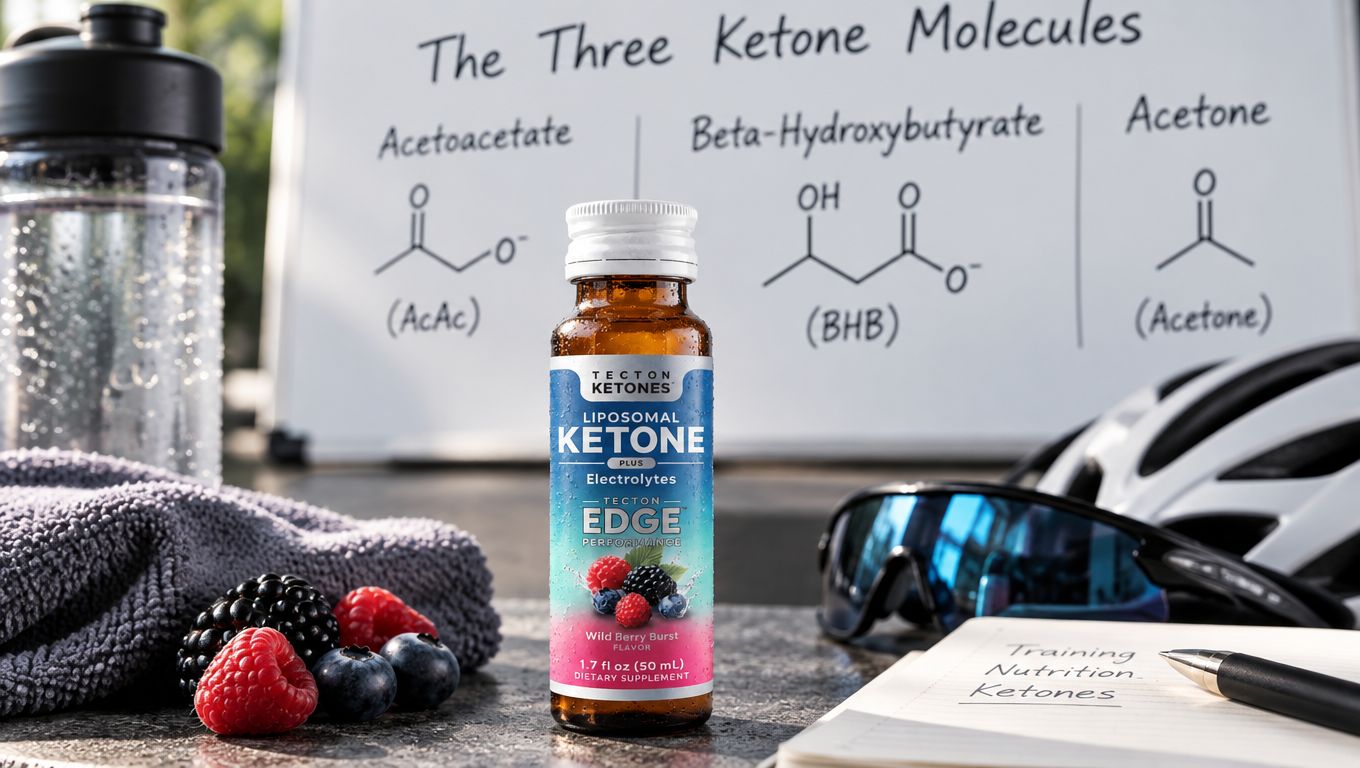
A useful explanation of the molecule itself appears in this overview of beta-hydroxybutyrate. If an active person wants to experiment with direct ketone availability rather than waiting for dietary production, the Tecton EDGE™ Performance Shot + Electrolytes is described as a liposomal R3HBG ketone shot with sodium, potassium, and magnesium for training, movement, or physically demanding days.
Three Ketone Bodies at a Glance
| Ketone | Source in Body | Primary Test | Why It Matters |
|---|---|---|---|
| BHB | Formed from fatty-acid-derived acetyl-CoA in the liver | Blood meter | Best practical marker of circulating ketone availability |
| Acetoacetate | Interconverts with BHB | Urine strip or blood laboratory testing | Shows a related ketone, but urine reflects excretion rather than current use |
| Acetone | Forms partly from acetoacetate breakdown | Breath analyzer | Provides a noninvasive signal related to ketone production and fat adaptation |
If you can measure only one number, measure blood BHB.
Blood, Breath, and Urine Testing Compared
Blood BHB testing is the closest option to a clinical decision rule. A finger prick produces a capillary blood sample, and the meter reports BHB in mmol/L within a short time. It's invasive, but it reflects the metabolic moment more directly than urine or breath.
Urine strips are inexpensive and simple. They detect acetoacetate through a color reaction, but the result depends on how much ketone the kidneys are spilling, how concentrated the urine is, and how adapted you are. A pale result doesn't necessarily mean you aren't using ketones.
Breath analyzers measure acetone, usually in parts per million. They're convenient for repeated checks and may become more useful once your routine is stable, but recent food, alcohol, mouthwash, ventilation, and device calibration can affect the result.
Ketone Testing Methods Compared
| Factor | Blood BHB | Breath Acetone | Urine Acetoacetate |
|---|---|---|---|
| Directness | Measures circulating BHB | Estimates exhaled acetone | Measures urinary ketone spillover |
| Invasiveness | Finger prick | None | None |
| Timing | Current reading | Reflects recent ketone production and adaptation | Delayed reflection of excretion |
| Best early use | Strongest confirmation during diet or fasting changes | Useful as a convenient supplement | Rough trend during early restriction |
| Long-term use | Reliable when used consistently | Convenient for repeated monitoring | Can become less informative with adaptation |
| Main limitation | Requires a strip and finger prick | Sensitive to conditions affecting breath | Can miss mild ketosis or fall as adaptation improves |
During the first phase of a ketogenic diet, blood BHB gives the clearest answer. Breath can reduce testing friction later, while urine strips can offer a low-cost trend. Pairing a breath device with occasional blood checks can help you learn whether your personal breath pattern corresponds to a verified BHB reading.
Your body weight can also shift for reasons unrelated to fat loss, especially during carbohydrate restriction or training. That's why a resource on why the scale is misleading for athletes can complement ketone tracking without replacing it.
For a more detailed look at the strengths and limitations of urine testing, see this guide to a urine ketones test kit.
Reading Your Ketone Number
What does a BHB number prove? It gives you a measurement, not a complete verdict. Read it alongside your carbohydrate intake, fasting state, recent exercise, symptoms, and medical context. How you feel can suggest a change, but the meter decides whether ketones are present at a measurable level.
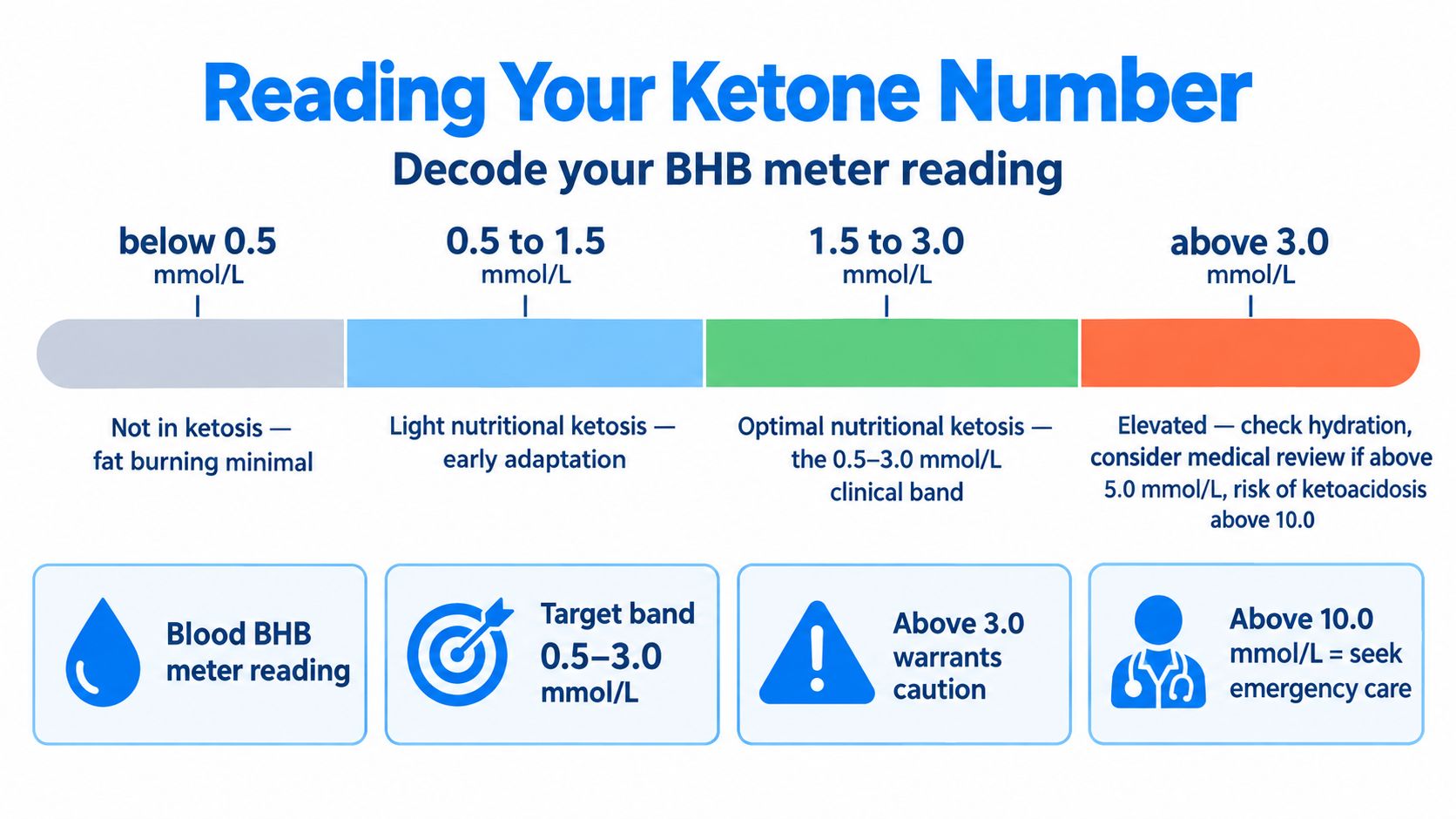
A reading below 0.5 mmol/L usually does not confirm nutritional ketosis. A result of 0.5 mmol/L or higher meets the commonly used entry point defined above. Nutritional ketosis can cover a broader range, including 0.5 to 5.0 mmol/L, depending on the person's diet, fasting state, and other circumstances (recent review in Frontiers).
Use these readings as practical reference points:
- 0.3 mmol/L: You may be producing some ketones, but this result remains below the usual threshold and does not confirm nutritional ketosis.
- 1.0 mmol/L: This fits light nutritional ketosis. It may follow carbohydrate restriction, an overnight fast, or exercise.
- 2.5 mmol/L: This is a higher nutritional ketosis reading. Longer fasting, stronger carbohydrate restriction, or substantial fat mobilization may contribute.
Values above 3.0 mmol/L require context. They do not automatically indicate an emergency, but people with diabetes, especially those at risk of diabetic ketoacidosis, should follow their clinician's testing and sick-day instructions. A level above 3.0 mM raises concern, while diabetic ketoacidosis depends on higher ketone levels together with abnormal clinical findings.
Timing changes the result. Morning and afternoon readings can differ because food, movement, sleep, hormones, and fasting duration affect fuel availability. A post-workout rise may reflect glycogen use and short-term fat mobilization, while a fasted test captures another point in the daily cycle.
Treat one value as a snapshot. A seven-day pattern, measured under similar conditions, gives a more useful basis for deciding whether your routine consistently produces nutritional ketosis.
Common Symptoms That Get Misread
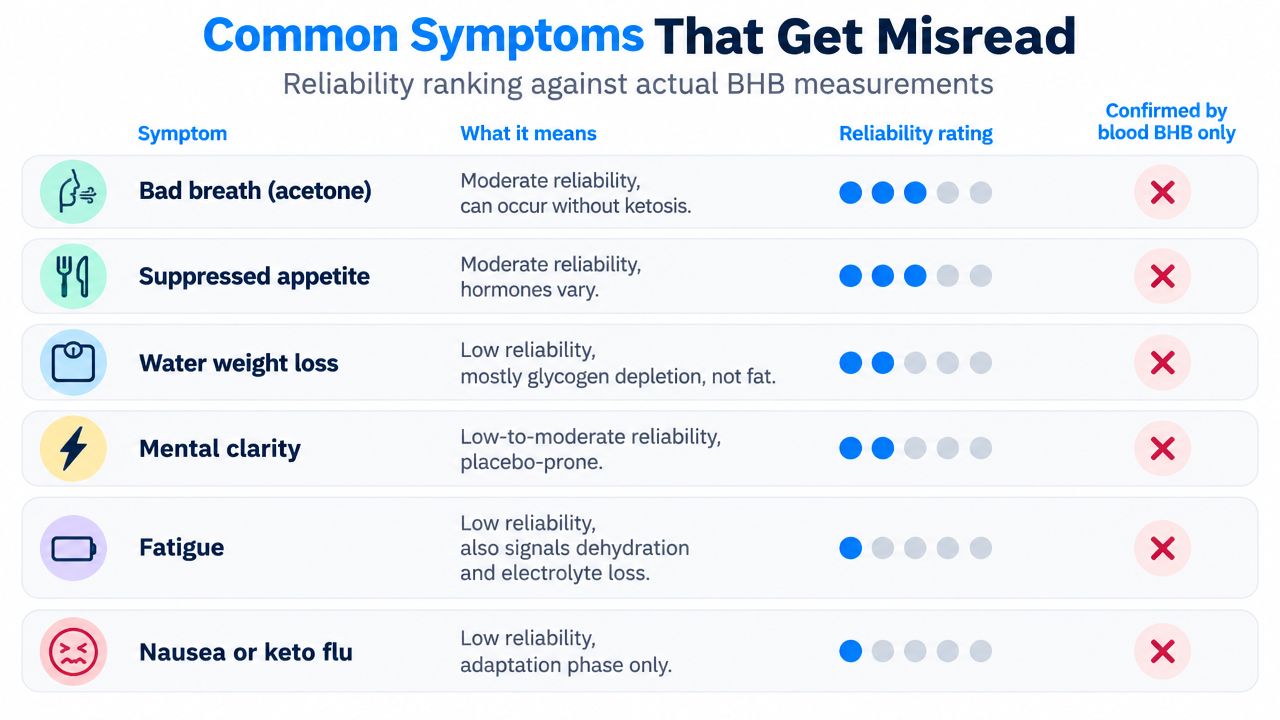
Symptoms can make ketosis feel obvious, but most are nonspecific. Bad breath may reflect acetone, yet it can also vary with oral hygiene, hydration, and food intake. Reduced appetite may accompany a low-carbohydrate routine, but it can also result from eating fewer calories or changing meal timing.
Water loss is one of the most commonly misread signals. Early carbohydrate restriction changes stored carbohydrate availability and associated fluid balance, so the scale can move without proving that BHB has reached nutritional ketosis. A headache, fatigue, cramps, or irritability may reflect dehydration or electrolyte changes rather than ketone production.
A symptom-by-symptom reality check
- Bad breath: Moderately suggestive because acetone is a ketone-related compound, but it isn't definitive.
- Appetite suppression: Compatible with ketosis, but meal size, protein, fat, sleep, and calorie intake also influence hunger.
- Water-weight change: A poor confirmation tool because early scale movement can reflect fluid shifts.
- Mental clarity: A personal experience, not a validated substitute for BHB measurement.
- Fatigue: Common during dietary adaptation, but also consistent with inadequate energy, fluids, or electrolytes.
- Keto flu: A group of transition symptoms that doesn't establish sustained ketosis.
There's another complication. Your tissues may be using ketones rapidly, so the amount produced and the amount remaining in blood won't always move together. Someone can feel energetic while BHB is modest, or feel tired while BHB is high.
The safest decision rule is simple: use symptoms to decide what to investigate, then use a meter to decide what's true.
Timelines and What Skews Your Readings
How quickly can a meter show ketosis, and why might the result differ from how you feel? The answer depends on both the route into ketosis and the conditions surrounding the test. A ketogenic diet usually produces a gradual rise over several days. Fasting can change BHB more quickly, while exogenous ketones can raise blood BHB without creating dietary ketosis. The number may look similar, but the underlying physiology differs.
Entry Timelines and Reading Distorters
| Method or Factor | Typical Onset or Effect on Ketone Reading |
|---|---|
| Carbohydrate restriction | Gradual rise as dietary glucose availability and insulin signaling change |
| Fasting | Faster rise as food-derived energy becomes unavailable |
| Exogenous ketones | Direct, temporary rise in circulating BHB without requiring diet-induced ketosis |
| Exercise | May raise BHB after glycogen use and increased fat mobilization |
| MCT intake | Can create a transient ketone increase |
| Alcohol | May alter normal ketone production and fuel handling |
| Hydration status | Can concentrate urine and affect urine-strip interpretation |
| Illness | May change appetite, metabolism, and breath acetone, requiring caution |
Research supports the distinction between making ketones and consuming them. A meta-analysis of 30 studies involving 408 participants found that exogenous ketones increased blood BHB, reduced glucose, and increased insulin in healthy non-athletes (PubMed meta-analysis). That result does not show that a person has entered nutritional ketosis through carbohydrate restriction or fasting.
Treat a surprising reading like a lab result that needs context. First check recent carbohydrates, including sauces, drinks, snacks, and alcohol. Then retest under a consistent condition, such as after an overnight fast. Record any exogenous ketone or MCT product, along with strenuous exercise, and compare several readings instead of reacting to one.
Illness and diabetes require extra caution. Follow medical advice rather than interpreting the number alone.
A fasting tracker can help you check fasting progress with a widget, but a timer cannot prove ketosis. For the difference between fasting and direct ketone delivery, review this guide to exogenous ketones and fasting.
Building Your Personal Confirmation System
How do you separate the way ketosis feels from what your body is producing? Use symptoms as clues, then let repeated measurements confirm or challenge them. A useful system combines objective testing, symptom awareness, and consistent routines. You do not need to measure every sensation or chase the highest possible reading. You need enough comparable information to recognize your own pattern.
Begin with similar testing conditions. Measure at roughly the same time, record whether you are fasted or fed, and note recent exercise. Briefly log carbohydrate intake, sleep, hydration, appetite, energy, and mental clarity. These details provide context when a result seems surprising.
A practical confirmation framework
- Objective testing: Use blood BHB when confirmation matters. A weekly fasted reading can help with maintenance. A short daily series is more useful while changing diet, fasting, or training.
- Symptom tracking: Rate appetite, energy, and cognitive clarity in simple terms. Record breath changes or cramps, but treat them as supporting context, not proof.
- Routine consistency: Keep test timing, meal patterns, and exercise conditions reasonably similar. Otherwise, each result belongs to a different experiment.
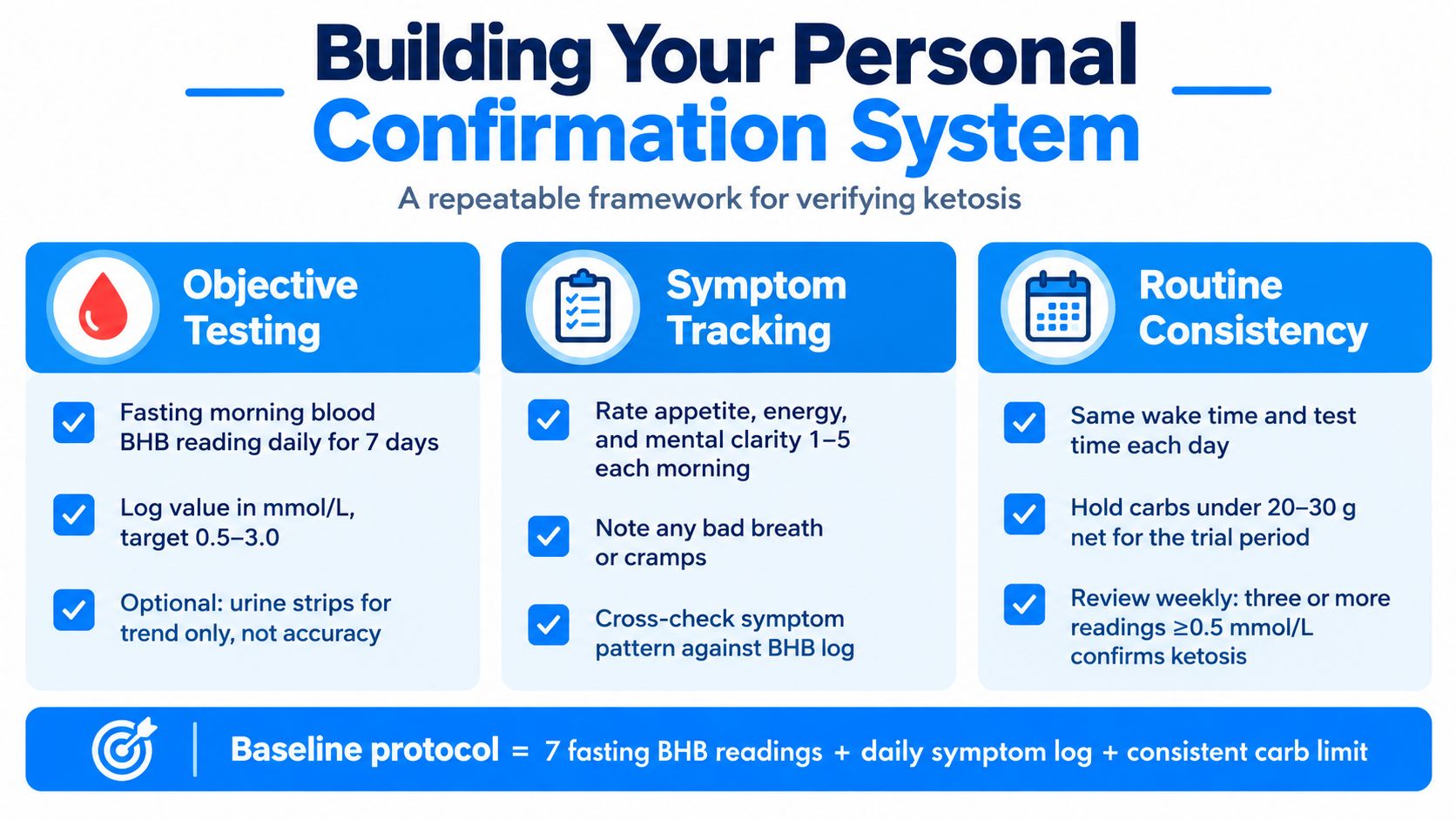
Read symptoms and measurements together. Strong appetite suppression with low BHB should prompt you to check calorie restriction, meal timing, or dehydration. A verified BHB reading with few noticeable symptoms can still indicate ketone use. Subjective experience is a poor substitute for measurement.
Exogenous ketones are a separate tool. Human studies show that supplementation can raise BHB. One trial reported an increase from 0.1 to 4.1 ± 1.1 mM with repeated intake over 28 days, without adverse changes in body weight, electrolytes, blood gases, or kidney function in that study population (human trial). This describes measured ketone availability under study conditions, not proof that a carbohydrate-restricted diet independently produced sustained nutritional ketosis.
Practical Takeaway
Track a consistent series of BHB readings rather than isolated symptoms. Use breath or urine testing for convenience, then return to blood BHB when the answer matters. Treat an exogenous ketone as direct fuel delivery, not as proof of independently sustained nutritional ketosis.
Tecton Ketones™ offers bioidentical exogenous ketone nutrition built around R3HBG and liposomal delivery, with options for performance, cognition, electrolytes, and structured fasting routines. Compare direct ketone support with your own BHB tracking system at Tecton Ketones™.


