


You're comparing ketone ester labels after a long training session, a demanding workday, or an afternoon when coffee no longer feels like the right answer. One product emphasizes grams per serving, another highlights liposomal delivery, and a third promises a rapid rise in ketones. The difficult part is that the largest serving isn't automatically the most useful product, and a higher blood-ketone reading doesn't automatically mean better performance.
The more rigorous question is simple: which formulation produces a predictable rise in usable D-β-hydroxybutyrate, with acceptable tolerability, for your actual goal? This guide evaluates the best ketone esters through that lens, separating physiology from marketing, comparing esters with salts and precursors, and ending with a cautious dose-start framework. For broader context on non-caffeinated options, this guide to natural energy and focus aids is also useful.
Why Choosing Among the Best Ketone Esters Feels Confusing
A performance-minded buyer may begin with a clear objective: steadier energy during endurance work, better cognitive endurance during a long work block, or a way to access ketones without fasting or following a strict ketogenic diet. The label search quickly becomes less clear. A bottle may list total ketone material, another may mention a tri-ester structure, and another may focus on flavor or electrolytes.
Consider two hypothetical shoppers. The first chooses the product with the largest number on the front label, assuming more grams must mean a stronger effect. The second chooses a product with a smaller serving because it claims to be “fast acting.” Neither has answered the central question: how much D-BHB reaches the blood, how quickly does it appear, and how well can the user tolerate it?
The label can hide the useful comparison
“Ketone ester” describes a chemical category, not a complete quality standard. Products can differ in:
- Stereochemistry, meaning whether the formulation supplies the biologically relevant D-BHB or includes less useful L-BHB.
- Delivered ketone mass, which isn't always equivalent to the total weight of the serving.
- Time-to-peak, because a rapid rise may suit training while a different curve may suit a long workday.
- Food context, since meal composition and timing can alter the blood-ketone response.
- Tolerability, especially reflux, nausea, abdominal cramping, diarrhea, or an unpleasant taste.
Controlled human research shows that oral ketone esters can produce substantially higher blood D-BHB concentrations than lower-dose exogenous-ketone formats, but it also shows that dose, formulation, exercise status, and meal context affect the resulting curve (human ketone-ester research review).
Practical rule: Compare measured D-BHB exposure, not serving size alone.
A better decision path
Start with the job the product must perform. An endurance athlete may prioritize rapid availability and electrolyte compatibility. Someone doing sustained desk work may care more about predictable exposure and taste. A fasting user may prefer a lower starting amount because gastrointestinal comfort matters more than reaching the highest possible BHB concentration.
The “best” option is therefore conditional. It's the formulation that gives you a measurable, tolerable response in the setting where you plan to use it. The practical test is not whether the label sounds advanced. It's whether the product provides transparent information about stereochemistry, dose, kinetics, and human use.
How Exogenous Ketones Create Usable Energy
Ketone metabolism becomes easier to understand when you follow the molecule through the cell.
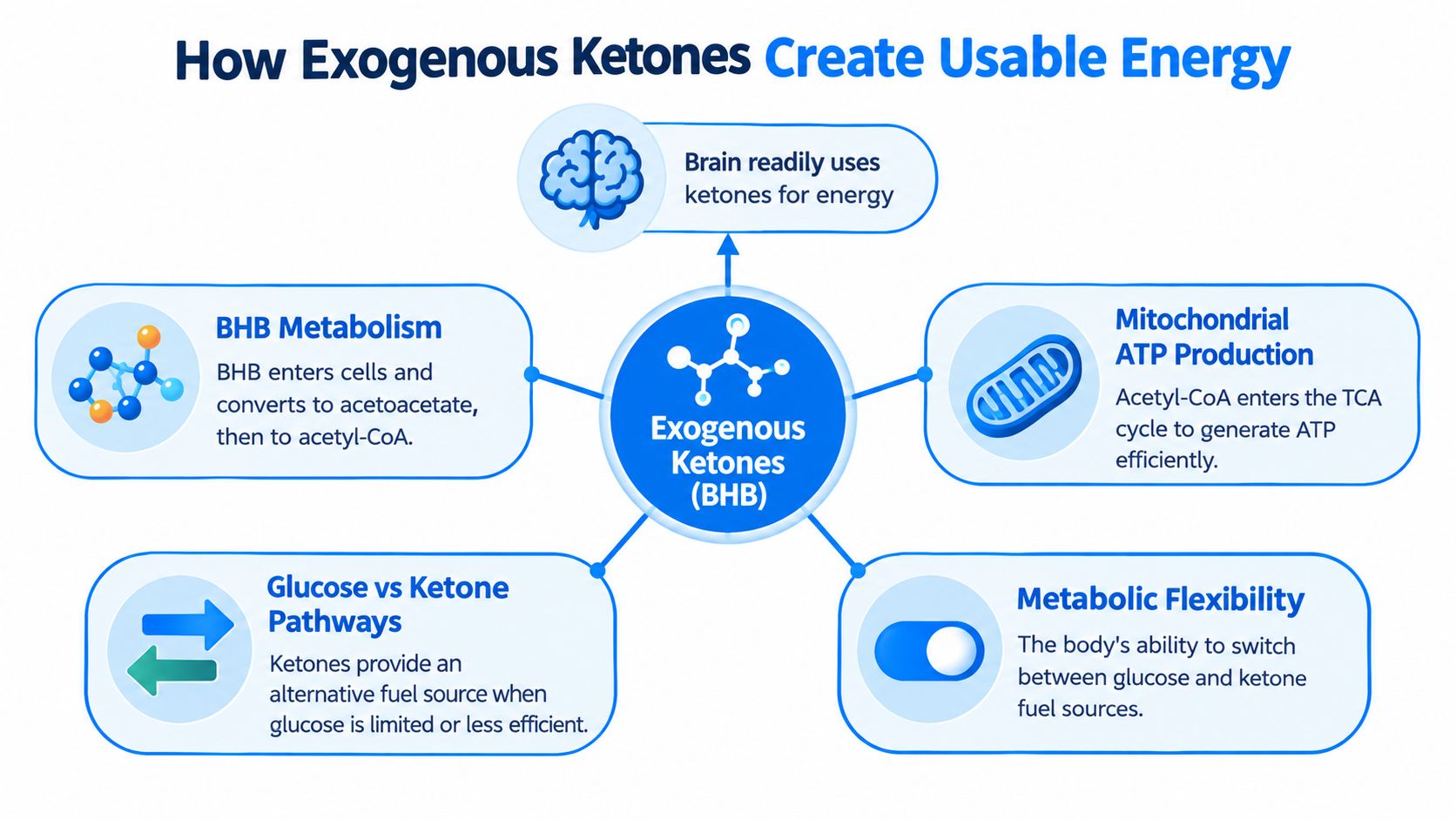
From BHB to ATP
Beta-hydroxybutyrate, or BHB, circulates in the blood and enters tissues. Inside cells, BHB is converted to acetoacetate, then to acetyl-CoA. Acetyl-CoA enters the mitochondrial tricarboxylic acid cycle, where its carbon is processed through reactions that generate electron carriers. Those carriers support oxidative phosphorylation, the mitochondrial process that produces ATP.
ATP is the immediate energy currency used for muscle contraction, neuronal signaling, ion gradients, and many other cellular tasks. Ketones don't create energy independently of oxygen. They provide an alternative carbon source that mitochondria can oxidize for ATP production.
Glucose follows a different entry route. It moves through glycolysis, producing pyruvate, which can become acetyl-CoA before entering the same central mitochondrial cycle. Ketones therefore don't replace glucose in every situation. They expand the available fuel options.
Endogenous and exogenous ketosis
Nutritional ketosis is a diet-induced state in which carbohydrate restriction and lower insulin signaling encourage the liver to produce ketones. Endogenous ketone production also occurs during fasting, when stored fat supplies energy and the liver converts fatty acids into ketone bodies.
Exogenous ketone supplementation supplies ketone material from outside the body. An oral ester can raise circulating BHB without requiring prolonged fasting or a strict ketogenic diet. That creates a temporary metabolic state, but it doesn't reproduce every adaptation associated with sustained dietary ketosis.
A controlled starvation study in nine healthy volunteers measured the brain's fuel shift after 3.5 days without food. Cortical gray-matter glucose metabolism fell by 26%, from 0.294 ± 0.054 to 0.217 ± 0.040 µmol·g⁻¹·min⁻¹, while net cerebral BHB uptake increased approximately 13-fold, from 0.012 ± 0.024 to 0.155 ± 0.140 µmol·g⁻¹·min⁻¹. After that fast, ketone bodies supplied approximately one-quarter of the brain's energy requirements (human cerebral fuel-switching study).
That finding explains why ketone availability can influence brain fuel use. It doesn't prove that a supplement reproduces every fasting adaptation or treats a neurological condition. Readers exploring cognitive recovery should keep the distinction clear, and a clinical resource such as the Sunridge Medical toxic exposure guide can provide broader context without turning ketone use into a disease claim.
For a more detailed introduction to the chemistry, see what ketone esters are. The practical takeaway is that exogenous ketones deliver substrate, while long-term metabolic adaptation depends on the wider diet, training, fasting, and recovery context.
Ketone Salts Versus Esters Versus Precursors Explained
The word “ketone” appears across several very different formulations. Treating them as interchangeable makes label comparison difficult.
The main chemical formats
Ketone esters chemically link a ketone body or ketone precursor to an alcohol or glycerol-derived carrier. A monoester can deliver D-BHB efficiently after digestion. A glycerol-backbone tri-ester can carry multiple D-BHB molecules and release them as the ester is broken down.
Ketone salts pair BHB with minerals such as sodium, potassium, calcium, or magnesium. They can raise blood BHB, but the mineral load may become relevant when serving size increases or when a user already consumes substantial electrolytes.
Precursors such as R-1,3-butanediol require metabolic conversion before producing BHB. That makes them different from a formulation that supplies the ketone body directly. A precursor may have a place in product design, but it shouldn't be described as identical to direct D-BHB delivery.
A formulation may also use a liposomal delivery system, which surrounds or disperses an active ingredient within lipid structures intended to support handling and absorption. Liposomal technology can be relevant to consistency and palatability, but the claim still needs human pharmacokinetic support. “Liposomal” by itself isn't proof of a superior blood-ketone curve.
| Format | BHB Delivery | Tolerability Notes | Best Fit |
|---|---|---|---|
| Ketone monoester | Direct, efficient D-BHB elevation when appropriately formulated | Taste and gastrointestinal tolerance can vary | Measured, rapid ketone delivery |
| Glycerol-backbone tri-ester | Can carry multiple D-BHB molecules per carrier structure | Product-specific tolerance and dose data matter | Users seeking concentrated ester delivery |
| Ketone salt | BHB paired with minerals | Mineral load and gastrointestinal response should be checked | Users who want combined ketones and electrolytes |
| R-1,3-butanediol precursor | BHB appears after metabolic conversion | Response depends on conversion and formulation | Users evaluating precursor-based products |
| Liposomal formulation | Delivery technology, not a separate ketone class | Evidence should show consistent exposure | Products emphasizing absorption and usability |
A systematic review and meta-analysis of 43 exogenous-ketone trials involving 586 participants found that supplementation increased blood BHB by a mean difference of 1.73 mmol/L, with a 95% confidence interval of 1.26–2.21 mmol/L, while blood glucose decreased by 0.54 mmol/L, with a 95% confidence interval of 0.40–0.68 mmol/L. In placebo-controlled comparisons, BHB increased by 1.98 mmol/L and glucose decreased by 0.47 mmol/L. The analysis also found significantly larger BHB effects from monoesters than from ketone salts (systematic review of exogenous ketones).
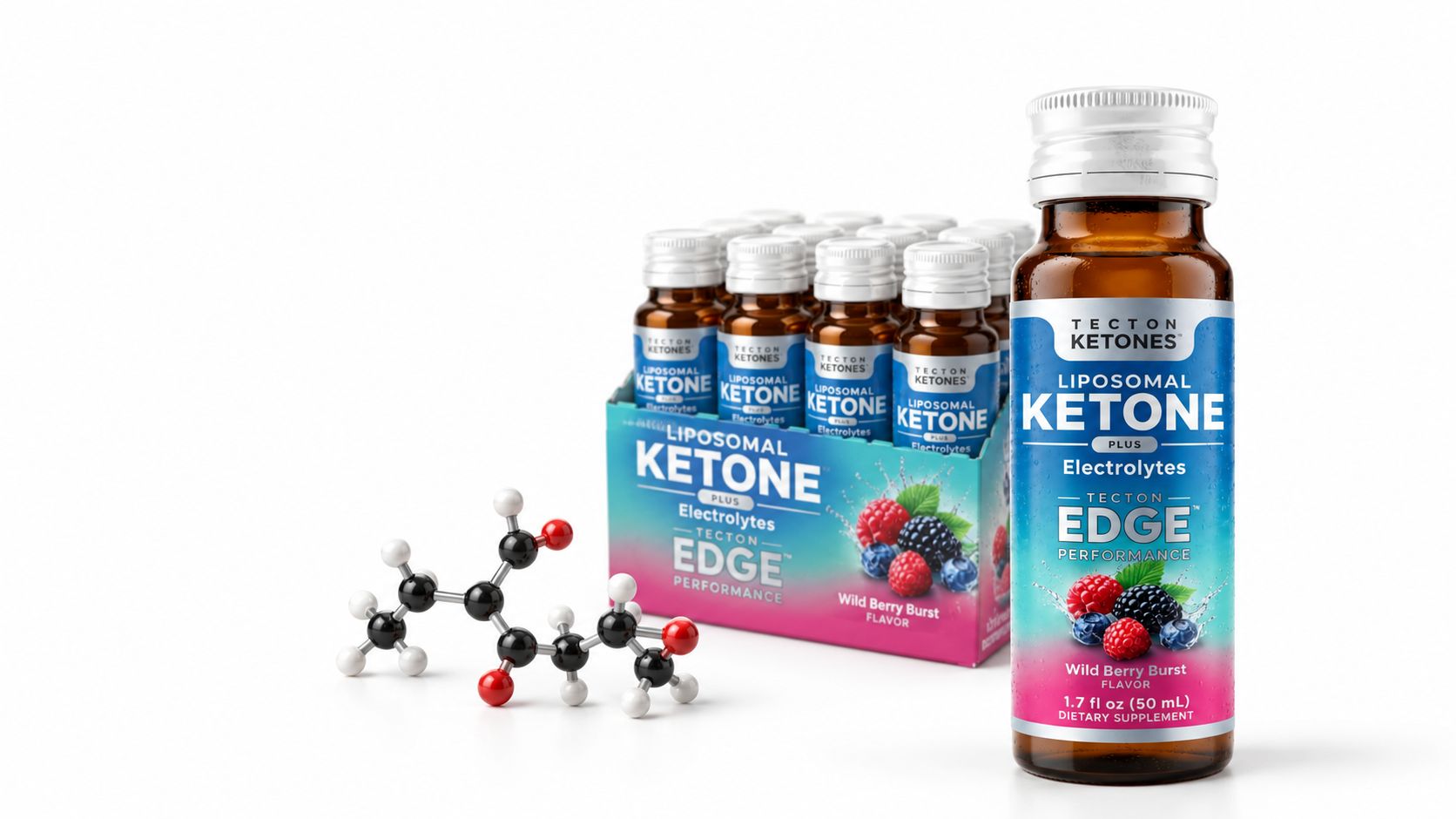
For an active user who wants ketones alongside hydration support, Tecton EDGE™ Performance Shot + Electrolytes uses liposomal R3HBG ketone with sodium, potassium, and magnesium. It's positioned for training, movement, physically demanding days, and endurance use without caffeine. Product details should still be judged against measured D-BHB exposure and personal tolerance. A broader comparison of exogenous ketones can help organize the alternatives.
What Separates the Best Ketone Esters in Human Data
A credible ketone-ester comparison begins with pharmacokinetics. The first question isn't whether a product uses the word “advanced.” It's whether controlled human data show how much D-BHB appears in blood, when it peaks, and how consistently users tolerate the dose.
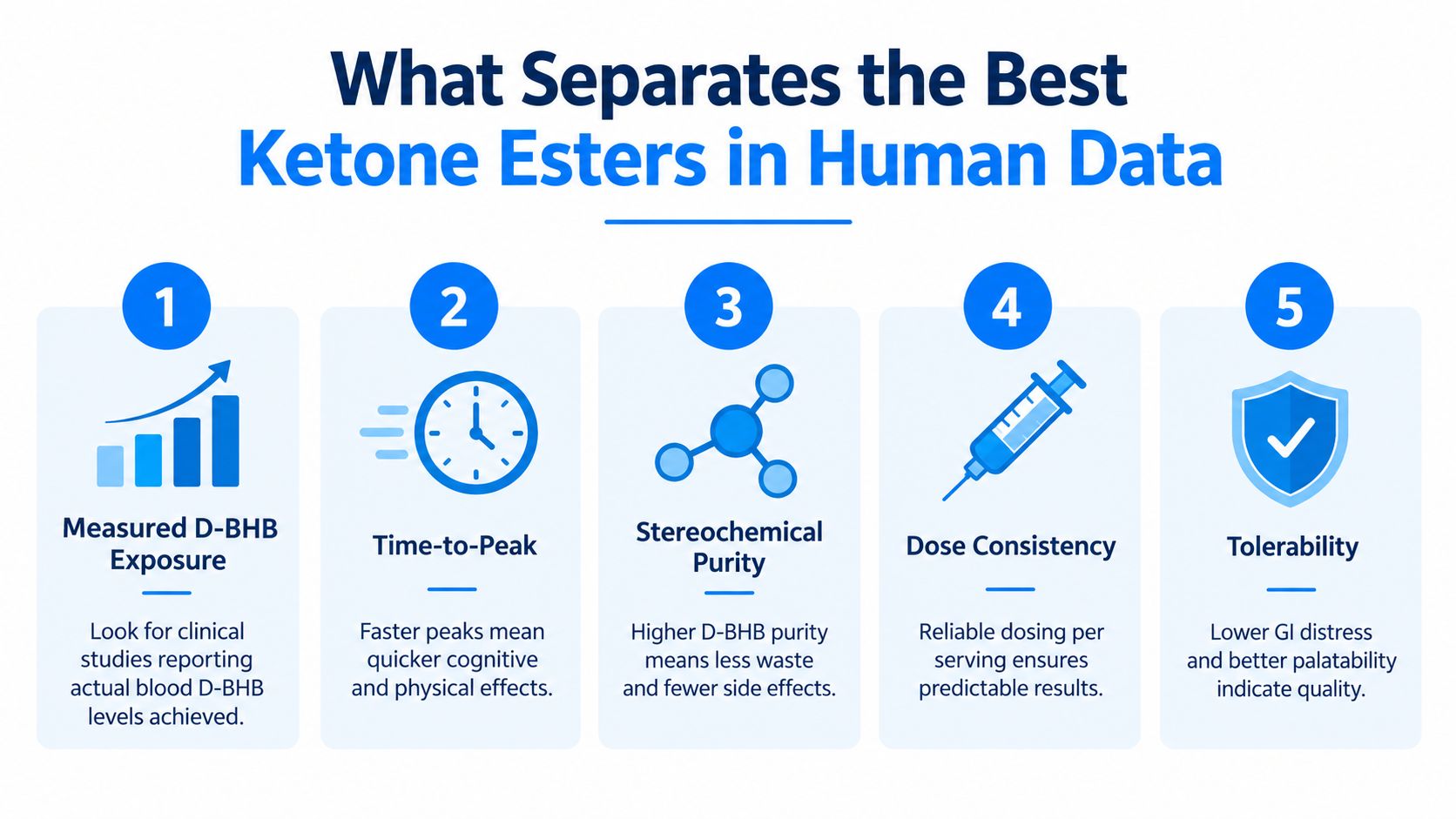
Five useful evidence filters
- Measured D-BHB exposure: Look for actual blood D-BHB results, not just total ketone grams.
- Time-to-peak: A fast rise may suit a planned workout, but speed alone doesn't establish better performance.
- Stereochemical profile: D-BHB is the biologically relevant ketone used in human energy metabolism. A label should make the stereoisomer profile clear.
- Dose consistency: Reproducible serving contents support predictable use across training or workdays.
- Tolerability: Reflux, nausea, burping, diarrhea, dizziness, abdominal cramping, and taste can determine whether a product remains practical.
Ketone-ester research moved from laboratory development into controlled human trials after the creation of the ketone monoester (R)-3-hydroxybutyl (R)-3-hydroxybutyrate, developed through Oxford University and National Institutes of Health collaboration beginning in the early 1990s. In a 2017 randomized human study, a ketone-ester drink raised blood D-BHB to a maximum of 5.3 ± 0.5 mmol/L, compared with 0.7 mmol/L after the control drink, with P < 0.0001 (ketone monoester review and human data).
That result demonstrates strong delivery capability. It doesn't prove that every user needs the same concentration, or that a higher excursion creates a universal performance advantage.
Performance evidence needs restraint
A systematic review of eight endurance trials involving 80 participants found no significant overall performance advantage for ketone esters versus controls, with no significant effects for time-to-exhaustion or time-trial outcomes (endurance performance review). Another systematic review of 10 studies involving 112 participants and 16 performance outcomes found three positive outcomes, 10 null outcomes, and three negative outcomes, with very high heterogeneity for endurance performance and ketone-ester studies.
The evidence supports reliable metabolic-state modification, not a guarantee of improved athletic output. A product earns credibility by disclosing its D-BHB profile, dose, pharmacokinetic curve, adverse-event information, and intended use case.
Matching a Ketone Ester to Performance Cognition and Metabolic Goals
The same blood-ketone rise can serve different purposes, and the surrounding context changes how useful it may feel. A runner, a student, and someone extending a fasting window aren't asking the formulation to do the same job.
Endurance training
For a long, steady session, the relevant features are predictable exposure, acceptable taste, and compatibility with hydration. One randomized crossover study found that a ketone-ester drink raised BHB above 3 mmol/L and improved the time participants could sustain an 80-rpm cycling cadence by 24 ± 9% compared with an isocaloric carbohydrate control, with p = 0.027 (cycling study of ketone ester use).
That result came from an acute exercise experiment. It shouldn't be generalized to every sport, intensity, or athlete. Ketones may support oxidative energy production, but high-intensity work can still require carbohydrate availability.
Cognitive endurance and desk work
For demanding mental work, a user may value a steady subjective experience more than a dramatic peak. The biological rationale is straightforward: the brain can use ketones as an alternative fuel when circulating availability rises. The evidence is stronger for measurable BHB elevation than for universal improvements in attention, memory, or productivity.
A high-purity D-BHB ester may be attractive when the priority is a clean formulation without unnecessary mineral load. A product that also contains caffeine or nootropics should be judged separately, since the stimulant or cognitive ingredients can affect the experience independently of ketone delivery.
Fasting windows and metabolic flexibility
Exogenous ketones can raise BHB without requiring prolonged carbohydrate restriction. That may interest people who want to explore ketone availability while maintaining a broader diet. It doesn't mean the supplement reproduces the full metabolic adaptation of fasting or nutritional ketosis.
Selection rule: Match the ester to the job, then validate the response with tolerance, timing, and measured BHB rather than expectation.
For readers comparing endurance options, this overview of science-backed supplements for athletes offers additional context. Keep the same standard here: a physiological mechanism is not the same as a guaranteed outcome.
How to Start Dosing and Why This Matters
Starting with the largest researched amount is a common mistake. Ketone esters can produce a substantial BHB rise, but gastrointestinal tolerance varies by formulation, dose, meal context, and individual sensitivity.
A conservative starting approach
- Start below the full serving: Use the smallest practical amount listed by the manufacturer, especially if you've never used an ester.
- Test it on an ordinary day: Don't make the first trial a race, maximal workout, exam, or long fast.
- Use consistent timing: Note whether you take it fasted, with a meal, or before exercise.
- Track the response: Record taste, reflux, nausea, abdominal comfort, perceived energy, focus, and workout tolerance.
- Increase gradually: Only consider more if the initial amount is comfortable and the intended use justifies it.
- Hydrate normally: If the product includes electrolytes, account for them as part of your overall intake rather than adding them blindly.
A randomized trial of 59 healthy adults increased a ketone diester from 12.5 g/day to 25 g/day and found no clinically meaningful safety differences versus placebo while monitoring reflux, burping, nausea, diarrhea, dizziness, and abdominal cramping. A 12-week pilot in adults aged 65 and older found up to 25 g/day generally safe and tolerable, although abdominal cramping and reflux were among the most common symptoms (ketone-ester safety and tolerability research).
Those findings support cautious use, not a universal prescription. A review describes research dosing of approximately 395–573 mg/kg to reach blood BHB around 3.3 mmol/L, which can correspond to roughly 31–46 g every 3–4 hours, a much more aggressive pattern than many consumer routines (review of ketone dosing and tolerability). Users shouldn't copy research dosing without considering body size, health status, product composition, and professional guidance.
Why This Matters
The biochemistry becomes useful only when it improves a real task.
- Steadier energy: A circulating alternative fuel may reduce the feeling of relying on repeated carbohydrate or caffeine inputs, although individual responses differ.
- Cognitive endurance: The brain can oxidize ketones, so exogenous BHB may provide substrate during prolonged mental demand.
- Workout performance: Selected endurance protocols may benefit, but the broader performance literature remains mixed.
- Metabolic efficiency: Ketones can alter fuel availability and glucose handling, but acute changes aren't proof of long-term metabolic improvement.
Stop if symptoms are persistent, severe, or worsening. People with diabetes, significant metabolic disease, pregnancy, medication use, or complex medical conditions should discuss ketone supplementation with a qualified clinician before experimenting.
Practical Takeaway and Application Framework for Daily Use
The best ketone esters aren't selected by the most dramatic promise. They're selected by a repeatable evidence and use process.
The application framework
- Define the task. Choose endurance, cognitive work, fasting support, or another specific use.
- Inspect the molecule. Confirm whether the product clearly identifies D-BHB, its stereochemical composition, and its carrier.
- Check the data. Prefer human pharmacokinetic evidence that reports measured blood D-BHB and timing.
- Start conservatively. Use a lower amount first and assess taste, gastrointestinal response, hydration, and subjective effect.
- Test one variable. Don't introduce several new supplements at the same time.
- Review the result objectively. A higher BHB reading confirms exposure. It doesn't confirm better performance, cognition, or long-term health.
For daily tolerability, some users may prefer a direct bioidentical D-BHB ester over a precursor-based product or a formulation carrying a substantial mineral load. A liposomal delivery system may be useful when it's supported by consistent product data, but the technology shouldn't replace transparent measurements. Tecton Ketones™ offers formulations built around liposomal R3HBG, including performance and electrolyte positioning, while its broader portfolio also includes products designed for cognition and appetite-focused routines. Those products should be evaluated with the same standards applied to any other ester.
The practical verdict is modest but useful: choose a measurable, well-tolerated source of D-BHB, match it to the task, and don't confuse acute ketosis with a guaranteed outcome. For people who want a structured trial, the ketone ester drink guide provides additional product-use context.
Explore Tecton Ketones™ to compare liposomal R3HBG formulations designed for performance, cognition, and structured metabolic routines. Choose a product that matches your use case, start conservatively, and evaluate your response through measurable exposure and real-world tolerance.


