


You can raise blood ketones in under an hour and still gain body fat. That sounds contradictory if you've been told ketones burn fat, but it follows directly from human physiology. Ketones are a fuel and a signal. Fat loss is an energy balance outcome over weeks. Confusing those two ideas is where most claims about ketones for weight loss go wrong.
Why Ketones Alone Do Not Equal Fat Loss
A higher beta-hydroxybutyrate, or BHB, reading tells you ketones are circulating. It doesn't tell you whether those ketones came from your own fat stores, from dietary fat, or from a drink you just consumed. It also doesn't tell you whether you ate fewer calories than you burned that day.
That distinction matters because your body can oxidize supplied ketones while storing other energy. If total intake remains above expenditure, adipose tissue doesn't shrink just because BHB is temporarily raised. Ketone oxidation can even reduce reliance on other fuels in the short term, which is normal fuel switching, not proof of net fat loss.
Core principle: Measure fat loss by sustained changes in body composition and energy intake, not by a single ketone reading.
Early scale changes add another layer of confusion. When people restrict carbohydrate, glycogen stores fall and water associated with glycogen is lost. The scale moves quickly, but that initial change isn't equivalent to the same amount of body fat lost. Sustained fat loss depends on adherence, protein intake, activity, and total energy intake over time.
What ketones can reasonably do
Ketones may help some people feel steadier between meals, train with an alternative fuel available, or stick to a structured eating pattern. Those are supportive effects. They're different from an independent fat loss effect, and the human evidence needs to be read with that boundary in mind.
The useful question isn't whether ketones are present. It's whether using them changes eating behavior, training quality, or body composition compared with a proper control. That's a stricter test, and it's the one that matters.
How BHB Actually Fuels the Body
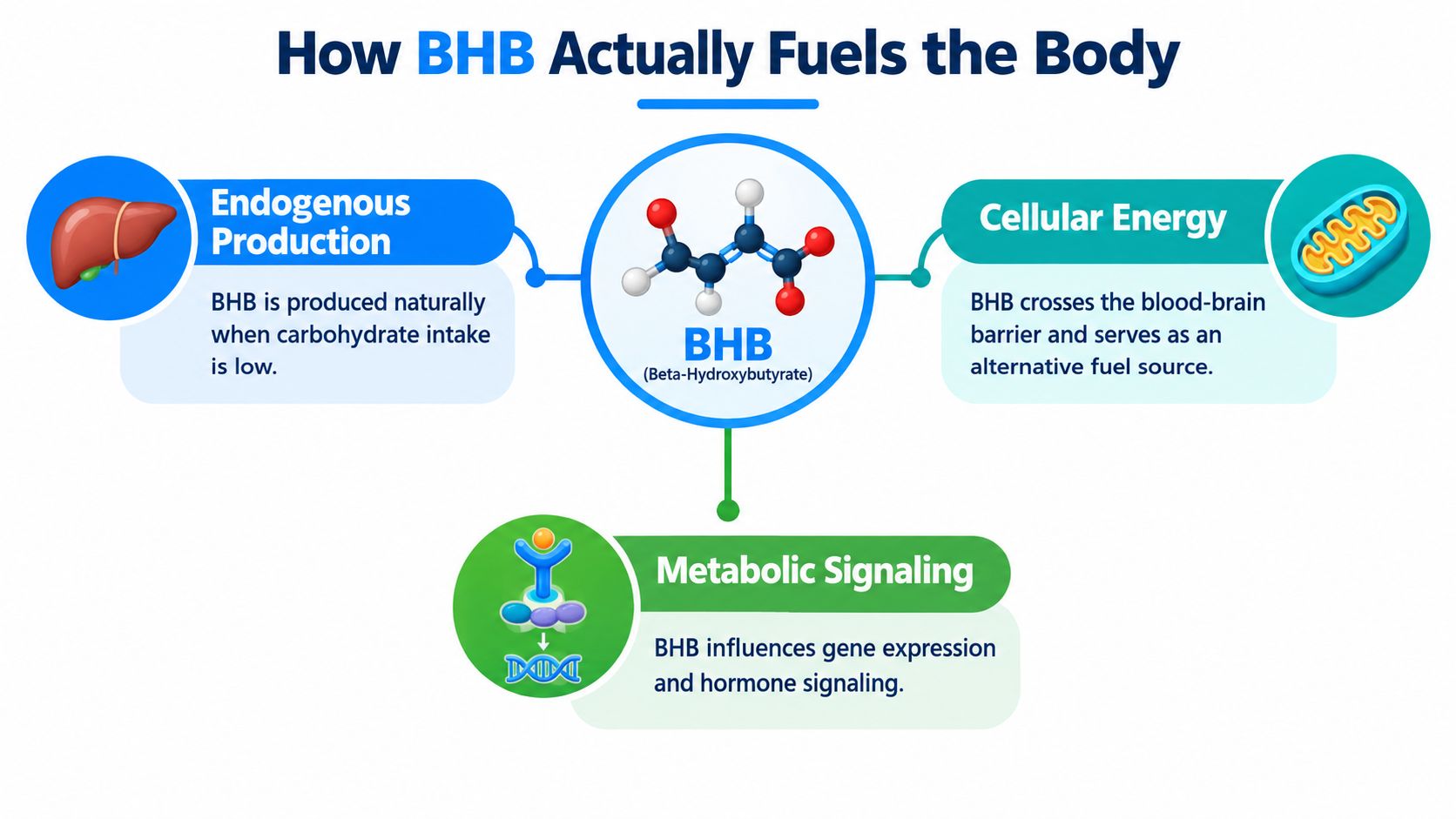
Your liver produces three ketone bodies, BHB, acetoacetate, and acetone, when carbohydrate availability falls during fasting, carbohydrate restriction, or prolonged exercise. BHB is the main circulating form measured in blood. You can read a focused primer on the role of beta-hydroxybutyrate in energy metabolism for the chemistry in more detail.
Once BHB reaches tissues such as brain, heart, and skeletal muscle, it's converted back to acetoacetate and then to acetyl-CoA inside mitochondria. Acetyl-CoA enters the tricarboxylic acid cycle, generating reducing equivalents that drive the electron transport chain and ATP synthesis through oxidative phosphorylation, as described in a review of ketone metabolism during exercise.
Glucose and ketones are parallel fuels
Glucose is the default fuel in the fed state. Ketones become more important when glucose availability drops. Metabolic flexibility means your tissues can shift between those fuels based on supply and demand, rather than depending on one pathway exclusively.
- Brain fuel: During prolonged starvation, ketones can provide 60% or more of the brain's energy demand, according to a review of brain ketone utilization.
- Muscle fuel: Ketone use rises with training status and exercise duration, alongside fat and carbohydrate oxidation.
- Signaling role: BHB also influences cellular signaling and gene expression, separate from its role as fuel.
That brain finding explains the interest in cognitive endurance. BHB and acetoacetate cross the blood-brain barrier and support ATP production in neural mitochondria. It doesn't, by itself, prove better memory or attention in every setting. Fuel availability and demonstrated cognitive outcomes are related questions, but they're not identical.
BHB also interacts with endothelial and immune signaling pathways. Those mechanisms are scientifically interesting and relevant to metabolic health research. They still don't convert an acute rise in BHB into guaranteed fat loss.
Nutritional Ketosis Versus Exogenous Ketone Supplementation
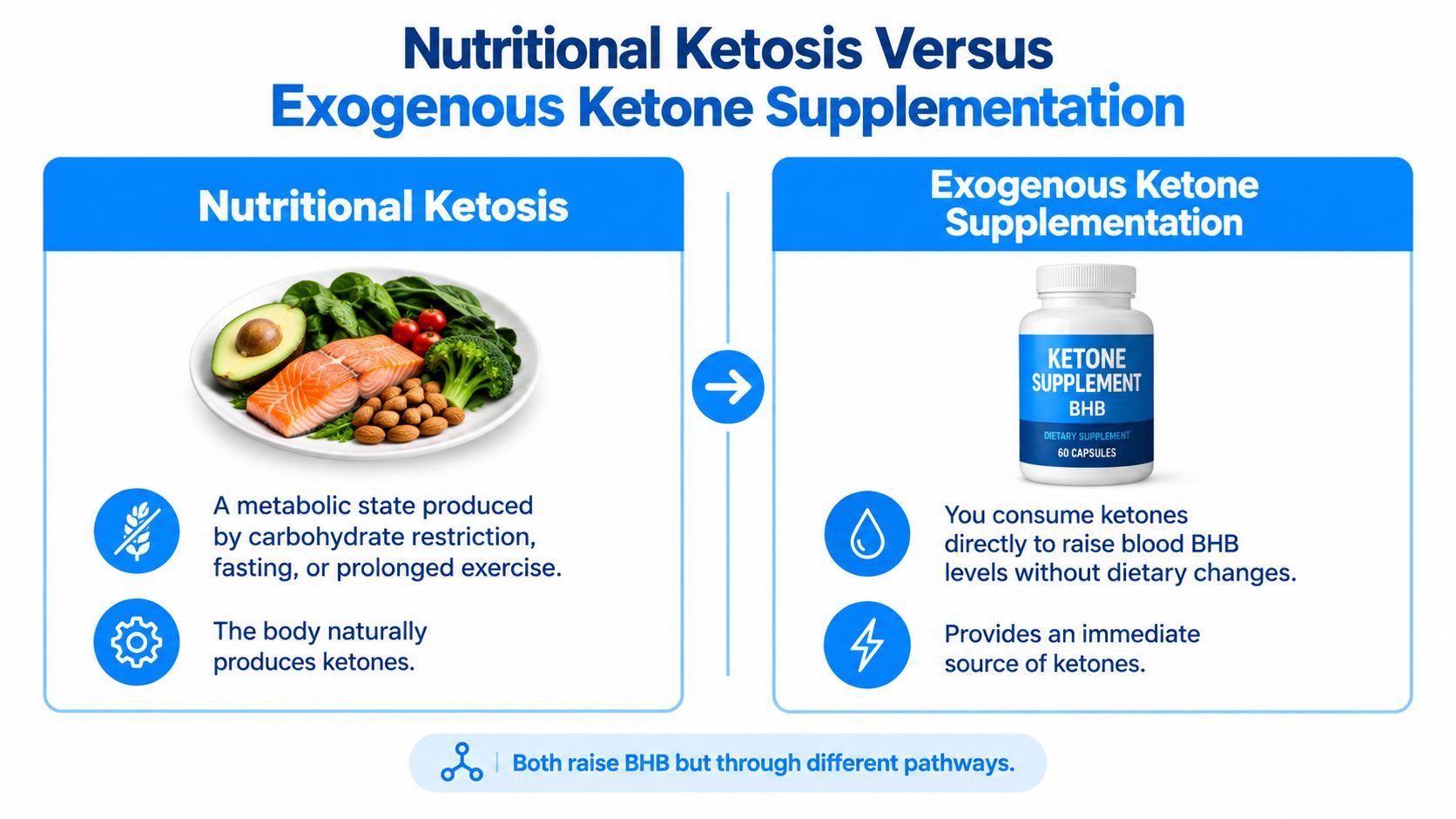
Nutritional ketosis is endogenous. You restrict carbohydrate, insulin falls, fatty acids are mobilized, and your liver makes ketones over hours to days. Exogenous ketosis is direct. You ingest ketones or a precursor, and circulating BHB rises without the same dietary context.
The comparison below shows why both raise BHB yet shouldn't be treated as interchangeable.
A systematic review of 43 trials involving 586 participants found exogenous ketones increased blood BHB by an average of 1.98 mmol/L and reduced blood glucose by 0.47 mmol/L compared with control conditions, as reported in a meta-analysis of acute exogenous ketone effects. That's a real, acute metabolic effect. It's not evidence of long-term glycemic control or sustained weight loss.
Hormonal context differs too. Diet-induced ketosis usually occurs with lower insulin and higher fatty acid availability. An exogenous serving can be taken with carbohydrate in the system, in a fed state, and for a short window. Evidence from ketogenic diets therefore can't be transferred wholesale to supplements.
This short video walks through that practical distinction in plain language.
Precursors sit between those poles. Medium-chain triglycerides are converted by the liver into ketones, which is why readers often compare them in guides to selecting an MCT powder for ketone support. The pathway still depends on hepatic conversion, dose, and tolerability, rather than delivering BHB directly.
What Human Studies on Exogenous Ketones Actually Show
Start with ketogenic diets, because that's where the longest data exist. A meta-analysis of 13 randomized controlled trials with 1,577 participants found very-low-carbohydrate ketogenic diets produced an additional 0.91 kg of weight loss versus low-fat diets over approximately 1 to 2 years, as reported in the British Journal of Nutrition meta-analysis of ketogenic versus low-fat diets. That's measurable, but modest. Broader low-carbohydrate evidence points in the same direction, a small average advantage with wide individual variation.
Exogenous ketone evidence is thinner. In an 8-week randomized, double-blind, placebo-controlled trial reported in 2025, 51 adults took racemic BHB mineral salts or maltodextrin placebo twice daily during modest calorie restriction, detailed in the randomized trial of BHB salts during calorie restriction. Body mass fell in both groups. The ketone group showed a within-group fat mass reduction of approximately 2 kg, improved body-fat percentage, and largely preserved lean mass.
The limitation that changes the conclusion
Between-group group-by-time interactions weren't significant. In plain terms, the trial didn't demonstrate greater weight or fat loss than placebo. Within-group improvement can reflect the calorie restriction both groups followed. Without a significant advantage over placebo, you can't claim the supplement caused superior fat loss.
| Study | Design | Intervention | Duration | Main finding |
|---|---|---|---|---|
| Ketogenic diet meta-analysis | Meta-analysis of 13 RCTs | Very-low-carbohydrate diet vs low-fat diet | Approx. 1 to 2 years | 0.91 kg additional average loss |
| BHB salts trial | Randomized, double-blind, placebo-controlled | Racemic BHB salts vs maltodextrin, both calorie restricted | 8 weeks | Fat mass fell within ketone group, no significant between-group advantage |
| Acute exogenous ketone review | Systematic review of 43 trials | Esters, salts and related formulations vs control | Acute | BHB rose and glucose fell short term, long-term weight outcomes not established |
A study can show that a product raises BHB and still leave the fat loss question unanswered. Those endpoints require different trial designs.
What's proven is narrow but clear. Exogenous ketones raise circulating BHB for a limited period. What's plausible is that they may support diet adherence or body-composition quality during calorie restriction. What's not established is independent, clinically meaningful fat loss from ketone drinks alone. Longer, larger trials with direct intake and body-composition measures are still needed.
Appetite, GLP-1 Signaling, and Exercise Synergy
Appetite is the most credible indirect pathway. If a tool helps you eat less without constant hunger, it can support a calorie deficit. The evidence, however, isn't uniform across metabolic health status.
In a randomized crossover study of 20 adults, reductions in subjective appetite after ketone ester ingestion occurred only in participants without metabolic syndrome, according to a crossover study comparing appetite responses by metabolic status. Participants with metabolic syndrome didn't show the same response and had higher relative fat intake than the comparison group in that setting.
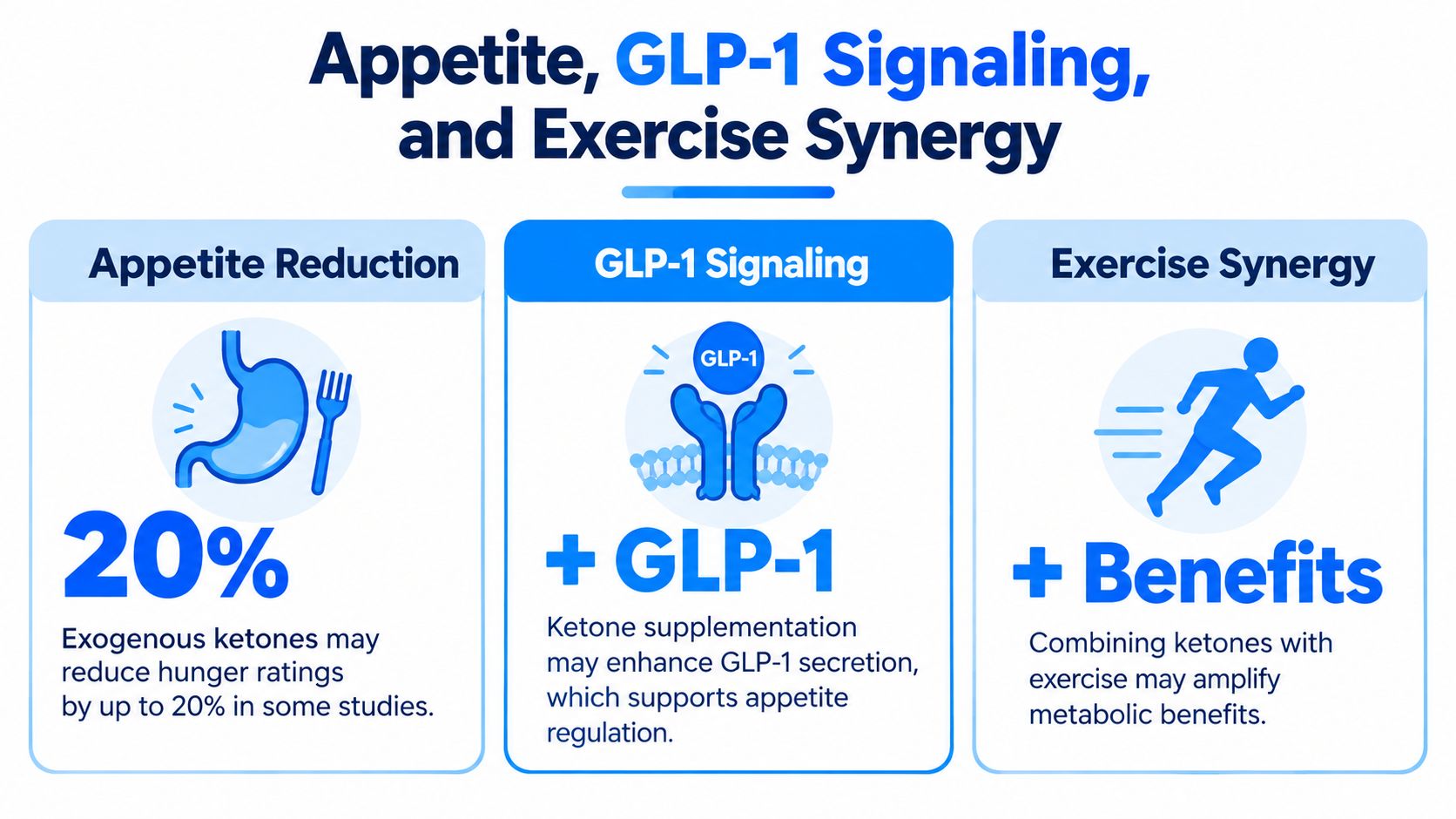
Older fasting research in normal-weight adults found lower ghrelin and appetite after a ketone ester drink. That result came from a small, fasted context. It shouldn't be generalized automatically to everyday fed use, obesity, or insulin resistance. Practical strategies for managing hunger during structured eating still matter more than any single acute signal.
Where GLP-1 and exercise fit
GLP-1 related products are best discussed in terms of appetite awareness and meal structure, not drug-like appetite suppression. For example, the GLP-1 Shot is described as a metabolic support ketone shot built with liposomal R3HBG™ ketone, 5-HTP, and prebiotic fiber, designed for fasting windows, spaced meals, or mid-day energy dips without aggressive stimulants. That's a habit-support positioning, and it should be judged by whether it helps you maintain your intended eating pattern.
With exercise, ketones provide an additional oxidative fuel and can alter substrate selection. That may feel useful during longer sessions. It hasn't consistently translated into superior body-composition outcomes in trials. Treat exercise synergy as a performance and adherence hypothesis, not a fat loss guarantee.
Comparing Ketone Esters, Salts, and Precursors
Not all products labeled ketones deliver the same exposure. Format, dose, stereochemistry, and mineral load change what reaches your blood and how you tolerate it.
In a randomized human metabolic study of 15 healthy participants, drinks providing approximately 12 or 24 g of BHB produced peak blood D-BHB of about 2.8 mmol/L with a ketone ester versus 1.0 mmol/L with ketone salts, with levels returning toward baseline within 3 to 4 hours, as shown in a head-to-head comparison of ketone ester and ketone salts. Both lowered glucose, free fatty acids, and triglycerides acutely.
- Ketone esters: Deliver BHB efficiently and typically produce higher peaks, with taste and cost as practical considerations.
- Ketone salts: Bind BHB to minerals such as sodium, potassium, or calcium. They can raise BHB, but mineral load and lower peaks limit some uses.
- Precursors: Require conversion in the liver before BHB appears, so response depends more on metabolism and dose.
Stereochemistry and delivery matter
Your body produces and uses D-BHB, the bioidentical form. Racemic products contain a mix that includes L-BHB, which isn't used the same way. A label that only says BHB without clarifying form gives you incomplete information.
Liposomal delivery is used to support absorption and consistency of delivery. In the cognition category, for instance, the Locked Cognition™ Shot is formulated with liposomal R3HBG™, Alpha GPC, and Lion's Mane for mentally demanding workdays without relying on coffee or stimulants. That's a different use case from weight loss, and conflating focus support with fat loss would be a category error.
Evaluate products by delivered D-BHB, expected duration, tolerability, and what outcome you're targeting. Peak BHB alone still doesn't prove a weight outcome.
Practical Framework for Using Exogenous Ketones
Use exogenous ketones for a defined job. Vague use produces vague results and makes it impossible to tell whether the product helped.
Why This Matters
When BHB is available as fuel, the practical outcomes people are usually seeking are steadier energy, cognitive endurance during long work or training, workout performance support, and metabolic efficiency through better fuel flexibility. Those outcomes can support a weight plan indirectly if they improve consistency. They don't replace the plan.
Timing options to test
- Before training: Use when you want an alternative fuel available and prefer to train without a large meal.
- During a fasting window: Use to bridge to your first meal if it helps you keep the structure you've chosen.
- Between meals: Use during a predictable afternoon dip instead of adding unplanned calories.
What to expect physiologically
Expect a temporary rise in circulating BHB and a possible short-term dip in glucose. Some people notice steadier perceived energy or softer appetite. Others notice little, especially around appetite if metabolic syndrome or insulin resistance is present. Don't expect automatic fat loss, compensation for excess intake, or the full adaptation that comes from sustained nutritional ketosis.
Practical rule: Track hunger, training quality, total intake, waist measurement, and body composition trends. Don't judge success by ketone strips alone.
Who may benefit most is narrower than marketing suggests. Already active people, people using low-carbohydrate or fasting structures, and people who want non-stimulant fuel for work or training have a coherent reason to test. Anyone managing a clinical condition, taking glucose-lowering medication, or considering ketones alongside prescription weight management therapy should discuss use with their clinician first.
Application Framework and Realistic Expectations
Three conclusions survive a strict reading of the evidence. First, exogenous ketones reliably raise circulating BHB for a few hours. Second, ketogenic diets show a small long-term average weight advantage, driven largely by whether people can sustain the eating pattern. Third, exogenous ketones haven't been shown to independently cause greater fat loss than placebo in the best available body-composition trial.
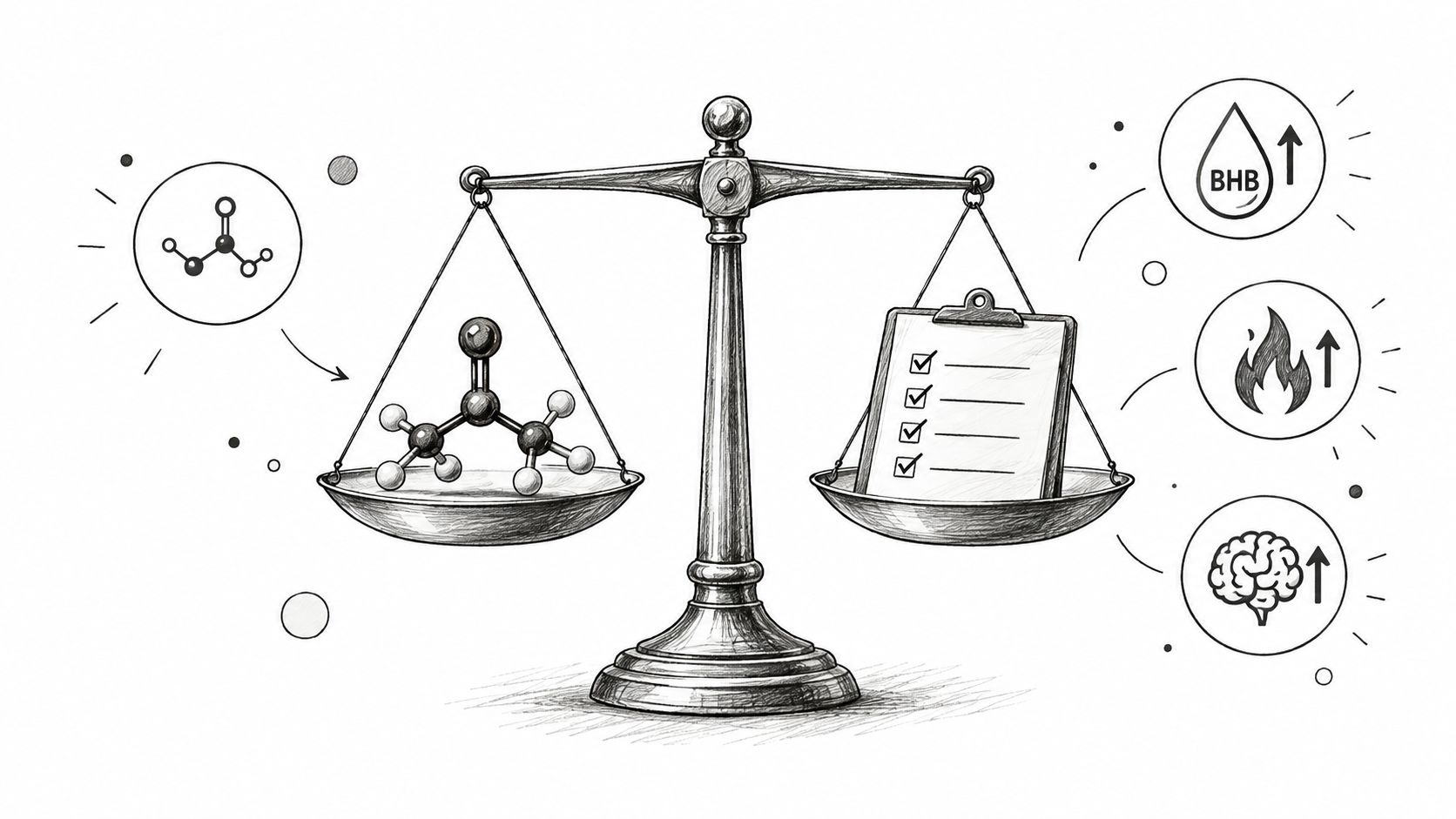
Use this decision sequence. Define your primary goal, whether that's appetite structure, training fuel, or cognitive endurance. Choose a format that delivers bioidentical D-BHB in a form you tolerate. Place it inside an energy-controlled, protein-adequate diet and a training plan you can repeat. If you want structured dietary support alongside that work, nutrition coaching for weight management can help translate targets into daily meals and accountability.
View ketones for weight loss as an adherence and performance tool, not a shortcut. If the tool doesn't improve consistency, hunger management, or training output after a fair test, it isn't earning its place in your plan.
If you're evaluating exogenous ketones as fuel for training, focused work, or structured eating windows rather than as a weight loss shortcut, explore the bioidentical D-BHB formulations and education at Tecton Ketones™. Choose the format that matches your goal, test it against hunger, energy, and performance, and keep the fundamentals of intake, protein, and training in place.


