


Most hydration advice gets one big thing wrong. It treats all electrolyte drinks as if they do the same job.
They don't.
If you sweat lightly, work at a desk, or train for a short session in cool weather, plain water is often enough. Recent evidence also suggests many people don't need electrolyte drinks for everyday sodium replacement, and that these products are most defensible during sustained heavy sweating, especially beyond an hour in heat. The same evidence summary noted no evidence that athletes need higher dietary sodium day to day, and a comparative rehydration study found flavored water, coconut water, and a carbohydrate-electrolyte sports beverage were similarly effective after moderate-to-high intensity exercise, which challenges the idea that a premium electrolyte drink is always superior (Autyfit evidence summary).
The useful question isn't “Are electrolytes good?” The useful question is whether a drink's sodium content, sugar content, and concentration match the situation you're in.
That's where hydration science gets practical.
What an Electrolyte Hydration Drink Actually Is
An electrolyte hydration drink is a fluid with dissolved minerals, usually sodium, potassium, chloride, and sometimes magnesium, meant to help replace what leaves the body in sweat.
That sounds simple, but the label hides a design question. Two products can both say “electrolytes” and behave very differently once they reach the gut.
A better way to sort the category is by purpose.
Three categories that people often confuse
Some drinks are built for prolonged exercise. They usually contain sodium and carbohydrate together, because a long run, ride, or field session creates two problems at once: fluid loss and energy use.
Others are sold as daily hydration mixes. These often keep sugar low, and some keep sodium low too. That may fit a general wellness product, but it can also leave the drink functioning more like flavored water with minerals than a targeted rehydration formula.
A third group is oral rehydration solutions. These are formulated with intestinal absorption in mind, not just taste or branding. They are a different tool for a different job.
Practical rule: Do not judge a drink by the word “electrolytes” on the front. Judge it by the job it is designed to do.
The critical lens for evaluation
For athletes, the useful question is not whether a drink contains electrolytes. The useful question is whether the formula gives the intestine the right conditions to pull fluid in efficiently.
That is why sodium-to-sugar ratio and total concentration matter so much. A drink can list five minerals and still be poorly set up for rapid fluid uptake. Another can look plain and work well because its formula matches how absorption works.
A helpful analogy is a key and a lock. The minerals on the label are the pieces of the key, but the proportions determine whether the key turns. If sodium is too low, or the drink is too concentrated, the label may sound impressive while the hydration effect falls short.
So an electrolyte hydration drink is not one single category in practice. It is a broad label applied to products that solve different problems, with very different degrees of usefulness.
Why Sodium and Sugar Drive Hydration
The main engine of rapid fluid uptake in the intestine is sodium-glucose cotransport. This acts like a turnstile in the intestinal wall. Glucose and sodium move through together, and water follows.
Classic human perfusion work found maximal water absorption with hypotonic formulations around 50 to 60 mmol/L sodium and 90 to 100 mmol/L glucose, and identified a 2:1 glucose:sodium molar ratio as a critical design feature for maximizing fluid influx (PubMed study on sodium-glucose cotransport and water absorption).
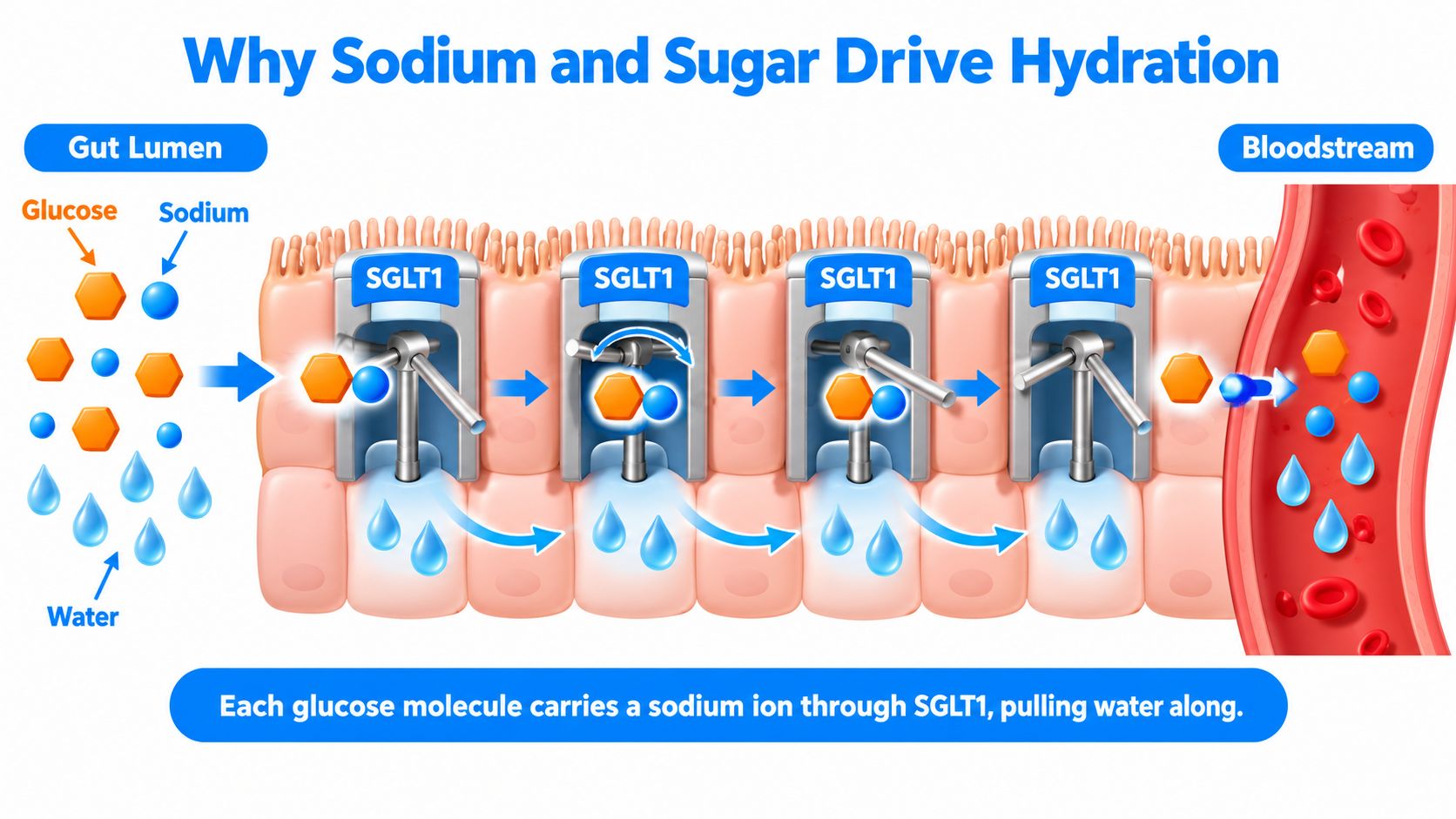
The turnstile idea in plain English
If you drink plain water, absorption still happens. It just doesn't use this same sodium-glucose transport advantage.
If you drink a properly balanced formula, sodium and glucose can move together through SGLT1 transporters in the intestine. Water follows osmotically, which is why the drink's design matters more than the marketing words on the label.
A practical discussion of this shows up in Tecton's article on a keto electrolytes drink, especially for readers trying to reconcile low-carb habits with hydration needs during training.
A useful example of a hybrid format is Tecton EDGE™ Performance Shot + Electrolytes, which is designed for active individuals who want steady energy during training or physically demanding days and includes liposomal R3HBG™ ketone with sodium, potassium, and magnesium.
Later in the same physiology, another energy system becomes relevant. Beta-hydroxybutyrate, or BHB, is a ketone body that can serve as an alternative fuel. It crosses the blood-brain barrier through monocarboxylate transporters, and in healthy middle-aged adults an intravenous BHB infusion reduced cerebral glucose consumption by about 14% while oxygen use stayed unchanged, showing that the brain can immediately substitute ketones for part of its glucose demand under acute conditions (NIH article on ketones and brain energy use).
Why concentration changes everything
Osmolality is just a way of asking how concentrated a drink is compared with blood.
- Hypotonic drinks are less concentrated and often move through the gut more easily.
- Isotonic drinks are closer to blood concentration.
- Hypertonic drinks are more concentrated and can slow gastric emptying or pull water into the gut.
That's why a drink loaded with sugar can work against the very thing it claims to improve.
A hydration drink isn't better because it has more ingredients. It's better when the intestine can move it efficiently.
Key Electrolyte Ingredients and Their Real Roles
Most labels try to make every mineral look equally important. In practice, they aren't.
Sodium comes first
Sodium is the priority because it's the main ion lost in sweat, and it plays the central role in fluid retention and plasma volume support. Research on post-exercise rehydration shows that electrolyte-containing beverages can improve net fluid retention compared with plain water by reducing urinary losses, and one review reported that a beverage with 26 mmol/L sodium (600 mg/L) significantly improved urine volume, net fluid balance, and beverage hydration index versus water (Nutrients review on sodium and rehydration).
For training, a practical target is often sodium-forward, not potassium-forward.
The other minerals
Potassium matters for intracellular fluid balance and muscle function, but it's rarely the limiting factor when sodium is adequate.
Magnesium gets a lot of label space. Acute hydration evidence is much weaker. It may matter more when someone is deficient or prone to cramping for broader reasons.
Chloride usually follows sodium. It helps maintain salt balance and is part of how the body handles fluid and acid-base chemistry.
Amino acids such as taurine or glycine can be functional extras in some formulas, but they are not electrolytes.
| Electrolyte | Primary Role | Sweat-Loss Importance | Per 500 mL Training Target |
|---|---|---|---|
| Sodium | Supports fluid retention and extracellular balance | High | 400 to 700 mg |
| Potassium | Supports intracellular fluid balance and muscle function | Lower than sodium | Lower priority than sodium |
| Magnesium | Supports neuromuscular function | Usually not the main acute hydration limiter | Situational |
| Chloride | Pairs with sodium in fluid and acid-base balance | Meaningful because it tracks with sodium | Usually comes with sodium salts |
Where marketing gets ahead of physiology
A recent gap analysis described an electrolyte inversion problem. Many products emphasize potassium even though sodium is the primary ion lost in sweat. The same review also described a sugar paradox, with some drinks containing 10 to 12 g sugar per 100 ml, above the 4 g/100 ml ceiling for isotonic absorption. It also noted that carbohydrate-electrolyte solutions may help rehydration versus water, but the benefit was strongest in the 4% to 9% carbohydrate range and in exercise-associated dehydration, which is narrower than many labels imply (systematic review and market gap analysis PDF).
How Formulations Differ and Why It Matters
Two hydration drinks can sit next to each other on a shelf and behave very differently in the gut.
One may be sodium-light and sugar-free. Another may be carb-heavy with enough sodium to retain fluid. A third may look healthy but carry so much sugar that it becomes less useful for rapid absorption.
The variables that actually change performance
Start with sodium concentration. Some drinks are built for light daily use. Others are built for athletes who lose a lot of sweat.
Then look at carbohydrate level. Very-low-carb products may be fine when you mostly need flavor and a modest electrolyte bump. During longer efforts, carbs can become useful because they support both transport and fuel delivery.
Caffeine belongs in a separate category. It can help performance, but it isn't the reason a drink hydrates.
| Profile | Sodium (mg/L) | Carbs | Osmolality | Best Use |
|---|---|---|---|---|
| Plain water | None added | None | Hypotonic | Short sessions, low sweat loss |
| Low-sodium daily mix | Lower end | Usually low or none | Often hypotonic | Light activity, taste, casual use |
| Balanced sports drink | Moderate | Moderate | Often isotonic | Longer sessions with sweat loss |
| Oral rehydration style drink | Sodium-forward | Modest glucose | Designed around efficient absorption | Illness, heavy sweat loss, practical rehydration |
| High-sugar drink | Variable | High | Can become hypertonic | More fuel-oriented than hydration-oriented |
Two common failure patterns
The first is the electrolyte inversion problem. The label highlights potassium, magnesium, or trace minerals while sodium stays too low to matter much during sweating.
The second is the sugar paradox. A product promises hydration but carries enough sugar to make the drink more concentrated than the gut handles well during exercise.
Decision rule: Match sodium to sweat rate, then match carbs to session length. Everything else is secondary.
When an Electrolyte Hydration Drink Is Worth Using
Athletes usually want a yes-or-no answer. The honest answer is situational.
Strong use cases
For endurance exercise beyond an hour in heat, an electrolyte hydration drink earns its place. Here, sodium supports fluid retention, and carbohydrate can help sustain output if the session keeps going.
For heavy sweaters, outdoor workers, and sauna users, the key feature is usually sodium. If sweat loss is high, a sodium-forward drink makes more sense than a fancy ingredient panel.
For vomiting or diarrhea, an oral rehydration-style approach is more appropriate than a standard gym drink because the goal is efficient replacement, not lifestyle hydration branding.
Situations where water is often enough
Short gym sessions, easy walks, desk work, and cold-weather training usually don't require a specialized drink. The kidneys and sweat glands regulate sodium well in healthy people, so default daily electrolyte loading usually isn't necessary.
If you want a post-training nutrition context for recovery fluids more broadly, Tecton's overview of an after workout drink is a helpful companion read.
Low-carb, fasting, and ketone use
People eating low-carb or keto diets often notice bigger shifts in water and sodium handling. That's one of the few everyday contexts where electrolyte planning can become more relevant even outside long endurance work.
This is also where it helps to distinguish three different ketone concepts:
- Nutritional ketosis comes from diet or fasting.
- Endogenous ketone production means your liver is making ketones.
- Exogenous ketone supplementation means ketones, or ketone precursors, are taken directly.
Not all exogenous ketone products are the same. Human work shows that some products act as precursors rather than delivering BHB directly. A randomized crossover pilot study reported that the ketone ester bis-octanoyl (R)-1,3-butanediol is hydrolyzed in the gastrointestinal tract into octanoic acid and (R)-1,3-butanediol, which are then metabolized into BHB (SAGE pilot study on ketone precursor metabolism).
For people structuring fasting windows or trying to smooth energy between meals, GLP-1 Shot is a metabolic support ketone shot designed for appetite patterns, fasting windows, or midday energy dips, built with liposomal R3HBG™ ketone, 5-HTP, and prebiotic fiber.
Common Misconceptions About Hydration Drinks
The supplement aisle creates a lot of false certainty.
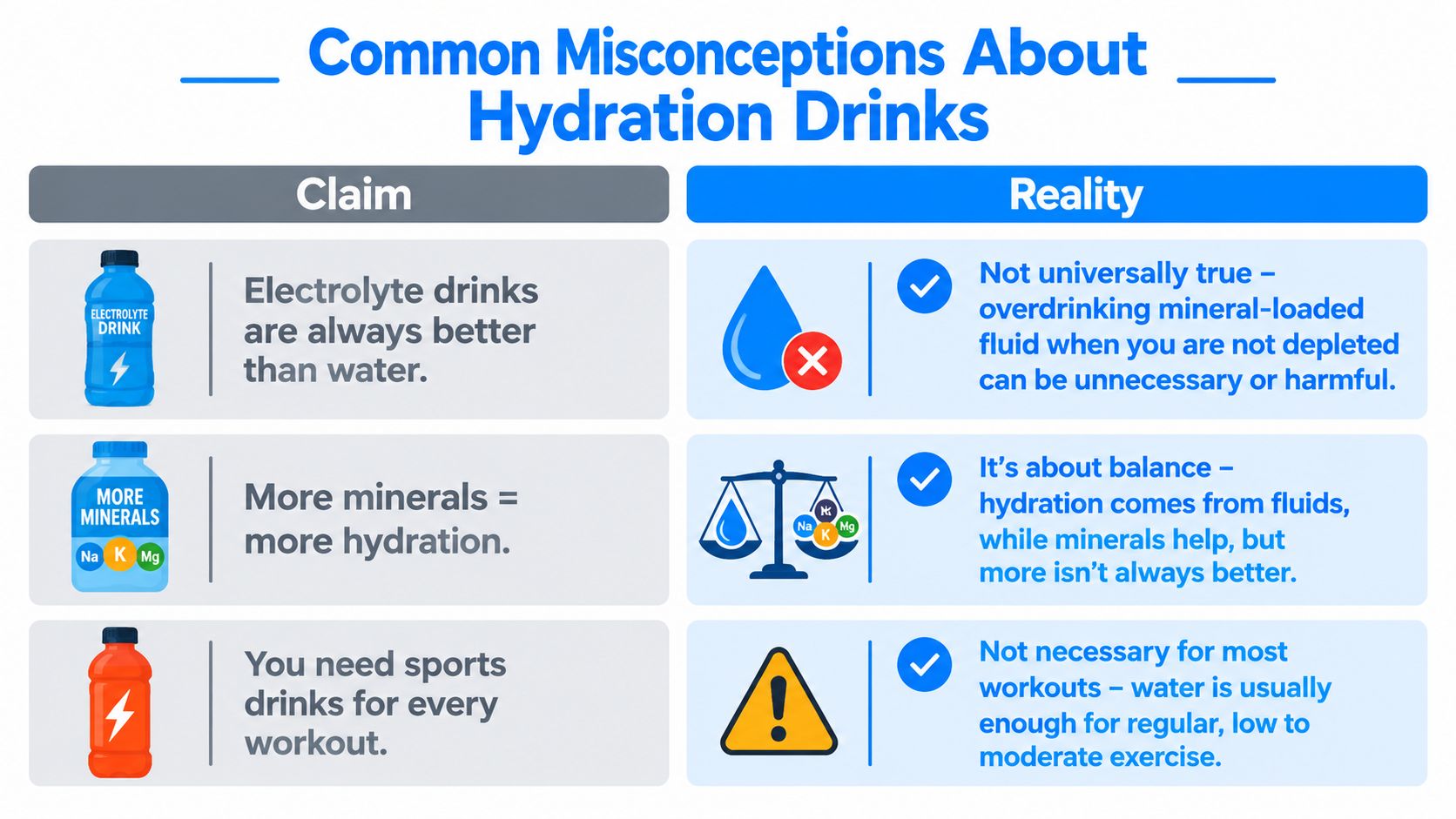
Better than water for everyone
No. Water is often enough, especially when sweat losses are modest. If you aren't losing much sodium, adding a mineral-heavy drink may just add unnecessary intake.
More electrolytes means more hydration
Also no. More isn't automatically better. Extra magnesium can upset the gut, and potassium is tightly regulated in healthy people. A minimalist label can mislead too, because some “clean” drinks underdose sodium and still imply performance hydration.
For people trying to make practical choices at work, not just in sport, these workplace hydration tips are useful because they frame hydration around routine, environment, and beverage choice rather than sports-drink hype.
You need one every day
Usually not. People with a varied diet and ordinary activity can meet baseline needs through normal eating and drinking.
Another layer of confusion comes from the crossover with ketone products. Ketones can support energy metabolism, but they don't replace basic hydration physiology. Human endothelial-cell data show ketone bodies can affect barrier biology through transport mechanisms, partly through an MCT1-dependent mechanism, while the authors concluded that brain endothelium still relies heavily on glucose and glycolysis for normal function (PubMed study on ketones and brain endothelial transport).
That's a good reminder to keep categories separate. Hydration depends first on fluid movement, sodium handling, and context.
Practical Framework for Choosing and Timing
You don't need a complex formula. You need a repeatable filter.
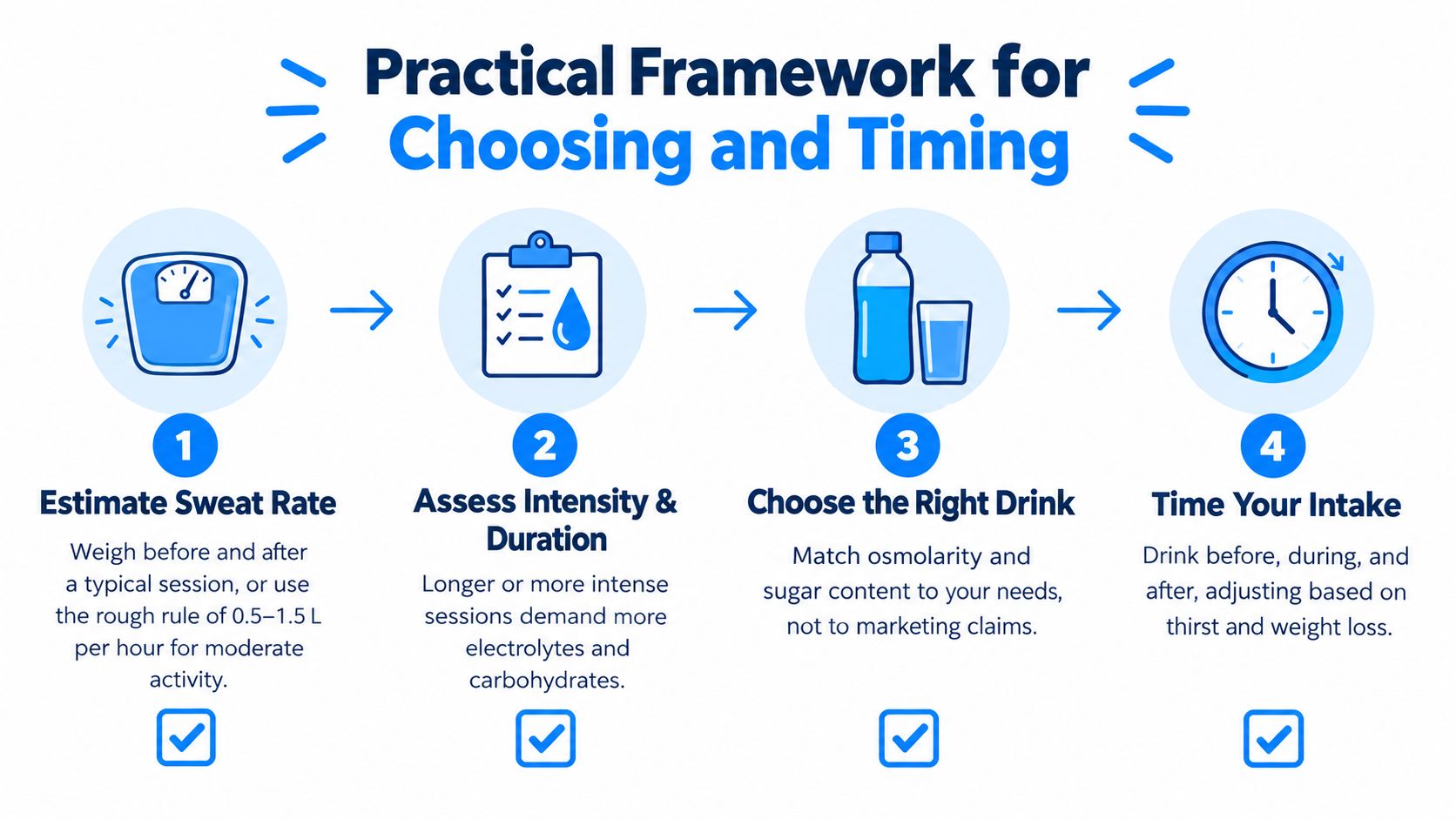
Four steps that work in the real world
-
Estimate your sweat rate
Weigh yourself before and after a typical hard session, or use the rough rule of 0.5 to 1.5 L per hour for moderate-to-hard exercise in heat. The point isn't precision. The point is knowing whether you're a light or heavy sweater. -
Match the drink to the session
Under an hour, water usually works. For longer efforts, sodium matters more. For very long efforts, carbohydrate starts to matter more too. -
Adjust for context
Fasting, low-carb eating, illness, and very hot conditions all shift the threshold toward more deliberate electrolyte use. -
Time intake sensibly
Sip steadily instead of chugging at long intervals. Most athletes tolerate that better, and it aligns better with ongoing losses.
Why this matters
A good hydration plan supports outcomes athletes notice:
- Steadier energy during long sessions
- Cognitive endurance when heat and fatigue rise
- Workout performance when sweat losses become meaningful
- Metabolic efficiency when fuel choice matches the task
This is also where ketone science becomes relevant for some athletes. BHB participates in mitochondrial ATP production as an oxidative fuel, which is part of why exogenous ketones interest athletes looking for metabolic flexibility. But product type matters. A review of acute ketone supplementation found ketone salts increased fat oxidation but impaired high-intensity exercise performance in healthy men, and it noted that most studies have failed to show consistent ergogenic benefits overall (review of ketone supplements and exercise performance).
That's one reason Tecton's positioning around bioidentical BHB structure, liposomal delivery, and clear category distinctions is more scientifically useful than lumping all ketone products together. If you want a broader consumer guide to a drink with electrolytes, look for one that treats sodium content and use case as the starting point.
The bottle matters too. For athletes carrying fluids through long sessions or team training, these SoccerWares bottle recommendations are practical because flow rate, portability, and ease of drinking affect whether a plan is realistic.
Use this one-line filter: match sodium to sweat loss, match carbs to duration, and don't let the label make the decision for you.
Tecton Ketones™ offers bioidentical exogenous ketone nutrition built around liposomal R3HBG™ for people who want clearer distinctions between hydration, fuel delivery, and metabolic support. If you're looking for a science-led resource on ketones, electrolyte use, and performance nutrition that doesn't blur those categories, visit Tecton Ketones™.


