


The adult human brain accounts for about 2% of body weight, yet it uses roughly 20% of the body's glucose-derived energy at rest. A widely cited estimate places cerebral glucose use at approximately 80 mg per minute, or about 0.45 mmol per minute. This metabolic review captures the central paradox of brain energy metabolism: a relatively small organ has a continuous, unusually demanding fuel requirement.
That demand explains why brain performance can't be reduced to a simple “brain boost” claim. Glucose remains the default fuel under ordinary conditions, but ketones can enter the brain's energy system when carbohydrate availability changes. The useful question isn't whether ketones reach the brain. Human research shows that they do. The more important question is when a fuel shift is meaningful, for whom, and whether it changes real-world function.
Introduction to Brain Energy Metabolism and Why It Matters
Brain energy metabolism describes how brain cells obtain, process, and use fuel to make ATP, the molecule that powers cellular work. Neurons need ATP to maintain electrical gradients, transmit signals, recycle neurotransmitters, and preserve the conditions required for communication. Those processes continue during sleep and rest, so the brain needs a reliable supply rather than occasional bursts of energy.
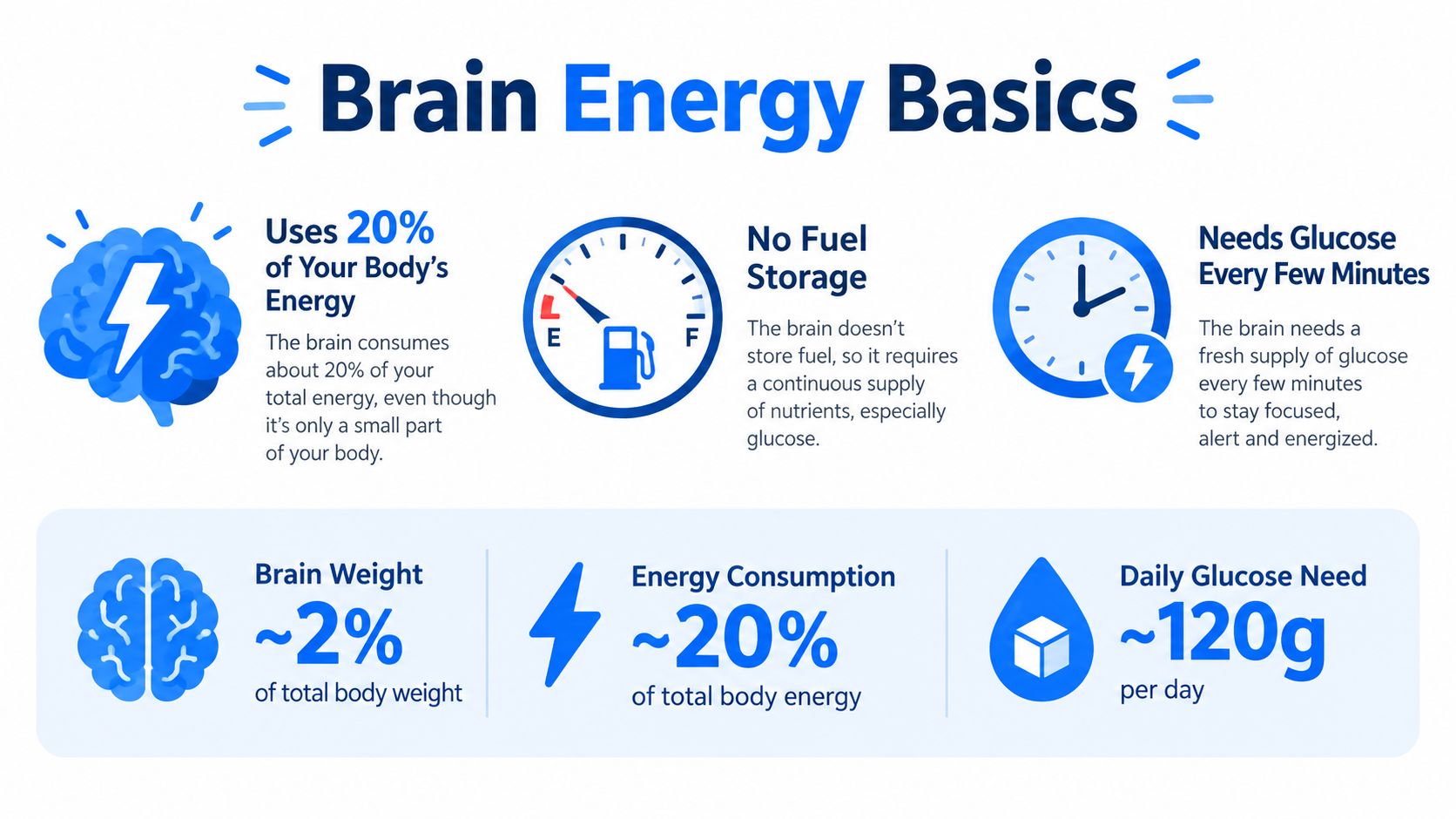
The brain also has limited ability to store readily available fuel. That makes continuity important. A meal pattern, fasting period, endurance session, or metabolic stressor can alter which substrates are available, but the brain still has to keep producing ATP while the transition occurs.
The fuel system in plain language
Think of the brain as a city that can't shut down its power grid. Glucose is the usual delivery source. Lactate can be exchanged between brain cells and used as an intermediate fuel. Ketones provide another carbon source that can be converted into acetyl-CoA and processed inside mitochondria.
This flexibility doesn't mean every alternative fuel improves cognition. It means the brain has more than one route to energy, and those routes become more or less important depending on circulating fuel, transport, cellular demand, and metabolic state.
That distinction matters for consumers evaluating ketone products. A person who sleeps poorly, eats inconsistently, or trains beyond their usual capacity may describe a smoother experience with an alternative fuel, but that subjective response isn't proof of universal cognitive enhancement. Recent synthesis finds modest cognitive benefits overall, with results varying by population and task rather than showing a consistent improvement for everyone. The recent review in Frontiers in Nutrition also reflects an evolving view of ketones, including their potentially more central role in neuronal energetics under normal physiology.
Practical rule: Treat ketones as a context-dependent fuel tool, not as a replacement for sleep, adequate food, hydration, or clinical care.
For readers thinking about long-term cognitive resilience, a resource such as Velma's guide to cognitive decline prevention can help place fuel choices inside a broader lifestyle framework. Brain energy metabolism is one part of a larger system that includes vascular function, movement, nutrition, sleep, and metabolic health.
How the Brain Makes Energy from Glucose Lactate and Ketones
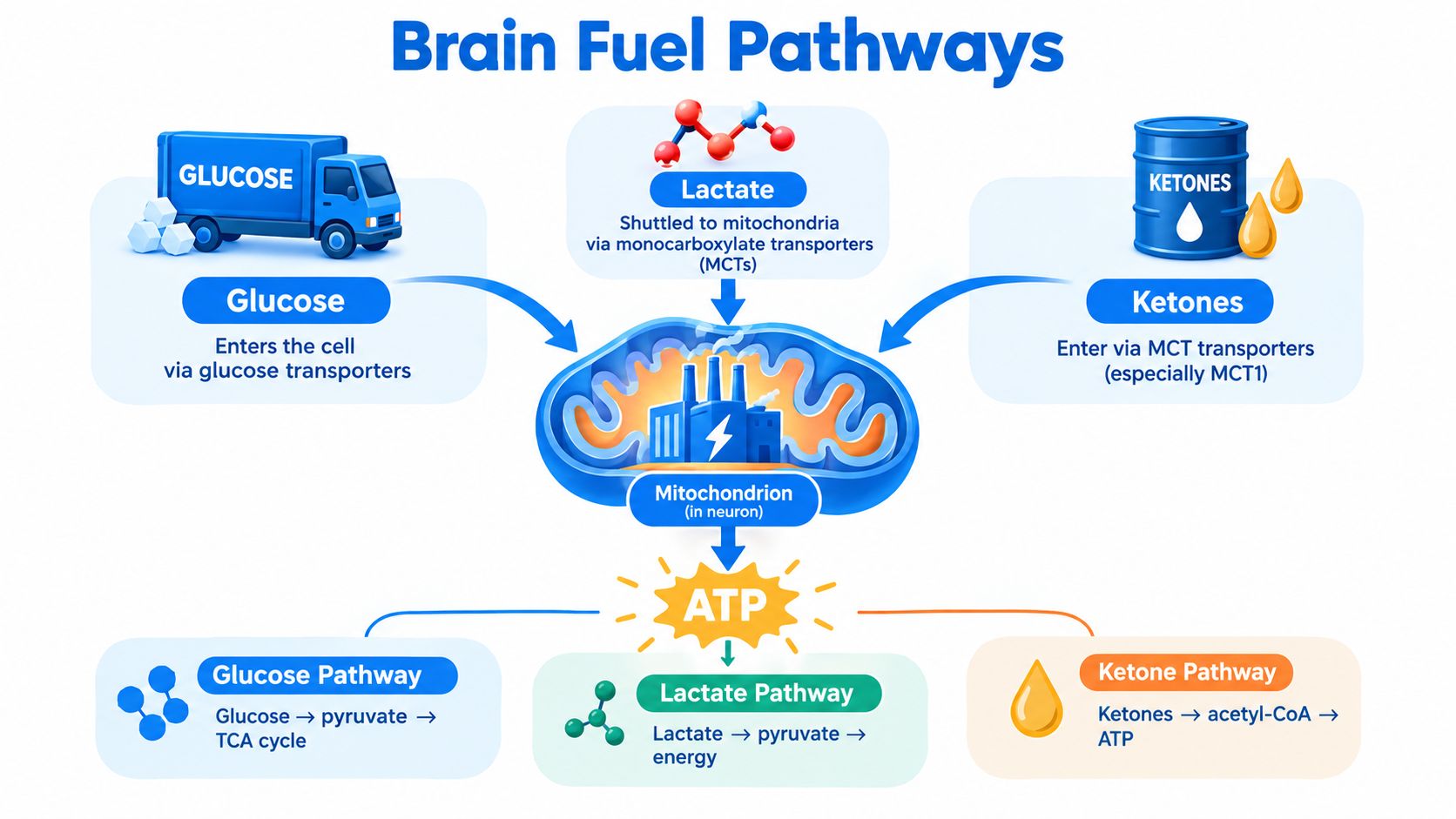
A useful analogy is a city power grid. Fuel molecules are delivery trucks, mitochondria are power plants, and ATP is the electricity that keeps homes and businesses operating. Different fuels arrive through different routes, but the mitochondria ultimately convert usable carbon into energy.
Glucose starts the usual route
Glucose enters brain cells through transport systems and is broken down through glycolysis into pyruvate. Pyruvate can then enter mitochondria, become acetyl-CoA, and move through the tricarboxylic acid cycle, commonly called the TCA cycle. Electrons generated along the way feed the electron transport chain, which creates the gradient used to produce ATP.
This pathway is efficient when glucose supply and glucose handling match demand. It also creates intermediates used for other cellular tasks. But glucose isn't the only carbon source the brain can use.
Lactate provides an important example. Astrocytes and neurons can exchange lactate, and neurons can convert lactate back to pyruvate for mitochondrial energy production. During exercise or increased neural activity, lactate isn't automatically a waste product. It can function as a mobile fuel intermediate, depending on local production, transport, and demand.
Ketones enter downstream
The main circulating ketones are beta-hydroxybutyrate, or BHB, and acetoacetate. BHB crosses the blood-brain barrier through monocarboxylate transporters, often abbreviated as MCTs. Inside neurons, BHB is converted through a sequence of reactions into acetyl-CoA, which enters the TCA cycle and supports electron transport and ATP generation.
That route differs from glucose because ketones enter the mitochondrial energy pathway farther downstream. They don't need to pass through glycolysis first. This doesn't make ketones universally superior. It means they can provide a different substrate when glucose availability or processing is altered.
Human data support this substrate-swapping model. In a short-term ketosis study, brain metabolic rate tracked circulating ketones while cerebral glucose metabolism declined proportionally, showing that higher ketone availability can shift whole-brain fuel selection. The human ketosis study provides the relevant physiological context.
Endothelial function also belongs in this discussion. Blood vessels regulate delivery of oxygen and substrates to brain tissue, while ketones and related metabolic signals may influence cellular signaling beyond their role as fuel. Those effects are mechanistically interesting, but they shouldn't be converted into disease-treatment promises without outcome-specific human evidence.
For a deeper explanation of how mitochondria turn substrates into ATP, see Tecton's overview of cellular energy production.
Metabolic flexibility means the ability to use available fuels and adjust their relative contribution as conditions change. It doesn't mean keeping the brain in ketosis all the time. A flexible system can use glucose during ordinary conditions, lactate when its availability rises, and ketones during fasting, carbohydrate restriction, prolonged exercise, or other situations that change substrate supply.
Nutritional Ketosis Versus Endogenous Production and Exogenous Supplementation
People often use “ketosis” as though it describes one intervention. It doesn't. Ketones can appear through diet-induced nutritional ketosis, endogenous production during fasting or carbohydrate restriction, or exogenous supplementation.
Nutritional ketosis usually develops when carbohydrate intake is sufficiently restricted to increase liver ketone production. Endogenous ketones are made by the body from fatty acids, particularly when insulin signaling and carbohydrate availability favor that shift. Exogenous ketones, by contrast, are consumed directly. They can raise circulating BHB without requiring the user to wait for the liver to produce it.
Historical human studies show why this distinction matters. Plasma ketones are usually below 0.5 mM after an overnight fast and contribute less than 5% of brain metabolism, while prolonged fasting lasting about 5 to 6 weeks can allow ketones to supply almost 60% of the brain's energy needs. This review of ketone metabolism summarizes those human observations.
Three routes to ketones compared
| Route | Source and trigger | Typical onset and control | Key consideration |
|---|---|---|---|
| Nutritional ketosis | Dietary carbohydrate restriction stimulates endogenous production | Gradual and influenced by meals, activity, and individual physiology | Changes the broader diet pattern, not only circulating ketones |
| Endogenous production | The liver makes ketones during fasting, carbohydrate restriction, or increased fat mobilization | Develops as the metabolic state changes | Production is regulated by the body and isn't precisely controlled by the user |
| Exogenous supplementation | A consumed ketone compound supplies BHB or a BHB precursor | More direct and easier to time around a task or session | Product chemistry, tolerability, and dose determine the practical experience |
Not all exogenous products are chemically equivalent. Ketone salts pair BHB with minerals, while ketone esters link ketone molecules to an alcohol or glycerol-based structure that is cleaved during metabolism. Precursors such as R-1,3-butanediol rely on conversion by the body before producing BHB. A bioidentical D-BHB structure corresponds to the form naturally produced and utilized by human metabolism, while L-BHB is a different stereoisomer with different metabolic handling.
Liposomal delivery is a formulation approach intended to support dispersion and absorption consistency. It shouldn't be treated as proof of superior cognitive or performance outcomes by itself. Tecton emphasizes R3HBG tri-ester technology, designed to deliver 100% D-BHB without the heavy mineral load associated with some salt formulations. The Tecton EDGE™ Performance Shot + Electrolytes uses liposomal R3HBG ketone with sodium, potassium, and magnesium for active routines.
For a plain-language explanation of the category, this guide to exogenous ketones distinguishes consumed ketones from those produced through fasting or carbohydrate restriction. Consumers comparing formulations may also find a practical discussion of CBD MCT oil dosing useful, because MCT products and ketone products affect fuel availability through different mechanisms.
When Brain Fuel Shifts During Exercise Fasting Injury and Aging
Brain fuel selection changes with context. Exercise, fasting, injury, and aging don't create the same physiological condition, but each can alter the relationship between fuel supply and energy demand.
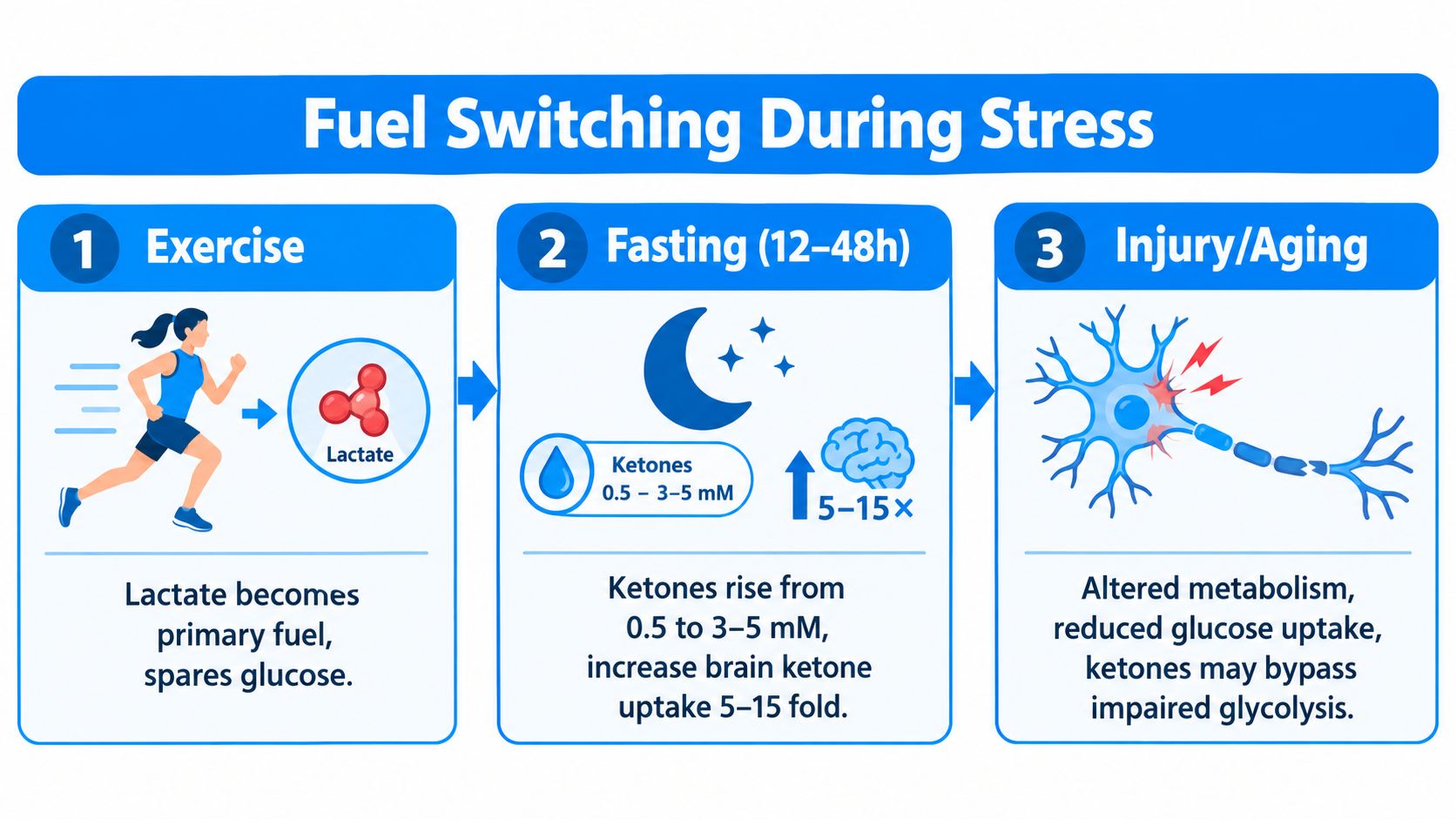
During prolonged exercise, muscle and brain metabolism may draw on changing mixtures of glucose, fatty acids, lactate, and ketones. Lactate produced in working tissue can circulate and become usable fuel, while an increase in ketone availability may reduce exclusive dependence on glucose. The practical effect is better described as fuel flexibility than as a guaranteed performance enhancement.
Fasting produces a clearer ketone shift. Human measurements found that brain BHB concentration rose from 0.05 ± 0.05 mmol/L in the nonfasted state to 0.60 ± 0.26 mmol/L after two days of fasting, then to 0.98 ± 0.16 mmol/L after three days. The human fasting study demonstrates that nutritional ketosis can increase brain ketone availability over a short time window.
Stress states require careful interpretation
Traumatic brain injury is often discussed through the concept of an energy crisis, where energy demand and substrate handling may become mismatched. That rationale makes ketones scientifically relevant as an alternative substrate, but it doesn't mean an over-the-counter supplement treats injury. Anyone with a head injury needs qualified medical assessment, particularly when symptoms are new, severe, or changing.
Aging introduces a different question. A 2025 PNAS study described nonlinear transitions in brain aging and identified a midlife “critical window” for metabolic intervention. The study highlighted ketones because they can be metabolized without insulin and may bypass insulin resistance. The PNAS research supports a timing-based perspective rather than a blanket claim about advanced neurodegeneration.
Public discussion often becomes too broad. Brain region, metabolic state, age, task, and disease stage can all influence whether ketones act as a minor supplement to glucose or a more meaningful alternative substrate. The most useful consumer takeaway is that timing may matter more than the label “brain fuel.”
What Human Studies Show About Exogenous Ketones and Brain Energy
Human research supports several specific conclusions. Ketones can reach the brain, neurons can use BHB, and raising ketones can alter the balance between ketone and glucose metabolism. Those findings are stronger than the claim that exogenous ketones reliably improve cognition for every healthy adult.
A human tracer study found that labeled BHB was used predominantly by neurons. Researchers measured a utilization rate of 0.032 ± 0.009 mmol per kilogram per minute, accounting for 6.4 ± 1.6% of total acetyl-CoA oxidation. The tracer study provides direct evidence that BHB is a meaningful neuronal fuel rather than merely a metabolite circulating outside the brain.
Fuel substitution and blood flow
A separate randomized human infusion study reported a global 39% increase in cerebral blood flow and a 33% reduction in cerebral glucose metabolism during ketone infusion. Oxygen use for glucose metabolism fell from 97% to 74% during hyperketonemia. The review summarizing this infusion research describes a measurable shift in cerebral substrate handling and perfusion.
These are metabolic outcomes, not proof of improved memory, attention, or work performance. They show that the brain responds to circulating ketones and can reduce its relative reliance on glucose when ketone availability rises.
That distinction matters because cognitive studies have produced a less dramatic picture. Recent synthesis reports modest overall cognitive benefits, with effects varying according to the population and task. The evidence doesn't establish a universal cognitive boost in healthy adults, older adults, or people with neurological conditions.
The field is still developing. Emerging work argues that ketone-body metabolism may be important for maximum neuronal energy production even under normal nutritional conditions, moving the conversation beyond a simple “backup fuel” model. That hypothesis is biologically interesting, but it remains different from demonstrating a consistent real-world outcome from supplementation.
What the evidence supports
- Brain access: BHB crosses the blood-brain barrier through MCT transporters.
- Neuronal use: Tracer data show that neurons oxidize BHB.
- Substrate switching: Higher circulating ketones can coincide with lower cerebral glucose metabolism.
- Clinical restraint: Metabolic shifts don't automatically equal cognitive or therapeutic benefits.
For readers comparing delivery formats, Tecton's discussion of ketone ester drinks offers additional product-category context. The sensible standard is to match the formulation and timing to a defined use case, then evaluate personal response without mistaking a transient fuel change for a medical outcome.
Why This Matters for Steadier Energy and Cognitive Endurance
Biochemistry becomes useful when it clarifies a real situation. Consider a long workday followed by training. If meals are spaced out or carbohydrate availability changes, an alternative fuel may help some people maintain a steadier subjective energy pattern, although responses vary.
- Steadier energy: Ketones provide usable carbon for mitochondrial ATP production without requiring the brain to rely exclusively on circulating glucose.
- Cognitive endurance: During a demanding focus block, continued substrate availability may support sustained neuronal work. That doesn't guarantee sharper thinking.
- Workout performance: Athletes may value fuel flexibility during prolonged effort, especially when they want energy support without caffeine.
- Metabolic efficiency: Using multiple substrates can help the body adjust to fasting, low-carbohydrate intake, or changing exercise demands.
Use the outcome, not the promise, as your test. Track focus, perceived energy, training quality, gastrointestinal tolerance, and sleep rather than assuming a ketone rise guarantees better performance.
Ketones support an energy system. They don't override inadequate recovery, poor hydration, under-fueling, or an unsuitable training plan.
Practical Takeaway and Application Framework for Daily Use
A practical approach starts with context rather than product enthusiasm.
- Choose a defined window. Consider exogenous ketones before a prolonged focus period, endurance effort, physically demanding day, or structured fasting window. Don't add them randomly to every situation.
- Start with expectations grounded in physiology. You may notice smoother energy or sustained effort rather than a stimulant-like surge. Some people notice little change, and cognitive effects aren't universal.
- Separate endogenous from exogenous ketosis. Fasting and carbohydrate restriction ask the liver to produce ketones. Supplementation provides ketones directly. They aren't interchangeable lifestyle strategies.
- Review the formulation. Compare D-BHB content, ketone salts, esters, precursors, mineral load, sweeteners, and delivery design. Liposomal delivery may be relevant to consistency, but it doesn't replace human outcome data.
- Use safety language accurately. A safe NDI notification framework is intended to support a reasonable expectation of safety under labeled conditions of use. It isn't a guarantee that every person should use a product, nor does it establish disease treatment benefits.
- Know when to involve a clinician. Ask a qualified healthcare professional before using ketone products if you're pregnant, managing a medical condition, taking glucose-lowering medication, or recovering from a head injury.
Tecton's liposomal R3HBG options include EDGE Performance + Electrolytes and EDGE Performance + Caffeine, but the right choice depends on whether hydration support, caffeine, training demand, or focus is your primary objective. The larger principle is simple: use ketones to support a specific fuel transition, then judge the result by function and tolerability.
Tecton Ketones™ offers bioidentical exogenous ketone nutrition built around liposomal R3HBG, giving consumers a direct BHB option without requiring a strict ketogenic diet. Visit Tecton Ketones™ to explore formulations designed for cognitive endurance, training, fasting windows, and steady daily energy.


