


600 mg daily of alpha-lipoic acid may reduce certain symptoms of diabetic peripheral neuropathy in the short term, especially burning pain and numbness. That's the clearest answer, and it's also the point most consumer articles blur by treating symptom relief as if it automatically meant nerve repair.
People usually ask whether alpha lipoic acid benefits go beyond “antioxidant support.” The honest answer is yes, but only in specific contexts, and the route, dose, and time horizon matter far more than most labels suggest.
What Alpha Lipoic Acid Actually Does
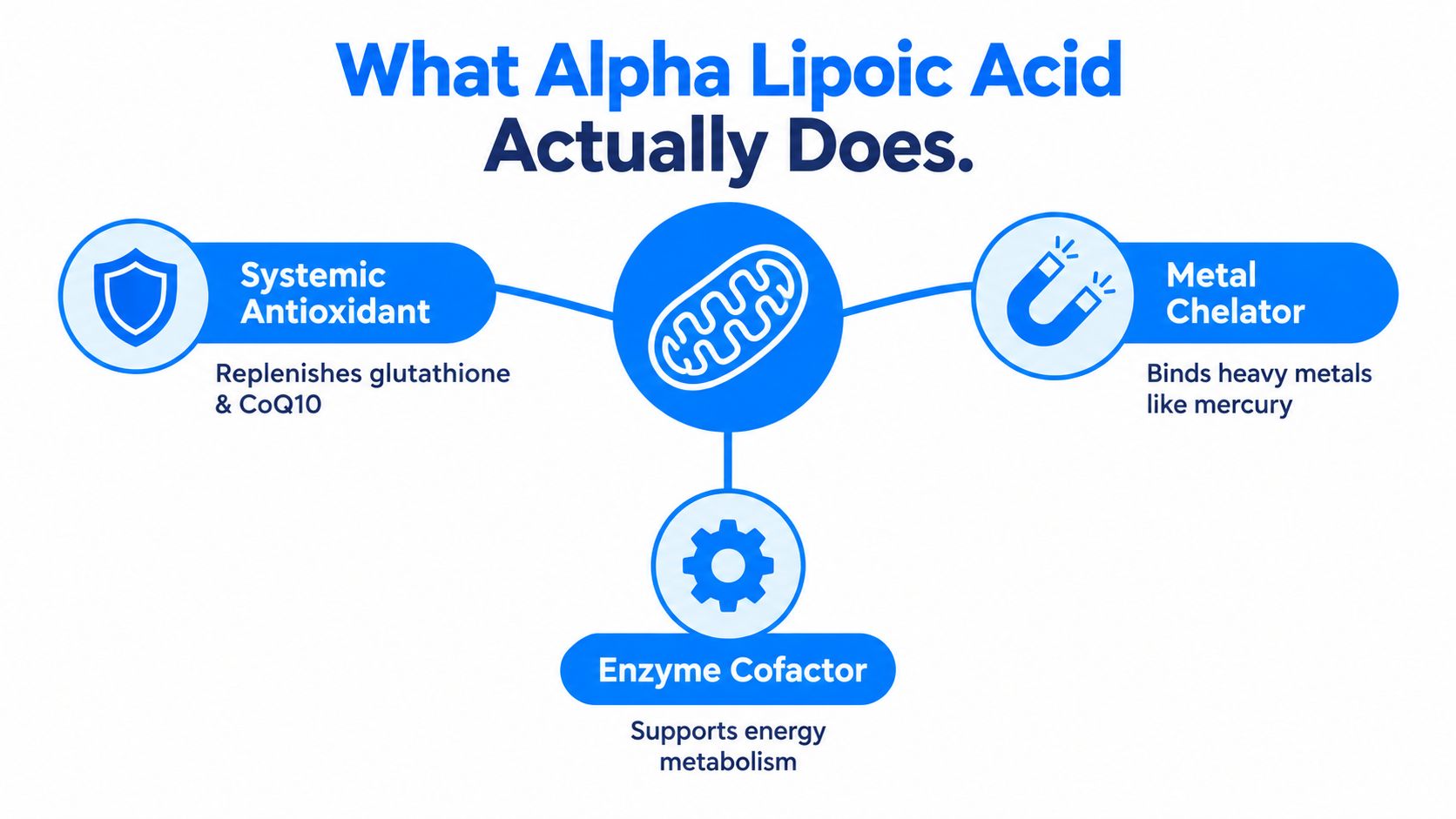
Alpha-lipoic acid sits at the intersection of energy metabolism and antioxidant defense. In plain terms, it helps mitochondria handle nutrients efficiently, and it also helps recycle other antioxidants so cells can keep dealing with oxidative stress.
That doesn't make it a magic switch. Its effects depend on concentration, formulation, and the tissue you're trying to influence, which is why the same molecule can look useful in one setting and underwhelming in another.
The biochemical role that matters
ALA is often described as a mitochondrial cofactor because it supports enzyme systems that help convert fuel into usable cellular energy. That's the part people miss when they reduce it to a generic “antioxidant pill.”
It also works in both water and fat environments, so its antioxidant activity isn't limited to one cellular compartment. In practical terms, that makes it interesting for tissues exposed to metabolic stress, including nerves and blood vessels.
Why marketers overpromise it
The phrase alpha lipoic acid benefits gets stretched into claims about universal energy, cognition, and broad disease reversal. That's not supported by the human data you can defend.
A more accurate framing is this, ALA looks most plausible when you want support for oxidative balance, cellular energy handling, and certain neuropathy symptoms. For background on oxidative stress and why that framing matters, I'd point readers to this oxidative stress reduction guide.
Practical rule: if a claim sounds like ALA can fix everything, it's probably selling the molecule harder than the evidence does.
Clinically Supported Benefits and What the Evidence Shows
The strongest human signal is still short-term symptom relief in diabetic peripheral neuropathy. A 2012 systematic review pooled four randomized placebo-controlled trials and found a statistically significant reduction in Total Symptom Score, with a standardized mean difference of -2.26 and a reported average reduction of about 50% in included studies using at least 600 mg per day orally or intravenously. The review concluded that 600 mg daily for three weeks produced a clinically relevant decrease in neuropathic symptoms and rated the evidence grade-A. The review is here.
That's real, but it's narrow. The same evidence base does not show that ALA reverses nerve damage, prevents ulcers or amputations, or improves long-term diabetic control.
What improves, and what doesn't
Later evidence made the picture more cautious. A 2022 Cochrane review of three trials involving 816 participants found that after six months, ALA probably has little or no effect on neuropathy symptoms or impairment, and it found no eligible evidence for better quality of life or fewer complications such as ulceration or amputation. A 2023 review of 10 randomized controlled trials involving 1,242 patients still found favorable effects on symptom scores, but not consistently on vibration perception, nerve-conduction studies, or other objective measures. That review is summarized here.
This is the main trade-off with alpha lipoic acid benefits. It may help people feel better in the short term, but that doesn't prove it changes the disease course.
Glucose handling and metabolic markers
ALA is also discussed for glucose metabolism and insulin sensitivity. In one placebo-controlled clinical study of 72 people with type 2 diabetes, oral ALA at 600, 1,200, or 1,800 mg per day improved measured insulin sensitivity by about 25% after four weeks. But a separate randomized placebo-controlled trial with 102 participants found that 600 mg daily for 16 weeks didn't significantly change fasting glucose, fasting insulin, or HOMA-IR. The clinical summary is here.
So the reasonable conclusion is limited but useful. ALA may influence glucose-handling physiology, yet that's not the same thing as treating diabetes, and it doesn't reliably translate into the outcomes people care about most.
A simple benefit map
| Benefit area | Evidence strength | Practical interpretation |
|---|---|---|
| Short-term neuropathy symptom relief | Strongest | Most defensible use case, especially around 600 mg daily |
| Glucose handling and insulin sensitivity | Mixed | Possible adjunct effect, not reliable disease treatment |
| General antioxidant support | Plausible | Biologically real, but harder to translate into outcomes people can feel |
A resource that focuses on downstream tissue support rather than a single supplement can also help frame expectations, especially if chronic skin or wound concerns are part of the conversation. For that, the wound healing nutrient guide is a useful companion read because it keeps the focus on broader nutrition strategy instead of one-molecule thinking.
ALA works best as a targeted adjunct, not a stand-alone answer.
Intravenous Versus Oral Alpha Lipoic Acid
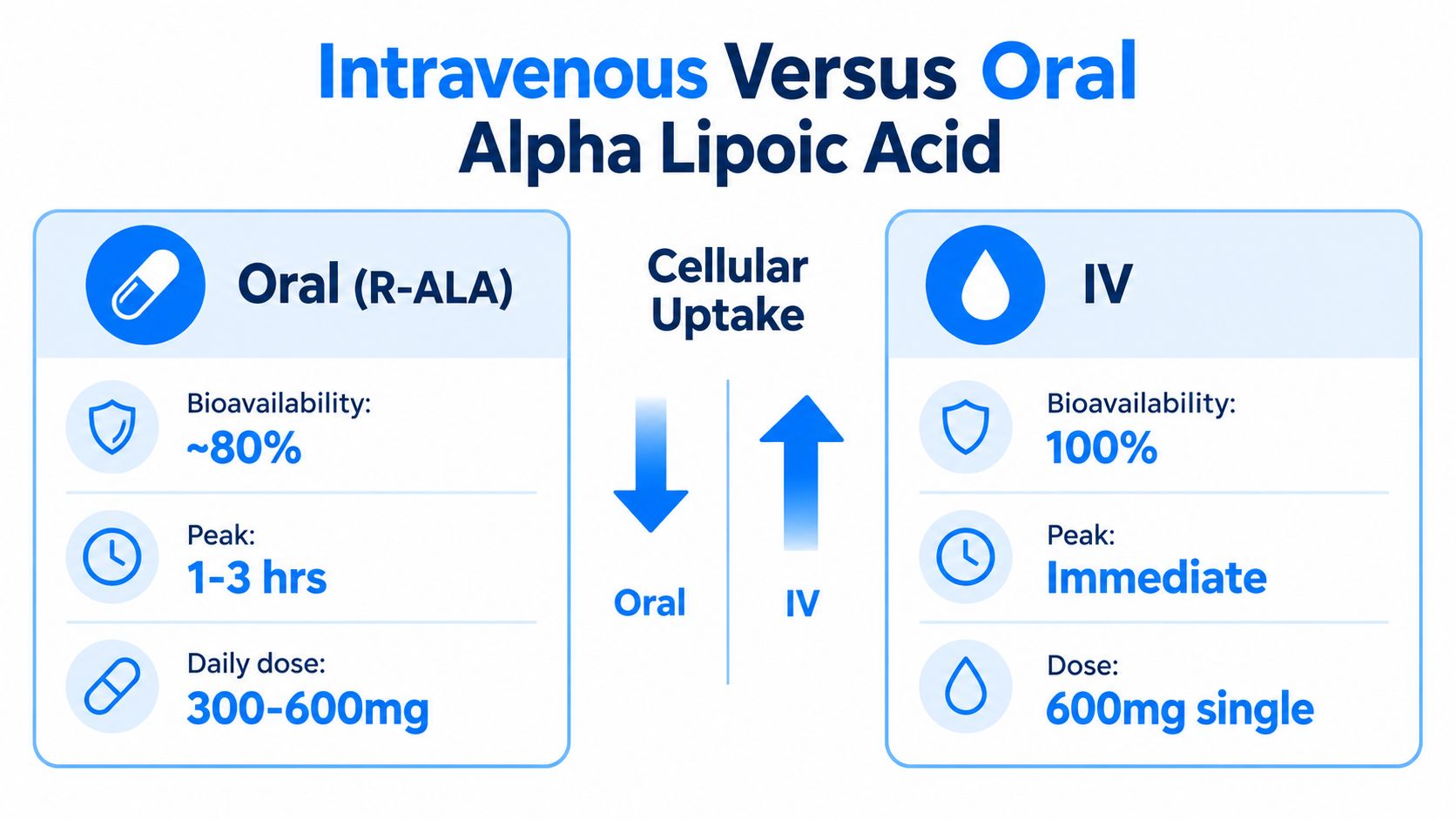
Route matters here more than people expect. The better neuropathy data often come from intravenous use, while most consumers take oral capsules and assume the two are interchangeable.
Why IV often looks stronger
A meta-analysis of 15 randomized controlled trials involving 1,058 patients found that 300–600 mg/day intravenously for 2–4 weeks significantly improved nerve-conduction outcomes and positive neuropathic symptoms. The pooled efficacy odds ratio was 4.03, and the reported weighted mean improvements in conduction velocity were measurable across median and peroneal motor and sensory nerves. The reference is here.
That doesn't mean IV is “better” for every person. It means the clearest physiological and symptom data have often come from supervised short courses of IV therapy.
What oral use looks like in practice
Oral ALA can still help, but it tends to look more modest and outcome-dependent. Earlier comparative evidence found that oral doses of 600 mg/day or more for 3–5 weeks produced measurable symptom improvement, though not always one that was clearly clinically significant. The 2023 review also found favorable effects on Total Symptom Score and patient satisfaction, with less consistency on objective nerve tests. The AAFP summary is here.
If you want the practical distinction, it's this. IV therapy is the format most associated with rapid symptom studies, while oral therapy is the format that people can use day to day.
Form choices and why they matter
The supplement market likes to blur free acid, R-ALA, racemic ALA, and stabilized salts into one bucket. They aren't identical in real-world performance, and the label alone doesn't tell you much about clinical effect.
Peer-reviewed research notes on absorption and formulation are a useful reminder that bioavailability is part of the decision, not an afterthought. If a product can't be absorbed well, the theory behind it doesn't matter much.
How to Use Alpha Lipoic Acid Safely and Effectively
For a symptom-focused trial, the most defensible starting point is the dose that keeps showing up in the neuropathy literature, 600 mg daily. That aligns with the clearest short-term benefit data, and it's the cleanest dose to discuss with a clinician if neuropathy symptoms are the main reason you're considering ALA.
Match the form to the goal
If the goal is short-term symptom support, oral ALA is the most common consumer route. If the goal is closer supervision and a faster clinical response, the strongest study signal has been with IV therapy.
A practical approach to understanding
- For burning, tingling, or numbness: oral ALA at a studied dose is the most reasonable self-care starting point.
- For supervised clinical symptom management: IV protocols have stronger short-course trial support.
- For general antioxidant support: use caution, because “antioxidant” doesn't automatically mean a noticeable outcome.
Tecton Ketones™ is relevant here only as a separate tool category, since it delivers bioidentical ketone fuel rather than alpha lipoic acid. That matters for people who want metabolic support without trying to force ALA into a role it hasn't earned.
Timing and tolerability
ALA can cause stomach upset in some people, so many people do better taking it with food if that improves tolerance. If a product label suggests a form or dose that looks far beyond the neuropathy literature, treat that as a marketing choice, not proof of better results.
Practical rule: use the smallest dose that matches your goal, then judge it by symptoms, not by how aggressive the bottle sounds.
If you're also trying to support glucose control, the more relevant framework is broader than any single supplement. The supplements for blood sugar balance overview is useful because it places ALA alongside nutrition, medication, and monitoring rather than treating it as a lone solution.
What I'd track in practice
For neuropathy, track the things patients actually feel, not vague wellness language. Burning intensity, nighttime discomfort, tingling, numbness, and walking tolerance tell you more than a generalized “energy” score.
If those markers aren't moving after a reasonable trial, the supplement probably isn't pulling enough weight to justify indefinite use.
Safety Profile and Medication Interactions
ALA is usually discussed as gentle, but that doesn't mean risk-free. The most common issue is gastrointestinal discomfort, especially when the dose climbs or the formulation doesn't agree with someone's stomach.
The bigger clinical issue is interaction with glucose-lowering therapy. Because ALA may influence insulin sensitivity or glucose handling, people taking diabetes medications should monitor more carefully if they start it.
When to be cautious
- If you use glucose-lowering medicine: watch for symptoms of low blood sugar and talk with your clinician before changing anything.
- If you get persistent nausea or stomach upset: reduce exposure or stop and reassess.
- If you're changing multiple supplements at once: don't blame or credit ALA for effects you can't isolate.
For a broader nutrition angle, readers often compare ALA with other metabolic-support nutrients, and this CoQ10 dosing guide is helpful because it shows how another mitochondrial nutrient is discussed with more restraint than hype.
ALA shouldn't be framed as a substitute for glucose management, foot care, or prescribed neuropathy treatment. It's a possible adjunct, and that word matters.
What to Expect and When to Reassess
Short-term symptom changes may show up within weeks, especially when the goal is burning pain or numbness rather than structural nerve recovery. Longer-term metabolic changes are less predictable, so don't use lab markers alone to judge whether the supplement is helping.
Track what matters most, then reassess with a clear eye. If symptoms aren't improving, if blood sugar control is unstable, or if you're planning medication changes, it's time to involve a clinician instead of just increasing the dose.
Tecton Ketones™ focuses on clinically informed ketone nutrition for people who want steady fuel, sharper focus, and practical metabolic support without guesswork. If you're comparing targeted supplements and want a cleaner, science-led approach to energy and performance, visit Tecton Ketones™ and review the options that fit your routine.


