


You may be doing a lot of the “right” things already.
You train hard, eat reasonably well, sleep better than others, and still get stretches of flat energy, slower recovery, brain fog, or the sense that your output doesn't match your effort. That pattern often gets blamed on stress in the vague, everyday sense. In practice, part of the issue is often oxidative stress, which is less about drama and more about biochemistry.
At a basic level, oxidative stress is an imbalance between reactive molecules and the systems that keep them in check. Some oxidative signaling is normal and useful. The problem starts when production stays high, recovery stays incomplete, and the cell keeps paying the cost. If you only think about oxidative stress as “not enough antioxidants,” you miss the bigger lever.
A key question is this: why is the cell producing so much exhaust in the first place?
Beyond Antioxidants The Real Source of Cellular Stress
Oxidative stress is often approached through nutrition advice. Eat more berries. Add greens. Take vitamin C. Those can help, but they don't explain why a well-fed person can still feel metabolically inefficient.
A better model is to think like an engineer. If a car engine burns fuel poorly, the fix isn't limited to cleaning the tailpipe. You look at combustion efficiency, fuel quality, and load. Cells work the same way. Oxidative stress reduction depends partly on antioxidant defenses, but it also depends on how efficiently your cells make energy.
When energy dips are really a fuel handling problem
If your day swings between sharp focus and sudden fatigue, or if hard training leaves you feeling more depleted than adapted, that often reflects a mismatch between energy demand and mitochondrial efficiency. Your body is still making ATP, but it may be doing so with more metabolic friction than you realize.
That matters because oxidative stress isn't an abstract wellness concept. It has broad physiological relevance. Oxidative stress is a primary or secondary cause for many cardiovascular diseases, acting mainly as a trigger for atherosclerosis, and it has been definitively linked to neurological conditions including Parkinson's disease, Alzheimer's disease, ALS, multiple sclerosis, depression, and memory loss, as described in this NIH review on oxidative stress and disease.
Clinical lens: The goal isn't to eliminate reactive oxygen species completely. The goal is to keep production matched to capacity, so signaling stays useful instead of destructive.
Antioxidants matter, but they aren't the full strategy
A food pattern rich in plants, polyphenols, and micronutrients still belongs in the foundation. It supports antioxidant capacity and gives the body raw materials for repair.
But if mitochondrial output is unstable, you're still asking the cell to clean up excess exhaust after the fact. That's why some people do everything “healthy” and still feel metabolically noisy. The more useful frame is simple:
- Lower the load when possible, including sleep loss, overreaching, and poor glycemic control.
- Support internal defense systems rather than relying only on external antioxidant compounds.
- Improve fuel efficiency so the mitochondria produce less reactive byproduct at baseline.
That third point is where most consumer advice falls short, and it's where the discussion gets much more interesting.
The Hallmarks of Oxidative Stress
Oxidative stress becomes meaningful when you connect it to patterns people observe. Recovery drags. Focus fades early. Workouts feel harder than the output suggests. Minor stressors seem to hit harder than they used to.
None of those symptoms prove oxidative stress on their own, but they fit the physiology. When reactive molecules remain high, they can affect membranes, proteins, and signaling pathways that support performance, cognition, and repair.
What clinicians look for
In research and clinical interpretation, oxidative stress is often discussed through biomarkers of lipid, protein, or DNA damage. You'll hear names like F2-isoprostanes, 8-OHdG, or lipid peroxidation markers. You don't need to memorize them. What matters is what they represent: evidence that the cell has been operating under more oxidative strain than it can fully buffer.
Some population-level data support the relevance of this balance. A higher Oxidative Balance Score has been associated with lower stroke risk, with the strongest protective association seen in adults aged 60 years and older, women, and individuals with a BMI between 25–30 kg/m², according to this cross-sectional analysis of US adults.
That doesn't mean one score captures your entire metabolic reality. It does mean oxidative balance is tied to outcomes that matter.
Not all oxidative stress is bad
Understanding the nuances is important. Exercise itself increases reactive oxygen species. That's not automatically harmful. In moderate amounts, that signal helps the body adapt. It can improve endogenous antioxidant defense and make the system more resilient over time.
The problem comes when the dose exceeds recovery.
Moderate oxidative challenge can be adaptive. Chronic overload without recovery usually isn't.
A practical way to consider this:
| Pattern | Likely effect |
|---|---|
| Appropriate training with recovery | Adaptive signaling and stronger internal defense |
| Repeated hard effort with poor sleep or under-fueling | Higher oxidative burden and poorer recovery |
| Sedentary, low-capacity metabolism | Lower resilience and weaker stress handling |
Common signs that deserve attention
- Persistent fatigue: Energy production may be getting less efficient under demand.
- Slow workout recovery: The training signal may be turning into excess damage.
- Mental drag: Brain energy delivery and redox balance are tightly linked.
- Reduced stress tolerance: Small disruptions can feel bigger when cellular reserves are thin.
If those patterns are recurring, the answer usually isn't “take more antioxidants.” It's to identify where excess oxidative load is being generated.
Traditional Strategies and Their Limitations
The standard advice isn't wrong. It's incomplete.
A nutrient-dense diet, regular exercise, and sleep discipline all support oxidative stress reduction. In fact, short-term dietary changes can move oxidative markers quickly, and consistent movement can strengthen endogenous defense systems. Those are real effects, not wellness clichés.
What still works
The foundations are still the foundations:
- Plant-rich nutrition: Fruits, vegetables, coffee, tea, and similar foods contribute compounds that help maintain redox balance.
- Training with recovery: Exercise can upregulate internal antioxidant systems when the dose fits the athlete.
- Sleep and circadian consistency: Redox repair is harder when recovery timing is chaotic.
For readers interested in a topical antioxidant example, this overview of astaxanthin for skin benefits is a useful reminder that oxidative stress shows up in visible tissues too, not just in performance metrics.
A practical nutrition discussion is also worth having around broad-spectrum support rather than megadosing single ingredients. Tecton has a readable primer on liquid vitamin C and delivery considerations that fits into that larger conversation.
Where the conventional playbook can fail
The weak point is the assumption that more supplemental antioxidants always helps. It doesn't.
The literature has repeatedly challenged the idea that swallowing higher doses of common antioxidant supplements solves oxidative stress at a systems level. Some common antioxidants have failed to improve outcomes in clinical settings, and some have raised concern in low-bias studies. That's one reason clinicians have shifted toward supporting endogenous defense, mitochondrial function, and context-specific interventions instead of a blanket “more is better” strategy.
Exercise illustrates the same trade-off. Recent reporting summarized that high-intensity interval training can increase ROS markers by 30–50% in untrained individuals, adaptive enzyme responses can occur within 4–6 weeks of consistent training, and overtraining without recovery can lead to sustained oxidative damage and impaired performance, as noted in this discussion of exercise-induced oxidative stress.
That's why good advice has to be dose-aware.
A better decision rule
- Keep the basics.
- Don't confuse antioxidant intake with oxidative control.
- Ask whether your metabolism is producing excess reactive byproduct at the source.
That third step changes the intervention entirely.
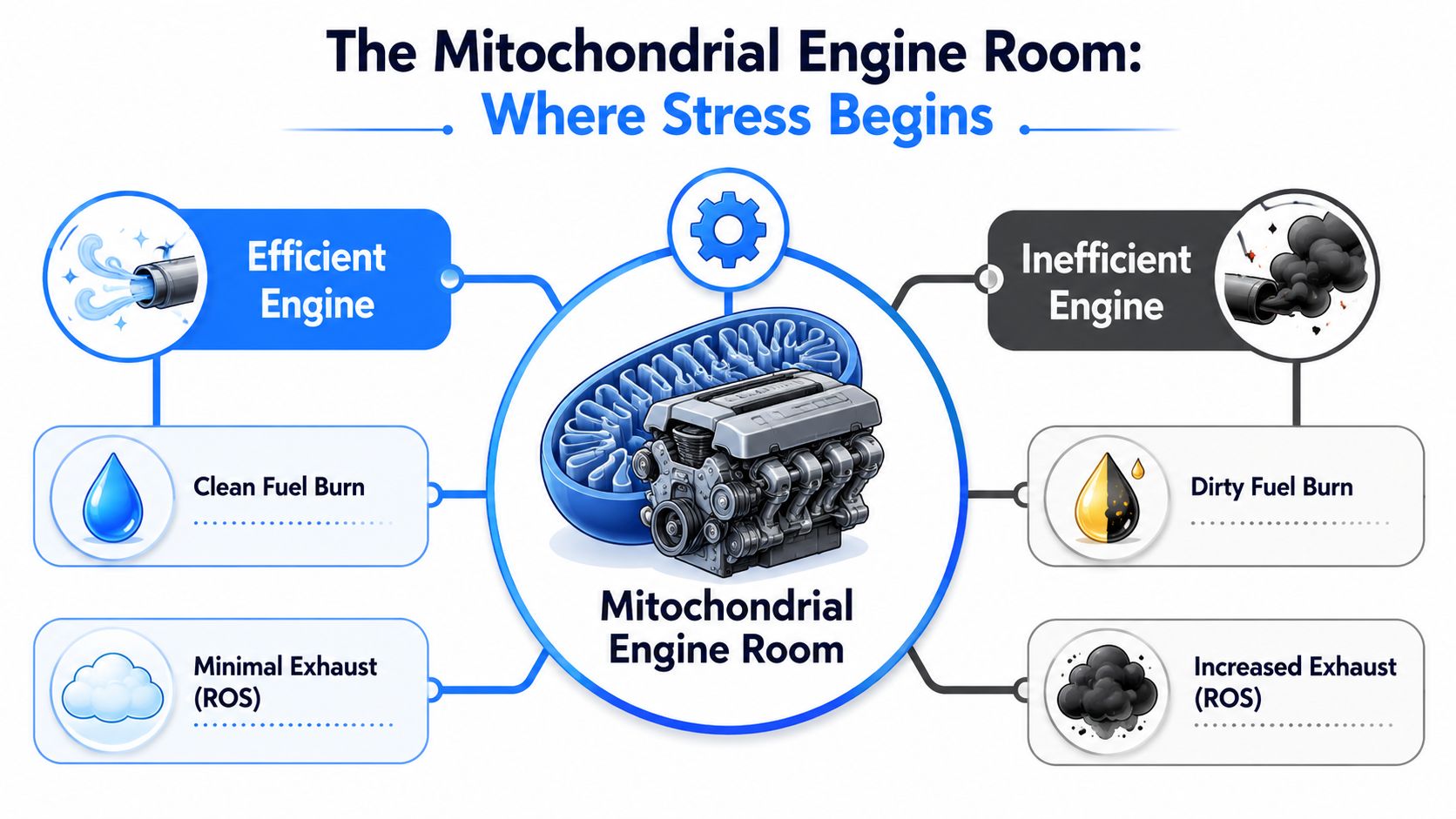
The Mitochondrial Engine Room Where Stress Begins
Mitochondria offer a prime focus for those seeking a more durable strategy for oxidative stress reduction.
They are the cell's energy converters. They take fuel, move electrons through oxidative phosphorylation, and produce ATP. When that system runs efficiently, the cell gets usable energy with less collateral byproduct. When it runs poorly, electrons leak and reactive oxygen species rise.
Why mitochondria deserve most of the attention
Research points to mitochondria as the main bottleneck. Approximately 90% of cellular ROS are generated through oxidative phosphorylation in mitochondria, which is why mitochondrial stabilization is such a central target for therapy and metabolic support, according to this Frontiers review on ROS control and mitochondrial efficiency.
That single fact changes the intervention hierarchy. If most ROS are being created in the engine room, then oxidative stress reduction can't rely only on scavenging what has already been produced.
Efficient engine versus dirty engine
A useful comparison looks like this:
| Mitochondrial state | What happens |
|---|---|
| Efficient fuel handling | ATP production is steadier, with less electron leak |
| Inefficient electron flow | More reactive byproduct escapes during energy production |
| Repeated overload | Recovery demands rise and output becomes less stable |
Many people support this system with nutrients involved in mitochondrial energetics. If you want a consumer-friendly breakdown of one widely used option, this guide to Coenzyme Q10 Vegan gives helpful context on where CoQ10 fits.
For a broader foundation in how the body shifts between fuel systems, Tecton's article on the energetic systems of the body is useful because it frames oxidative stress as an energy management issue, not just a supplement issue.
The body already has an internal defense network
The body isn't passive here. Endogenous antioxidant enzymes such as SOD, catalase, and GPx are the heavy lifters. They work faster and more strategically than many exogenous antioxidants because they're built into the cellular defense system.
One of the key regulators is Nrf2, a signaling pathway that increases expression of these protective enzymes. Exercise can activate Nrf2 when the dose is appropriate. That's part of why training can either build resilience or dig a hole, depending on recovery, sleep, and substrate availability.
Practical rule: If you want less oxidative stress, improve how the cell makes energy before you focus on “detoxing” the aftermath.
For active individuals, targeted fuel support can play a role. Tecton EDGE™ Performance Shot + Electrolytes is formulated for training, movement, and physically demanding days with liposomal R3HBG ketone plus sodium, potassium, and magnesium. In that context, the rationale isn't stimulation. It's support for steadier energy, hydration, and metabolic efficiency during load.
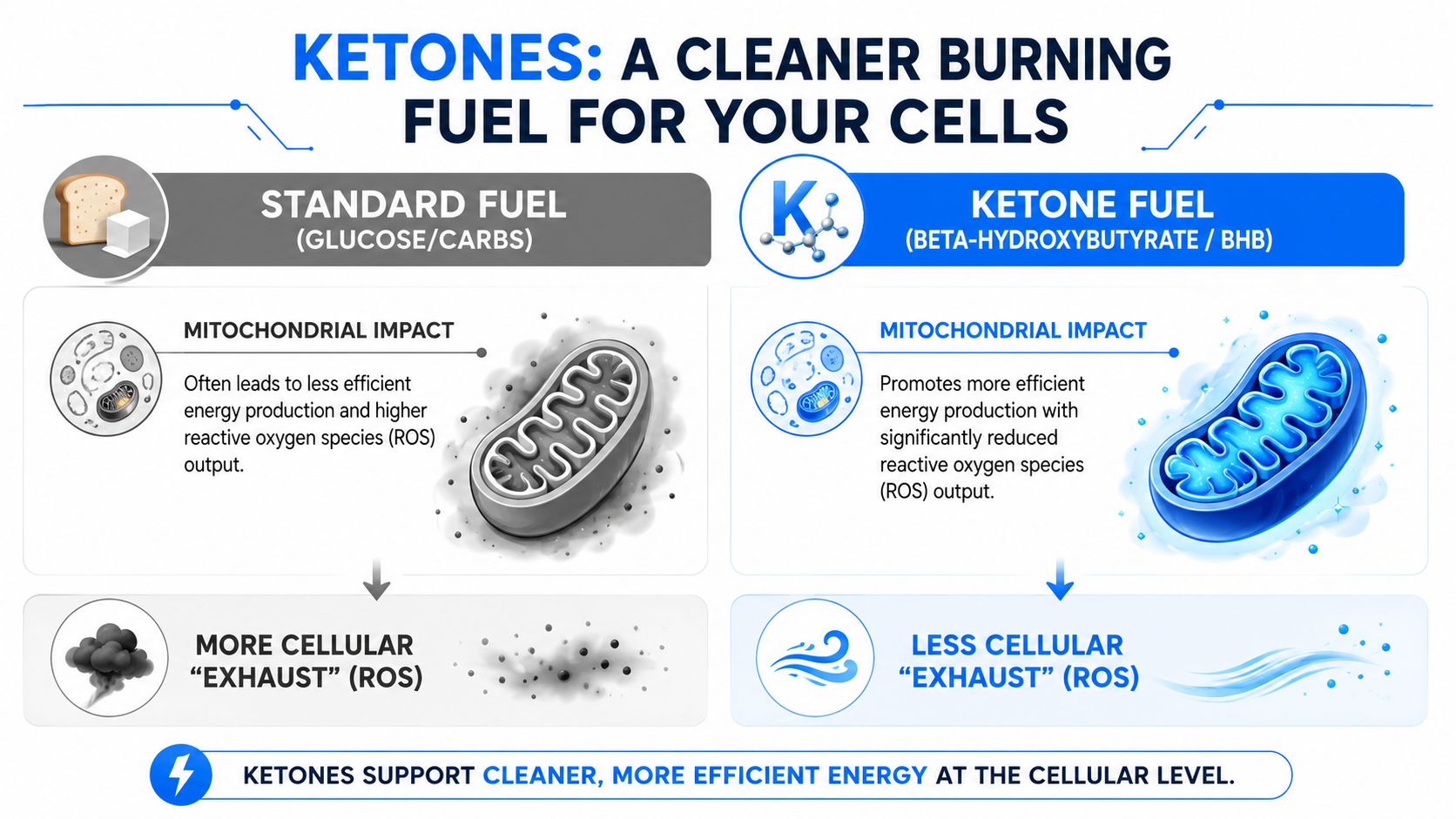
Ketones A Cleaner Burning Fuel for Your Cells
If mitochondria are the engine room, ketones are one of the more interesting fuels you can provide.
The main ketone discussed in human metabolism is beta-hydroxybutyrate, or BHB. It's produced naturally during nutritional ketosis and fasting, but it can also be delivered through exogenous ketone supplementation. The distinction matters.
- Nutritional ketosis comes from diet and carbohydrate restriction.
- Endogenous ketone production is what your liver makes under those conditions.
- Exogenous ketones provide ketones directly, without requiring the same degree of dietary restriction.
That difference is one reason ketones matter for modern life. Many people want the metabolic and cognitive utility of ketones without fully restructuring how they eat.
Why BHB changes the energy conversation
Glucose is a normal fuel. It isn't the enemy. But glucose-heavy metabolism can become less stable in people with poor metabolic flexibility, high training stress, or frequent swings in intake and demand.
BHB enters cellular energy pathways differently. It supplies an alternative substrate to mitochondria and supports ATP production without depending on the same upstream glycolytic traffic. That matters in tissues with high energy demand, especially the brain, heart, and working muscle.
BHB also has signaling roles beyond fuel. It participates in pathways that influence cellular stress responses, inflammation signaling, and redox balance. In plain language, ketones don't only feed the cell. They also help shape how the cell responds to stress.
A controlled human finding that often gets overlooked is this: beta-hydroxybutyrate infusion decreased ATP degradation products, including plasma total purines, blood lactate, and blood ammonia during low-phosphate states, indicating a shift from ATP degradation toward ATP resynthesis in muscle and liver, as reported in this PubMed study on BHB and energy metabolism.
That is exactly the kind of physiology performance-minded people care about. Better energy handling. Less metabolic waste under strain.
Brain energy and metabolic flexibility
The brain is metabolically expensive tissue. When energy delivery is inconsistent, people notice it as reduced clarity, poor cognitive endurance, or that late-afternoon drop in mental sharpness.
BHB crosses into the brain and provides a direct alternative fuel source. That doesn't mean everyone needs to live in ketosis. It does mean that metabolic flexibility, the ability to use glucose and ketones appropriately, is a major asset.
If you want a deeper primer on the category itself, Tecton's explanation of what exogenous ketones are is a good starting point because it separates mechanism from marketing.
This is also where related metabolic interventions often enter the discussion. For example, some readers exploring mitochondrial support also look at options such as an energy and metabolic support peptide to understand how different tools may influence substrate use and cellular signaling. The key is to keep the hierarchy straight. Fuel efficiency still comes first.
A short visual summary helps make the distinction clearer:
Glucose versus ketones isn't a religion
This isn't a carb-versus-ketone ideology. It's about context.
Some people do well with a mixed-fuel approach. Some benefit from periods of nutritional ketosis. Others use exogenous ketones around training, fasting windows, travel, or cognitively demanding work. The right question is not “which fuel is morally superior?” It's “which fuel helps this person produce energy more efficiently under current conditions?”
Choosing the Right Exogenous Ketone The Tecton Difference
Not all exogenous ketones behave the same way.
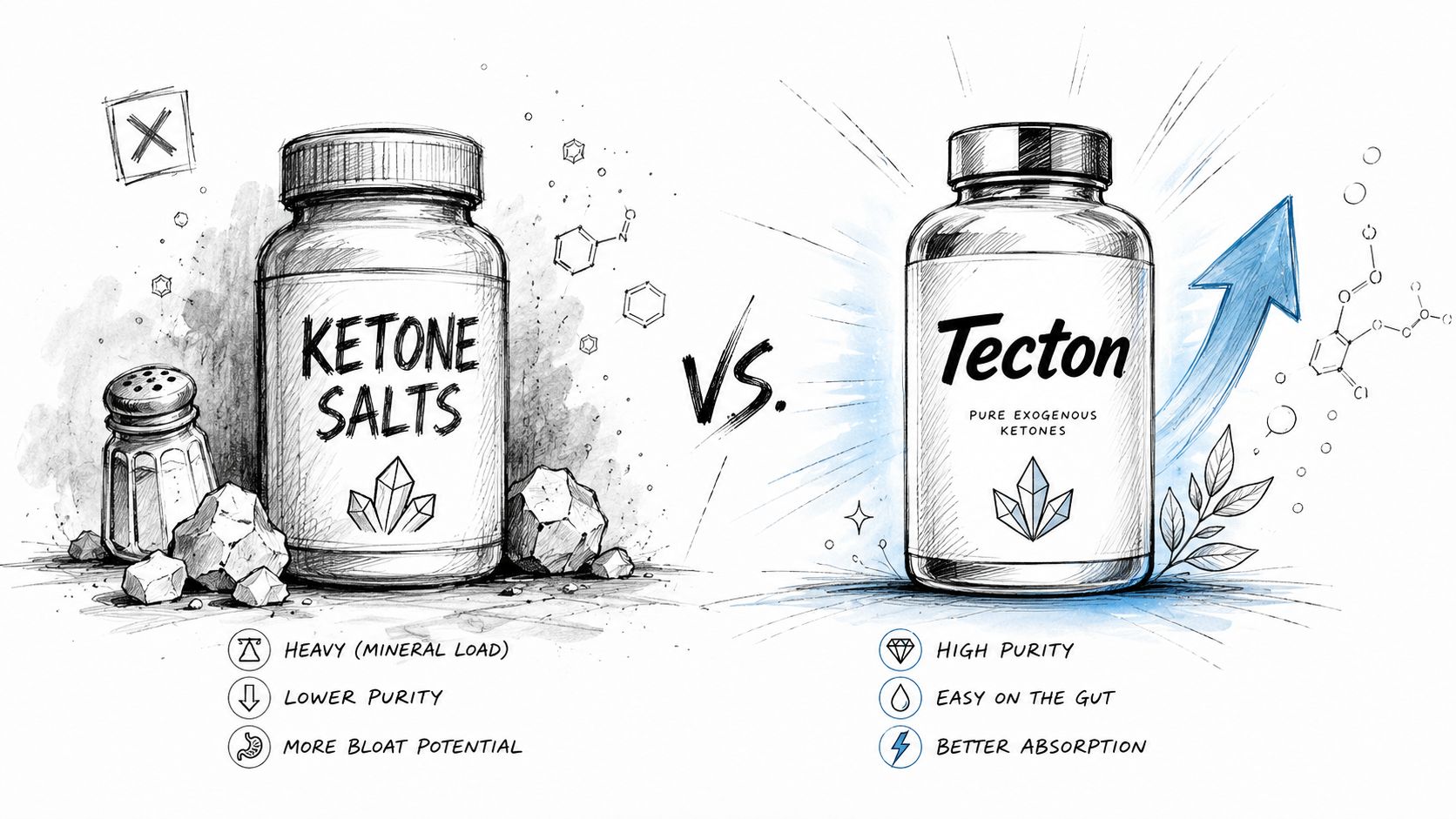
The market generally includes ketone salts, ketone esters, and precursors. These categories differ in chemistry, tolerability, mineral load, and how directly they raise circulating ketones.
What separates the common formats
- Ketone salts: These bind BHB to minerals. They can be useful in some contexts, but the mineral burden can become a practical limitation, especially when people take larger doses or already use electrolyte products.
- Precursors: These rely on conversion steps to generate ketones later. That can make the experience less direct and, depending on the ingredient, less aligned with people who want a cleaner ketone input.
- Ketone esters: These are designed to deliver ketones more directly and tend to make the metabolic intent clearer.
A key human data point is that exogenous D-beta-hydroxybutyrate is rapidly absorbed and raises blood ketone concentrations above 1 mM, reaching a level approximately 1.7-fold greater than the same dose of D+L-BHB or MCT oil, despite a lower caloric load, according to this human research on oral ketone delivery.
Why formulation details matter
If you care about scientific rigor, two details are worth separating from the usual category noise.
First, bioidentical structure matters. The body naturally makes and uses D-BHB. A product built around bioidentical ketone chemistry aligns more closely with that physiology than formulas that include non-bioidentical forms or rely on indirect conversion.
Second, delivery system matters. Liposomal delivery is designed to support absorption and tolerability, which becomes more relevant when a product is meant for repeated real-world use rather than occasional experimentation.
Tecton's platform is built around R3HBG, which the company describes as a bioidentical ketone technology designed to deliver D-BHB directly, and its liposomal approach is intended to support consistent delivery without relying on heavy mineral loads or precursor chemistry. That's also why Tecton emphasizes avoiding R-1,3-butanediol, artificial dyes, sweeteners, and BPA packaging in daily-use formulations.
From a clinician's perspective, those choices matter because the ketone category has too often treated “raised ketones” as the only metric. In practice, the how matters almost as much as the whether.
Application Framework for Metabolic Health
If you want oxidative stress reduction to be practical, keep the framework simple. Start with the root cause. Improve energy efficiency. Use antioxidants and recovery habits as support, not as the only plan.
Why This Matters
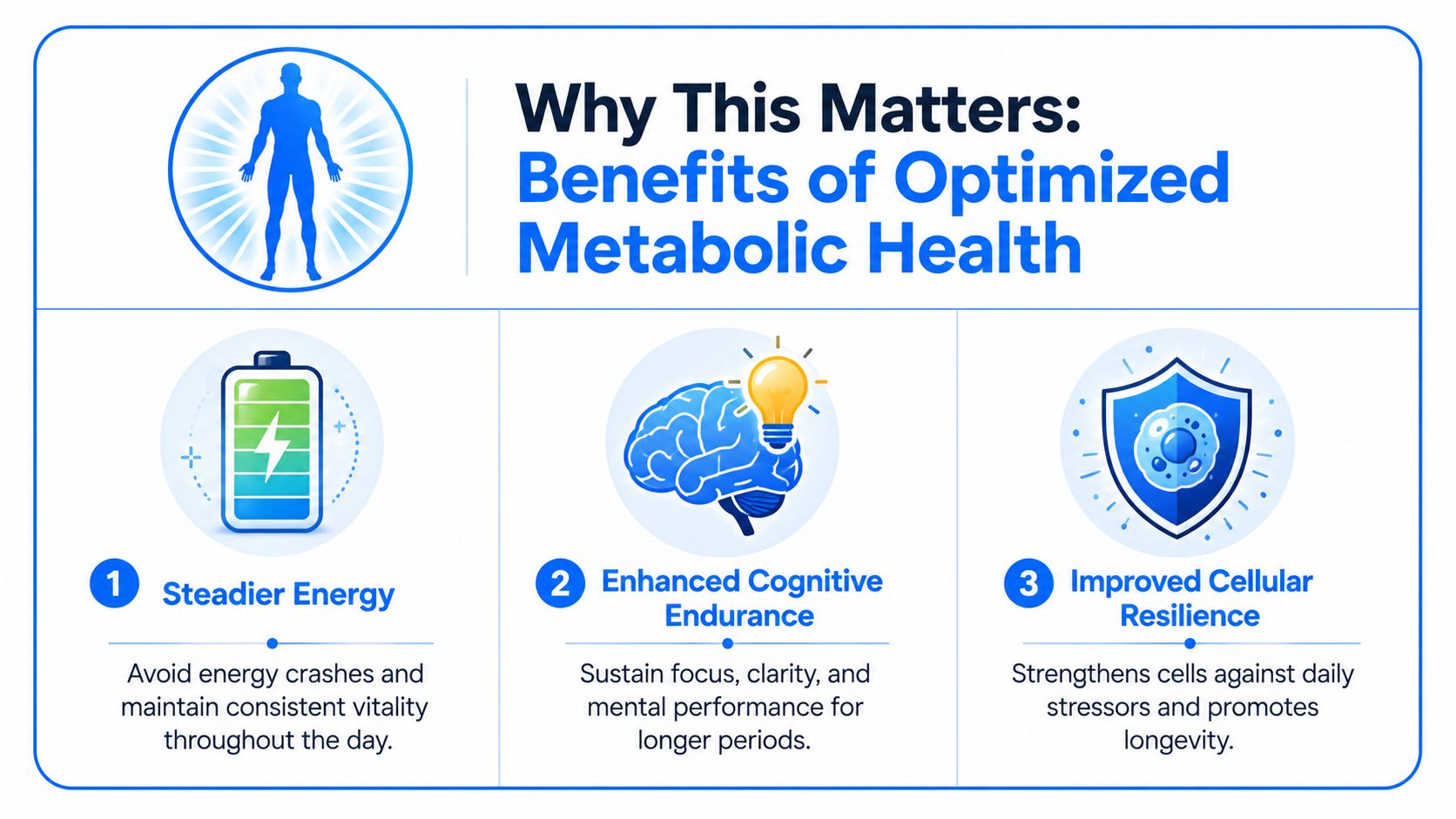
When cellular fuel handling improves, people usually care about outcomes that feel tangible:
- Steadier energy: Fewer dramatic swings across the day.
- Cognitive endurance: More durable focus during demanding work.
- Workout performance: Better support for effort when energy demand rises.
- Metabolic efficiency: Less friction between fuel intake and usable output.
There's also a recovery angle. Beta-hydroxybutyrate has been shown to reduce protein catabolism and decrease systemic protein oxidation, with net phenylalanine balance estimates approximately 30% higher in BHB intervention than placebo, demonstrating suppression of muscle protein breakdown in humans in this clinical paper on BHB and protein balance.
Who may benefit and when to use it
Exogenous ketones may fit people who want targeted support rather than full-time dietary ketosis:
- Endurance athletes or active adults: Before training or on long physically demanding days.
- Professionals and students: During periods that require sustained cognitive output.
- People using fasting windows: To support steadier energy while extending metabolic flexibility.
- Individuals working on metabolic health: As one tool alongside sleep, nutrition quality, and training structure.
Start with the use case, not the trend. The physiology should match the goal.
Practical Takeaway
Use this sequence:
- Reduce obvious oxidative load through sleep, recovery, and stable nutrition.
- Train for adaptation, not exhaustion.
- Support mitochondrial efficiency with appropriate fuel strategy.
- Use exogenous ketones when the situation calls for rapid, usable ketone energy.
- Track how you respond, especially in energy steadiness, workout tolerance, appetite rhythm, and mental clarity.
If you have a medical condition, take medications, or are changing a therapeutic nutrition strategy, involve a qualified healthcare professional. That's especially important if you're using ketones within a broader metabolic or neurological care plan.
Tecton Ketones™ approaches exogenous ketones from a metabolic physiology perspective rather than a hype-first supplement angle. If your goal is steadier energy, cleaner fuel delivery, and a more practical path to ketosis without relying on a strict ketogenic diet, their educational resources and bioidentical ketone formulations are a strong place to continue your research.


