


The popular advice is to treat adaptogens as a universal answer to stress, then add caffeine or another stimulant when energy still falls short. That approach confuses two different physiological problems. Adaptogenic support is intended to influence how the body regulates stress, while exogenous ketones provide an alternative fuel substrate that can change energy metabolism directly. Neither replaces sleep, adequate nutrition, medical evaluation, or a well-designed training plan.
A more useful question is narrower: what measurable problem are you trying to solve? If the problem is persistent stress reactivity, sleep disruption, or poor recovery, botanical support may be relevant. If the problem is maintaining cognitive or physical output while glucose availability is limited, exogenous ketones may be relevant. The evidence is strongest when each intervention is matched to the physiology it can plausibly affect.
The Clinical Origins of Adaptogenic Support
The word adaptogen now appears on capsules, beverages, powders, and mushroom blends, often without a consistent clinical definition. That widespread use can make the category sound more settled than it is. Independent coverage has noted that adaptogens are a Western construct influenced by Traditional Chinese Medicine and Ayurveda, while clinical classification and regulatory standardization remain unclear, particularly for ingredients such as schisandra and adaptogenic fungi. Nutritional Outlook's discussion of adaptogens is useful precisely because it highlights that gap.
The modern scientific study of adaptogens traces back to World War II, when researchers focused on stamina, endurance, and performance in soldiers, pilots, sailors, and wartime production workers. A widely cited review describes a major expansion of adaptogen research after 1940, followed by later growth in controlled clinical trials and mechanistic studies. HerbalGram's review of adaptogen research places the field in a performance and stress-resilience context, not in the modern supplement aisle.
That history matters because it changes the standard of evaluation. A compound shouldn't earn credibility just because it has a traditional name or appears in a popular blend. The relevant questions are whether the ingredient has a plausible mechanism, whether controlled human studies support a specific outcome, whether the preparation is standardized, and whether the dose used in research resembles the dose on the label.
Clinical rule: An adaptogen should be judged by its measurable effect under a defined stress condition, not by the breadth of claims attached to its name.
This is also where nutrition professionals can add value. People looking for individualized dietary support may benefit from services such as nutrition services Utah, particularly when supplement decisions need to fit training, energy intake, sleep, or medication use. Adaptogenic support should be part of a broader assessment rather than a substitute for one.
Commercial interest has expanded quickly. Industry reporting describes adaptogen-containing products rising 10% in 2020 and 14% in 2021 worldwide, while estimates place adaptogens at about 1% of the U.S. dietary supplement market and 2% globally. Nutritional Outlook's market analysis also cites an estimate of USD 10.89 billion in 2024, projected to reach USD 16.32 billion by 2030 at a 7.2% CAGR. These are market estimates, not proof of efficacy. They show that consumer demand is growing faster than agreement about what the category should mean.
Mechanisms of Stress Resilience and HPA-Axis Regulation
Stress resilience begins with the hypothalamic-pituitary-adrenal, or HPA, axis. A stressor can prompt the hypothalamus to release corticotropin-releasing hormone, which signals the pituitary to release adrenocorticotropic hormone. The adrenal glands then increase cortisol output. Cortisol helps mobilize energy and coordinate the response, but repeated or poorly regulated activation can impose a biological cost.
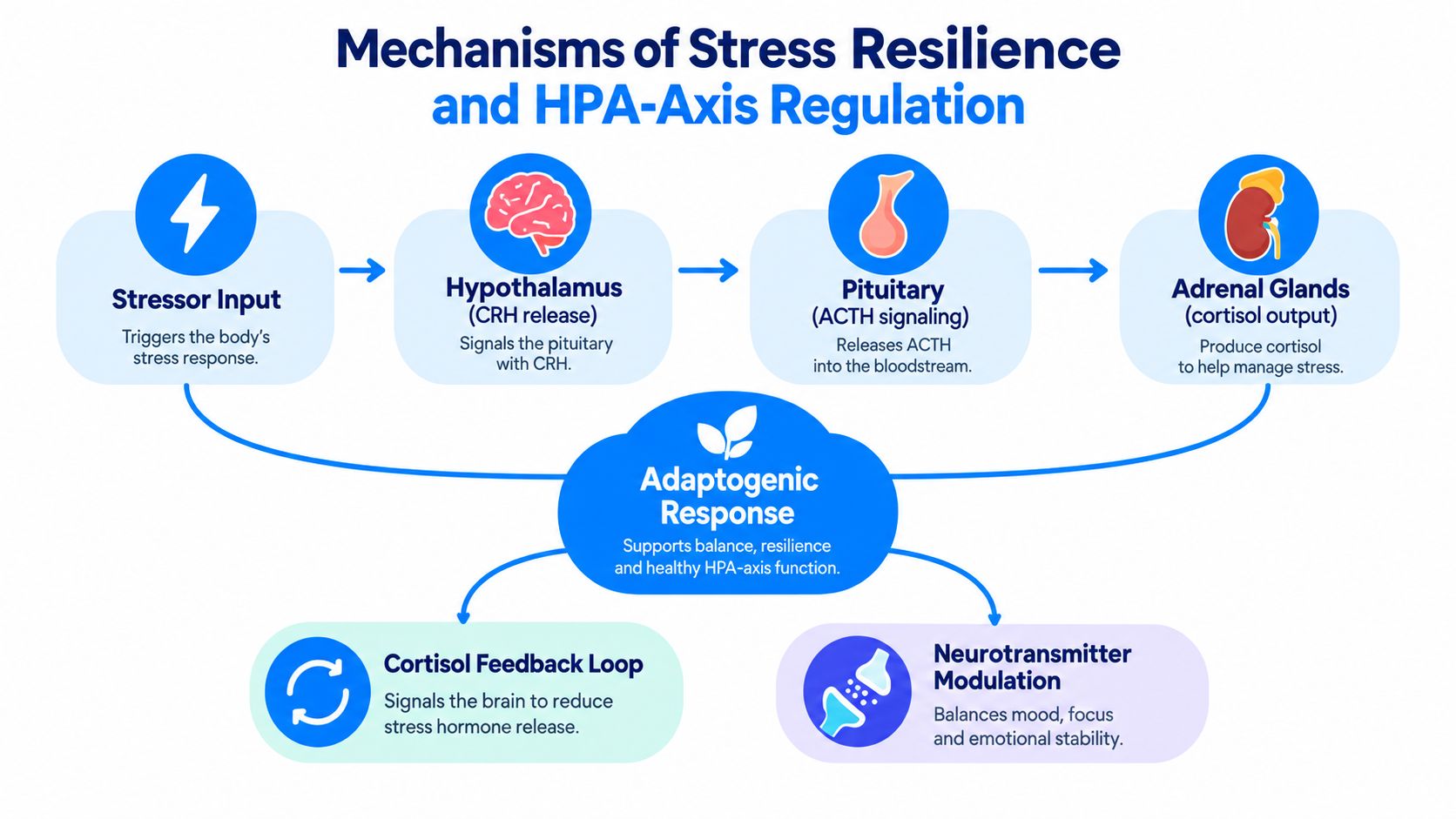
Adaptogens aren't best understood as sedatives. A major review describes their activity as “multi-targeted and multi-channel,” with effects across the immune, nervous, and endocrine systems. The proposed pathways include cortisol regulation, glucocorticoid receptor feedback, and stress-induced nitric oxide and JNK signaling. The mechanistic review in PMC provides the relevant framework.
What the feedback loop means
A healthy stress response rises when demand increases and then settles as the threat or workload resolves. Adaptogenic support is intended to improve the efficiency of that regulation, rather than force cortisol permanently lower. That distinction is important. Cortisol isn't a toxin to eliminate. It's a necessary hormone involved in glucose availability, vascular tone, immune signaling, and circadian organization.
Human evidence summarized in the same review reports that ashwagandha reduced perceived stress scores by roughly 34% to 44% in randomized trials, with concurrent reductions in serum cortisol across studies. Those findings don't mean every ashwagandha product will produce the same response. Extract type, dose, baseline stress, study design, and individual physiology all matter.
For people with persistent fatigue, the first step should be identifying causes rather than assuming adrenal dysfunction. A clinician-led review of fatigue treatment options from ProMD Health can provide a more appropriate context for symptoms that may involve sleep, endocrine function, nutrition, medication, or other medical factors.
What to measure
A protocol becomes more credible when it has a baseline and an endpoint. Useful measures include:
- Perceived stress: Track the same validated questionnaire at consistent intervals.
- Sleep quality: Record sleep duration, awakenings, and subjective restoration.
- Heart-rate variability: Use a consistent measurement method because HRV varies with timing, illness, alcohol, training load, and sleep.
- Cortisol: Interpret testing with a qualified professional and respect the limitations of a single sample.
For readers comparing botanical stress tools with metabolic interventions, natural stress relief supplements offers a related discussion, but the central principle remains the same. A change in how you feel matters, yet it becomes more useful when paired with repeatable physiological or behavioral measurements.
The Locked Cognition™ Shot is designed for mentally demanding days and combines liposomal R3HBG™, Alpha GPC, and Lion's Mane. Its intended use is steady workday focus during activities such as desk work, meetings, and presentations, rather than acute stimulant intensity.
Evaluating the Evidence for Key Botanical Compounds
The adaptogen label doesn't create an equal evidence base. Among commonly used botanicals, ashwagandha and rhodiola have the clearest performance-oriented human support, especially when people are under meaningful stress load. A clinical review describes randomized-trial evidence for Withania somnifera and Rhodiola rosea in psychophysical health and stress resilience, with mechanisms involving HPA-axis regulation, neurotransmission, immune pathways, and autonomic balance. The clinical evidence review also reports beneficial HRV changes in people taking ashwagandha.
| Compound | Evidence Level | Primary Mechanism | Best Use Case |
|---|---|---|---|
| Ashwagandha, Withania somnifera | Stronger human evidence for stress-related outcomes | HPA-axis and cortisol regulation, autonomic balance | Ongoing stress, recovery deficits, sleep disruption |
| Rhodiola, Rhodiola rosea | Supportive human evidence, especially under stress load | Stress-response signaling and psychophysical resilience | Mental fatigue and demanding performance periods |
| Panax ginseng | Broad traditional and clinical interest, benefits remain less clearly defined | Multiple metabolic and neuroendocrine pathways | General stamina, with cautious interpretation |
| Schisandra | Traditional use with a need for tighter clinical validation | Proposed stress and cellular signaling effects | A research-informed option, not a first-line certainty |
| Adaptogenic fungi | Uneven evidence, often species-specific | Immune, neurotrophic, or metabolic pathways depending on species | Only when the product identifies the species and evidence |
Stronger evidence doesn't mean universal benefit
Ashwagandha appears most relevant when a person has high perceived stress, sleep disruption, or recovery problems. Rhodiola is more often considered when stress presents as fatigue and reduced mental stamina. Neither should be framed as a guaranteed energy enhancer for someone who is already well-rested and not under substantial stress.
Panax ginseng is frequently described as a prototypical adaptogen, but its broad benefits remain difficult to classify cleanly. Schisandra and many mushroom products face an even larger evidence gap. Recent reporting emphasizes that large, long-term human studies remain limited, while many studies are small or based on animals. USA Today's review of the evidence captures the tension between rapid product innovation and slower clinical validation.
A practical hierarchy therefore looks like this:
- Choose an ingredient with human data relevant to your actual goal.
- Prefer a standardized extract with the active compounds disclosed.
- Start with one intervention so you can identify benefit or intolerance.
- Don't assume a blend is better because it contains more ingredients.
For a broader discussion of gender-specific considerations, supplements for stress in women can be useful, especially when stress symptoms overlap with hormonal transitions or medication use. Ashwagandha and GABA are also discussed in this analysis of ashwagandha and GABA, but mechanistic plausibility shouldn't be confused with proof that every combined formula will work.
Combining Adaptogens with Exogenous Ketone Metabolism
Adaptogens and exogenous ketones address different layers of physiology. Adaptogens are generally discussed in relation to stress-response regulation, particularly the HPA axis. Exogenous ketones provide a circulating fuel source, often in the form of beta-hydroxybutyrate, or BHB, without requiring the body to produce all of that ketone energy through fasting or carbohydrate restriction.
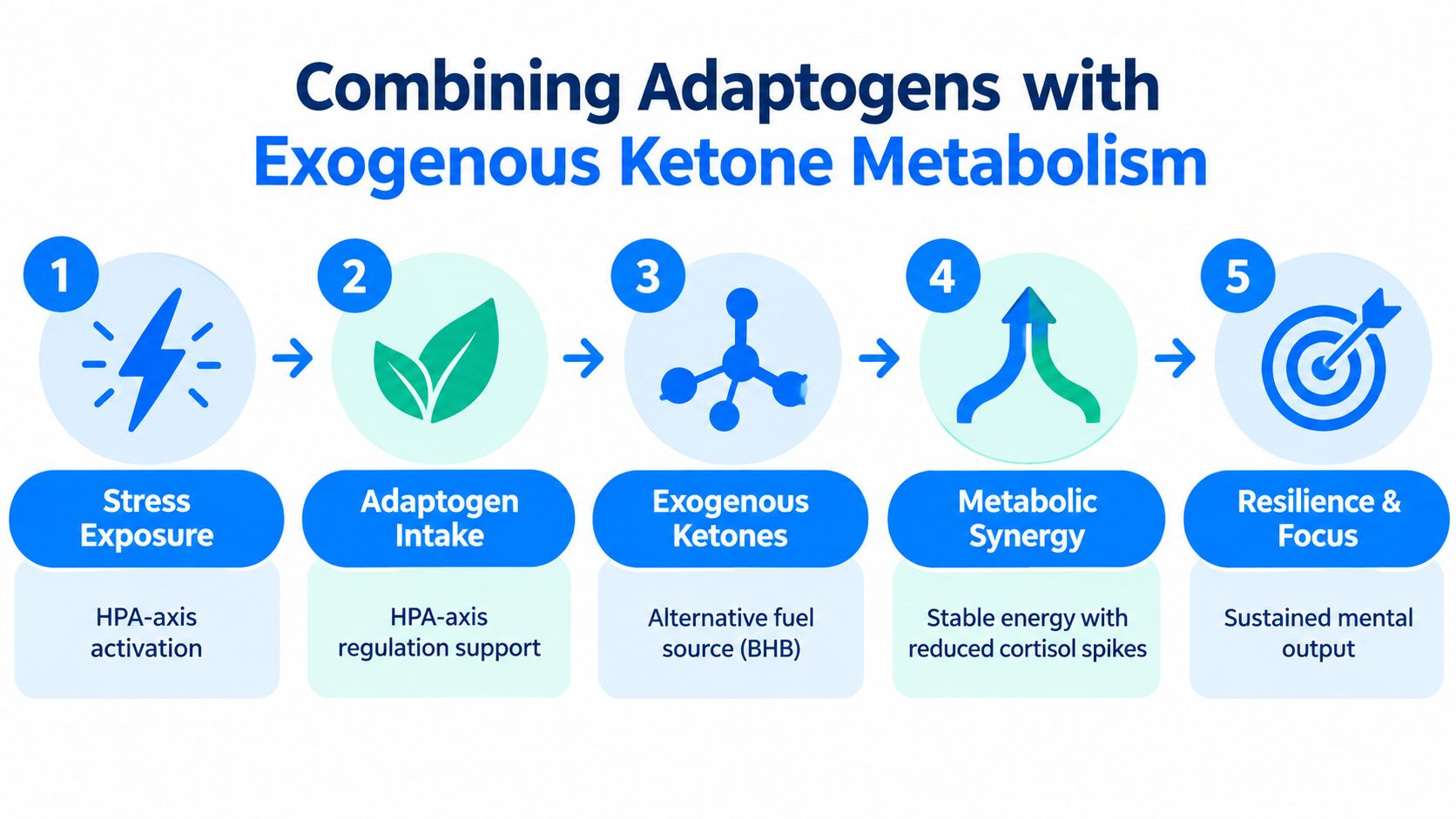
During endogenous ketosis, the liver converts fatty acids into ketone bodies, including BHB and acetoacetate. During exogenous supplementation, the user consumes ketones or ketone precursors directly. These are not interchangeable experiences. Diet-induced ketosis depends on sustained changes in nutrient availability, while exogenous ketones can acutely increase circulating ketones even when ordinary food is still being consumed.
How BHB supplies energy
BHB travels through the blood and can be taken up by tissues including skeletal muscle and the brain. Inside mitochondria, it is converted to acetyl-CoA, which enters the citric acid cycle. The resulting reducing equivalents support the electron transport chain and oxidative phosphorylation, where mitochondria generate ATP.
Glucose follows a different route. It enters glycolysis, produces pyruvate, and can then contribute acetyl-CoA for mitochondrial oxidation. Ketones don't make glucose obsolete, and they don't guarantee superior ATP production in every setting. Their value is that they provide an alternative substrate, which can support metabolic flexibility, the ability to use different fuels as demand and availability change.
In a controlled human study, ketone salts increased oxygen consumption and carbon dioxide production while lowering the respiratory exchange ratio during isocaloric nutrition. That pattern indicates a measurable shift away from carbohydrate-dominant oxidation and toward ketone use. The controlled physiology study supports the metabolic effect without proving a universal performance benefit.
Where the two approaches may complement each other
An adaptogen may be relevant when stress increases autonomic load or disrupts recovery. BHB may be relevant when the brain or muscles need an alternative oxidative substrate. Together, they create a dual-pathway hypothesis, one intervention addresses regulatory stress signaling, and the other addresses fuel availability.
The hypothesis still needs disciplined testing. Don't describe a ketone drink as an HPA-axis therapy, and don't describe an herb as a direct mitochondrial fuel. For practical ideas about replacing habitual stimulants, healthy alternatives to coffee for energy provides a useful starting point.
Practical Protocols for Dosing and Safety
The safest protocol is conservative, measurable, and simple. Adaptogens are usually better positioned as consistent stress-resilience tools than as on-demand stimulants. Exogenous ketones are more suitable for specific periods of cognitive or physical demand, provided the user tolerates them and has a clear reason to use them.
Build the botanical protocol first
Start with one standardized botanical, taken according to the product label and the evidence relevant to your goal. If the target is stress reactivity or sleep disruption, a calming profile may fit better than a stimulating one. If the target is stress-associated mental fatigue, a morning-oriented option may be more appropriate.
Track:
- Baseline symptoms: Note stress, sleep, energy, and training load before starting.
- Timing: Take more activating products earlier in the day if they disturb sleep.
- Response: Look for changes over consistent use, not a dramatic first-day sensation.
- Interactions: Review medications and health conditions with a clinician or pharmacist.
People who are pregnant, breastfeeding, managing endocrine or immune conditions, or taking psychoactive drugs, blood thinners, stimulants, diabetes medication, or immunosuppressants should seek professional guidance before using adaptogens. Stop if symptoms such as unusual agitation, persistent nausea, worsening sleep, or allergic reactions appear.
Add ketones for a defined demand
Use exogenous ketones before or during a demanding work block, a training session, or a fasting window when an alternative fuel is relevant. Don't treat the appearance of a high BHB reading as proof that the product improved your performance. Pair subjective ratings with output, such as pace, power, task completion, or sustained attention.
Human ketosis has a broad physiological context. Circulating ketones are typically below 250 µM in healthy fed adults, rise to about 1 mM after roughly 16 to 20 hours of fasting, and can reach up to 20 mM in diabetic ketoacidosis. The physiology review in Nature makes the essential distinction clear, nutritional ketosis isn't the same as pathological ketosis.
A 28-day human safety study used 25 mL of ketone monoester three times daily. Participants reached blood BHB levels of 4.1 ± 1.1 mM without changes in body weight, body composition, fasting glucose, cholesterol, triglycerides, electrolytes, blood gases, or kidney function. Mild nausea occurred after 6 of 2,016 drinks. The PubMed-indexed safety study supports a specific safety observation, not a blanket guarantee for every ketone formulation or user.
Why This Matters for Performance and Cognition
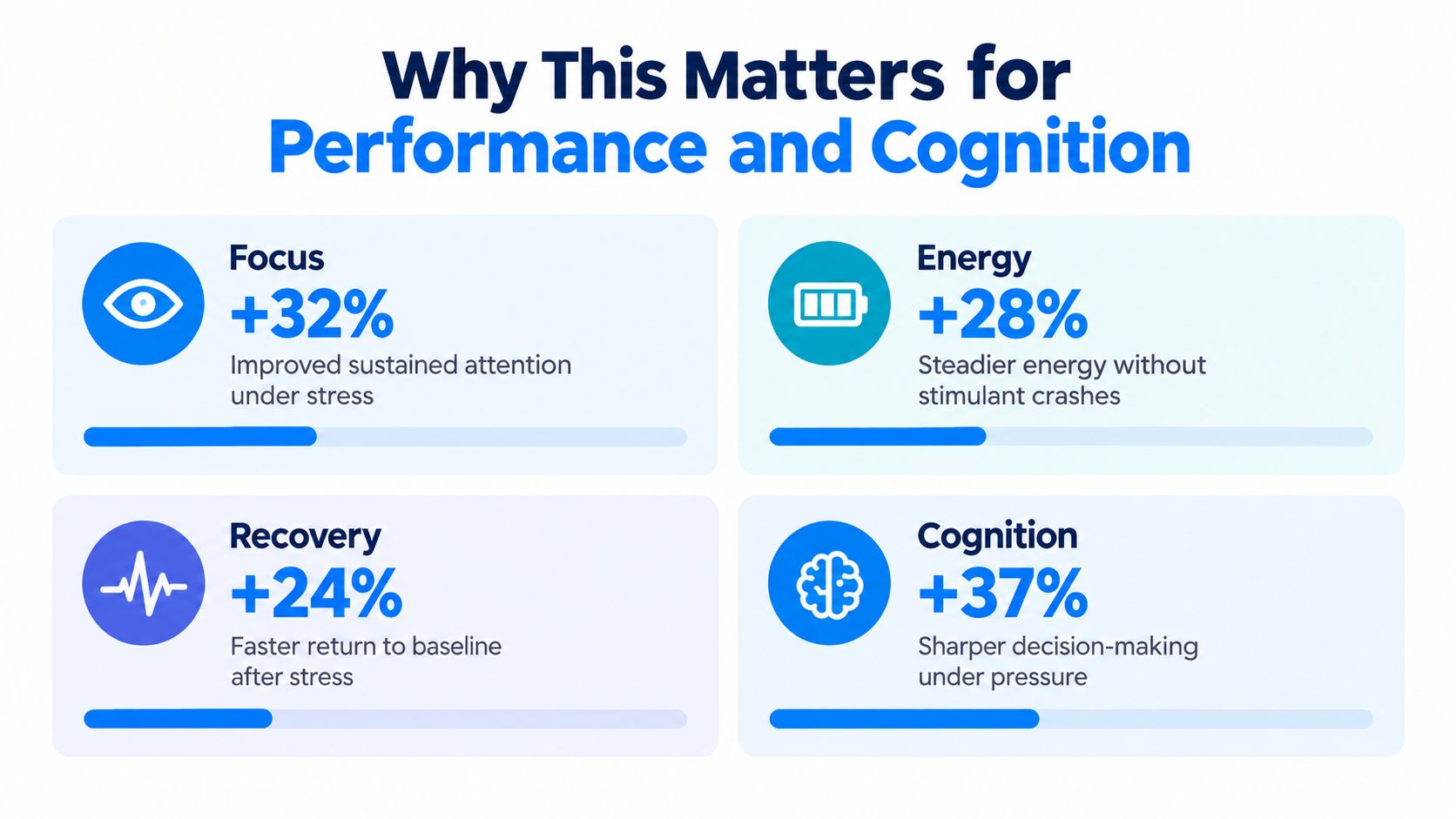
Biochemistry matters because the intervention should produce an observable change in a real task. A person using adaptogenic support may be looking for less stress-driven disruption, while a person using exogenous ketones may be looking for a steadier supply of oxidizable fuel. The useful outcome is not a feeling of being “optimized.” It's better control of output under a defined demand.
Steadier energy
Ketones can provide an alternative substrate for mitochondrial oxidation, while stress regulation may reduce the subjective volatility that comes from poor sleep or excessive arousal. Neither mechanism promises unlimited energy. They may instead support a smoother response when the underlying demand is manageable.
Cognitive endurance
The brain can use ketones as an oxidative fuel. That doesn't mean every cognitive task improves, or that ketones replace glucose under all conditions. A sensible test is whether sustained attention, writing quality, meeting participation, or decision consistency holds up during a demanding block.
Workout performance
A controlled fuel shift can be relevant during endurance work or lower-carbohydrate training, but performance depends on hydration, electrolytes, pacing, carbohydrate availability, and training status. Adaptogens may be more relevant when perceived stress and recovery deficits limit output. Measure pace, power, perceived exertion, and recovery rather than relying on stimulation.
Metabolic efficiency
Metabolic flexibility means moving between glucose and ketones according to context. Exogenous ketones can increase ketone availability acutely, but they don't automatically create the full adaptation associated with repeated fasting or dietary ketosis. That distinction prevents a high BHB value from being mistaken for a complete metabolic transformation.
Application Framework for Evaluating Product Claims
A rigorous product decision starts with the label, not the advertisement. Botanical formulas should identify the plant species, plant part, extraction method, and standardized active compounds. Ketone formulas should identify the ketone structure, amount provided, delivery system, and non-ketone ingredients.
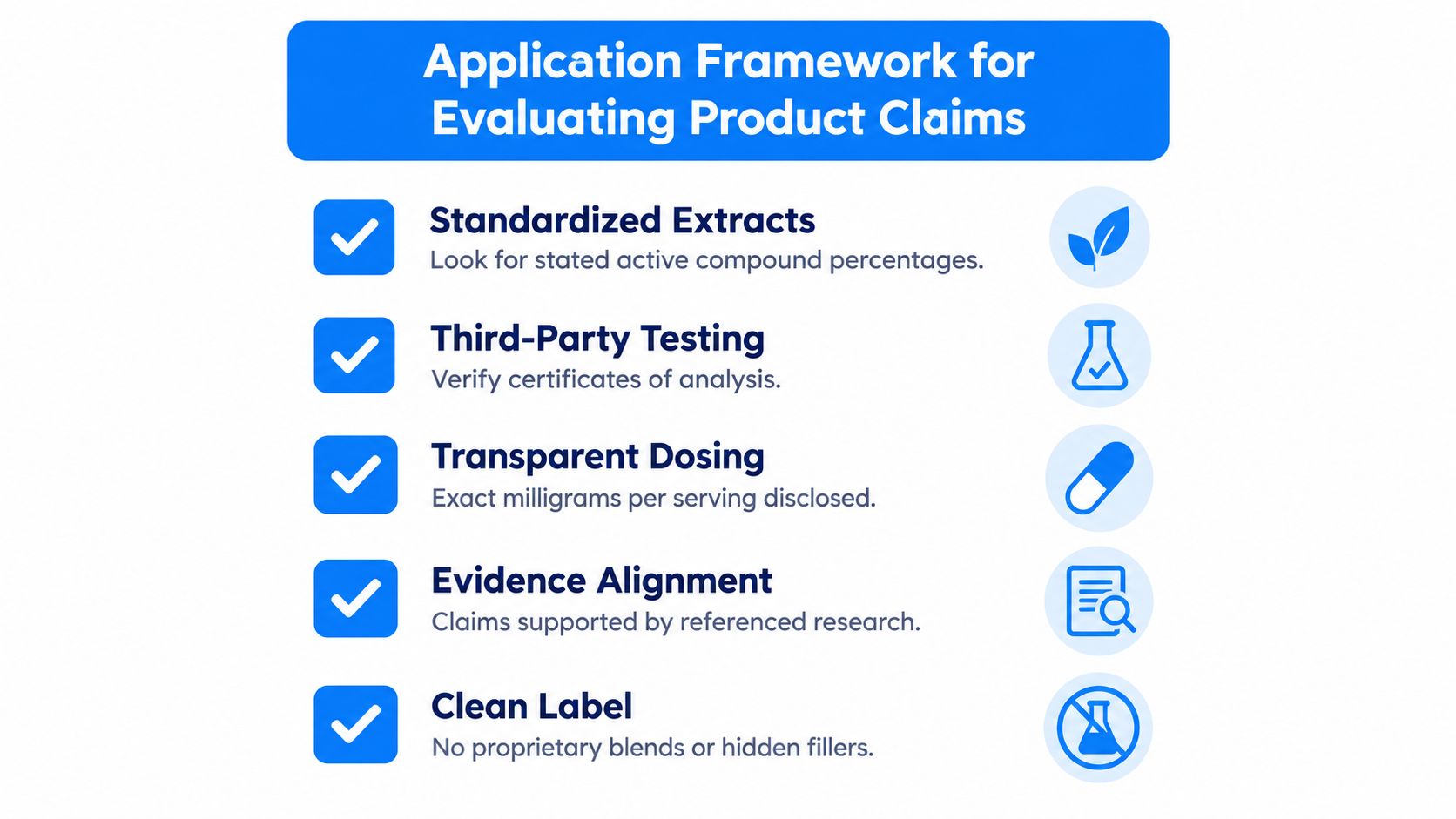
Use this checklist before purchasing:
- Standardized extracts: Look for stated active compounds rather than a plant name alone.
- Third-party testing: Ask whether certificates of analysis verify identity, contaminants, and potency.
- Transparent dosing: Reject proprietary blends that hide the amount of each ingredient.
- Evidence alignment: Match the claim to a human study involving the same species, preparation, and outcome.
- Clean label: Review unnecessary dyes, sweeteners, mineral loads, and excipients that may affect tolerability.
Delivery technology deserves careful wording. A liposomal system may be intended to support absorption and consistency, but the presence of the word “liposomal” doesn't prove superior clinical outcomes. Similarly, a bioidentical ketone structure should be distinguished from a ketone salt, ketone ester, or precursor because each format has different chemistry, mineral content, taste, tolerability, and metabolism.
For adaptogens, the main trade-off is breadth versus dose clarity. A large blend may sound extensive while providing too little of each ingredient to resemble studied preparations. For ketones, the trade-off may involve rapid availability, gastrointestinal tolerance, formulation complexity, and cost. The best choice is the one with a transparent rationale and a measurable use case.
The FDA's new dietary ingredient framework requires premarket notification at least 75 days before interstate marketing, with the ingredient name, product description, use conditions, and safety evidence supporting a reasonable expectation of safety under labeled conditions. FDA's NDI background guidance explains the framework. Regulatory notification isn't the same as proof that a product improves performance, but it is part of responsible product evaluation.
For readers who want a ketone-focused option, Tecton Ketones™ offers bioidentical R3HBG-based formulations in liposomal single-serve formats intended for performance, cognition, and metabolic fuel support. The product line is positioned around direct ketone availability without requiring a strict ketogenic diet, so evaluate it using the same standards applied to any supplement, clear composition, appropriate use, tolerability, and measurable outcomes.
The practical takeaway is straightforward. Choose one defined target, establish a baseline, use a transparent product, introduce one major change at a time, and reassess based on sleep, stress, output, and recovery. Adaptogenic support and exogenous ketones can occupy the same routine, but they should never be treated as interchangeable therapies or as substitutes for clinical care.
Tecton Ketones™ provides liposomal R3HBG-based ketone nutrition for people seeking a direct alternative fuel during demanding work, training, or fasting windows. Visit Tecton Ketones™ to review the formulations and choose a product that fits your measurable performance or cognition goal.


