


Most advice about a strength training supplement starts with muscle protein synthesis. That focus is understandable, but incomplete. A lifter can have adequate protein and still lose output when phosphocreatine availability, carbohydrate availability, hydration, or central fatigue limits the session.
The more useful question is not “Which supplement builds the most muscle?” It's “Which physiological bottleneck is limiting this training phase?” Protein and creatine support structural adaptation and repeated high-force work. Exogenous ketones address a different target, circulating fuel availability and cellular energy management. More ingredients don't automatically create better results. Precision does.
Redefining the Modern Strength Training Supplement
Strength training supplements used to be organized around one dominant outcome, more amino acids reaching muscle, followed by more muscle protein synthesis. That model explains why protein remains foundational, but it doesn't describe the full demands of a hard training session. Muscles need substrates for contraction, mitochondria need usable fuel to produce ATP, and the nervous system must continue coordinating force and technique as fatigue accumulates.
The modern performance view uses two complementary categories:
- Anabolic support, including protein and creatine, helps provide the raw materials and energetic capacity associated with muscle repair, adaptation, and repeated force production.
- Metabolic support, including exogenous ketones, changes which fuel is available for oxidation and may help sustain energy availability during selected training conditions.
This distinction matters because creatine and protein don't perform the same job as BHB. Creatine helps regenerate ATP rapidly during high-force efforts. Protein supplies amino acids for tissue remodeling. BHB, or beta-hydroxybutyrate, is an oxidizable ketone body that can enter mitochondrial pathways and contribute to ATP production in tissues with substantial oxidative demand.
The scale of the category reflects how established strength supplementation has become. The global protein supplements market was valued at USD 30.14 billion in 2025 and is projected to reach USD 64.97 billion by 2034, with a projected 9.08% CAGR from 2026 to 2034, according to Fortune Business Insights' protein supplements market analysis. Protein is no longer a niche product for competitive bodybuilders. It's a mainstream recovery and muscle-support product family used across gyms, retail, and e-commerce.
That commercial maturity creates a new problem. Buyers often receive increasingly complicated blends without a clear explanation of which ingredient addresses which limitation. A clinically informed plan starts with the training stimulus, then adds only the substrate or compound that matches the intended adaptation.
Practical rule: Use a supplement to solve a defined performance problem, not to make a label look more advanced.
Foundational Muscle Builders and the Evidence Base
Protein and creatine remain the bedrock of a rational strength training supplement plan. They work through different mechanisms, and both are most useful when resistance training provides the signal for adaptation.
Protein supplies amino acids for the turnover and remodeling of contractile tissue. A 2025 analysis in Frontiers in Nutrition found that protein supplementation improved outcomes versus control, with an effect size of SMD 0.64 and a 95% confidence interval of 0.31 to 0.97, although the review rated the evidence quality as very low. The practical interpretation is measured rather than dismissive. Protein is a sensible foundation when food intake doesn't reliably cover training needs, but the supplement doesn't replace progressive loading, sufficient total nutrition, or recovery. See the deeper discussion of protein synthesis and resistance training for the relationship between amino acid availability and training adaptation.
Creatine has a different role. It increases the availability of phosphocreatine, which helps resynthesize ATP during repeated, high-force contractions. Its modern commercial history reaches back to 1993, when creatine was commercialized for the mass market after about two decades of experimental athletic use. That milestone helped establish the evidence-backed, muscle-focused supplement category described in Grand View Research's background on the protein supplements market.
A 2024 systematic review and meta-analysis found that 4 to 12 weeks of creatine at 2 to 10 g per day, or 0.03 to 0.22 g/kg per day, combined with resistance training increased upper-body strength by 4.43 kg and lower-body strength by 11.35 kg versus training alone in healthy adults under 50, as reported in the peer-reviewed review available through PMC. Those findings describe an ergogenic effect on repeated high-force output and training adaptation, not an ability to build substantial muscle without exercise.
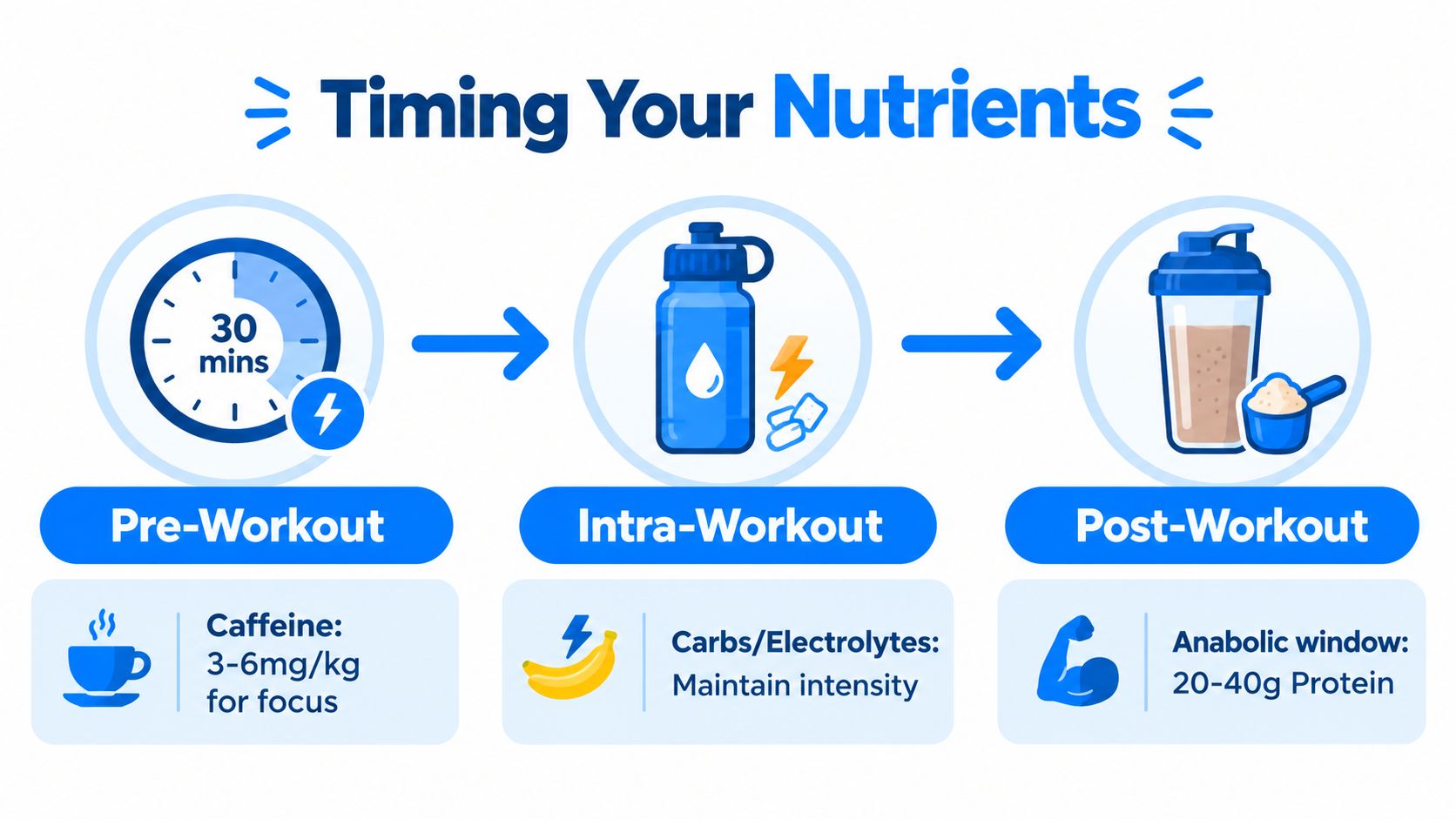
The training requirement remains important across age groups. A meta-analysis of 22 studies involving 721 participants aged approximately 57 to 70 found that creatine paired with resistance training produced greater lean tissue gains of 1.37 kg, along with improved chest press strength at SMD 0.35 and leg press strength at SMD 0.24, according to the Journal of Sports Medicine and Physical Fitness review. Creatine is best understood as a training amplifier. Without a mechanical stimulus, its value for muscle gain is limited.
Different creatine forms can also create unnecessary confusion. Most lifters should evaluate the evidence, tolerability, testing, and serving transparency before paying for a complex blend. A practical comparison of available options is provided in this resource on which creatine form works best from Evermost LLC.
The Stacking Myth and Ingredient Synergy
A longer ingredient list can create the impression of a stronger product, but physiological pathways don't reward complexity by default. A stack only makes sense when each component has a distinct job, an effective amount, and a training context that can reveal its effect.
Creatine and beta-alanine illustrate the difference. Creatine consistently supports repeated high-force work, including sprinting, jumping, and upper-muscular endurance. Beta-alanine may be relevant to tasks that create substantial intramuscular acidity, but its value isn't automatically transferable to every strength session. A 2025 systematic review found that creatine combined with beta-alanine improved strength and power overall, while showing no strong synergy for traditional endurance outcomes. A later 2026 synthesis reported that creatine alone produced the most consistent improvements in sprint, repeated-sprint, jump, and upper-muscular endurance outcomes, while beta-alanine and the combination often added limited or non-significant benefit beyond placebo, as summarized in the systematic review available through PMC.
That evidence doesn't make beta-alanine useless. It means the decision should follow the event and the limiting mechanism. A strength athlete performing brief, high-force sets may gain more from consistent creatine use than from adding beta-alanine to a proprietary blend. An athlete whose sport repeatedly demands intense efforts lasting long enough for buffering capacity to matter may have a different rationale.
Audit the stack before expanding it
Use three questions for every ingredient:
- What pathway does it target? If two products address the same pathway, the second may be redundant.
- Can the training session expose its effect? A compound with task-specific evidence shouldn't be judged by a general gym goal.
- Is the dose transparent? Proprietary blends make it difficult to distinguish a meaningful intervention from label decoration.
The same discipline applies to discussions of a peptide stack for muscle growth. Muscle-directed marketing can blur the difference between mechanistic interest, clinical evidence, and practical use. A responsible lifter should separate compounds with human performance data from products that mainly promise an attractive biochemical story. For a broader review of pre-training combinations, see this guide to a pre-workout supplement stack.
The central lesson is simple. Stacking isn't a mechanism. It's a purchasing strategy unless each ingredient solves a separate, demonstrated problem.
Exogenous Ketones and Cellular Energy Pathways
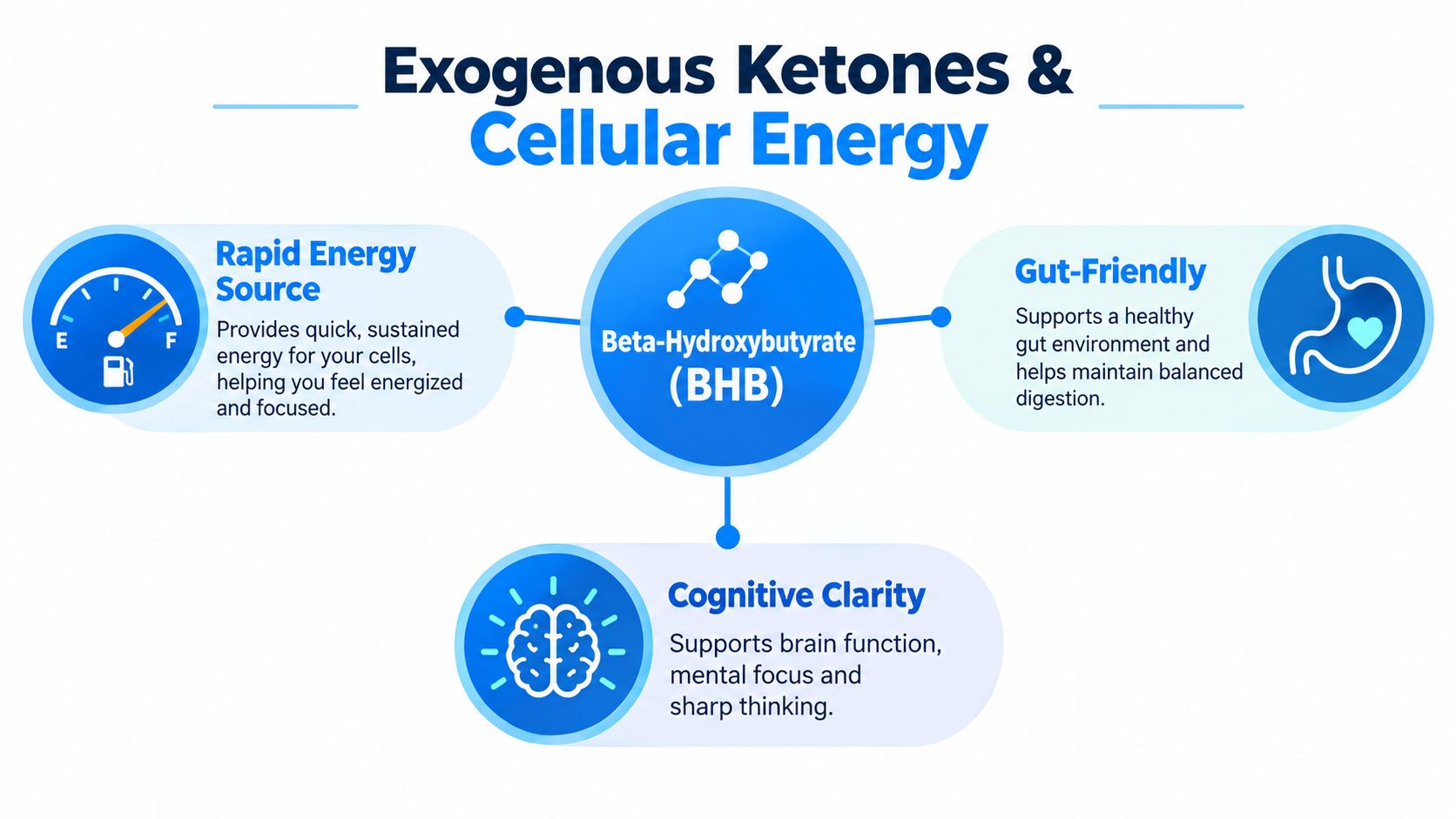
More ingredients do not automatically produce a better strength training supplement. Creatine and protein primarily support force production and muscle protein remodeling. Exogenous ketones address a different problem: they increase circulating beta-hydroxybutyrate, or BHB, giving oxidative tissues access to an alternative fuel without requiring a ketogenic diet.
Exogenous ketones differ from nutritional ketosis because they supply ketones directly. During nutritional ketosis, the liver increases endogenous ketone production in response to fasting or carbohydrate restriction. An ingested ketone source raises circulating BHB under different dietary conditions. The FDA background on new dietary ingredients and dietary supplements is relevant to the regulatory notification process for these ingredients, rather than to performance outcomes.
BHB functions as both a circulating fuel and a signaling metabolite. After absorption, it travels to tissues, can be converted to acetoacetate, and enters mitochondrial pathways that generate acetyl-CoA for oxidative ATP production. The heart and kidneys are highly oxidative tissues that can use BHB efficiently. Human research also supports direct metabolism of ingested D-BHB. For a broader evidence review, see this analysis of whether exogenous ketones work.
Salts, esters, and usable BHB
Formulation determines the size and duration of the BHB response. In a randomized human metabolic study, a ketone ester raised D-BHB to 2.8 mM, compared with 1.0 mM for ketone salts. Both moved toward baseline within 3 to 4 hours. The salts contained 50% L-BHB, which remained elevated for more than 8 hours, while urinary loss of ingested BHB stayed below 1.5%, according to the PubMed study comparing ketone ester and salt formulations.
D-BHB is the bioidentical form naturally produced and metabolized by the body. Ketone salts also add a mineral load, while esters can provide a higher D-BHB peak and may cause more gastrointestinal discomfort for some users. Liposomal systems aim to support delivery consistency, yet the label still needs to identify the ketone structure and amount supplied.
A 2022 meta-analysis of 43 human trials involving 586 participants found that exogenous ketones increased blood BHB by a mean of 1.73 mM versus baseline and 1.98 mM versus placebo. Mean blood glucose fell by 0.54 mM versus baseline and 0.47 mM versus placebo, according to the Frontiers in Physiology meta-analysis. These findings describe fuel availability, without showing that ketones outperform glucose in every workout.
For a non-caffeinated option combining ketone delivery with electrolytes, Tecton EDGE™ Performance Shot + Electrolytes is described as using liposomal R3HBG™ ketone with sodium, potassium, and magnesium.
Why This Matters for Performance and Recovery
Biochemistry matters only when it changes what you can do in training. The relevant question is whether an alternative fuel helps you maintain output, concentration, or perceived steadiness under a specific condition. Exogenous ketones aren't a substitute for glycogen, adequate food, or a well-designed program. They may be useful when the goal is to introduce circulating BHB without committing to a strict ketogenic diet.
A measurable rise in BHB creates several possible performance-relevant effects:
- Steadier energy: BHB provides an oxidizable substrate that can contribute to mitochondrial ATP production while circulating glucose remains available through a separate pathway.
- Cognitive endurance: The brain can use ketones as an alternative fuel, which may be relevant during prolonged concentration, technical lifting, or demanding competitive environments.
- Workout performance: A ketone product may fit sessions where the athlete values sustained energy and does not want additional caffeine.
- Metabolic efficiency: Exogenous BHB gives the body access to ketone availability without waiting for endogenous production from fasting or carbohydrate restriction.
The glucose and ketone pathways aren't mutually exclusive. Metabolic flexibility means the body can move between available fuels according to intensity, duration, feeding state, and tissue demand. During short maximal efforts, the phosphagen and glycolytic systems remain central. During lower-intensity work, recovery, and prolonged effort, oxidative metabolism becomes more influential. Ketones may contribute to that oxidative environment, but they don't erase the need for sport-specific carbohydrate planning.
BHB also has roles beyond fuel oxidation. Ketone bodies participate in cellular signaling, and metabolic changes can influence vascular and endothelial function. Those mechanisms are scientifically relevant, but they should be discussed as structure and function, not as promises to treat disease or guarantee recovery.
What you should feel: If the formulation suits you, the practical signal is smoother energy and sustained concentration, not a dramatic stimulant rush.
The quality of the product determines whether the concept is usable. Tecton positions its R3HBG technology as a bioidentical D-BHB source delivered through a liposomal formulation. That approach is intended to provide direct ketone fuel while avoiding the L-isomer and the heavy mineral load associated with some salts. Individuals who want to assess training response more systematically can pair subjective logs with Telomyx health and performance testing, rather than relying only on the sensation of a single session.
Choosing the Right Supplement for Your Training Phase
The best supplement choice changes with the training constraint. A heavy strength block asks for repeated high-force output. A high-volume hypertrophy phase creates more total fatigue. An active recovery day may prioritize hydration, movement quality, and mental readiness rather than maximal force.
| Supplement Type | Primary Goal | Optimal Timing |
|---|---|---|
| Protein | Support amino acid availability and structural repair | With meals or after training when dietary intake is insufficient |
| Creatine | Support repeated high-force output and training adaptation | Consistently across training and rest days |
| Beta-alanine | Support task-specific buffering demands | Consistently when the sport or session justifies it |
| Exogenous ketones | Provide circulating BHB as an alternative oxidative fuel | Before or during selected sessions, especially when steady energy is the priority |
| Electrolytes | Support fluid and mineral intake during demanding or sweaty sessions | Before or during training according to sweat and hydration needs |
For a heavy strength block, protein and creatine deserve priority because the main objective is force production and adaptation to progressive loading. Ketones can be considered if the athlete trains in a low-food window or experiences a decline in concentration, but they shouldn't displace meals that support the work.
A high-volume hypertrophy phase creates a stronger case for testing exogenous ketones as a metabolic support tool. Use them before training if the session begins after a long interval without food, or during training if mental fatigue rather than local muscle failure limits completion. Keep the rest of the plan stable so you can distinguish the supplement's effect from changes in sleep, food, or programming.
Active recovery is different. A ketone product may fit a long movement session or a physically demanding day when caffeine isn't desirable. It shouldn't be used to mask persistent exhaustion. Unusual fatigue, poor sleep, and declining performance require attention to training load and health, not a more aggressive stack.
When introducing a ketone product, expect a metabolic change rather than an instant “pump.” Some people notice steadier energy, while others notice gastrointestinal discomfort or no clear effect. Start with the labeled serving, avoid introducing multiple new products at once, and review the ingredient panel for artificial dyes, sweeteners, unnecessary mineral loads, and unclear L-isomer content.
Application Framework for Daily Use
A practical daily plan has fewer moving parts than most supplement cabinets.
- Build the base. Train progressively, eat enough to support the goal, and use protein when food intake leaves a gap.
- Add the established amplifier. Creatine belongs in a consistent routine when repeated high-force training is the priority.
- Match the metabolic tool to the session. Consider exogenous ketones before a fasted or long training session, during demanding movement, or on a day when steady energy without caffeine is useful.
- Track a defined outcome. Record concentration, completed work, perceived steadiness, and recovery quality. Don't judge a product solely by a stimulating sensation.
- Remove redundancy. If two products target the same outcome and neither produces a noticeable or measurable benefit, simplify.
Clean-label evaluation matters because daily use magnifies small formulation problems. Look for transparent ketone identity, clear electrolyte disclosure, suitable packaging, and a product that you can tolerate repeatedly. Tecton's published positioning emphasizes bioidentical R3HBG, liposomal delivery, and a formulation that excludes R-1,3-butanediol, BPA, artificial dyes, and artificial sweeteners. Treat those as formulation criteria to evaluate, not as a reason to ignore the fundamentals of training and nutrition.
The no-compromise approach is not “take everything.” It is choosing the smallest effective plan for the actual constraint. Protein and creatine support the anabolic and force-production side of lifting. Exogenous ketones offer a separate option for cellular fuel availability, cognitive endurance, and metabolic flexibility. Together, they form a more precise framework than a crowded stack built around the assumption that more ingredients must produce more adaptation.
Tecton Ketones™ offers bioidentical exogenous ketone nutrition designed to provide direct BHB fuel for training, sustained focus, and physically demanding days without requiring a strict ketogenic diet. Visit Tecton Ketones™ to evaluate its ketone-focused options and choose a formulation that fits your training phase.


