


Ketone ester benefits center on rapidly elevating blood BHB to provide alternative fuel for the brain and muscles. Human studies show BHB can reach 2 to 5 mmol/L, levels comparable to fasting, without dietary restrictions.
That result is physiologically meaningful, but it isn't the same as proving better race times, sharper cognition for everyone, or improved long-term health. A ketone ester is best understood as a rapid metabolic substrate, one that can temporarily increase ketone availability when fasting or carbohydrate restriction isn't practical.
The Ketone Paradox - Why Fuel Matters More Than Carbs
A ketone ester can bring fasting-style ketone availability into ordinary training and work, even when a ketogenic diet is impractical. Human metabolism can draw energy from both glucose and ketones. In a modern eating pattern with frequent carbohydrate intake, however, glucose availability often remains high and the liver produces relatively few endogenous ketones.
Glucose acts as readily available fuel for rapid demands, although its availability can shift with meals, activity, and carbohydrate intake. Ketones provide another usable fuel alongside glucose, offering steadier energy availability when carbohydrate intake fluctuates. The relevant question is therefore not whether ketones are universally better. It is whether adding them improves the fuel supply for a specific task, person, or setting.
During fasting or prolonged exercise, the liver converts fatty acids into the ketone bodies beta-hydroxybutyrate, acetoacetate, and acetone. This endogenous process depends on carbohydrate availability, insulin signaling, liver metabolism, and nutritional adaptation, so it cannot respond instantly to every demand. An exogenous ketone ester shortens that delay by delivering a precursor that releases BHB into the bloodstream.
The actual problem ketone esters solve
Consider a person preparing for a long training session after eating carbohydrates, or a professional facing several hours of demanding work without choosing to fast. That person may have little endogenous ketone production even though the brain and skeletal muscle can oxidize ketones. A ketone ester supplies BHB directly, producing a measurable change in circulating fuel availability without requiring the liver to manufacture it first.
A peer-reviewed review of human research reported that oral ketone esters can raise blood BHB to approximately 5 mmol/L in healthy adults. In a direct comparison, a ketone monoester reached a peak of 2.8 mmol/L, while a similar ketone-salt dose reached 1.0 mmol/L, about 2.8 times higher (peer-reviewed human review of ketone ester research). That difference illustrates why the formulation on a label matters more than the broad word “ketone.” Dose, chemical form, and absorption determine the exposure, a distinction examined in the formulation comparison later.
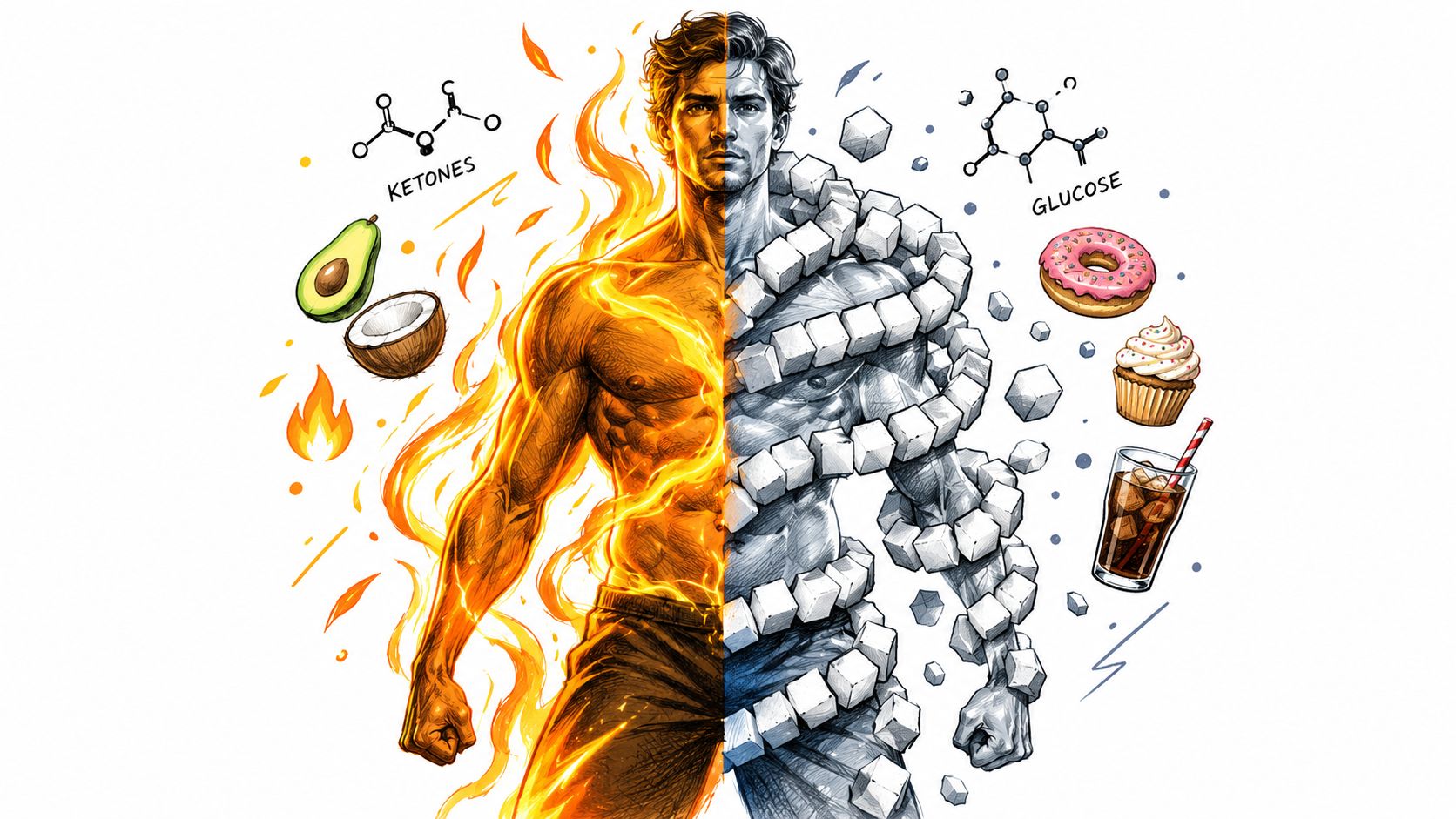
A rise in BHB is a meaningful metabolic outcome, not proof of better performance, sharper cognition, or improved health. Ketone esters provide a rapid way to test an alternative fuel pathway, with exposure measurable in blood rather than inferred from diet.
Practical rule: A rise in BHB confirms ketone exposure. It does not establish a performance or cognitive benefit by itself.
How Your Body Uses Ketones for Energy
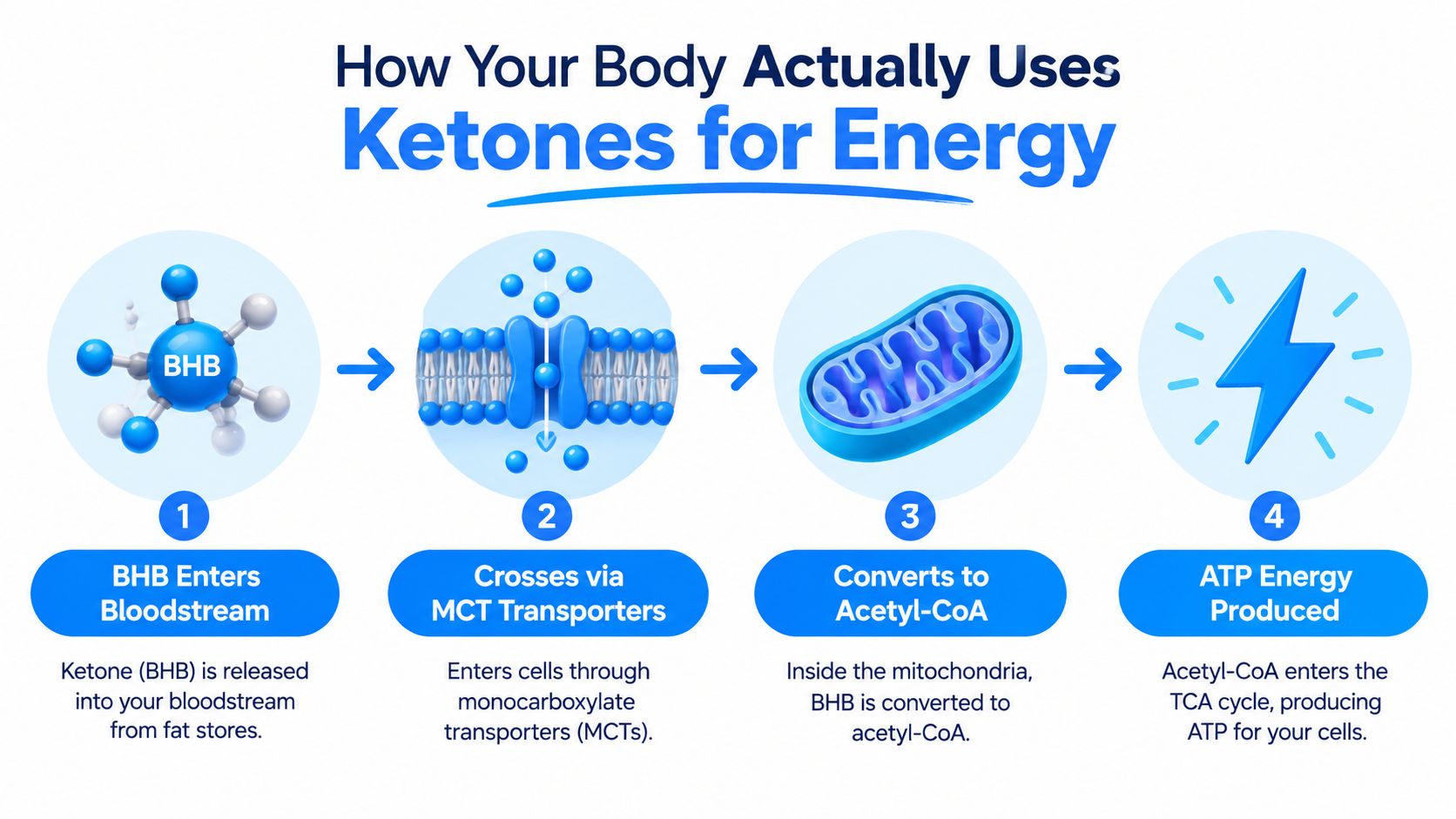
BHB is a transportable fuel that enters ordinary mitochondrial energy pathways after cells take it up from the blood. Its measurable effect begins with substrate availability, then depends on tissue uptake, mitochondrial processing, and energy demand.
When BHB reaches a tissue, it crosses cell membranes through monocarboxylate transporters, often called MCTs. Inside the mitochondria, BDH1 helps interconvert BHB and acetoacetate. Acetoacetate then moves through reactions that produce acetyl-CoA, the molecule that feeds into downstream oxidative metabolism.
Acetyl-CoA enters the tricarboxylic acid cycle, also known as the TCA cycle. The cycle generates reducing equivalents for the electron transport chain, while oxidative phosphorylation uses the resulting electrochemical gradient to produce ATP. BHB therefore arrives at cellular energy pathways in a relatively processed form, shortening some of the steps required for oxidation compared with glucose.
Glucose enters through glycolysis, which produces pyruvate before conversion to acetyl-CoA. Cells can oxidize both substrates, and their relative contribution changes with circulating fuel levels, insulin signaling, exercise intensity, diet, and tissue demand. A higher BHB concentration signals greater ketone availability, but it does not predict how much additional ATP a specific tissue will produce during a task.
Endogenous and exogenous ketosis follow different routes
Nutritional ketosis develops through sustained carbohydrate restriction. Lower carbohydrate availability encourages the liver to produce ketones from fatty acids, while repeated exposure can support broader adaptation in ketone production and oxidation.
Exogenous ketones raise circulating BHB without requiring the liver to manufacture the same amount from fatty-acid oxidation. This creates rapid fuel availability, while leaving several fasting or ketogenic-diet adaptations dependent on the underlying diet and duration of exposure. The clinical overview of beta-hydroxybutyrate explains BHB's role in human metabolism and helps distinguish fuel use from ketone production.
BHB also acts as a signaling metabolite. It can influence gene expression and cellular stress responses, with possible relevance to redox balance and pathways associated with vascular and endothelial function. These mechanisms provide biological rationale for further study. They do not establish improved cardiovascular or disease outcomes.
The brain demonstrates this fuel flexibility. In a controlled human study, intravenous BHB shifted cerebral substrate use toward ketones while oxygen consumption remained unchanged, indicating preserved overall oxidative metabolism (human brain metabolism study). That finding confirms a measurable metabolic response. It does not, by itself, show better concentration, faster thinking, or improved performance.
What Human Research Shows About Ketone Benefits
Ketone esters produce a reliable metabolic effect: they raise circulating BHB and alter which fuels are available to tissues. The performance or cognitive result depends on the task, the individual, the dose, and the surrounding diet. That distinction keeps measurable physiology separate from broad supplement claims.
Cognition has a plausible mechanism, with variable outcomes
The brain takes up and oxidizes BHB when circulating ketones rise. A systematic review of exogenous ketones and cognition covering 29 studies involving 1,347 participants found a statistically significant, modest positive association between exogenous ketones and cognitive performance. The pooled standardized mean difference was 0.26, with a 95% confidence interval of 0.11 to 0.40 and p = 0.0007. Results varied substantially across studies, reflected by I² = 93% heterogeneity.
The evidence supports cognitive endurance as a research question in situations involving sustained mental demand. It does not support describing ketone esters as universal cognitive enhancers.
A separate randomized, placebo-controlled study included 50 adults older than 55 with metabolic syndrome. Oral ketone ester administration increased brain βHB, measured with magnetic resonance spectroscopy. This demonstrates brain penetrance and target engagement. The study did not establish improved memory, treatment of neurological disease, or long-term clinical benefit (human brain ketone-availability trial).
Exercise results remain conditional
Ketone esters reliably raise blood BHB during exercise. Randomized trials and systematic reviews have not established a consistent endurance advantage across users. Many studies found no significant improvement in time trials, time to exhaustion, or maximal workload. More favorable findings may occur during intermittent high-intensity work, ultra-endurance events, or training overload, although these contexts do not define a general performance effect.
The more defensible concept is metabolic flexibility. During exercise, ketone availability can increase ketone oxidation while glucose remains available for energy production. Controlled research found that ketone ester ingestion increased BHB during and after exercise and lowered blood glucose at corresponding time points. The result indicates a shift in fuel selection, rather than complete replacement of glucose (controlled exercise metabolism study).
For practical decision-making:
- Measurable outcome: An effective ketone ester formulation reliably raises blood BHB.
- Plausible outcome: The brain and working muscles gain access to another oxidative fuel.
- Uncertain outcome: Every user will perform better, think better, or recover faster.
Ketone Esters vs. Salts, Precursors, and Nutritional Ketosis
Formulation determines exposure. The word “ketone” on a label leaves three practical questions unanswered: how much BHB reaches circulation, how much mineral the serving provides, and how well the product is tolerated.
Ketone salts attach BHB to minerals such as sodium, calcium, or magnesium. This format can simplify product development, yet the accompanying mineral load may restrict the amount of BHB a practical serving can deliver. Precursors such as R-1,3-butanediol require metabolic conversion before they produce BHB, so their effects differ from directly supplying a bioidentical ketone structure.
A direct human comparison using approximately 12 to 24 grams of ketone monoester and a similar ketone-salt dose reported a peak BHB concentration of 2.8 mmol/L with the ester and 1.0 mmol/L with the salt. The ester therefore produced about 2.8 times higher BHB, with fewer gastrointestinal and systemic side effects in that comparison (direct ketone ester and salt comparison).
Ketone formulation comparison
| Formulation | Peak BHB | Mineral load | Onset speed | Tolerability |
|---|---|---|---|---|
| Ketone ester | 2.8 mmol/L in the direct comparison | Low compared with mineral salts | Rapid | Fewer side effects than the salt in the direct comparison |
| Ketone salt | 1.0 mmol/L in the direct comparison | Higher because BHB is paired with minerals | Rapid, but exposure varies | More gastrointestinal and systemic effects in the comparison |
| Ketone precursor | Variable | Depends on the formulation | Requires metabolic conversion | Product and dose dependent |
| Nutritional ketosis | Depends on diet and physiology | Determined by food and electrolyte intake | Gradual dietary adaptation | Depends on adherence and dietary tolerance |
Bioidentical ketone structures are designed to supply the D-BHB form used naturally in human metabolism. Tecton's R3HBG is described as a tri-ester that bonds three D-BHB molecules to glycerol and releases D-BHB without the L-isomer or the heavier mineral burden associated with salts. Those claims apply to that product description and should be checked against its label and available regulatory documentation, rather than generalized to every ketone ester.
Nutritional ketosis follows a different route. Dietary change can create a sustained endogenous ketone environment, but adaptation takes time and results depend on food intake and individual physiology. An effective ester offers a faster, more predictable BHB rise, while requiring consideration of taste, gastrointestinal response, and cost. The practical differences between delivery formats are outlined in this guide to ketone versus ester formulations. An independent Amplicell Keto Max Gummies review also illustrates why the delivery format matters as much as the word “ketone.”
Practical Use Cases - When and How to Use Ketone Esters
The strongest use cases begin with a defined task. Taking a ketone ester only because BHB sounds beneficial makes it difficult to tell whether the product changed anything meaningful.
Cognitive work
A ketone ester may be relevant before sustained mental work when the objective is alternative brain-fuel availability. The brain-penetrance findings support the idea that oral ketones can reach brain tissue, but they don't establish treatment effects for dementia, Parkinson's disease, traumatic brain injury, or other neurological conditions.
Use the product before a demanding work block rather than after fatigue has already become severe. Track practical outcomes such as sustained attention, perceived mental effort, task completion, and afternoon energy. A blood BHB reading can confirm exposure, but it can't tell you whether the session was cognitively better.
Training and competition
Endurance athletes may test ketone esters before long sessions, during selected training blocks, or in situations where cognitive resilience matters as much as raw output. They shouldn't assume that ketones replace carbohydrate, particularly during high-intensity work where carbohydrate remains an important fuel.
A controlled study in 11 male team-sport athletes found that ketone ester co-ingestion attenuated the post-exercise decline in executive function and reduced lactate rise, although shuttle-run endurance and sprint performance didn't improve (team-sport ketone ester study). That's a useful example of a benefit that may relate to decision-making under fatigue rather than faster running.
Metabolic support and appetite awareness
Exogenous ketones may help some people explore fuel flexibility or structured fasting windows without claiming that they cause weight loss. Research has found changes in appetite-related hormones after exercise, but those changes didn't automatically reduce ad libitum energy intake.
Start with the lowest label-directed serving that allows you to assess tolerance. If using an ester around exercise or cognitive work, test timing during training rather than for the first time before competition. Products using liposomal delivery systems are designed to improve dispersion and absorption consistency, but consumers should judge them by measured tolerance and repeatable outcomes rather than the delivery label alone.
For broader supplement planning, readers can browse longevity supplements while keeping ketone esters in their proper role as a metabolic tool, not a substitute for nutrition, sleep, or clinical care.
Safety, Tolerability, and What the Research Does Not Yet Show
Human pharmacokinetic data show that a D-BHB ester can produce blood D-BHB concentrations up to 5.5 mmol/L, within levels observed during fasting. A five-day tolerability study reported no adverse effects at doses up to 2.1 g/kg/day, but chronic safety remains insufficiently characterized (human ketone safety and pharmacokinetic review).
Those findings are useful, but they don't prove that every formulation is suitable for repeated daily use over months or years. Short-term tolerability studies can't answer every question about long-term gastrointestinal effects, mineral balance, medication interactions, or acid-base physiology.
What can go wrong
Higher doses may produce gastrointestinal distress. During exercise, ketone esters can also contribute to bicarbonate depletion and lower blood pH, which may help explain why some protocols feel unpleasant or perform poorly despite producing a clear rise in BHB.
People should seek medical guidance before unsupervised use if they:
- Have metabolic disease: Glucose and ketone metabolism may already be altered.
- Take relevant medication: Drugs affecting glucose, insulin, or ketone handling can change the risk profile.
- Are pregnant or breastfeeding: Human safety evidence is limited for these populations.
- Have recurring gastrointestinal symptoms: An ester may aggravate existing intolerance.
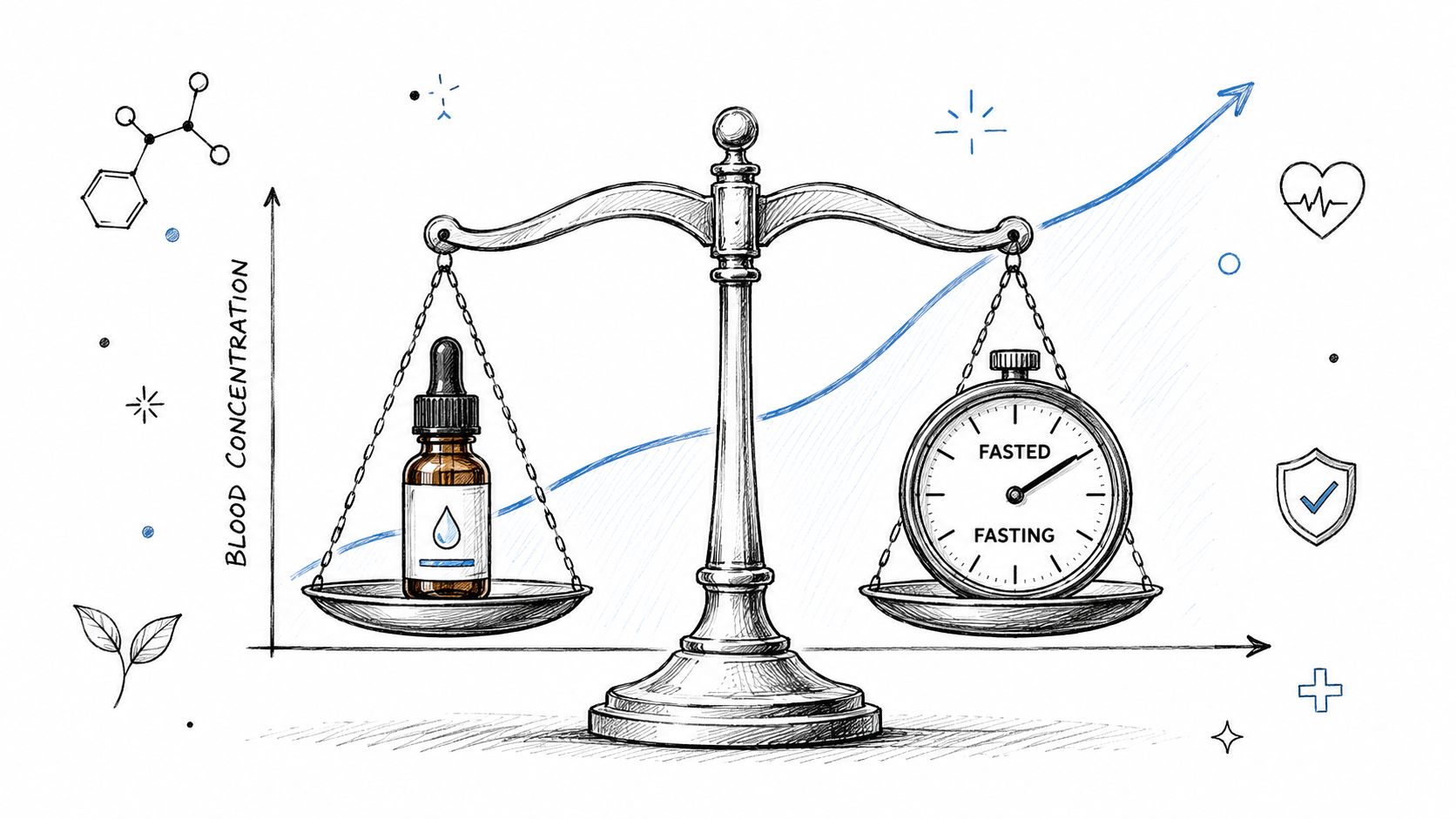
Tecton's stated formulation choices include avoiding R-1,3-butanediol, BPA packaging, and artificial additives, with daily-use tolerability as a design objective. That is a formulation position, not proof of lifelong safety. The practical meaning of a reasonable expectation of safety under labeled conditions is narrower than a guarantee for every person and every use pattern. Readers interested in practical tolerability considerations can review common exogenous ketone side effects.
Why This Matters - Translating Biochemistry Into Daily Performance
The practical value of ketone esters depends on whether their measurable metabolic effect serves a real task. A rise in BHB confirms exposure to the ester. It does not, by itself, demonstrate better concentration, endurance, appetite control, or training output.
Steadier energy: Ketones provide an additional oxidizable substrate during prolonged mental or physical work. They broaden the available fuel supply, while individual responses still depend on task demands, dose, and baseline metabolism.
Cognitive endurance: Controlled human research documents brain uptake of BHB, which helps explain why ketone esters may support sustained mental effort during demanding work. Average cognitive effects remain modest, with meaningful variation between studies and users.
Workout performance: Ketone esters may warrant testing in selected endurance, intermittent high-intensity, or fatigue-heavy contexts. The current evidence supports context-specific experimentation rather than a universal performance claim.
Metabolic efficiency: Ketones can be oxidized while glucose remains available. This capacity reflects metabolic flexibility. Claims about weight loss, disease treatment, or superior energy production require separate evidence and should not be inferred from fuel use alone.
A defensible consumer expectation is specific. A well-tolerated ester can raise BHB, make an alternative fuel available to the brain and muscles, and help an individual test whether that shift improves a defined session or work block.
BHB is a pharmacokinetic outcome. Concentration, endurance, appetite control, and recovery are practical outcomes that require direct observation. Measure both when assessing whether the intervention has value for a particular person.
Implementation Framework - Making Informed Decisions About Ketone Esters
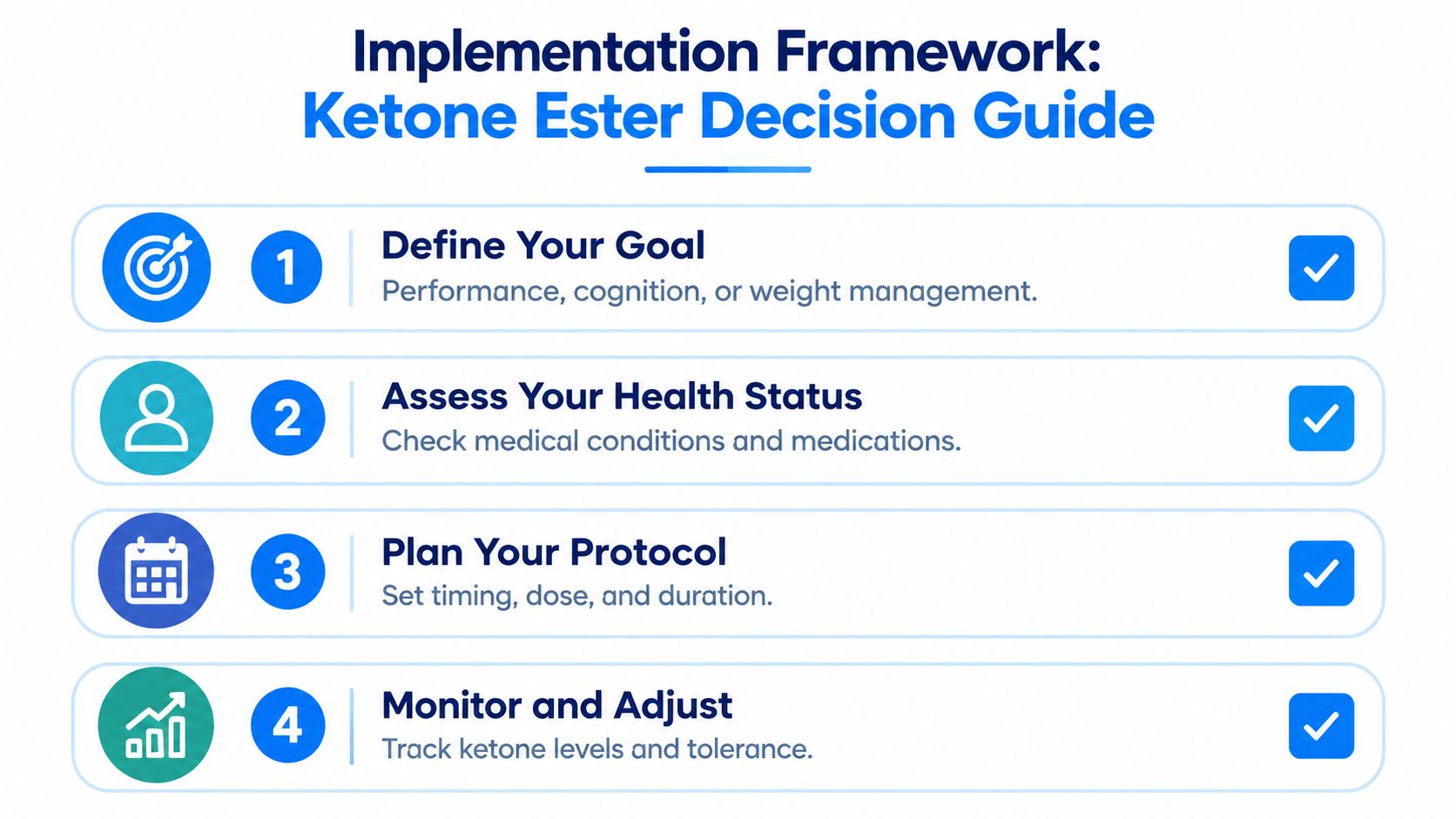
Use a ketone ester when the goal is clear and the expected result can be monitored.
- Define the task. Consider sustained cognitive output, a long endurance session, intermittent high-intensity work, or a structured fasting window. Don't start with a vague promise of “better health.”
- Assess personal risk. Review medical conditions, medications, pregnancy or breastfeeding status, and gastrointestinal tolerance with a qualified clinician when relevant.
- Test conservatively. Start with a lower label-directed serving, assess tolerance, and avoid introducing a new product before an important competition or demanding professional event.
- Measure the right outcome. BHB confirms exposure. Pair it with a practical measure such as task duration, perceived effort, training output, appetite ratings, or recovery quality.
- Adjust the protocol. Timing, meal composition, exercise intensity, formulation, and individual training status can all change the response.
People most likely to find value include endurance athletes testing specific contexts, professionals who need sustained cognitive output, and individuals exploring metabolic flexibility without strict dietary restriction. They should expect a measurable BHB rise within roughly 30 to 60 minutes only when that timing is supported by the product protocol and individual response, plus the possibility of transient side effects at higher doses.
Tecton Ketones™ offers examples of how bioidentical R3HBG, liposomal delivery, and a no-compromise formulation can translate ketone science into a consumer product. Those design choices don't remove the need for realistic expectations. Ketone esters complement adequate sleep, nutrition, and training, rather than replacing them.
Tecton Ketones™ delivers bioidentical exogenous ketone nutrition designed to raise BHB rapidly for defined performance, cognitive, and metabolic protocols without requiring a strict ketogenic diet. Visit Tecton Ketones™ to review the formulation and choose a practical way to test ketone availability against your own measurable goals.


