


The popular ketogenic diet timeline is usually presented as a 72-hour switch. Eat very few carbohydrates for three days, the story goes, and your body is fully adapted to using ketones. That framing confuses an early blood marker with a completed physiological transition.
Nutritional ketosis means ketones are present in the bloodstream. Keto-adaptation is broader. It involves changes in fuel use, mitochondrial ATP production, exercise tolerance, appetite, and the brain's ability to use ketones consistently. Blood beta-hydroxybutyrate can rise while your intervals feel flat, your endurance drops, or your concentration remains inconsistent. A useful ketogenic diet timeline therefore has stages, not a single deadline.
The Multi-Stage Reality of Ketosis
A person can enter measurable nutritional ketosis relatively quickly, particularly after reducing carbohydrate intake or beginning from a low-carbohydrate meal pattern. That doesn't mean the muscles have immediately become efficient at oxidizing fat during demanding work, or that the nervous system has fully adjusted to a different fuel mix.
The distinction matters because ketone production and ketone utilization are related but separate processes. The liver makes ketone bodies, including beta-hydroxybutyrate, or BHB, when carbohydrate availability and insulin signaling favor lipolysis. Peripheral tissues then convert BHB into acetyl-CoA, which enters the citric acid cycle and supports mitochondrial ATP production. The pathway is real, but the capacity to use it smoothly develops over time.
Practical rule: A higher BHB reading tells you that ketones are circulating. It doesn't tell you that your workout performance has recovered.
The longer-term adherence data also argues against treating week one as the whole story. One structured-keto cohort reported a decline from 487 participants at Month 3 to 115 at Month 6 and 41 at Month 9, as reported in WebMD's overview of the keto diet. That pattern doesn't establish why people discontinued, but it does show why tolerability, meal structure, training demands, and expectations deserve more attention than a simple “three-day switch.”
It also helps to distinguish a true ketogenic intake from a merely reduced-carbohydrate diet. The practical differences are outlined in this resource on low carb diet vs keto explained, but the physiological principle is straightforward: lowering carbohydrate can increase fat oxidation without necessarily producing the sustained ketone availability associated with a strict ketogenic pattern.
A practical model is sequential:
- Early transition: glycogen availability falls and endogenous ketone production rises.
- Initial adaptation: fluid balance, appetite, and perceived energy begin to change.
- Performance adaptation: fat oxidation and exercise tolerance become more stable.
- Long-term flexibility: the person can manage fuel selection, training load, and dietary adherence without relying on ketone readings alone.
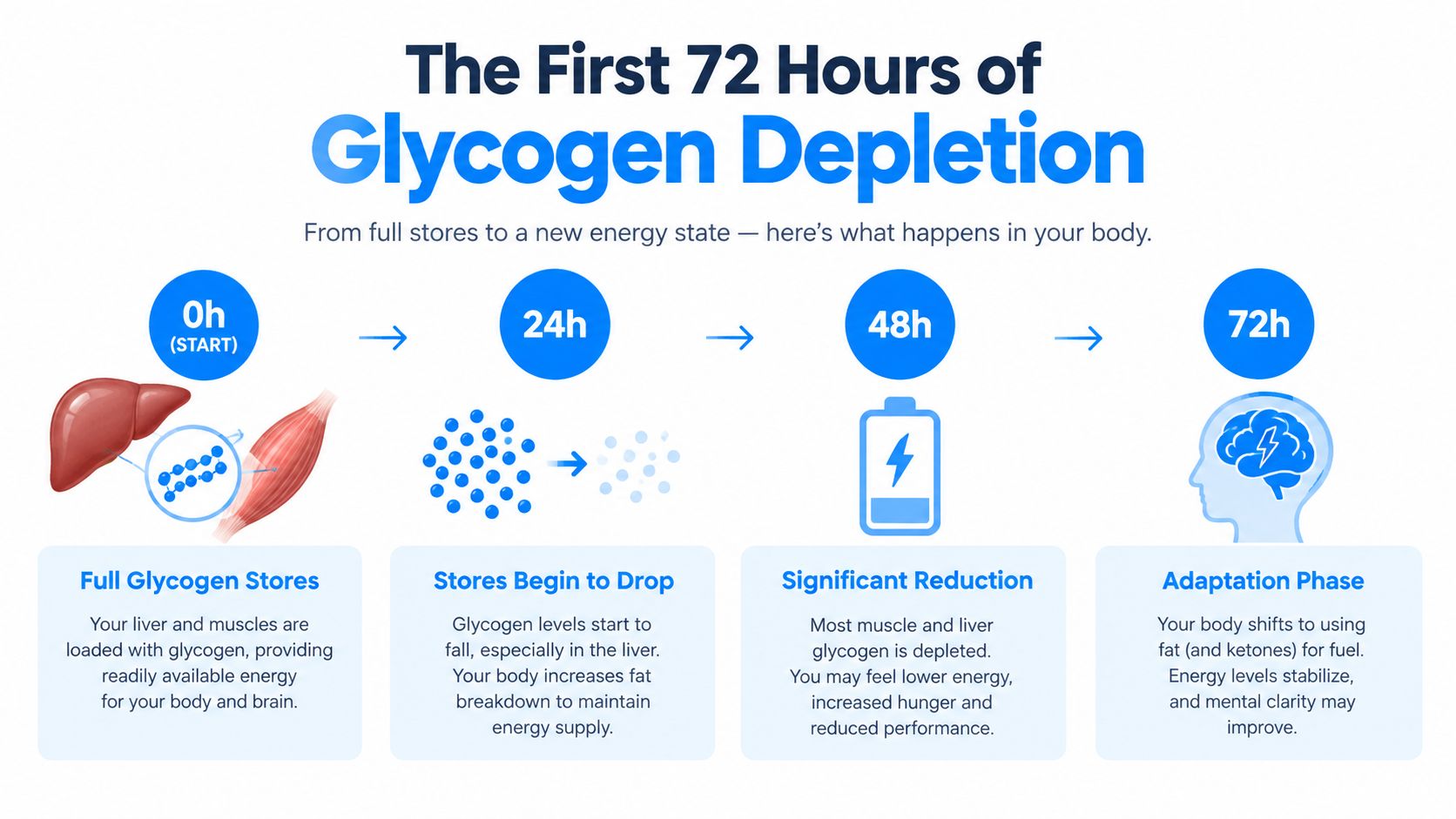
The First 72 Hours of Glycogen Depletion
The first three days are dominated by substrate availability and fluid movement, not perfected metabolic performance. As dietary carbohydrate falls, liver glycogen becomes less available for maintaining blood glucose between meals. Insulin signaling generally declines, lipolysis increases, and the liver receives more fatty acids for ketone synthesis.
The starting point changes the clock. A person coming from a carbohydrate-heavy pattern generally has more glycogen and a larger metabolic transition to make. Someone who has already reduced carbohydrate intake may reach measurable ketosis sooner, especially during fasting or overnight periods.
A 2025 randomized crossover study found that a 24-hour fast begun after a low-carbohydrate, high-fat meal pattern reached nutritional ketosis, defined as blood BHB of at least 0.5 mmol/L, at about 12 hours on average, while the high-carbohydrate, low-fat condition didn't reach that threshold during the fast (controlled human study). The finding doesn't mean every person will follow the same curve. It shows that the ketogenic diet timeline is partly pre-loaded by the preceding macronutrient pattern.
What the early symptoms mean
The so-called keto flu often reflects the practical consequences of changing carbohydrate intake, sodium handling, hydration, and food volume. Headache, light-headedness, fatigue, and reduced training motivation aren't proof that ketosis is harmful, but they are signals to review fluid and electrolyte intake rather than forcing the body to endure discomfort.
Useful early checks include:
- Hydration: Maintain a consistent fluid routine, especially if training or sweating heavily.
- Electrolytes: Review sodium, potassium, and magnesium intake with a qualified clinician, particularly if you use medication or have a medical condition.
- Training load: Reduce intensity temporarily if repeated efforts feel unusually poor.
- BHB tracking: Use the same measurement method and similar timing so that trends are more useful than isolated readings.
A practical guide to the transition is how to get to ketosis. Exogenous ketones may raise BHB without reproducing every effect of glycogen depletion, so a blood reading after supplementation shouldn't be interpreted as proof that the diet itself has completed its adaptation process.
For active people managing hydration as well as fuel, Tecton EDGE™ Performance Shot + Electrolytes combines liposomal R3HBG™ ketone with sodium, potassium, and magnesium. It is positioned for training, movement, or physically demanding days where energy support and electrolyte intake need to be considered together.
Weeks One to Three of Keto-Adaptation
Ketosis is not a three-day metabolic switch. During this phase, blood ketones may be measurable while metabolic adaptation remains incomplete. Muscle cells are still adjusting enzyme activity, fuel transport, and the balance of fatty acids and ketones used to produce ATP. Cardiovascular responses also change as oxygen demand interacts differently with substrate use.
The practical consequence is straightforward: an athlete can be in ketosis and still lose pace, power, or exercise economy temporarily. High fat oxidation does not guarantee that a given workload is energetically efficient. The 2024 International Society of Sports Nutrition position stand summarizes a 2020 study in elite athletes that found high fat oxidation after 5 to 6 days on a ketogenic low-carbohydrate, high-fat diet, alongside reduced exercise economy at intensities relevant to endurance competition (study details summarized in the ISSN position stand).
How to train during the lag
Treat these weeks as an adjustment block, not a test of willpower.
- Keep technical work in place. Skill practice and easy aerobic sessions can continue while perceived effort stays controlled.
- Protect high-intensity quality. Repeated sprints, maximal intervals, and glycolytic sessions may feel disproportionately difficult when carbohydrate availability is restricted.
- Increase gradually. Add volume or intensity only after recovery, sleep, and session quality have stabilized.
- Use performance markers. Compare pace at a familiar effort, heart-rate response, power, and perceived exertion. Ketone readings alone cannot show whether training capacity has recovered.
The same 2024 International Society of Sports Nutrition position stand reports that daily fat oxidation and hepatic ketogenesis can reach maximal diet-induced values within about one week in sedentary adults, while peak aerobic power and submaximal endurance performance have been observed to recover after 2 to 3 weeks (ISSN position stand). These milestones measure different adaptations. Early ketone availability therefore should not be treated as proof of immediate cellular efficiency or competition-ready performance.
For people addressing a long gap between meals rather than trying to force dietary ketosis, the GLP-1 Shot is described as a metabolic-support ketone shot containing liposomal R3HBG™, 5-HTP, and prebiotic fiber. That use case differs from a training electrolyte product and may suit people organizing fasting windows or managing mid-day energy dips.
Months and Beyond for Metabolic Flexibility
Long-term ketosis is not a simple three-day switch. Sustained adaptation involves managing fuel use over time. Metabolic flexibility is the ability to shift between glucose and fat-derived fuels in response to meals, fasting, activity, and energy demand. Producing ketones efficiently does not guarantee strong adherence, adequate nutrition, or a training strategy that fits the athlete.
After the initial transition, blood BHB is only one marker. Where clinically appropriate, fasting insulin and a lipid panel can add metabolic context. Body-composition trends, sleep, gastrointestinal tolerance, training output, and cognitive endurance show whether the approach is working in daily life. BHB measures circulating ketones, not cellular efficiency, recovery, or exercise readiness.
Diet quality still affects the outcome, even if it does not determine the early speed of adaptation. A feasibility trial estimated adaptation at about 2 to 3 weeks and found no major short-intervention difference between high-quality and low-quality ketogenic diets (trial record and guidance). The finding does not make food choices interchangeable. Macronutrient ratios alone cannot explain every response, and nutrient density still influences satiety, digestion, and long-term adherence.
Meal timing must fit the demands of training, sleep, and social life. A fasting window that looks effective on paper can fail if it reduces session quality or makes consistent eating impractical. A repeatable pattern usually outperforms maximal restriction over the long term.
Clinical ketogenic protocols also show that both entry and exit require planning. Clinical pediatric guidance describes initiation that may be gradual over 7 days or more, full targets that may take 1 to 4 weeks or longer, and weaning that may take 4 to 6 weeks. These timelines are not adult prescriptions, but they demonstrate why a ketogenic diet timeline includes the transition out as well as the transition in.
For a broader explanation of fuel switching, see metabolic flexibility and diet. The useful question is whether the approach supports health, training, and daily life without creating problems elsewhere.
Accelerating the Timeline with Exogenous Ketones
Endogenous ketones are produced by your liver from fatty acids during carbohydrate restriction, fasting, or related metabolic conditions. Exogenous ketones are consumed directly. They can raise circulating BHB without requiring the full dietary process of glycogen depletion and adaptation, which makes them useful when the desired outcome is immediate ketone availability rather than a complete dietary transition.
The chemical form matters. D-BHB is the naturally utilized stereoisomer. Ketone salts combine ketones with mineral ions, while ketone esters chemically link ketone-related compounds in a form designed to deliver BHB efficiently. Precursors depend on conversion in the body and may not create the same concentration or timing profile.
A controlled human study found that ketone ester drinks reached a peak D-BHB concentration of 2.8 mM, compared with 1.0 mM for ketone salts, and both moved toward baseline within 3 to 4 hours (human pharmacokinetic study). The same study found that ketone salts contained about 50% L-BHB, which persisted in blood for more than 8 hours but wasn't detectable after 24 hours. A rapid BHB increase is therefore not interchangeable with diet-induced adaptation.
Exogenous ketone formats compared
| Format | Peak D-BHB yield | Metabolic impact |
|---|---|---|
| Ketone ester | 2.8 mM in the controlled study | Rapid delivery of D-BHB, with levels moving toward baseline within 3 to 4 hours |
| Ketone salt | 1.0 mM in the controlled study | D-BHB delivery alongside minerals, with L-BHB persistence noted in the same study |
| Ketone precursor | Depends on conversion | Requires metabolic processing and may produce a different time course |
Liposomal delivery systems are intended to improve dispersion and absorption consistency, but they don't erase the need for dose tolerance, product quality, or appropriate use. A newer human trial of bis-hexanoyl (R)-1,3-butanediol reported circulating R-BHB of 0.8 to 1.7 mM, with higher doses producing higher peaks and less than 1 g of R-BHB excreted in urine (human trial).
Safety language also needs precision. The FDA's New Dietary Ingredient framework requires notification at least 75 days before interstate marketing when an ingredient hasn't previously been present in the food supply in an unaltered form. The notification includes the ingredient, product description, amount, conditions of use, and safety evidence supporting a reasonable expectation of safety (FDA NDI guidance). That regulatory process isn't a guarantee that every product or use case is appropriate for every person.
Readers comparing recovery-oriented wellness advice with metabolic products may also find this Thermo Recovery Wear healing advice useful for broader context. For timing, tolerance, and goal selection, see how to use exogenous ketones.
Why This Matters for Performance and Cognition
The value of the ketogenic diet timeline is practical. It tells you whether a disappointing workout reflects inadequate fueling, normal adaptation, excessive training stress, or a diet that doesn't suit the task.
BHB is converted into acetyl-CoA inside mitochondria, where it contributes to ATP production through the citric acid cycle and oxidative phosphorylation. Compared with glucose, ketones enter energy metabolism through a different route. That doesn't make them universally superior, but it can change the balance of fuels available to the brain, heart, and working muscle.
A pilot human brain-metabolism study found that a single ketone ester dose raised blood BHB and anterior cingulate BHB while reducing brain glucose metabolism, consistent with a shift toward ketones as a brain energy source (brain metabolism study). The finding supports a mechanistic distinction between supplying ketones and waiting for dietary ketosis. It doesn't prove that every person will experience better cognition or performance.
The performance translation
- Steadier energy: Direct ketone availability may reduce dependence on repeated carbohydrate intake for some contexts, although total energy and hydration still matter.
- Cognitive endurance: The brain can use ketones as an alternative fuel, which may be relevant during fasting or prolonged mental work.
- Workout performance: Exogenous ketones can provide fuel availability before adaptation is complete, but they don't automatically restore glycolytic capacity or exercise economy.
- Metabolic efficiency: A well-tolerated ketogenic pattern may improve the practical ability to use fat-derived fuel, while supplementation can add flexibility around training and meal timing.
Endothelial function and cellular signaling are also relevant research areas, but they shouldn't be turned into disease promises. Ketones act as both fuel and signaling molecules, and their effects depend on concentration, tissue, nutritional state, exercise demand, and individual health status.
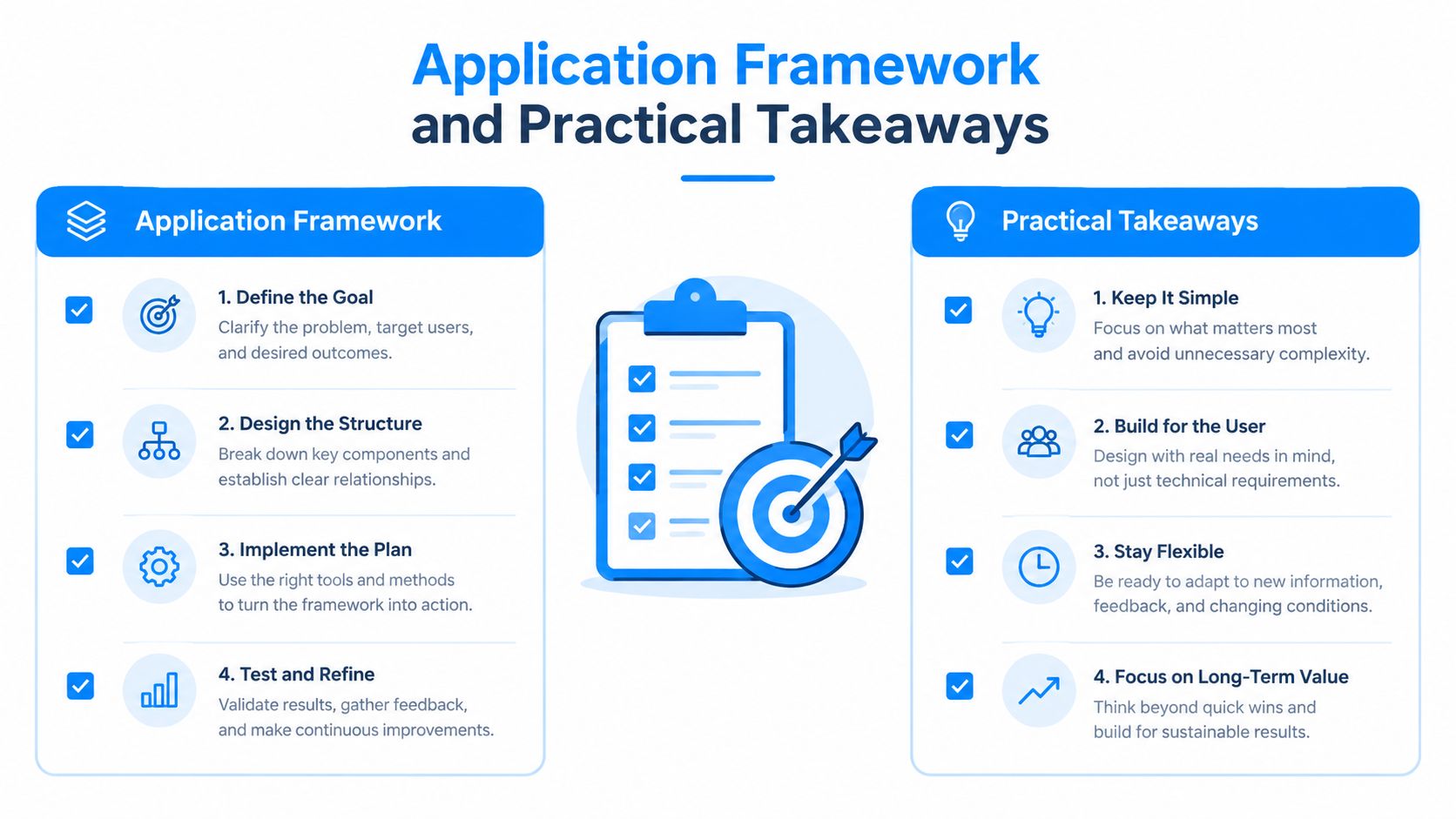
Application Framework and Practical Takeaways
Use the ketogenic diet timeline to match the intervention to the objective.
For dietary adaptation, reduce carbohydrate intake in a structured way, maintain adequate protein and micronutrient density, and monitor how hydration, sleep, appetite, and training respond. Don't judge the strategy by a single BHB reading during the first days.
For endurance training, protect easy aerobic work while your body adjusts to greater fat oxidation. Use pace, heart rate, power, and perceived exertion as performance checks. If repeated high-intensity sessions deteriorate, reconsider the carbohydrate restriction rather than assuming more ketones will solve every limitation.
For immediate ketone availability, exogenous ketones can be considered before a demanding cognitive or physical block, during a fasting window, or when dietary adaptation is incomplete. Start conservatively, assess gastrointestinal tolerance, and avoid treating a supplement-induced BHB rise as proof of full keto-adaptation.
For product selection, match the formulation to the task:
- Electrolyte-containing performance formulas: Consider when training demands both ketone availability and attention to sodium, potassium, and magnesium intake.
- Caffeine-containing formulas: Reserve for sessions where stimulant exposure is appropriate and compatible with sleep.
- Cognition-oriented formulas: Evaluate when the priority is sustained mental work rather than maximal physical output.
- Precursors and mineral salts: Review the actual BHB form, mineral load, tolerance, and expected time course before comparing them with bioidentical D-BHB delivery.
Track outcomes across stages: early symptoms, training quality, cognitive endurance, hydration, appetite, and clinically appropriate laboratory markers. People with medical conditions, those taking medication, and anyone using ketosis therapeutically should involve a qualified healthcare professional. Tecton Ketones™ offers liposomal, bioidentical ketone nutrition in formats intended for performance, cognition, electrolytes, or structured fasting support, so the right choice depends on the use case rather than the highest BHB number.
If you want a more direct way to add ketone fuel without waiting for the full dietary adaptation process, explore the science-led formats from Tecton Ketones™. Choose the formulation around your actual goal, such as training output, hydration, cognitive endurance, or a fasting window, and use it as part of a measurable routine rather than as a shortcut around sound nutrition and recovery.


