


The most popular advice about keto for endurance athletes usually falls into one of two camps. Either keto is presented as a shortcut to limitless endurance, or it's dismissed as useless because carbohydrates support hard efforts. Both positions miss the practical answer. A ketogenic diet can alter fuel selection and support a different training strategy, but the strongest pooled evidence does not show a reliable aerobic performance advantage.
For serious athletes, that distinction matters. The useful question isn't whether keto is magical or worthless. It's whether the approach fits your event demands, training calendar, gastrointestinal tolerance, and ability to maintain adequate energy intake. Exogenous ketones add another option, allowing athletes to test ketone availability without relying entirely on diet-induced ketosis.
The Reality of Low-Carb Endurance Performance
If you're considering keto, you probably want to know whether it will make you faster. The most honest answer is that the current evidence supports performance maintenance more strongly than performance enhancement.
A 2024 review and meta-analysis of 12 studies involving 132 endurance runners found no clear advantages or disadvantages for aerobic performance. The analysis included 5 ketogenic-diet studies and 7 ketone-supplement studies, examining outcomes such as VO2max, race time, time-to-exhaustion, and perceived exertion. None of the included studies showed a dependable performance benefit from keto-based strategies in this group.
That result challenges the binary argument. Keto isn't automatically a performance enhancer, but neither does the evidence support calling it harmful to endurance capacity after adaptation. For an athlete who feels better with steadier energy, fewer food interruptions, or a lower reliance on frequent carbohydrate intake, maintaining performance may still be a meaningful outcome.
What pooled research changes
Earlier reviews had a much smaller evidence base. A 2020 review of ketogenic diets in endurance athletes identified only 7 relevant human studies, including 6 intervention trials and 1 case study. Among the trials that reported VO2max, results were mixed. Some found increases across diets, while others found no significant effect.
The same review literature showed a recurring pattern. Endurance-trained athletes could maintain time-to-exhaustion at moderate intensity and preserve 10 km time-trial performance after a period of ketogenic adaptation. Yet at intensities above 70% of VO2max, greater fat oxidation was often accompanied by worse exercise economy, higher oxygen consumption, and sometimes higher perceived exertion, as detailed in the peer-reviewed endurance review.
Practical interpretation: A fuel source can support long-duration work without improving the cost of producing that work.
A separate 2026 meta-analysis of 33 aerobic-focused studies reported that endurance capacity was maintained in 69.2% of the 13 endurance-capacity studies. It also identified an early adaptation window of 7 days or less in which performance decrements could appear before recovery. The timing matters. Testing keto during the first difficult days tells you very little about how the strategy may function after adaptation.
Keto should therefore be treated as a metabolic strategy, not a promise of faster racing. It may suit long, steady training and athletes who value fuel stability. It can be a poor match for repeated surges, sprint finishes, steep climbs, or any race plan that depends heavily on high glycolytic output.
Metabolic Flexibility and Fuel Selection
Your endurance engine doesn't use one fuel exclusively. It continuously adjusts the proportion of glucose, glycogen, fatty acids, and ketones according to intensity, duration, nutrition, and training status.
Glucose and muscle glycogen provide rapidly accessible carbon through glycolysis and mitochondrial oxidation. That speed is valuable when power rises, because carbohydrate can generate ATP at a high rate and support fast changes in output. The limitation is supply. Stored glycogen is finite, and carbohydrate availability becomes strategically important as intensity and duration increase.
Ketone bodies, especially beta-hydroxybutyrate, or BHB, take a different route. The liver produces endogenous ketones from fatty acids during fasting or carbohydrate restriction. Peripheral tissues convert BHB into acetyl-CoA, which enters the mitochondrial citric acid cycle. The resulting reducing equivalents drive the electron transport chain and support oxidative phosphorylation, the process that produces mitochondrial ATP.
Fuel switching is the useful adaptation
Nutritional ketosis is diet-induced. Endogenous ketone production is the body's own response to reduced carbohydrate availability, fasting, or related metabolic conditions. Exogenous ketone supplementation is different again. Ketone esters, ketone salts, and precursors deliver ketone-related compounds from outside the body and create an acute, transient rise in circulating acetoacetate or BHB, often called acute nutritional ketosis or intermittent exogenous ketosis, as described in peer-reviewed sports nutrition literature.
The practical target is metabolic flexibility, the ability to use available fuels without becoming excessively dependent on one pathway. A keto-adapted athlete generally increases fat oxidation, which can support lower-intensity work. That doesn't eliminate the value of carbohydrate when the session requires rapid ATP delivery.
Ketones do more than provide fuel
BHB is also a signaling metabolite. Ketone availability can influence cellular signaling, oxidative balance, and the way tissues respond to energetic stress. Research discussions also examine possible effects on endothelial function, vascular regulation, and mitochondrial signaling, but these mechanisms shouldn't be translated into guaranteed race outcomes.
The brain readily uses ketones as an alternative energy substrate when glucose availability falls or ketone availability rises. That's why some athletes report steadier concentration during long sessions, although subjective cognitive benefits remain individual rather than assured. An endurance athlete still has to distinguish feeling mentally stable from producing more mechanical power.
A metabolic flexibility overview for athletes can help connect these pathways to training decisions. For athletes who want ketones and electrolytes in one caffeine-free format, Tecton EDGE™ Performance Shot + Electrolytes combines liposomal R3HBG ketone with sodium, potassium, and magnesium for use during training or physically demanding days.
Phased Adaptation and Training Periodization
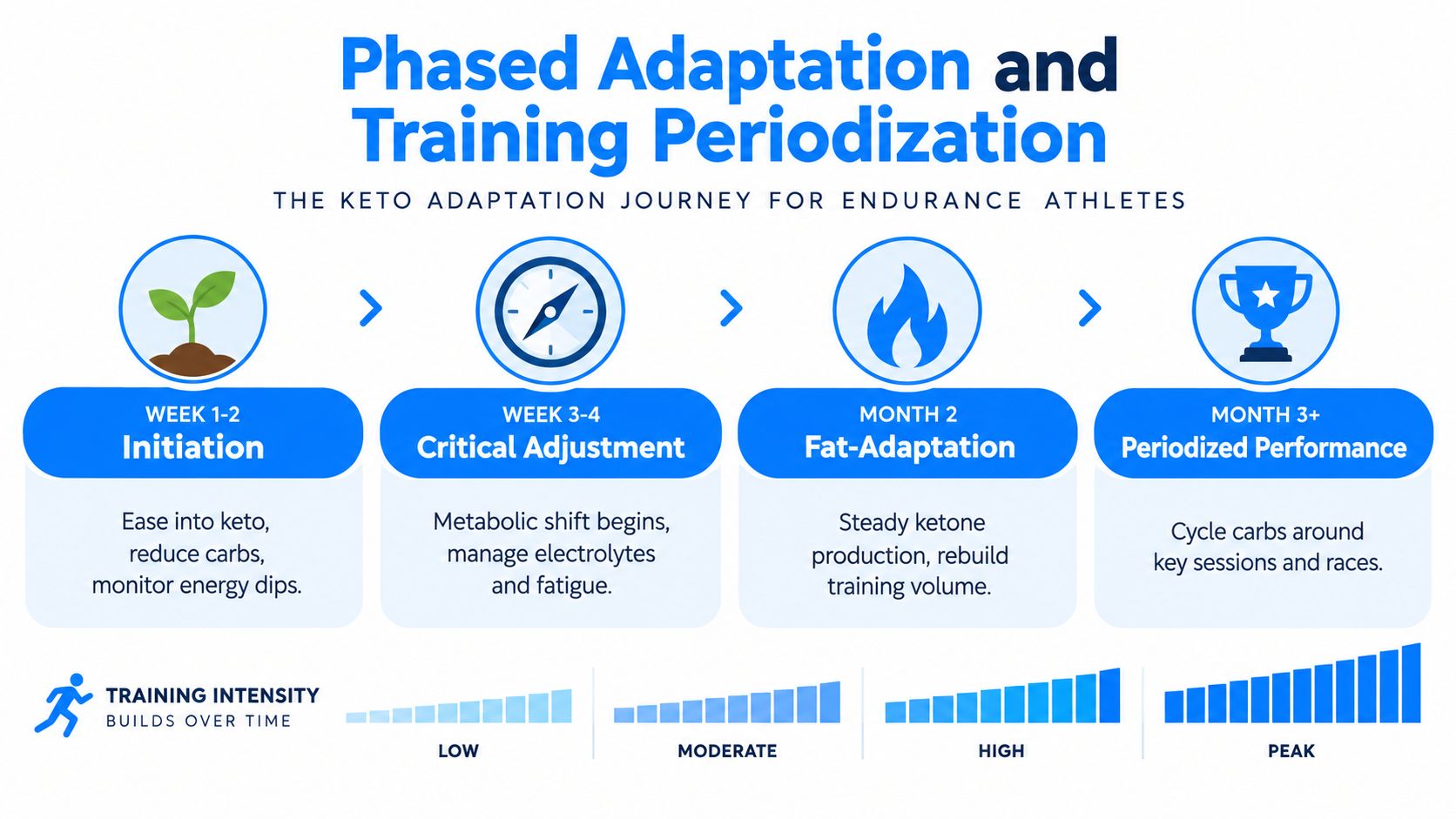
Keto adaptation isn't a switch. It's a period in which fuel availability, enzyme activity, fluid balance, perceived effort, and training tolerance can change at different speeds.
The most common error is treating a dietary transition like a fitness block. Athletes reduce carbohydrate intake and continue the same interval volume, long-run pace, and race-specific intensity. When output drops, they conclude that keto has failed. Often, they've only matched an aggressive training demand with an unsettled fuel system.
Build the base before testing the edge
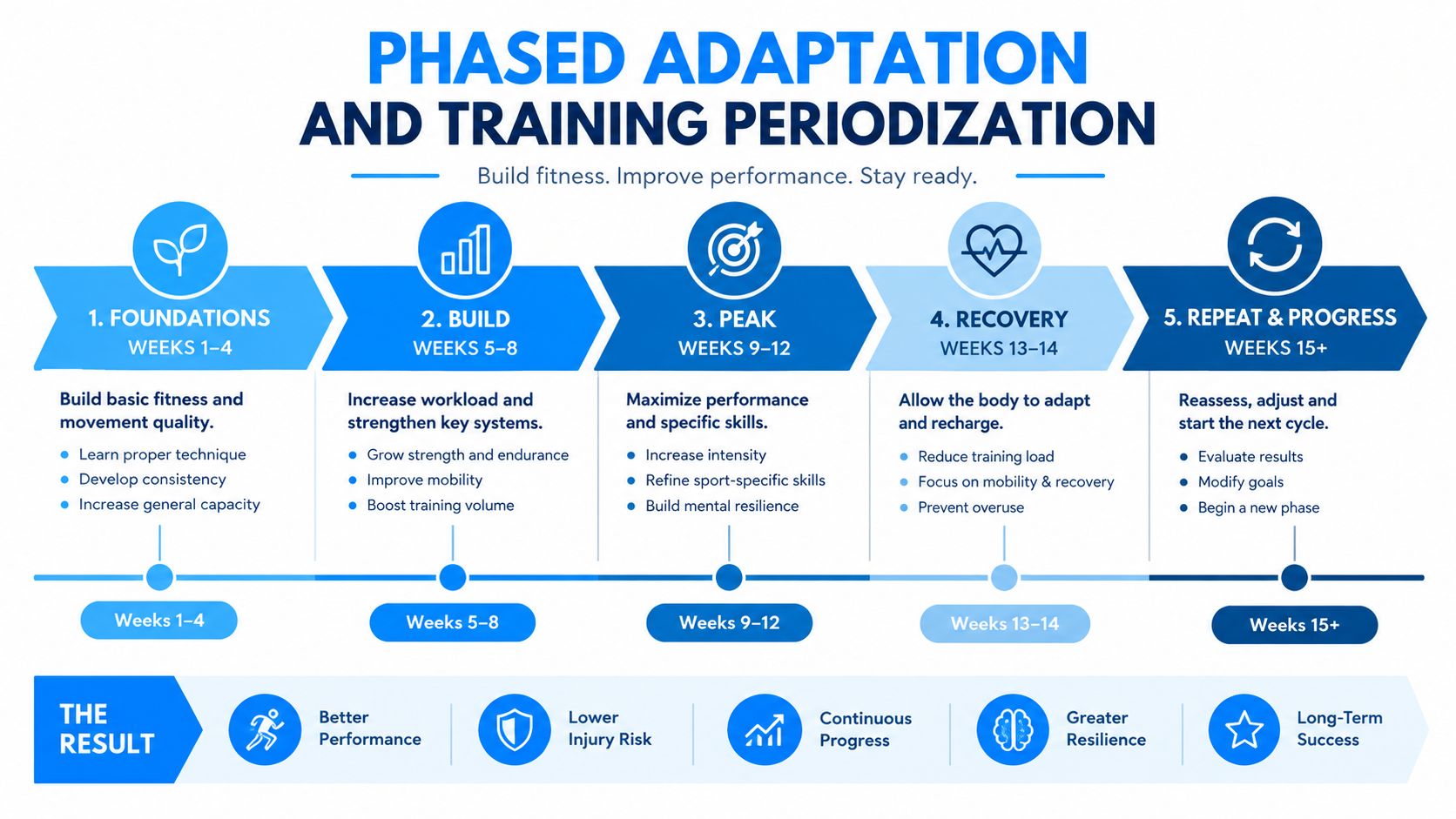
Use a staged approach:
- Reduce training pressure during initiation. Keep easy aerobic work, technique, mobility, and low-stress sessions. Avoid using the transition period to chase personal bests.
- Protect total energy intake. Removing carbohydrate without replacing its energy can create fatigue that has nothing to do with ketone metabolism. Include adequate protein, dietary fat, fluids, and electrolytes, and monitor sleep, mood, body mass, and recovery.
- Make moderate aerobic work the anchor. Zone two sessions are easier to control than intervals. They allow you to observe whether energy steadiness improves without demanding maximal glycolytic output.
- Reintroduce intensity selectively. Once easy training feels stable, add controlled tempo or threshold work before maximal intervals. Keep carbohydrate available for sessions where power and pace matter most.
- Periodize rather than moralize. A strict low-carbohydrate approach isn't automatically more disciplined. A targeted carbohydrate strategy may better support a mixed endurance program.
The 2020 endurance review documented the historical pattern clearly. Lower-intensity endurance could be maintained after adaptation, while work above 70% of VO2max could become less economical. That means training intensity should determine the fuel decision, not ideology.
Monitor function, not just ketones
A blood ketone reading can confirm that BHB is present. It can't tell you whether your pace, power, economy, mood, or recovery are improving. Track the variables that determine performance:
- Training output: Compare pace, power, heart rate, and perceived exertion under similar conditions.
- Recovery quality: Watch sleep, soreness, motivation, and the ability to complete the next session.
- High-intensity tolerance: Test whether intervals remain technically sound and repeatable.
- Fuel tolerance: Record gastrointestinal symptoms and the amount of carbohydrate you can comfortably use when needed.
The early window can include temporary decrements, as the 2026 pooled analysis reported. Don't schedule your decisive assessment during that window. Give the strategy enough time to settle, then evaluate it against the demands of your actual event.
The Role of Exogenous Ketones in Performance
Exogenous ketones solve a specific problem. They can raise circulating BHB without requiring prolonged dietary restriction or fasting. That makes them useful for experimentation, but it doesn't make them a universal ergogenic aid.
A 2026 systematic review of 26 studies on exogenous ketones found that supplementation reliably raised blood BHB, while acute performance effects remained inconsistent. Across the reported measures, the review noted 3 positive, 10 null, and 3 negative performance outcomes across 16 measures. The reasonable conclusion is that raising ketones and improving performance are separate outcomes.
A 2022 systematic review and meta-analysis reached a similar conclusion. Ketone monoesters and precursors increased blood ketone concentrations, but they didn't significantly improve endurance exercise performance overall. Monoesters raised ketones more effectively than precursors, yet a stronger biochemical response still didn't guarantee a better time trial.
Where exogenous ketones may fit
The strongest use case is targeted, not automatic. You might test an exogenous ketone before a long, steady session when the goal is to assess energy steadiness, mental focus, or tolerance to a different fuel mix. You might also test it during a demanding training day when maintaining concentration matters as much as maintaining pace.
Controlled human data shows how large the metabolic shift can be. In trained cyclists, a ketone ester raised BHB from 0.1±0.0 to 3.5±0.3 mmol/L within 30 minutes, lowered respiratory exchange ratio, and left BHB at 3.0±0.3 mmol/L after exercise, according to a controlled cyclist trial. That demonstrates delivery and utilization. It doesn't demonstrate a guaranteed performance gain.
Use ketones to answer a training question, not to decorate a fueling plan.
The downside can be physiological strain. In endurance-trained adults, a ketone monoester bolus raised pre-exercise BHB to 3.9±1.0 mM, compared with 0.2±0.3 mM with placebo, but also increased ventilation, heart rate, and perceived exertion without significantly changing time-trial performance, as reported in this human performance trial.
That's why athletes should trial products in training, not debut them at a race. A useful starting point is to compare formulations and ingredient profiles, including the VitzAi.com Keto BHB range, while keeping your established carbohydrate and hydration plan intact. For a deeper explanation of the evidence, see whether exogenous ketones work.
Choosing the Right Ketone Supplement
The supplement category includes several chemically different options. The label may say “ketones,” but the body doesn't experience a ketone salt the same way it experiences a ketone ester or a precursor.
Ketone salts attach BHB to minerals such as sodium, potassium, calcium, or magnesium. They can be easier to formulate and may suit lower-intensity experimentation, but the mineral load can become substantial, and gastrointestinal tolerance varies.
Ketone esters chemically bind a ketone body or ketone precursor to an alcohol backbone. They can raise BHB efficiently, but taste, cost, and stomach tolerance are common barriers. The controlled cyclist data cited earlier shows that a large BHB increase can occur without an automatic performance improvement.
Precursors require conversion inside the body. They may raise ketones less directly than monoesters, and the 2022 meta-analysis found that monoesters were more effective at increasing circulating ketones than precursors.
Liposomal delivery systems are intended to package an active compound in lipid-based structures that may support handling and absorption. Their practical value should be judged by product testing, tolerability, ingredient transparency, and reproducible use, not by the word “liposomal” alone. Bioidentical structures such as D-BHB are also relevant because the body naturally produces and uses the D form. Claims about a product's exact composition should be verified from its technical documentation.
Ketone Supplement Comparison
| Type | Absorption | Cost | Side Effects |
|---|---|---|---|
| Ketone salts | BHB delivery is paired with mineral absorption | Often positioned as a more accessible format | Mineral load and gastrointestinal discomfort may limit tolerance |
| Ketone esters | Efficient, rapid BHB elevation is possible | Commonly positioned at the premium end | Strong taste, nausea, and increased perceived strain can occur |
| Ketone precursors | Require metabolic conversion before ketone availability rises | Varies by ingredient and formulation | Effects and tolerance depend on the precursor |
| Liposomal BHB formats | Designed to support consistent delivery and absorption | Varies by formulation | Tolerance depends on ingredients, concentration, and individual response |
Choose based on the job. An athlete with a sensitive stomach may prefer a lower-intensity tolerance trial. An athlete seeking a rapid BHB rise may consider an ester or a carefully characterized bioidentical formulation. Neither choice replaces carbohydrate when the session requires high output.
Endurance athletes also use adjacent recovery tools, such as topical products. A resource such as Hemp Well Ireland CBD cream belongs in a separate recovery discussion, not in the same category as a metabolic fuel. Keep those purposes distinct.
Why This Matters
Biochemistry matters only when it changes what you do in training.
Steadier energy can mean fewer abrupt sensations of hunger or fatigue during easy, prolonged work, especially when your overall diet is consistent. It doesn't mean you can ignore calories, hydration, sodium, or carbohydrate requirements.
Cognitive endurance matters during long races, technical descents, navigation, and late-session decision-making. The brain can use ketones as an alternative energy substrate, but subjective clarity isn't proof of a faster finish.
Workout performance remains intensity-dependent. Ketones may fit controlled aerobic sessions, while carbohydrate remains a practical tool for hard intervals and race surges.
Metabolic efficiency means improving your ability to draw on multiple fuels. The objective isn't to banish glucose. It's to select the fuel mix that supports the session without creating unnecessary gastrointestinal or physiological stress.
Race Day and Recovery Protocols
Race day isn't the place to discover whether a ketone product suits you. Build a protocol during ordinary training, repeat it under similar environmental and workload conditions, and keep your established hydration and carbohydrate strategy available.
Before the event
For a long, steady effort, test an exogenous ketone in training before the start, allowing enough time to observe stomach comfort, heart rate, perceived exertion, and focus. A ketone shot with electrolytes may fit an athlete who wants ketone availability alongside hydration support, but it shouldn't displace fluids or the carbohydrate plan that has already proven tolerable.
For a high-intensity event, be more cautious. The human monoester trial found increased ventilation, heart rate, and perceived exertion without a significant time-trial benefit. That profile makes a race-day experiment particularly unattractive when the event depends on repeated surges or maximal output.
During the event
Use a simple decision rule:
- Steady endurance: Test ketones only if you've already established tolerance and understand how they affect your effort.
- High-intensity racing: Don't assume a higher BHB level will improve output. Prioritize the fueling plan that supports the required intensity.
- Hydration-sensitive events: Account for the product's mineral content and your total electrolyte intake.
- Gastrointestinal uncertainty: Never introduce a new formulation during competition.
Carbohydrate and ketones aren't mutually exclusive. The best plan may use ketones as an optional adjunct while preserving carbohydrate for intensity, climbs, surges, or the finish.

After the finish
Recovery starts with replacing fluids and providing the substrates needed for repair and glycogen restoration. Ketones may be relevant to cognitive steadiness or a structured post-event routine, but they shouldn't be marketed as a substitute for protein, carbohydrate, sleep, or adequate total energy.
Use the post-workout drink guidance to evaluate the whole recovery context rather than isolating one ingredient. If you feel nausea, unusual breathlessness, palpitations, or an abnormal rise in perceived exertion, stop the experiment and discuss the response with a qualified clinician.
Practical Takeaways for the Endurance Athlete
Keto can be a valid endurance strategy, but it's not a guaranteed speed strategy. Pooled research supports maintained aerobic performance more consistently than improved performance, while early adaptation can temporarily reduce training quality.
Use this framework:
- Choose the right block: Start during a lower-pressure training period, not before a key race.
- Protect the basics: Maintain adequate energy, protein, fluids, electrolytes, and recovery.
- Match fuel to intensity: Use low-carbohydrate availability for selected aerobic work, and retain carbohydrate when power demands rise.
- Test exogenous ketones: Evaluate tolerance, heart rate, perceived exertion, focus, and output before considering race use.
- Judge results by performance: Keep the strategy only if it supports training consistency and event-specific demands.
For athletes who want to explore direct ketone delivery without making strict dietary ketosis the sole foundation, Tecton Ketones™ offers bioidentical R3HBG-based formulations, including options designed around performance, electrolytes, caffeine, or cognition. Visit Tecton Ketones™ to review the formulations and decide whether one fits your training experiment.


