


Is energy always better when it feels stronger? For many people, the more useful question is whether they need more stimulation or more usable fuel. Caffeine can increase alertness, but it doesn't supply the body with an alternative metabolic substrate. Caffeine-free ketones take a different route by delivering beta-hydroxybutyrate, or BHB, directly.
That distinction matters for athletes training later in the day, professionals working through an afternoon focus block, and anyone who wants to avoid stimulant exposure. It also matters because raising blood ketones doesn't automatically improve every workout, sharpen cognition for every person, or make a product universally safe. The practical choice depends on your physiology, timing, training demand, and tolerance.
What Caffeine Free Ketones Actually Are
Caffeine-free exogenous ketones are metabolic-substrate supplements, not stimulants. They provide ketone bodies that tissues can oxidize for energy, without relying on caffeine's primary mechanism of blocking adenosine receptors.
Your body can reach ketosis in three distinct ways:
- Nutritional ketosis occurs when a ketogenic diet reduces carbohydrate availability enough to increase ketone production.
- Endogenous ketone production happens inside the body, primarily in the liver, during conditions such as fasting, prolonged exercise, or carbohydrate restriction.
- Exogenous ketone supplementation delivers ketones from outside the body, allowing circulating BHB to rise without requiring prolonged fasting or a ketogenic diet.
A controlled human study compared a ketone monoester with a ketone salt. The monoester raised blood D-BHB to a peak of 2.8 ± 0.2 mmol/L, while the salt reached 1.0 ± 0.1 mmol/L, with the difference statistically significant at P < 0.001. Both returned to baseline within approximately 3 to 4 hours, showing that the effect is measurable but temporary. Nutritional ketosis is commonly defined as blood ketones above 0.5 mmol/L, and both formats exceeded that threshold in the experiment, as reported in the controlled human comparison of ketone monoesters and salts.
Core definition: A caffeine-free ketone product supplies an oxidizable fuel. It doesn't need to make you feel stimulated to be physiologically active.
This is why “caffeine-free” shouldn't be interpreted as “weak.” It describes the absence of caffeine, not the absence of an energy effect. A ketone drink may raise circulating BHB while producing a calmer subjective experience than a stimulant, although individual responses vary.
The central decision is straightforward. Choose direct ketone fuel when you want an alternative substrate without stimulant exposure. A caffeinated formulation may have a place when alertness and high-intensity drive are the immediate priority, particularly earlier in the day. Neither approach replaces sleep, hydration, food, or appropriate training fuel.
For readers who want to understand the broader evidence before choosing a format, Tecton's explanation of how exogenous ketones work provides useful background. The important point is to evaluate the actual ketone structure, dose, tolerability, and intended use rather than treating every “energy” product as interchangeable.
How Ketones Fuel the Body Without Stimulants
BHB enters the bloodstream after absorption and can be taken up by tissues including skeletal muscle and the brain. Inside cells, it is converted into acetyl-CoA, which enters the Krebs cycle. The resulting reducing equivalents feed the mitochondrial electron-transport chain, where oxidative phosphorylation produces ATP.
The pathway differs from glucose metabolism. Glucose requires approximately 10 enzymatic steps to become acetyl-CoA, while BHB can reach acetyl-CoA in three reactions, according to a peer-reviewed review of ketone metabolism and brain energy. That doesn't make ketones universally superior. It means they enter mitochondrial energy metabolism through a different route.
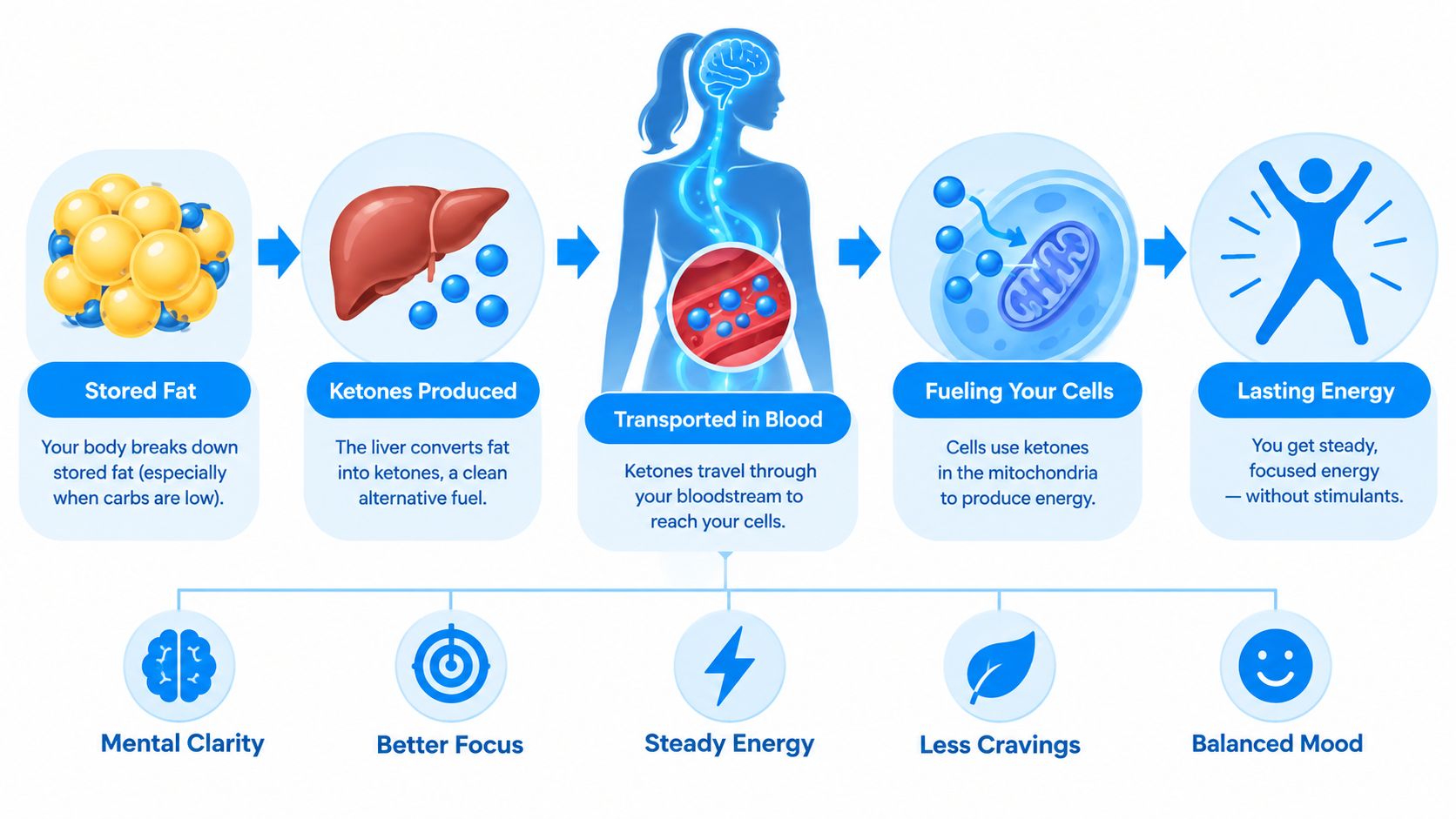
Glucose and ketones are complementary fuels
The brain readily uses BHB when glucose availability is limited, but exogenous ketones don't eliminate glucose metabolism. Fuel selection remains context-dependent and changes with exercise intensity, insulin status, recent carbohydrate intake, and tissue demand.
That adaptability is the practical meaning of metabolic flexibility. A metabolically flexible system can draw on carbohydrate, fat, and ketones according to the task and the available fuel. A ketone supplement can increase ketone availability, but it can't guarantee that the body will perform every task better.
Human research also connects BHB with vascular physiology and cellular signaling. A JACC state-of-the-art review describes intravenous BHB increasing myocardial blood flow by approximately 75% and producing vasodilation, while also discussing local cerebral and renal blood flow. These are mechanistic and infusion findings, not proof that an oral ketone drink prevents or treats cardiovascular disease.
Caffeine has a different job. It primarily increases alertness through adenosine-receptor antagonism. Ketones provide a substrate that mitochondria can oxidize. One changes neural signaling associated with wakefulness, while the other changes the fuel available to cells.
A dose-response study of a BHB and medium-chain-triglyceride formulation found dose-dependent increases in blood R-BHB and improved cognitive performance in the pre-exercise condition, but no meaningful dose- or administration-related improvement across physiological, perceptual, or physical-performance outcomes. Participants avoided caffeine for 48 hours, reducing the chance that caffeine carryover or withdrawal explained the findings, as reported in the controlled dose-response study of exogenous ketones.
The distinction is useful in practice. If you need a stimulant effect, ketones aren't a direct substitute for caffeine. If you want circulating fuel without adding a stimulant, caffeine-free ketones address a different problem.
Ketone Salts Esters and Bioidentical R3HBG Compared
The chemical form determines how much BHB reaches the bloodstream, which stereoisomer appears, what mineral load accompanies the product, and how well the formula is tolerated.
Ketone salts pair BHB with minerals such as sodium, potassium, calcium, or magnesium. They can be practical and often include electrolytes, but delivering larger quantities of BHB may require a substantial mineral load. Racemic salts may also contain both D-BHB and L-BHB. The D form is the biologically preferred form produced and readily used by the body, while L-BHB is metabolized more slowly.
Ketone esters chemically link a ketone body to an alcohol or precursor. Human studies generally show that monoesters produce larger BHB excursions than salts. In a repeated-intake intervention, healthy adults consumed 25 mL, equivalent to 26.8 g, three times daily for 28 days. Average post-drink maximum BHB reached 4.1 ± 1.1 mmol/L, with individual peaks ranging from 1.8 to 6.3 mmol/L, as described in the 28-day human ketone monoester intervention. The study found no measurable changes in body weight, body composition, fasting glucose, blood lipids, electrolytes, blood gases, or kidney function in its study population, but it didn't establish weight loss or disease benefits.
Tecton describes R3HBG as a tri-ester structure that bonds three D-BHB molecules to a glycerol backbone. According to the brand's formulation description, this releases bioidentical D-BHB without an L-isomer and avoids the heavy mineral load associated with delivering BHB through salts. Tecton also positions its liposomal delivery system as a way to support absorption and consistency. Those are formulation attributes, not a guarantee that every user will experience the same blood ketone response.
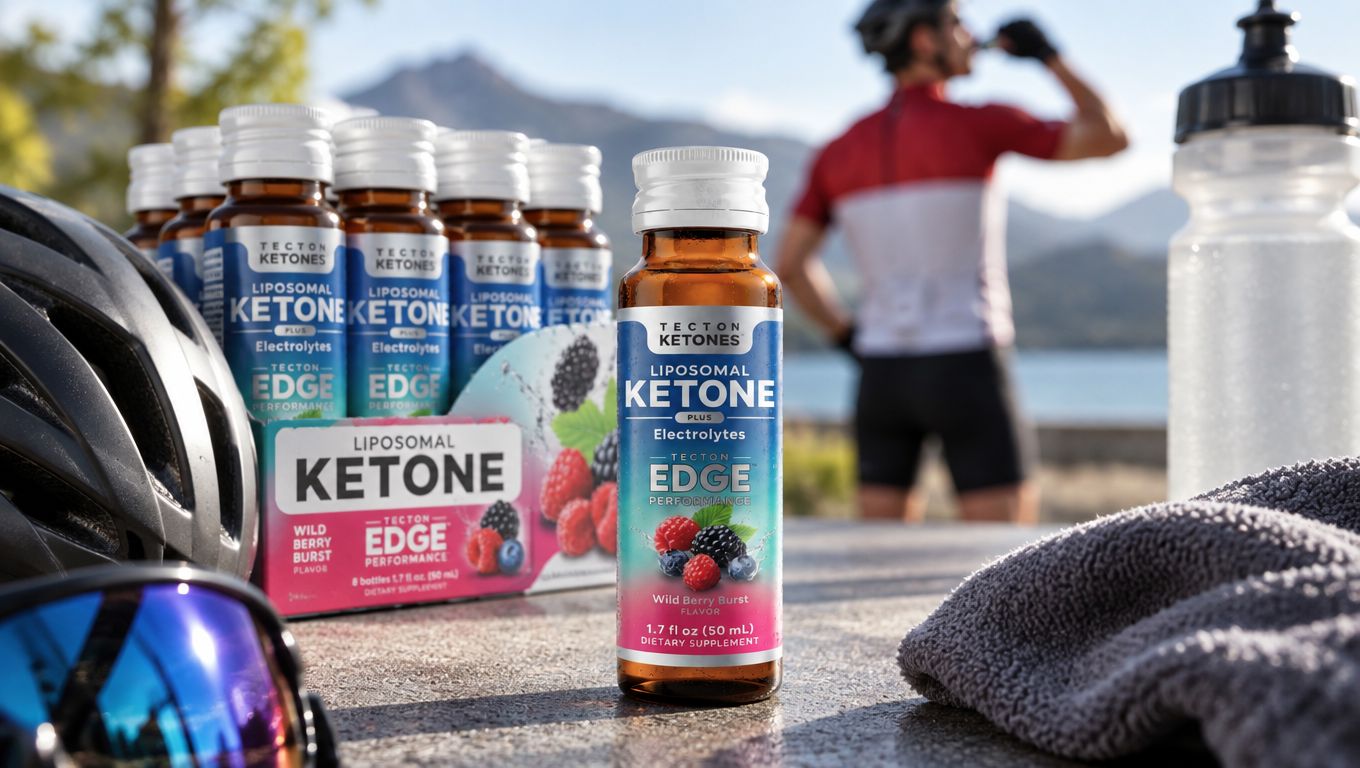
Exogenous Ketone Formats at a Glance
| Format | Structure | BHB Delivered | Mineral Load | Key Consideration |
|---|---|---|---|---|
| Ketone salts | BHB bound to minerals | D-BHB, or a D/L mixture depending on formula | Can be substantial | Electrolyte content may be useful, but mineral load can limit the amount delivered |
| Ketone esters | BHB linked to an alcohol or precursor | Often a higher proportion of D-BHB | Lower mineral burden | Stronger BHB exposure may come with greater gastrointestinal challenges |
| Bioidentical R3HBG | Tecton describes three D-BHB molecules bonded to glycerol | D-BHB according to the brand's formulation description | No heavy mineral load according to the brand | Evaluate tolerability, measured response, and label transparency |
The science of ketone esters helps explain why structure matters more than the generic word “ketones.” The Tecton EDGE™ Performance Shot + Electrolytes is positioned for active individuals who want ketone fuel alongside sodium, potassium, and magnesium during training, movement, or physically demanding days.
Caffeinated vs Caffeine Free Ketones for Different Situations
The best choice depends less on ideology than on the job you need the product to perform.
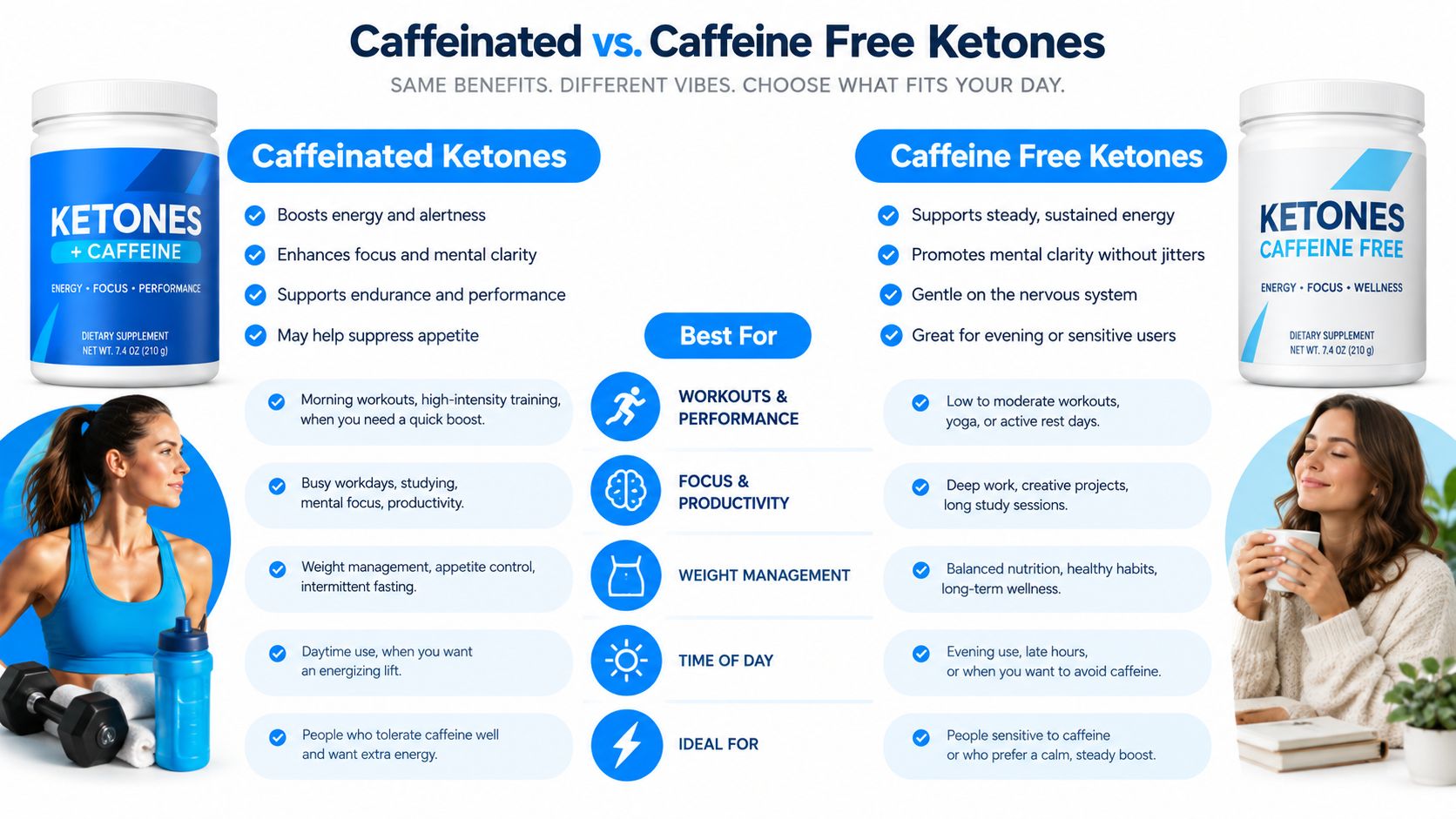
A caffeinated ketone product combines substrate delivery with stimulant signaling. That can suit a morning training session, a demanding pre-workout window, or a situation where perceived alertness matters as much as fuel availability. It can also be a poor fit late in the day, for people sensitive to stimulants, or for anyone whose sleep is easily disrupted.
A caffeine-free product separates the fuel question from the stimulant question. It may fit afternoon cognitive work, evening exercise, repeated daily use, or a fasting window where you want direct ketone availability without adding caffeine. It still doesn't guarantee a performance advantage.
Match the formulation to the situation
| Situation | Caffeinated ketones | Caffeine-free ketones |
|---|---|---|
| Morning high-intensity training | May support alertness and training drive | Supplies ketone substrate without stimulant signaling |
| Evening training | May interfere with sleep in sensitive users | Better aligned with a sleep-conscious routine |
| Afternoon deep work | Useful when stimulation is wanted | Better suited to non-stimulant fuel support |
| Stimulant sensitivity | Less suitable | More appropriate, though not automatically risk-free |
| Repeated daily use | Requires attention to total stimulant exposure | Avoids caffeine carryover, but still requires tolerance testing |
Decision rule: If the primary need is wakefulness, consider the stimulant separately. If the primary need is an alternative fuel, start with a caffeine-free ketone format.
Public guidance on caffeine describes potential effects of excessive intake, including nervousness, sleep disruption, tachycardia, arrhythmias, and seizures. A commonly cited adult limit is 400 mg per day, as noted in the FDA guidance on concentrated caffeine. That limit isn't a reason to treat all caffeine-free ketones as harmless. It simply reinforces that stimulant exposure and ketone exposure should be evaluated as different variables.
Performance data also argues against broad promises. A systematic review identified 16 physical-performance outcomes, with 3 positive, 10 null, and 3 negative compared with control conditions, as summarized in the technical review of ketone supplementation and exercise performance. Ketone elevation is a real physiological outcome. Superior output isn't a reliable consequence.
Steady Endurance and Sleep-Friendly Cognitive Support
The strongest case for caffeine-free ketones is not “instant peak performance.” It's the possibility of supplying an alternative fuel during tasks where steady output matters and a stimulant isn't desirable.
During endurance work, acute ketone ingestion can raise blood BHB and shift substrate use toward fat and ketone oxidation. Reviews also report lower respiratory-exchange ratios after ketone ingestion, indicating a change in fuel selection. Those metabolic changes don't reliably translate into faster times, greater power, or better tolerance of every endurance session.
For a long aerobic session, that means ketones may be considered as an additional fuel strategy, not as a replacement for hydration, electrolytes, carbohydrates when needed, or adequate total energy. If the next demand requires rapid glycogen restoration, ketones aren't the direct tool for that job.
Cognitive endurance requires a more specific claim
Cognition is similarly conditional. A randomized crossover trial involving 24 healthy young adults found only a small cognitive effect from ketone monoester supplementation and no improvement in most tested domains after moderate exercise. A separate randomized trial involving 20 adults, half with metabolic syndrome, found improved working-memory measures and lower blood glucose after ketone-ester ingestion. Appetite reduction appeared only in participants without metabolic syndrome, according to the human review of ketones and cognition.
That contrast is more useful than a universal focus claim. A person with stable glucose regulation, good sleep, and low cognitive stress may notice little. Someone working through fasting, metabolic strain, or a long concentration block may respond differently. The relevant question is not merely whether ketones improve focus, but for whom, under what conditions, and compared with what.
For an afternoon work block, a caffeine-free product may be a reasonable experiment if the alternative is skipping fuel until a late meal. For an evening session, avoiding caffeine may protect sleep compatibility. If you're building a calming routine around non-stimulant options, buy chamomile on Tealyra is a separate beverage choice that can complement the ritual, but it shouldn't be confused with a metabolic fuel.
Dosing Timing and Tolerability Guidance
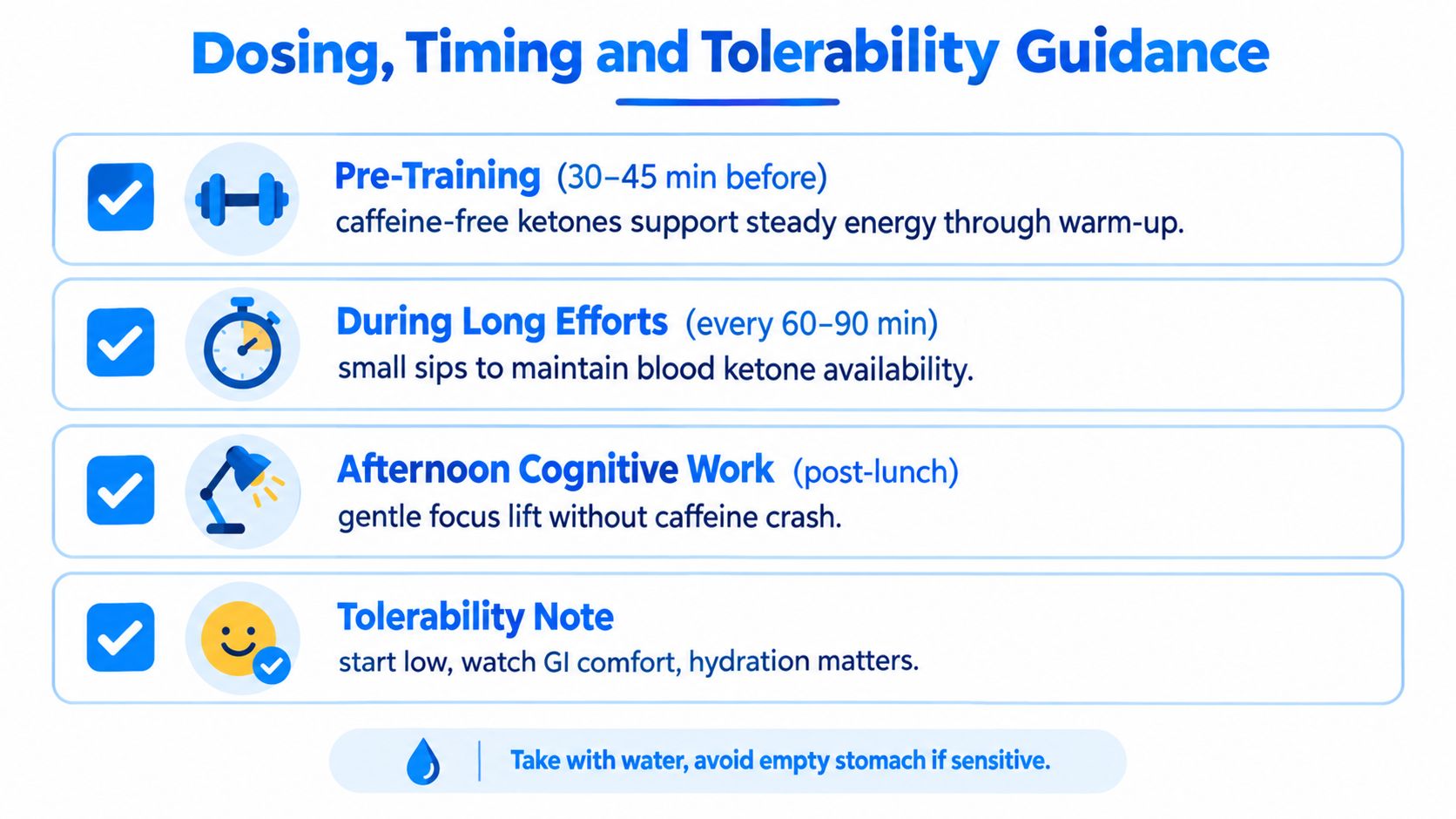
Use exogenous ketones for a defined purpose, not as a reflexive replacement for meals or recovery basics. The most logical timing depends on the task:
- Before training: Use a studied serving before a session when you want circulating BHB available during warm-up and early work.
- During long efforts: Consider the product's tolerance and use it as part of a broader hydration and fueling plan.
- Afternoon cognitive work: A caffeine-free format can fit a focus block when you want to avoid adding a stimulant.
- Fasting windows: Treat ketones as direct fuel, not as proof that fasting is automatically safe or appropriate for everyone.
A human study involving 28 healthy adults found that 25 g of ketone monoester raised mean blood D-BHB from 0.7 to 4.0 mmol/L after 30 minutes. The same study observed reductions in blood glucose, lactate, and non-esterified fatty acids, as reported in the human study of ketones and muscle and cardiac energetics. A different repeated-intake study showed that individual peak BHB responses can vary widely even when participants consume the same nominal serving.
That variation makes conservative testing sensible. Start with the serving specified on the product label, assess gastrointestinal comfort, and avoid stacking several unfamiliar products at once. Ketone esters can be harder on the gastrointestinal tract for some users, while salts may create their own tolerance and mineral-load considerations.
Who shouldn't self-experiment
Caffeine-free doesn't mean universally safe. People using insulin, sulfonylureas, or SGLT2 inhibitors should consult a clinician before using exogenous ketones because glucose responses and medication effects may matter. The same applies to people managing pregnancy, cardiovascular disease, or significant metabolic illness.
A practical first-use checklist is simple:
- Choose one product and one clear use case.
- Test it on a low-consequence day rather than before an important competition.
- Track gastrointestinal symptoms, perceived energy, cognitive accuracy, and sleep.
- Stop and seek clinical guidance if you have concerning symptoms or use glucose-lowering medication.
For a deeper discussion of tolerability and possible reactions, review Tecton's guidance on exogenous ketone side effects. Don't interpret a smooth subjective experience as proof that a product is appropriate for a medical condition.
Choosing the Right Tecton Ketone Product and Practical Takeaway
Tecton's portfolio maps its products to different use cases. EDGE Performance + Electrolytes is positioned for endurance, hydration, movement, and steady output without caffeine. EDGE Performance + Caffeine is intended for higher-intensity training and morning focus when a stimulant effect is wanted. Locked Cognition is positioned for cognitive endurance with nootropic ingredients, while GLP-1 is positioned around appetite awareness and metabolic balance.
The common platform is Tecton's R3HBG formulation, which the brand describes as a bioidentical D-BHB delivery system. Tecton also describes its products as using liposomal delivery and excluding R-1,3-butanediol, BPA, artificial dyes, and artificial sweeteners. These are formulation and brand-positioning details, so evaluate them alongside the label, your response, and the evidence for the specific outcome you want.
Application Framework
- Choose caffeine-free ketones for evening training, afternoon focus, repeated use, or stimulant-sensitive routines.
- Choose caffeinated ketones when morning alertness and high-intensity drive are central to the session.
- Test one variable at a time during the first week. Keep training, meals, and caffeine intake as consistent as practical.
- Measure useful outcomes, including perceived steadiness, task accuracy, workout completion, gastrointestinal comfort, sleep quality, and, when appropriate, blood BHB.
- Don't replace fundamentals. Ketones don't substitute for carbohydrates when glycogen restoration is the priority, or for protein, fluids, electrolytes, and sleep.
The scientifically honest position is narrow but useful. Caffeine-free ketones can raise circulating BHB and provide an alternative substrate without stimulant exposure. Whether that improves your endurance or cognition depends on your baseline physiology, the task, the product format, and the conditions in which you use it.
Tecton Ketones™ offers caffeine-free and caffeinated ketone options built around its R3HBG platform, including formulations for endurance, electrolytes, cognitive endurance, and higher-intensity use. Explore the science-led product range at Tecton Ketones™ and choose the format that matches your actual performance and focus demands.


