


Picking the shake with the biggest protein number on the front label is the most popular advice, and it's also the fastest way to choose the wrong product. A 30 g headline tells you nothing about added sugar, leucine, or whether the drink will keep you full for an hour or replace lunch. The best protein shake for low carb eating isn't a brand. It's the format that matches the job, passes a few label calculations, and doesn't pretend that protein alone creates ketosis.
That distinction matters. Protein supplies amino acids. Ketones supply an alternative fuel. A shake can do the first job well while doing nothing measurable for the second, and you'll make a better choice once you score those jobs separately.
Low-Carb Shake Types Compared at a Glance
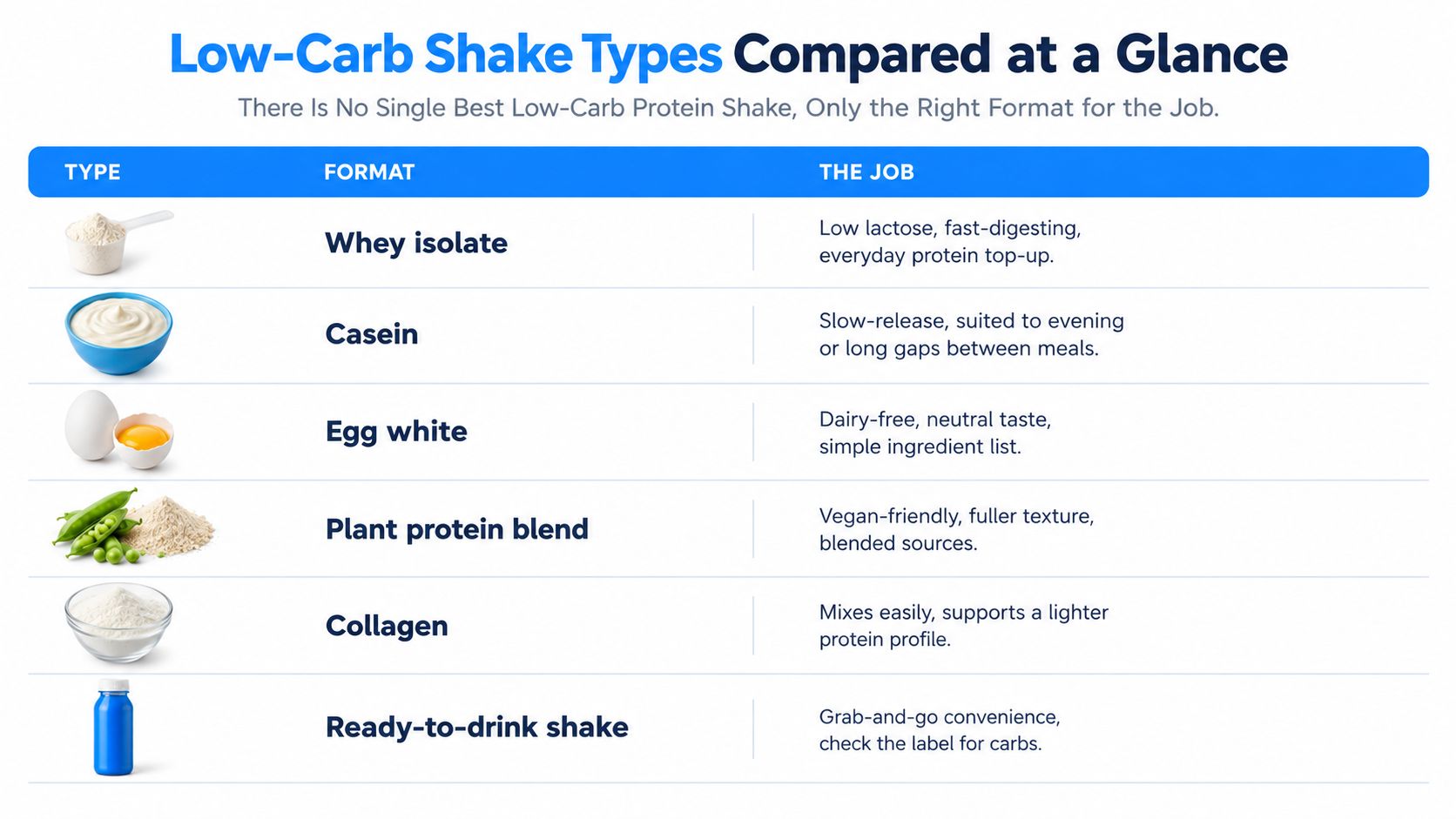
Whey isolate typically has the lower carb range, while plant blends tend to provide more carbs per serving. Use the table as a comparison of typical retail-label ranges, not as a substitute for the package in front of you. Choose by the job the shake needs to do, since a protein top-up and a meal replacement call for different trade-offs.
| Format | Protein per serving | Total carbs | Calories | Best fit |
|---|---|---|---|---|
| Whey isolate powder | 22-27 g | 1-3 g | 100-130 kcal | Muscle maintenance, post-training |
| Plant protein blend | 18-25 g | 3-6 g | 110-160 kcal | Dairy-free diets, larger serving needed |
| Ready-to-drink low-carb shake | 20-30 g | 2-5 g | 150-250 kcal | Convenience and travel |
| Collagen or egg white shake | 15-20 g | 0-2 g | 70-120 kcal | Very low calorie intake |
| Keto fat-based shake | 8-15 g | 2-5 g | 300-450 kcal | Energy and satiety, not a protein dose |
| Ketone-protein shake | 8-30 g | 2-6 g | 150-450 kcal | Protein plus exogenous BHB; check the product label |
Whey isolate is a practical protein top-up: it supplies complete protein, contains little lactose, and devotes a high share of calories to protein. Plant blends suit dairy-free diets, though a larger serving may be needed to approach whey's leucine content.
Ready-to-drink shakes prioritize convenience and may include added cost and additives. Collagen mixes easily and keeps calories low, but it is an incomplete protein with low leucine. Assess it differently from whey or egg white.
Deciding the Role First
A fat-based keto shake made with MCT oil or nut butter is primarily an energy drink, not a concentrated protein serving. A ketone-protein shake combines protein with exogenous ketones, so its protein and ketone components have separate jobs. The ranges in that row reflect the broad differences between products; the label is needed to judge a specific serving.
Decide whether you need a protein top-up, a mini-meal, or a meal replacement. Then choose the format that fits.
A ketone shot without protein is a separate category. The word “keto” alone does not tell you whether a product provides protein, ketone fuel, or both.
Label Checks That Separate Low-Carb Shakes From Sugary Ones
Judging a shake by protein alone is how sugary meal replacements pass as low-carb products. The FDA Nutrition Facts label guide requires packaged foods and beverages to disclose total carbohydrate, dietary fiber, total sugars, added sugars, and protein per serving, so you can compare products in consistent units.
Use the panel in this order every time:
- Confirm the serving size. Check that it matches the scoop or bottle amount you'll consume.
- Record total carbohydrate. Don't lead with net carbs, because net-carb methods vary by jurisdiction and by sugar alcohol.
- Check added sugars. The FDA sets the Daily Value for added sugars at 50 grams per day on a 2,000-calorie diet, so a shake with 10 grams provides 20% of that benchmark before any other food.
- Scan ingredients for hidden sugars. Look for sucrose, dextrose, syrups, honey, and concentrated fruit juice.
- Calculate protein density. Divide grams of protein by calories, then multiply by 100.
- Recalculate the prepared drink. Add the milk, yogurt, or fruit you'll blend in, not just the dry powder.
Reading Protein Density
That last calculation changes rankings fast. A 160-calorie shake with 30 grams of protein supplies 18.75 grams of protein per 100 calories, whereas a 250-calorie shake with the same protein supplies 12 grams per 100 calories. Both bottles can claim 30 g. Only one is strongly protein-forward.
| Metric | Low-carb target | Red flag | Why it matters |
|---|---|---|---|
| Total carbohydrate per serving | 2-5 g | Above 8 g | Hidden sources include maltodextrin, oat flour and banana powder |
| Added sugar per serving | 0-1 g | 3 g or more | 10 g equals 20 percent of the 50 g Daily Value |
| Calories per serving | 100-250 kcal | Above 300 kcal for a top-up | Sets how the shake fits into a meal |
| Protein density | 12 g or more per 100 kcal | Under 10 g per 100 kcal | Separates protein-forward shakes from sugary meal replacements |
| Serving size | Matches the amount you mix | Labeled scoop is smaller than the amount used | Small labeled servings understate carbs consumed |
Pass rule: Total carbohydrate near 2-5 g, added sugar near zero, and protein density at about 12 g per 100 kcal or higher.
If a shake fails two of those three checks, a strong flavor or a familiar brand doesn't rescue it. It's a dessert drink with protein added, and your daily carb budget will pay for the difference.
Protein Quality and Leucine Per Serving
A protein total does not show the whole muscle-building picture. Leucine is the amino acid most closely linked to activating muscle protein synthesis, and shakes with the same protein amount can provide different leucine doses. That makes amino-acid content useful label math when comparing products for a protein top-up or a more substantial shake.
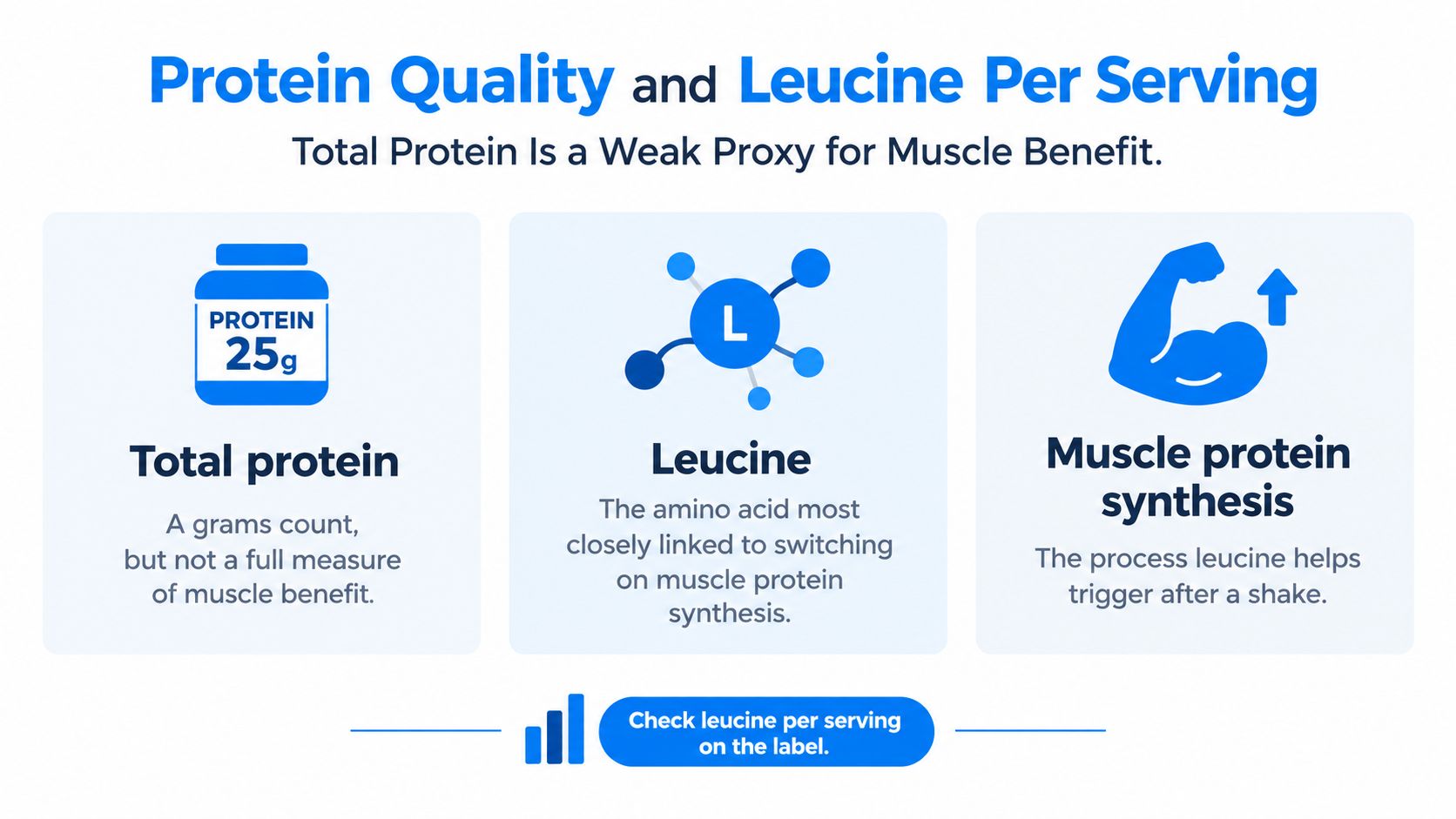
A review on leucine and muscle protein synthesis describes roughly 3-4 g of leucine per serving as associated with maximal stimulation of muscle protein synthesis. Whey can help reach that range because it has a high essential-amino-acid density. Use 2.5 g as a practical floor and aim for 3 g or more when a label provides the figure.
Age can affect the amount needed. For adults over 60, the linked review discusses a strong response around 2.8 g of leucine, equivalent to approximately 26-30 g of protein. It also describes a comparison in which 1.7 g of leucine from roughly 15 g of whey was insufficient.
Targets by Reader Group
- Adults under 60 who resistance train: Choose 25-30 g complete protein, with leucine at 2.5-3 g or more when disclosed.
- Adults over 60: Aim for 26-30 g protein per serving. Use the review's 2.8 g leucine figure as a reference point.
- Plant-based users: Expect 30 g or more from a blend, since lower digestibility and leucine density can call for a larger serving.
- Calorie-restricted low-carb dieters: Keep at least 25 g protein, then compare protein against calories to judge whether the shake fits as a top-up or meal.
A protein bioavailability chart can help compare whey, egg, and plant sources alongside their disclosed amino-acid profiles. For readers with suppressed appetite, Weight Method's guide to protein on GLP-1 compares whey and plant options in that context.
This short explainer shows why amino-acid composition matters beyond the protein total.
Leucine may not appear on a product label. When it is absent, use a 25 g or larger complete-protein serving as a working benchmark, then compare disclosed amino-acid information to distinguish otherwise similar shakes. Protein supports muscle protein synthesis; it is not the same thing as ketone fuel.
Sweeteners, Fillers and Sugar Alcohols Explained
A shake sweetened with sucralose alone adds negligible carbohydrate; one that combines sucralose with maltodextrin also gets carbohydrate from the bulking agent. That difference matters more than the sweetener named on the front of the tub. A WebMD report on FDA low-carb labeling notes there is no universally standardized FDA definition of "low-carb", so check the Nutrition Facts panel and serving size rather than relying on front-label language.
| Ingredient | Carbohydrate effect | Tolerance note | Label check |
|---|---|---|---|
| Sucralose | Negligible carbohydrate | Generally well tolerated | Check whether it is the only sweetener |
| Stevia or monk fruit | Negligible per typical dose | Aftertaste varies by person | Often blended with a bulking agent |
| Erythritol | Counted as a sugar alcohol, low glycemic effect | Bloating can occur at high doses | Check how the label reports it |
| Allulose | Low, partly absorbed | Gas or cramping can occur in some people | Check the total carbohydrate line |
| Maltitol | Partly counted, higher glycemic effect than erythritol | Gas and bloating are common | Often found in sugar-free products |
| Maltodextrin | Counted fully as carbohydrate | Rapid digestion | Adds carbohydrate even when used as a bulking agent |
| Xanthan, guar or gellan gums | Minimal in small amounts | Guar can cause bloating | Used as thickeners; check the amount |
Reading the Whole Sweetener System
Check the complete ingredient list, not just the named sweetener. Dextrose, oat flour, banana powder and sweetened dairy bases can also add carbohydrate, so a product's flavoring system and base matter alongside its protein. A shake can use a low-carbohydrate sweetener and still contain other ingredients that raise its carbohydrate load.
If you prefer to avoid artificial sweeteners, this guide to formulating without artificial sweeteners explains the trade-offs for taste and ingredient selection. For fasting, ketogenic eating or glucose control, compare the disclosed total carbohydrate, fiber, sugar and serving size instead of relying on a front-label claim.
Start with half a serving for three days. Track bloating, cramps and cravings, and change the sweetener system if symptoms appear.
The dose can change the response. Erythritol may be fine in a smaller serving but cause bloating at higher doses; maltitol can also trigger gas and bloating. A sugar-free label does not mean a shake will feel sugar-free in use.
DIY Low-Carb Shake and the Carb Cost of Each Add-In
A homemade shake gives you control, but only if you count every add-in. This base recipe keeps protein in front and makes each later swap measurable.
- Add the liquid. Pour 240 ml unsweetened almond milk into the blender.
- Add the protein. Add one 25-30 g scoop of whey isolate.
- Add fat for satiety. Add 1 tbsp natural peanut butter.
- Add fiber. Add 1 tbsp ground flaxseed.
- Add volume and blend. Add 1 cup spinach and ice, then blend for 30-45 seconds.
That build lands at roughly 280-300 kcal, about 30-35 g protein, and about 10 g total carbohydrate. Verify those figures against your own labels, because scoops and nut butters vary enough to move the total.
Building Your Own Total
| Add-in | Typical serving | Approx total carbs | Approx fiber |
|---|---|---|---|
| Unsweetened almond milk | 240 ml | 1 g | Under 1 g |
| Whole cow's milk | 240 ml | 12 g | 0 g |
| Plain nonfat Greek yogurt | 170 g (6 oz) | 6 g | 0 g |
| Ground flaxseed | 1 tbsp (7 g) | 3 g | 2 g |
| Chia seeds | 1 tbsp (12 g) | 5 g | 4 g |
| Natural peanut butter | 1 tbsp (16 g) | 3 g | 1 g |
| Frozen raspberries | 65 g (1/2 cup) | 8 g | 4 g |
| Banana | 1 medium (118 g) | 27 g | 3 g |
The swap principle is simple. Every add-in spends part of your carb ceiling, and the liquid base is often the biggest hidden cost. Swapping whole milk for unsweetened almond milk saves more carbohydrate than removing the flaxseed and peanut butter combined.
Fruit choice matters just as much. A banana can turn a controlled shake into a moderate-carb smoothie in one step, while a smaller portion of raspberries adds flavor and fiber for a fraction of that cost.
Keeping the Recipe Low Carb
Set your carbohydrate ceiling before blending, not after tasting. Add ingredients one at a time, keep a running total from the table and your labels, and stop when the next addition would push the full drink past your limit.
If the result isn't filling, don't automatically add fruit. Add ice, spinach, fiber, or a measured amount of fat first. You'll raise volume and satiety without slowly rebuilding the sugary shake you were trying to avoid.
Where Ketone Fuel Fits Beside a Protein Shake
A shake earns its place by the job it does: topping up protein, serving as a mini-meal, or replacing a meal. Its protein and carbohydrate numbers describe its nutrition, not how much ketone fuel it supplies. Two separate states clarify the difference.
Nutritional ketosis occurs with dietary carbohydrate restriction or fasting, when the liver increases endogenous ketone production and releases beta-hydroxybutyrate (BHB) into circulation. Exogenous ketone supplementation raises circulating BHB directly. A low-carb shake may fit a dietary pattern that supports ketone production, but the drink itself is not a ketone supplement.
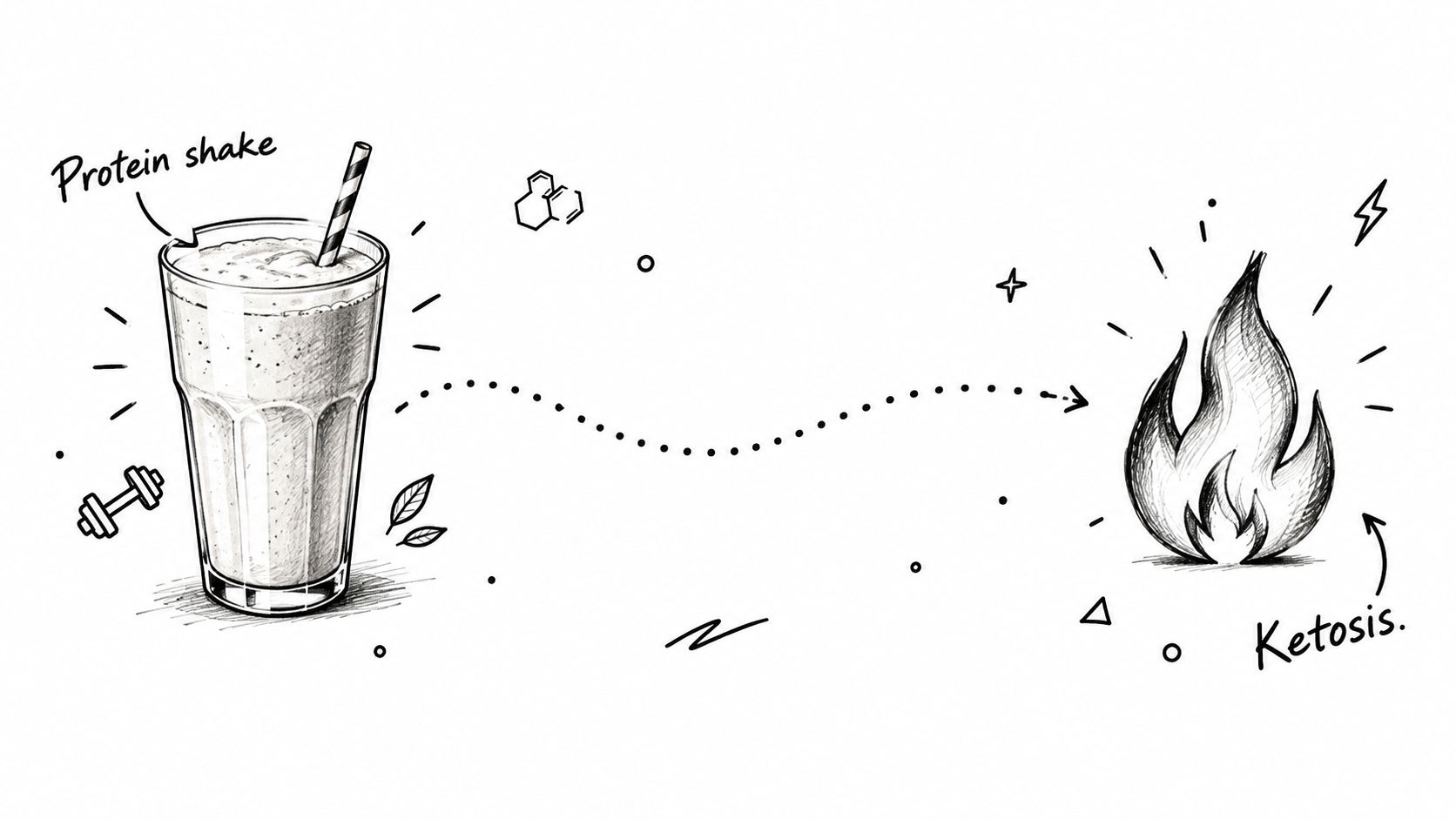
The distinction matters when matching a product to a goal. For a protein top-up, assess protein per serving and the carbohydrate cost. For a mini-meal or meal replacement, consider whether the full drink fits the intended role. A ketone product has a different purpose: providing an exogenous source of BHB.
How BHB Becomes Energy
BHB travels in blood, enters tissues including the brain, and is converted toward acetyl-CoA. Acetyl-CoA enters the TCA cycle and supports mitochondrial ATP production. In nine healthy adults, a study of cerebral ketone uptake during starvation found that 3.5 days of starvation increased net cerebral BHB uptake 13-fold, from 0.012 to 0.155 micromol per gram per minute. Ketone bodies supplied approximately one-quarter of the brain's energy requirements. This demonstrates adaptation during starvation, not an immediate effect from drinking a shake.
During intravenous BHB infusion, a human study indexed on PubMed reported an average blood concentration of 2.16 mmol/L. Cerebral ketone uptake rose from 1.11 to 5.60 micromol per 100 grams of brain tissue per minute, while cerebral glucose metabolism fell from 25.8 to 17.2 micromol per 100 grams per minute. The findings show that the brain can use ketones alongside glucose, with ketones substituting for part of glucose oxidation.
Comparing Ketone Forms by Measured BHB
The form of a ketone product affects its measured BHB response. In a controlled human comparison indexed on PubMed, the ketone ester (R)-3-hydroxybutyl (R)-3-hydroxybutyrate raised blood D-BHB to approximately 2.8 mmol/L, compared with about 1.0 mmol/L for sodium-plus-potassium BHB salts. Both returned to baseline within 3-4 hours.
- Ketone salts: Deliver BHB with minerals such as sodium and potassium, adding an electrolyte load.
- Ketone esters: Can produce a larger acute D-BHB rise without the same mineral load.
- Precursors: MCT oil or 1,3-butanediol act indirectly through metabolism, so they should not be assumed to match measured ester exposure.
Bioidentical D-BHB is the form the body produces. Tecton describes its R3HBG as a tri-ester bonding three D-BHB molecules to a glycerol backbone, excludes R-1,3-butanediol from its formulation, and uses liposomal delivery intended to support absorption. Liposomal evidence is product-specific, and NDI status is a notification framework, not evidence of efficacy.
For context on how carbohydrate restriction relates to ketone availability, see this explainer on low-carb diets and ketones. When choosing a shake, use its label to judge protein and carbohydrate fit. Choose a ketone supplement separately if exogenous BHB is the intended purpose.
Why This Matters
A low-carb shake and a ketone supplement do different jobs. The shake supplies protein while limiting carbohydrate; exogenous ketones provide an alternative fuel source. Choosing between them, or using both, depends on what the day requires.
Steadier Energy and Cognitive Endurance
When ketones contribute to the fuel mix, glucose is spared rather than eliminated. For mentally demanding work, a ketone product may be relevant when an alternative fuel source is the goal. It does not make a protein shake a cognitive aid, and the product's presence on a label is not evidence of a particular effect.
A protein-only day might include a low-carb shake to fill a protein gap after training. On a ketone-plus-protein day, the same shake can serve that role while a separate ketone product supplies exogenous ketones. The distinction is practical: protein supports amino acid intake, while ketones are an additional fuel source.
Workout Performance and Metabolic Efficiency
ATP production from ketone-derived acetyl-CoA describes a mechanism, not proof of better training results. Any effect may be modest and task-specific, so judge a shake by whether it meets the day's protein needs and assess training by session output, not by label promises.
Metabolic efficiency means the body can shift fuel selection as intake changes. A protein-forward, low-carb shake lowers carbohydrate intake while helping maintain amino acid intake, but does not induce ketosis by itself.
Blood BHB rises after exogenous dosing and then returns toward baseline. Treat it as a transient fuel signal, not a permanent metabolic state.
Expect a temporary rise in circulating BHB, continued glucose use, and no automatic change in body composition or disease outcomes. These observations can inform timing around work, training, or a fasting window, but neither a shake nor a ketone supplement is a treatment. Protein and ketones have distinct roles, so evaluate each by the job it is meant to do.
Practical Takeaway for Choosing Your Shake
A 25- to 30-gram shake covers roughly 21% to 33% of a 90- to 120-gram daily protein target. The right choice depends on the gap you need to fill and whether the shake is a protein top-up, a mini-meal, or a meal replacement.
The adult Recommended Dietary Allowance is 0.8 grams of protein per kilogram of body weight per day, or approximately 0.36 grams per pound, according to Harvard Health's overview of high-protein foods. Harvard Health's example puts the basic daily requirement at about 60 grams for a 75-kilogram, 165-pound adult. A 180-pound adult has a corresponding baseline of approximately 65 grams per day. These figures describe a minimum, not necessarily an optimal intake for training, aging, or calorie restriction.
| Role | Job the shake must do | Criteria beyond protein | Red flag |
|---|---|---|---|
| Protein supplement | Fills a 20-30 g protein gap | Low carbs, leucine, low added sugar | Milk or fruit added until it becomes a high-calorie drink |
| Appetite-supporting mini-meal | Bridges a gap between meals | Fiber, some fat, enough volume | Hunger returns within one to two hours |
| Full meal replacement | Replaces a complete meal | Micronutrients, fiber, fat, complete protein | Protein-only powder with few other nutrients |
Matching the Shake to Its Job
- Protein top-up: Choose whey isolate or a ready-to-drink shake with 2-5 g total carbohydrate and at least 25 g protein. Check the full label, since additions can change the carb total.
- Mini-meal: Add fiber, some fat, and enough volume to make the shake more substantial. Hunger may return sooner than after a whole-food meal.
- Meal replacement: Look for roughly 300-450 kcal with micronutrient coverage, or build a similar profile with whole-food additions. Protein alone does not make a meal complete.
- Training or focus day with ketone fuel: Pair the protein shake with a separate ketone product if you want exogenous BHB. Ketone fuel supplies a different function and does not replace protein.
For endurance or physically demanding days without caffeine, the Tecton EDGE™ Performance Shot + Electrolytes provides liposomal R3HBG™ ketone and electrolytes, including sodium, potassium, and magnesium. A caffeine-containing version is another option when alertness matters before a session. Either way, a ketone shot is separate from the shake's protein contribution.
Verification and Safety Boundaries
Use the same checks whenever you choose or change a product: read the full label, compare total carbohydrate and protein density, and account for any recipe additions. If you are trying a new product, start with half a serving for three days before increasing it.
A 28-day human tolerability study indexed on PubMed included 24 healthy adults aged 18-70 who received 25 mL of a ketone monoester containing 26.8 grams per serving three times daily. Blood BHB rose from approximately 0.1 to 4.1 +/- 1.1 mmol/L after dosing, while kidney-function, electrolyte, and metabolic measures remained normal during the study. This supports short-term tolerability in healthy adults, not disease outcomes or the use of a ketone drink as a balanced meal.
If you have a condition or take medication affecting glucose, blood pressure, kidney function, or electrolytes, seek individualized clinical guidance before using concentrated ketone products. For other readers, the choice comes down to the job: identify the protein gap, check the label, confirm leucine when muscle is the goal, and treat ketone fuel as a separate tool.
Choose a shake by its label and intended role. Add ketone fuel only when you want exogenous BHB as a separate option for training, focus, or fasting windows. Tecton Ketones™ offers bioidentical R3HBG ketone shots in liposomal, single-serve formats for performance, cognition, and metabolic support without requiring a strict ketogenic diet. Its shots supply ketone fuel, not the protein or meal nutrients a shake is meant to provide.


