


The usual advice about appetite suppressant supplements starts with the wrong question: which product makes you feel least hungry? A more useful question is whether a particular ingredient improves the outcome you need, without compromising nutrition, tolerability, or daily performance. A stronger sensation isn't necessarily a better result.
Fiber, stimulants, prescription appetite-regulating medicines, and exogenous ketones belong in different evidence categories. Comparing them as interchangeable hunger-control products can obscure the distinction between feeling fuller, consuming less, changing body weight, and supplying an alternative fuel.
Why Appetite Suppression Is Not One Outcome
The most dramatic reduction in hunger isn't automatically the safest or most useful response. Someone who feels comfortably satisfied after meals has a different experience from someone who skips needed food because eating no longer feels appealing.
That distinction matters because appetite is a subjective experience, not a complete health outcome. The NIH consumer overview of weight-loss supplements describes limited scientific evidence for these products and notes that many ingredients lack adequate human research on effectiveness and safety.
Separate the feeling from the result
An appetite-support product should be assessed against a specific endpoint:
- Appetite awareness: Can you identify hunger patterns and respond with appropriate meals?
- Fullness and satiety: Do meals feel satisfying, and does that satisfaction persist between meals?
- Food intake: Does your eating pattern become more consistent without becoming nutritionally inadequate?
- Body composition: If weight changes, what happens to waist measurements, strength, and lean mass?
- Maintenance: Can you sustain the routine without escalating doses or repeatedly overriding hunger?
These questions aren't interchangeable. A change in appetite ratings doesn't establish fat loss, and a change on the scale doesn't reveal whether muscle has been preserved.
Practical rule: Judge an appetite product by what it helps you do consistently, not by how completely it removes hunger.
Prescription GLP-1 approaches concern pharmacological appetite regulation. Fiber strategies concern meal-related satiety. Stimulant-containing products require assessment of stimulant exposure. Exogenous ketones concern fuel availability, with appetite effects requiring separate evidence.
For someone whose main difficulty is irregular eating, a structured approach to managing hunger patterns may be a more appropriate starting point than searching for stronger suppression.
The editorial standard is straightforward: define the problem, identify a plausible ingredient rationale, and require evidence that matches the intended outcome. Adequate food intake and training fuel remain constraints, not optional extras.
How to Evaluate Appetite Support
A useful label tells you what you're taking. A useful study tells you what that formulation did, at a defined dose, in a particular population over a specified period. Neither a long ingredient list nor an impressive mechanism substitutes for that connection.
The NIH professional assessment of weight-loss supplements describes evidence that is often limited or inconsistent, with studies commonly involving small groups and short durations. It also distinguishes supplements from approved prescription weight-management medicines, which undergo structured clinical evaluation before approval.
This evaluation map can help organize the questions to ask.
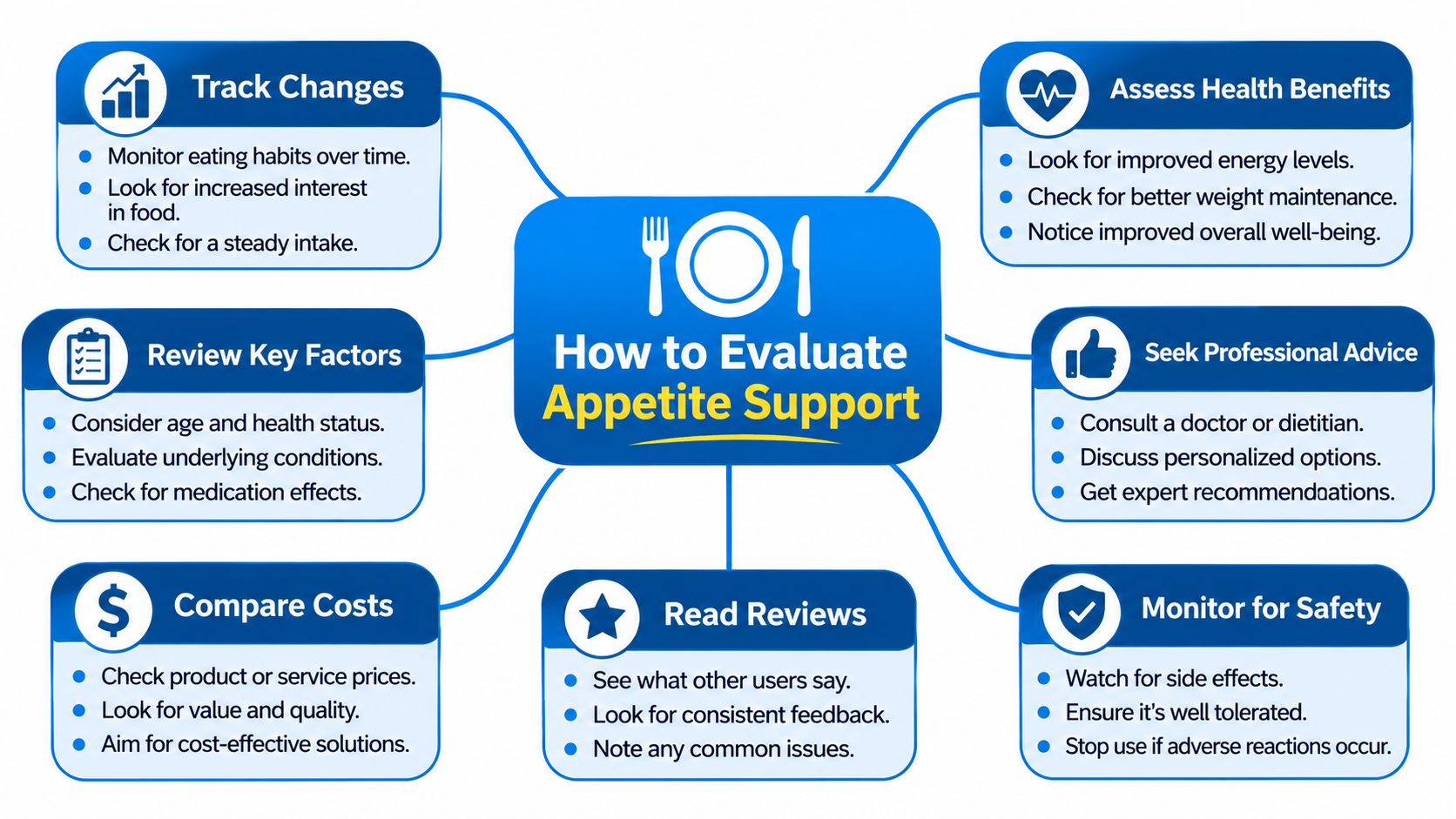
Match the measurement to the claim
Hunger describes the desire to eat. Prospective food consumption asks how much someone thinks they could eat, while fullness and satiety describe related but distinct aspects of satisfaction.
Glucose handling, gastric volume, stimulant activity, and ketone availability are physiological variables, not synonyms for those experiences. Likewise, metabolic flexibility, the capacity to use different fuels as conditions change, isn't established merely because someone reports fewer cravings.
Use these criteria when evaluating a product:
- Human evidence quality: Look for an appropriate control group, relevant participants, and clearly defined endpoints.
- Ingredient transparency: Require identifiable ingredients and disclosed amounts rather than an unexplained proprietary blend.
- Outcome fit: Check whether researchers measured appetite, intake, weight, or fuel metabolism.
- Tolerability: Consider whether digestive discomfort or other symptoms undermine the intended benefit.
- Interaction risk: Have a pharmacist or clinician review the complete formula alongside medications.
- Routine fit: Ask whether preparation, timing, and cost make consistent use realistic.
For broader label-reading preparation, Lila's guide on how to choose supplements offers an additional consumer resource. Product selection should still rest on ingredient-specific clinical evidence.
Lower hunger deserves scrutiny if it accompanies fatigue, inadequate protein intake, or declining training quality. Those observations don't prove a supplement caused the problem, but they justify reassessing the routine rather than celebrating suppression alone.
Comparing Major Appetite Approaches
Prescription treatment, meal-related fullness, stimulant exposure, and supplemental fuel each answer a different biological question, so no single approach wins across every context. Each one needs its own evaluation standard.
Appetite-support approaches at a glance
| Approach | Primary mechanism | Appetite evidence | Safety focus | Best-fit context | Key limitation |
|---|---|---|---|---|---|
| Prescription GLP-1 modulators | Incretin-based pharmacology | Requires medicine-specific clinical assessment | Prescriber review, tolerability, interactions | Clinician-directed weight-management care | Not interchangeable with supplements carrying GLP-1 language |
| Soluble fiber or volume agents | Gel formation, water retention, and meal-related bulk, depending on formulation | Direct human evidence exists for selected fiber formulations | Fluid intake, swallowing, gastrointestinal tolerance, medication timing | A defined goal of improving meal-related satiety | Results don't transfer automatically between fibers |
| Stimulant-containing supplements | Stimulant activity, depending on ingredients | Must be assessed ingredient by ingredient | Total caffeine exposure and cardiovascular history | Evaluation of a specific stimulant-containing routine | An immediate sensation doesn't establish durable appetite control |
| Exogenous ketones | Increased availability of supplemental ketone fuel | Fuel-metabolism evidence isn't proof of appetite suppression | Exact formulation, accompanying ingredients, individual tolerance | Considering an alternative nutritional fuel | Long-term appetite and weight outcomes remain separate questions |
Direct appetite evidence has a different value
A randomized trial of a glucomannan, inulin, and psyllium combination measured both appetite and body weight over 180 days. Mean weight reduction was 7.3% versus 2.4% with placebo, an adjusted difference of −4.9 percentage points.
The same trial reported a composite appetite-suppression score of 25.6 versus 8.4, a 17.2-point between-group difference. Those results belong to that specific combination under those specific conditions. A product containing only one of the ingredients, at a different dose or schedule, sits outside what the trial tested.
The pairing of subjective and objective outcomes is what gives the study analytical weight. Researchers measured hunger directly and verified it against weight change instead of inferring one from the other.
Mechanistic similarity doesn't establish equivalence
A supplement marketed around GLP-1 concepts works through different pharmacology than a prescription GLP-1 medicine, regardless of what the label implies. An increase in circulating ketones shows fuel availability changed. It says nothing by itself about pharmacological appetite control.
Stimulants require the same discipline. The evidence question stays tied to the specific ingredient and amount, and a product combining caffeine, botanicals, and fiber cannot borrow the strongest finding from each component while leaving the finished blend untested.
The defensible comparison asks which approach has evidence for your endpoint. Category labels and marketing language answer a different, easier question. Applying that standard also stops an acute fuel-metabolism experiment from being presented as a long-term weight-management trial.
Fiber and Volume Agents
The strongest human evidence in this category sits behind the least marketable ingredient class. Ordinary fiber carries more randomized-trial support for satiety than most products sold under the appetite-suppressant label, yet the umbrella term conceals real variation. Gel-forming capacity, fermentability, dose, water intake, and timing each change what a fiber product does once swallowed.
Soluble viscous fibers absorb water and form a gel-like matrix in the stomach, slowing gastric emptying and creating a plausible physical basis for fullness. A plausible mechanism supplies a hypothesis. Whether a given preparation measurably improves appetite or weight remains an empirical question each formulation has to answer on its own.
Treat the comparison below as a conceptual map rather than a validated numerical ranking of evidence.
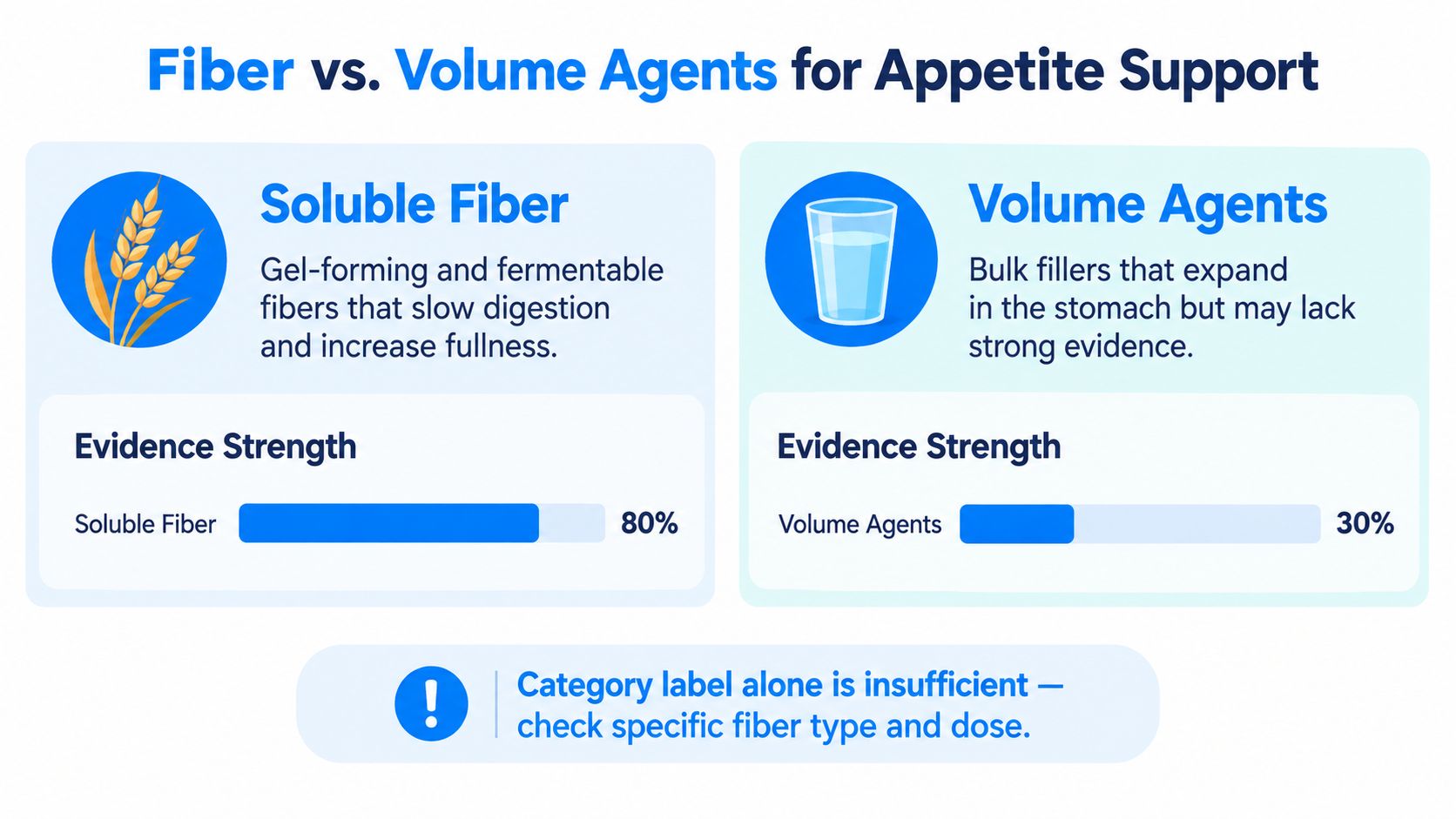
Psyllium and glucomannan aren't interchangeable
The NIH ingredient-level review of psyllium and glucomannan describes a meta-analysis of six randomized studies in which psyllium, taken before meals at a mean 10.8 g/day for approximately 4.8 months, produced 2.1 kg greater weight loss, a 0.8 kg/m² larger BMI reduction, and 2.2 cm more waist-circumference loss than control.
The same NIH review summarizes an eight-trial meta-analysis involving 301 participants that found no significant weight-loss advantage for glucomannan versus placebo, while an older analysis it cites reported a small 0.79 kg advantage over approximately five weeks. Read together, the two bodies of evidence do not contradict each other. They show that fiber type is the variable doing the work, and "fiber-based appetite suppressant" describes a marketing category rather than an evidence category.
Implementation requires more than buying powder
A fiber strategy succeeds or fails on execution details that labels rarely spell out:
- Preparation and fluid intake: Follow the product's mixing directions rather than improvising a dry dose, since the studied viscosity depends on adequate water.
- Meal timing: Compare the intended routine with the conditions used in relevant research, typically pre-meal dosing for the fibers with weight outcomes.
- Swallowing and gastrointestinal tolerance: Seek professional advice where these are already concerns.
- Medication spacing: Ask a pharmacist whether fiber should be separated from your medicines.
The NIH review flags esophageal-obstruction reports tied to glucomannan tablets specifically. Additional bulk does not guarantee additional benefit, and in the wrong format it adds risk.
For consumer-level guidance, Pumpernickel Health Foods psyllium advice covers practical use, while this overview of partially hydrolyzed guar gum shows how a different fiber chemistry behaves differently in the gut. Neither source makes one formulation's results transferable to another.
Judge fiber as a structured satiety tool with ingredient-specific evidence, not as a drug-strength appetite off-switch.
GLP-1 Modulators and Ketone Support
GLP-1 pharmacology and exogenous ketone nutrition should not share an evidence label. Prescription GLP-1 medicines act through incretin-related pathways; ketone products supply or generate a fuel substrate.
This diagram separates the categories conceptually. Its absorption, potency, and appetite language shouldn't be interpreted as a clinical ranking of formulations.
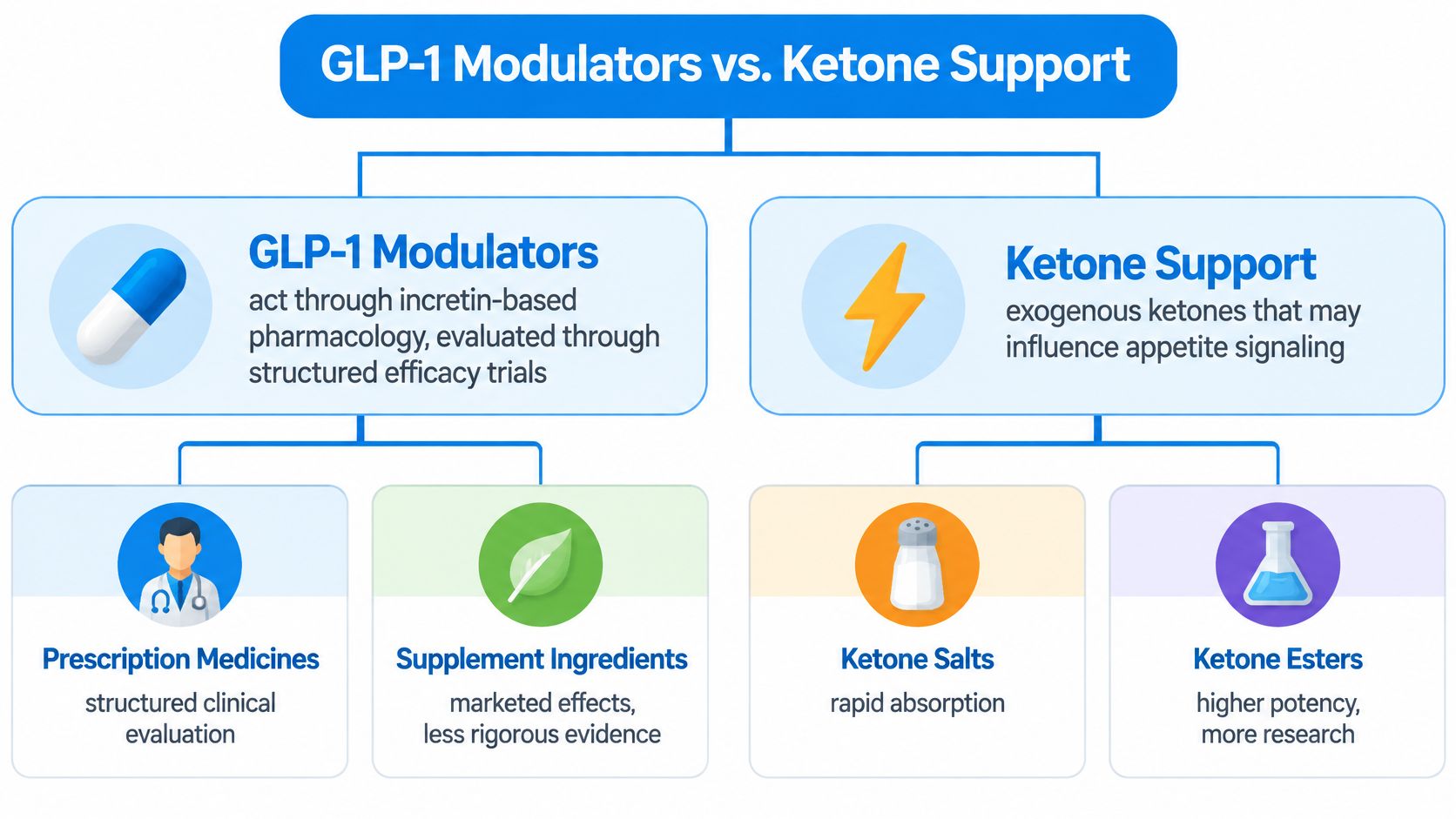
What a ketone measurement actually establishes
Endogenous ketone production means the body makes ketones. Nutritional ketosis describes a dietary context in which endogenous ketone availability rises, while exogenous supplementation introduces ketone nutrition without requiring that same dietary pattern.
BHB is a usable energy substrate. In simplified biochemical terms, its metabolism can supply intermediates for mitochondrial ATP production, the process cells use to generate usable energy; glucose reaches those energy-producing pathways through a different route.
Human evidence supports a fuel shift, not every proposed downstream benefit. In a randomized brain-imaging study involving ten participants, a single ketone-ester dose of 395 mg/kg increased circulating BHB, lowered blood glucose, and reduced brain glucose metabolism by 17%.
That acute experiment doesn't establish long-term appetite suppression, body-fat reduction, or improved cognition. A separate ketone-monoester trial protocol illustrates the distinction between measuring brain BHB and testing clinical outcomes: a protocol describes planned methods, not successful results.
Endothelial function and cellular signaling are also distinct research endpoints. A rise in blood ketones alone cannot substantiate claims about blood-vessel function or beneficial signaling effects.
Formulation isn't an outcome
Ketone salts associate BHB with minerals; esters use a chemically bonded structure, while precursors require conversion. Bioidentical D-BHB describes molecular identity, not proof that a finished product produces superior appetite control.
Tecton's GLP-1 Shot combines liposomal R3HBG™, 5-HTP, and prebiotic fiber for routines involving appetite patterns, fasting windows, or uneven energy. That positioning doesn't make it a pharmaceutical GLP-1 medicine, and liposomal delivery alone doesn't establish superior clinical outcomes.
For additional context, consider the distinction between exogenous ketones and weight-loss claims.
The accompanying video provides further product context.
Why This Matters
- Steadier energy: Evaluate the actual experience rather than assuming higher BHB guarantees it.
- Cognitive endurance: Brain fuel availability and sustained task performance require different measurements.
- Workout performance: Supplemental fuel isn't a substitute for adequate training nutrition.
- Metabolic efficiency: A change in fuel selection doesn't prove improved efficiency or greater fat loss.
Stimulants and Fat-Burning Blends
A noticeable immediate effect can make a product feel convincing before it has demonstrated anything useful about sustainable eating. Alertness, a racing pulse, and reduced interest in food aren't equivalent outcomes.
Coffee imagery can also make a concentrated stimulant blend seem more familiar than its full ingredient list warrants.
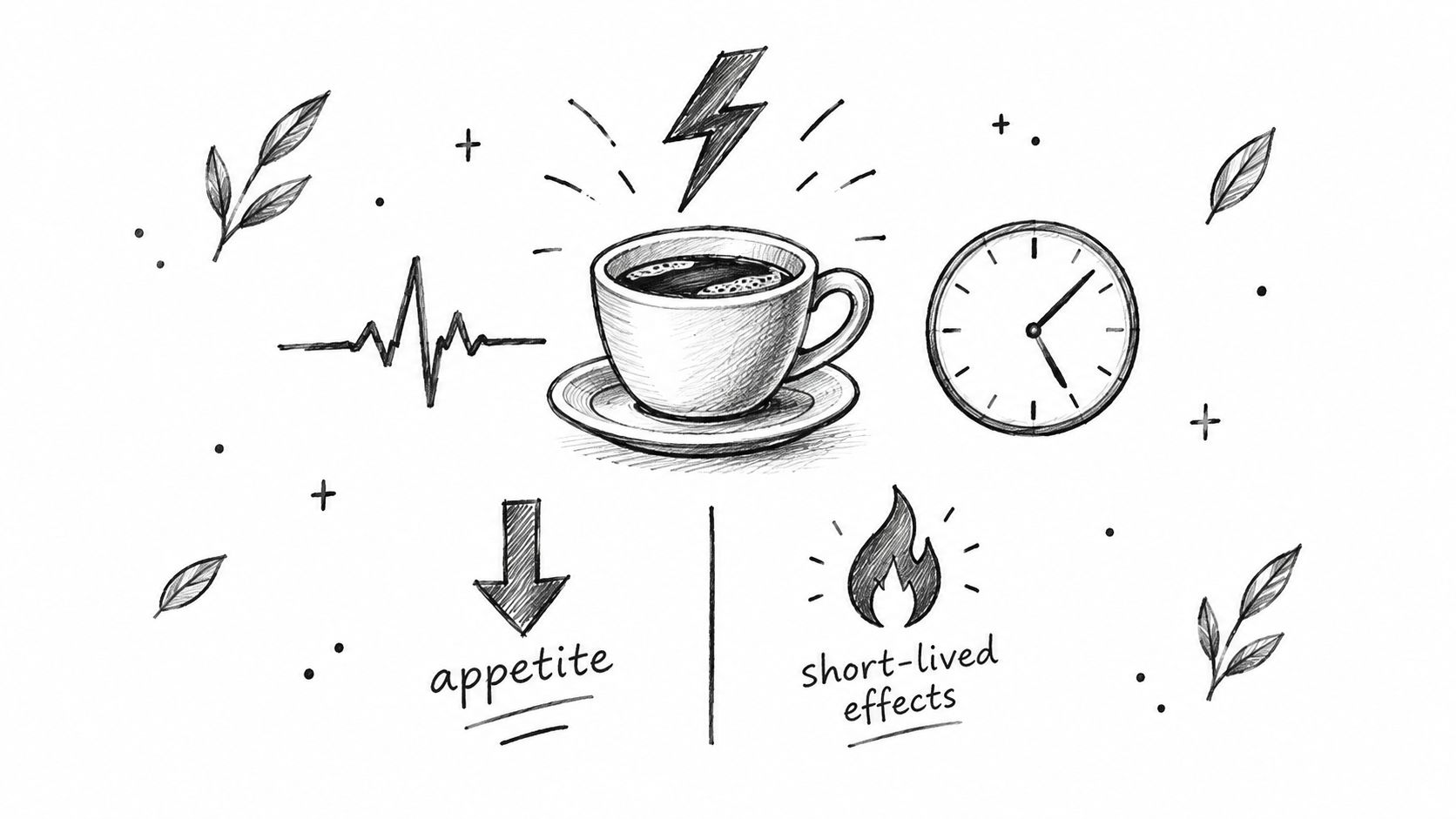
Evaluate exposure before the promise
The National Center for Complementary and Integrative Health's weight-loss supplement guidance states that many products haven't been adequately tested for safety. Caffeine and caffeine-containing botanicals such as guarana can increase heart rate and may contribute to abnormal rhythms.
A review should therefore include total caffeine intake from beverages, pre-workout products, and supplements. Cardiovascular history, medication use, caffeine sensitivity, and any sleep disturbance are reasons to seek individualized guidance rather than increase the dose.
The strongest immediate effect may simply be stimulant exposure, not evidence of an effective appetite-control strategy.
A proprietary blend that conceals amounts makes this assessment harder. “Natural” describes neither a reliable dose nor a demonstrated safety margin.
The adulteration record changes the quality standard
A JAMA Network Open analysis of FDA warning data identified 776 adulterated supplements from 2007 through 2016, including 317 marketed for weight loss. Among those weight-loss products, 269 contained sibutramine, a prescription appetite suppressant withdrawn from the U.S. market in 2010.
These were products identified through warning data, not a representative sample of every supplement sold. The findings therefore don't establish the prevalence of adulteration across the entire market, but they do document a serious ingredient-transparency problem.
Consumers should give more weight to:
- Complete disclosure: Active ingredients and amounts should be identifiable.
- Independent testing: Check what was tested, by whom, and whether the testing applies to the product you're buying.
- Conservative claims: Avoid treating dramatic weight-loss promises as evidence of potency or quality.
Independent testing cannot prove appetite efficacy. It addresses a different question: whether you have a credible basis for trusting what's in the container.
Which Approach Fits Your Routine
Choose the problem before choosing the format. Someone seeking more satisfying meals needs a different decision process from someone experiencing persistent fatigue or asking whether prescription treatment is appropriate.
A tolerated fiber strategy is a reasonable category to investigate when the priority is measurable meal-related fullness. Persistent hunger accompanied by exhaustion, unexplained changes in weight, or difficulty meeting nutritional needs deserves a clinician's assessment rather than progressively stronger supplements.
Match use to context
For someone interested in supplemental fuel without a strict ketogenic diet, exogenous ketones can be considered as nutrition, with expectations limited to what the formulation and evidence support. They shouldn't be used to make an under-fueled routine feel acceptable.
The Tecton EDGE™ Performance Shot + Caffeine combines liposomal R3HBG™ with naturally sourced caffeine and is positioned for demanding physical efforts or pre-training routines. Its caffeine content still belongs in the same exposure assessment as other sources; the presence of ketones doesn't remove stimulant-related considerations.
For the appetite-pattern formula discussed earlier, the relevant question is whether it fits a structured eating routine. Product positioning around fasting or between-meal energy isn't evidence that extending a fast is beneficial for a particular person.
- Seek guidance before use: Pregnancy, prescription appetite-regulating medication, cardiovascular history, or an eating-disorder history calls for individualized review.
- Review formulation-specific concerns: Gastrointestinal problems, swallowing difficulty, and caffeine sensitivity can change which options are appropriate.
- Protect food and fluid intake: Athletes, older adults, and people reducing calories should plan adequate protein, hydration, and meals; electrolyte needs should reflect the individual situation.
Decision checkpoint: If a routine only works when you ignore fatigue, dizziness, or inadequate eating, reconsider the routine rather than intensifying appetite suppression.
Application Framework for Better Decisions
A useful trial begins with a clear question and a stopping rule. Without those, it's easy to interpret any noticeable sensation as success.
Define and document the decision
- Choose the priority. Write down whether you're trying to improve post-meal fullness, organize calorie intake, manage a fasting routine, explore supplemental fuel, or discuss prescription care.
- Verify the formula. Check exact ingredients, doses, warnings, and independent testing. A label cannot by itself verify the absence of undeclared substances.
- Establish a baseline. Record hunger patterns, meal timing, approximate intake, protein adequacy, energy, and training quality. Include body weight and waist circumference only when relevant and appropriate.
- Change deliberately. Avoid starting several appetite-support products together. Otherwise, you won't know which ingredient or routine is associated with the response.
Reassess the whole outcome
Review the pattern over several weeks rather than reacting to a single low-hunger day. Ask whether meals became easier to organize, whether nutrition remained adequate, and whether the perceived benefit justified inconvenience or adverse effects.
Stop and seek advice if reduced appetite accompanies inadequate intake, persistent fatigue, dizziness, poor training performance, or other concerning symptoms. Don't interpret feeling unwell as evidence that a product is working.
The practical conclusion is category-specific: selected fiber formulations have the most direct satiety evidence among the supplement approaches discussed; stimulant blends warrant substantial caution; prescription GLP-1 therapy belongs in clinical care; and exogenous ketones have a fuel-availability rationale that should not be promoted as proven appetite suppression or weight-loss treatment.
The most scientifically useful authority is the one that preserves those boundaries. Good product evaluation requires clarity about both what a formulation can reasonably support and what hasn't been established.
Tecton offers exogenous ketone shots formulated for different routines, including appetite-pattern support and performance nutrition. Visit Tecton Ketones™ to review the formulations and ingredient information, then discuss any medication, appetite, or fueling concerns with a qualified clinician before choosing a product.


