


What if the limiting factor in your nutrition plan is not intake, but transport?
An athlete can hit protein, micronutrients, and supplement timing with precision and still see flat energy, slower recovery, or inconsistent mental output. The reason is simple. The body only benefits from compounds that survive digestion, cross the intestinal barrier, enter circulation, and reach the tissues that can use them.
That is the performance question. How much of what you consume becomes available substrate?
Absorption determines whether a meal supports glycogen restoration, whether an amino acid dose reaches muscle in time to matter, and whether a supplement changes physiology or just passes through. Gut function, digestive capacity, chemical form, meal composition, and intestinal integrity all shape that outcome. Athletes dealing with bloating, irritation, or inconsistent digestion often need to address gut health before they add more inputs, which is why a focused plan for repairing gut function and improving nutrient uptake can matter as much as food selection.
This also changes how advanced fueling should be evaluated. Exogenous ketones are a useful example. The next frontier is not only which ingredient is present, but how the molecule is built and delivered. Bioidentical structures, carrier systems such as liposomal formats, and formulation choices that improve stability and uptake can change how quickly a compound appears in blood and how reliably it affects energy, cognition, and training output.
For anyone using nutrition as a performance tool, the target is practical. Choose compounds the body can absorb efficiently, deliver them in forms that fit human physiology, and match timing to the metabolic job you want done.
You Are What You Absorb Not Just What You Eat
Why do two athletes eat similarly, use the same supplements, and still get very different results?
Intake is only the first step. Performance depends on how much of that intake becomes usable substrate in blood and tissue. That is the practical meaning of bioavailability. A solid nutrition plan improves food quality and the conditions that let the gut process, transport, and deliver those compounds where they can do work.
Absorption also varies more than many athletes assume. The same meal can produce different outcomes based on nutrient form, meal composition, age, digestive capacity, and the condition of the intestinal lining. On paper, the diet looks strong. In practice, energy, recovery, focus, and training consistency may still come up short.
Why good intake can still produce poor results
Three athletes can all eat well and still get different physiological returns.
- Chemical form changes uptake: The body absorbs some forms more efficiently because transporters and digestive enzymes recognize them more readily.
- Meal context changes availability: Fat can improve uptake of fat-soluble compounds, while fiber, phytates, or competing minerals can reduce absorption of specific nutrients.
- Gut condition changes the result: Irritation, low digestive output, and compromised barrier function can reduce how much reaches circulation. For athletes working on that layer first, this guide to repairing gut function and improving nutrient uptake is a useful companion, and this practical guide for lasting gut relief offers additional at-home strategies.
I use a simple rule in practice. Do not judge a nutrition strategy by intake alone. Judge it by response. Stable energy, predictable digestion, better session quality, and faster recovery tell you more than a perfect food log.
A Better Performance Question
A better question is not "Did I eat enough?" It is "Did I absorb enough to support output, repair, and stable brain energy?"
That shift matters even more with advanced fueling compounds such as exogenous ketones. At that point, formulation is not a marketing detail. It affects kinetics, tolerance, and metabolic impact. Bioidentical structures, liposomal delivery systems, and other design choices can change how reliably a compound survives digestion, crosses the intestinal barrier, appears in circulation, and contributes to usable energy.
That is the next frontier in nutrient absorption. Food choice still matters. So does formulation science. For athletes and bio-optimizers, the win comes from matching the molecule, the delivery system, and the physiology.
The Digestive Journey and Sites of Absorption
Where does performance nutrition become usable fuel?
Digestion decides that. A meal, capsule, or ketone shot has to survive breakdown, reach the right intestinal region, and arrive in a form the body can move into circulation.
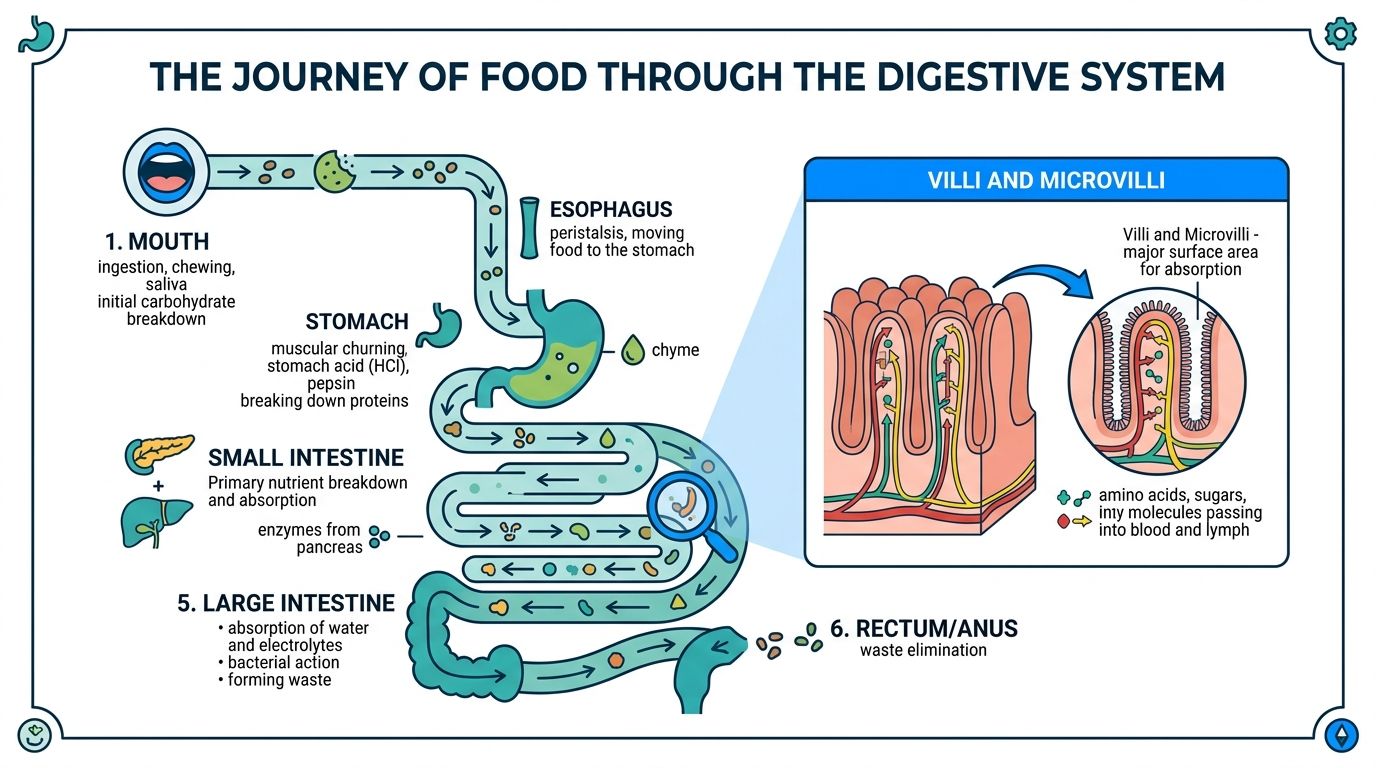
From breakdown to delivery
The process starts in the mouth with chewing and early enzymatic exposure. The stomach follows by acidifying and mixing the meal, which helps denature proteins and prepares nutrients for pancreatic enzymes, bile, and intestinal absorption downstream. If gastric output is low, the rest of the system often has to work with poorly prepared material.
Most absorption takes place in the small intestine. Its lining has a large absorptive surface, and different segments handle different jobs. That regional specialization matters in practice, because a problem upstream can reduce delivery to the exact site where a nutrient is best absorbed.
A useful map looks like this:
| Site | Main absorption role |
|---|---|
| Duodenum | Major early site for iron, calcium, magnesium, phosphorus, and fat-soluble nutrient handling |
| Jejunum | High-capacity uptake of amino acids, peptides, carbohydrates, water-soluble vitamins, and many minerals |
| Ileum | Continued nutrient uptake, with specific importance for bile acid recycling and vitamin B12 absorption |
| Lacteals | Lymphatic transport of absorbed fats and other lipid-compatible compounds |
Why location changes outcome
The duodenum does a disproportionate amount of early sorting. Minerals that matter for oxygen delivery, contraction, and nerve signaling begin competing for uptake here. Fat-soluble compounds depend on digestion, emulsification, and packaging before they can leave the gut efficiently.
Protein follows a different pattern. Stomach acid and proteases start the work, pancreatic enzymes continue it, and the small intestine absorbs the resulting amino acids and peptides primarily through the jejunum, with continued uptake into the ileum.
Fats add another layer. After bile and pancreatic lipase do their work, many lipid-based compounds enter intestinal cells and then move through lymph before reaching wider circulation. That route is one reason formulation science matters. If a compound is designed to behave more like a lipid-compatible payload, delivery can look very different from a standard powder or capsule. The same principle helps explain why advanced ketone products and even compounds targeting the brain are increasingly discussed in terms of transport and barriers, not just dose. This matters once you understand how the blood-brain barrier regulates fuel access to the brain.
What disrupts the route
In athletes, I usually see the same friction points repeat. Low stomach acid. Poor bile flow. Fast eating under stress. Very large mixed meals around training. Medications that change gastric acidity or motility. None of those issues guarantee malabsorption, but each can shift the odds in the wrong direction.
Symptoms give clues, even if they do not give a diagnosis. Bloating after protein-heavy meals, greasy stools, fatigue after eating, and inconsistent tolerance to nutrient-dense foods often suggest that breakdown and delivery need attention before more supplementation does.
Useful starting points include:
- Reduce meal complexity for a short block: Fewer ingredients makes tolerance patterns easier to spot.
- Match food texture to digestive capacity: Cook fibrous plants more thoroughly if raw versions create symptoms.
- Improve eating mechanics: Chew fully, slow the meal down, and avoid stacking large meals onto high sympathetic stress.
- Work on fundamentals before adding products: A more detailed practical guide for lasting gut relief can help troubleshoot basics at home.
For athletes using portable fuel, formulation becomes part of absorption strategy. Tecton EDGE™ Performance Shot + Electrolytes is a practical example. It combines liposomal R3HBG™ ketone with sodium, potassium, and magnesium, which is relevant because tolerance, uptake route, and metabolic effect depend on more than the ingredient label alone.
How Nutrients Cross Into Your System
Absorption is a membrane problem before it becomes a performance benefit.
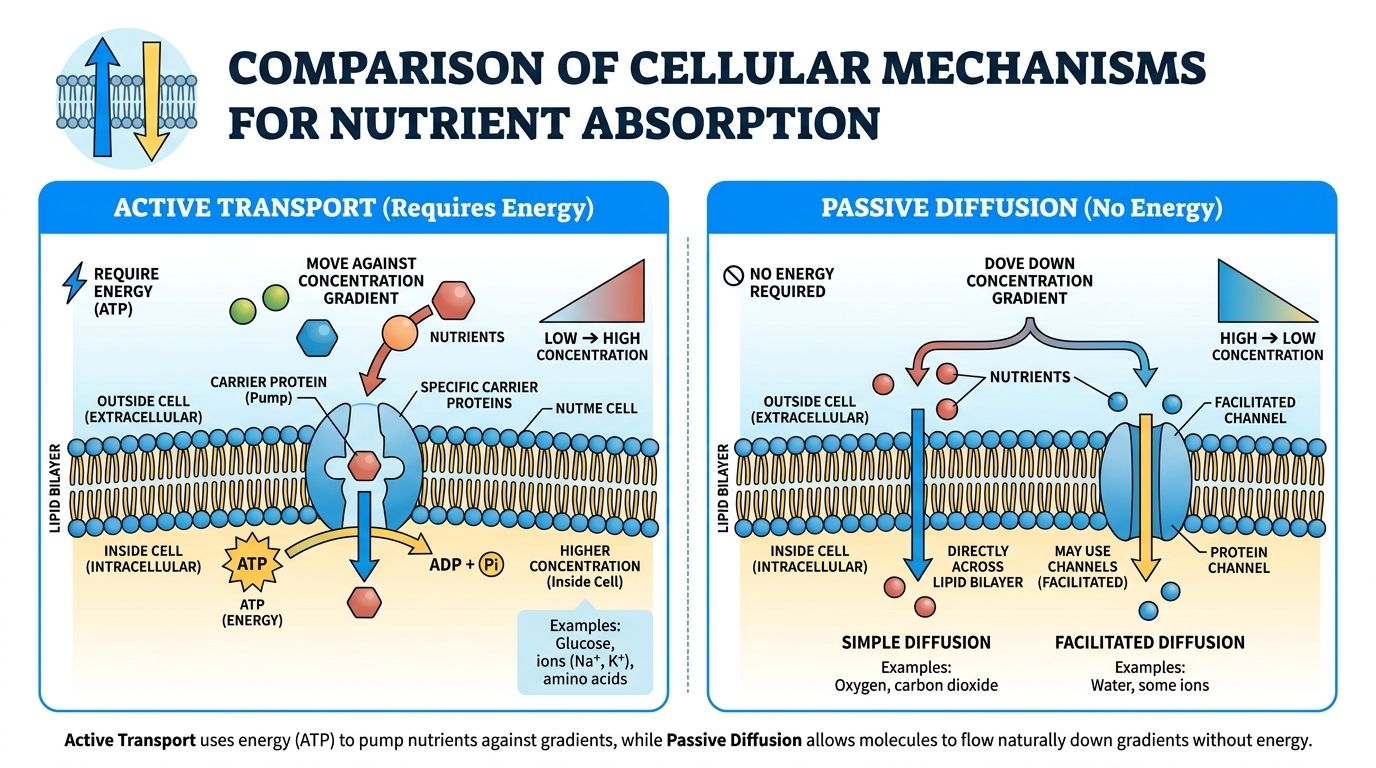
Two routes with very different rules
After digestion breaks food into smaller components, those compounds still have to cross the intestinal lining. They do that mainly by moving either between cells or through them.
The paracellular route moves substances through the tight spaces between adjacent intestinal cells. It is relatively passive, driven by concentration and charge gradients, and it allows limited movement of smaller water-soluble compounds. Useful, but not highly selective.
The transcellular route sends nutrients through the intestinal cell itself. That process depends on membrane transporters, channels, and carrier proteins. In many cases it also depends on energy use and on the body recognizing the molecule's shape, charge, and chemical context. Most amino acids, peptides, sugars, and many other high-value nutrients rely heavily on this route.
That selectivity is the point. The gut is not designed to wave everything through. It is designed to control what enters circulation, at what rate, and in what form.
Why molecular structure matters
A nutrient can look good on a label and still perform poorly at the membrane.
Transport proteins bind specific molecular forms. Peptide transport differs from free amino acid transport. Mineral salts differ in solubility and dissociation behavior. Lipid-based compounds behave differently again, because they may need emulsification, micelle formation, membrane partitioning, or packaging into lipoprotein particles before they move efficiently.
For athletes and bio-optimizers, formulation science starts to matter more than ingredient lists. If the molecule matches the transport system and survives the digestive environment, uptake is smoother and more predictable. If the form is unstable, poorly recognized, or irritating to the gut, absorption slows, tolerance worsens, and the metabolic effect becomes less reliable.
That same logic explains why advanced delivery systems are getting more attention. Liposomal delivery can change how a compound interfaces with the intestinal surface and how well it is protected on the way in. Bioidentical structures matter for a similar reason. The closer a molecule is to a form human transport and metabolic systems already handle well, the fewer barriers it has to overcome.
Three practical consequences follow:
- Passive movement favors simplicity. Small compounds moving down a gradient can enter without much assistance.
- Active uptake favors recognition. Carrier-mediated transport works best when the molecule fits the transporter the body already uses.
- Formulation changes outcome. Delivery format can alter tolerance, speed of uptake, and downstream metabolic impact.
This matters even more for compounds intended to support brain function. A substrate has to clear digestion and intestinal uptake first, then circulate in a usable form, then in some cases cross a second selective barrier. For that second step, this overview of how the blood-brain barrier works adds useful context.
Ketone products are a good example of why this section matters. Exogenous ketones are not just “energy ingredients.” Their real-world effect depends on chemical form, stereochemistry, mineral load, osmotic burden, and delivery system. A well-designed ketone formula can raise circulating ketones with less GI friction and a cleaner metabolic signal. A poorly designed one can create the opposite trade-off.
For mentally demanding work or training blocks, Locked Cognition™ Shot uses liposomal R3HBG™ alongside Alpha GPC and Lion's Mane. The relevant point is not branding. It is that delivery format and molecular design influence whether a brain-directed substrate gets absorbed and reaches tissue in a form the body can use.
Key Factors That Enhance or Inhibit Absorption
Why do two people eat the same nutrients and get different results? Absorption is shaped by meal composition, gut condition, medication use, feeding pattern, and the form in which a compound is delivered.
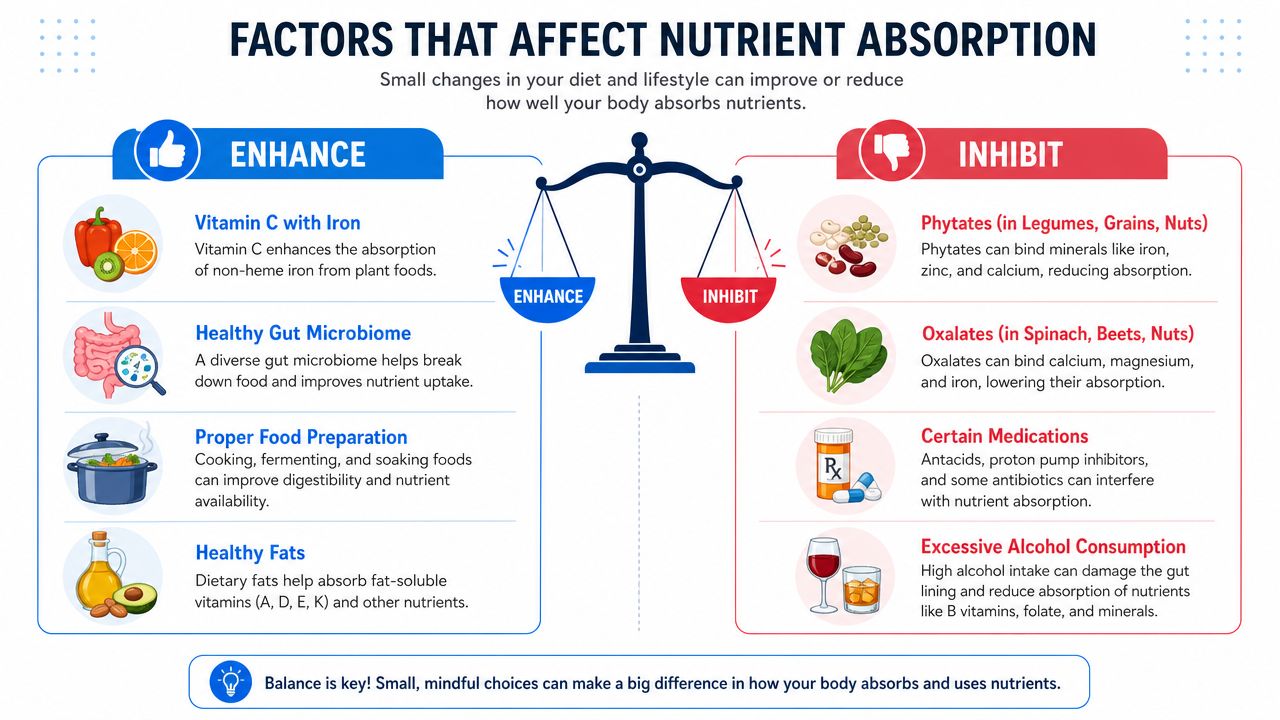
What improves uptake
The first layer is chemistry. Fat-soluble vitamins need dietary fat for micelle formation and transport, so vegetables that provide vitamins A, D, E, or K are better used when a meal includes olive oil, eggs, avocado, or another fat source. Iron follows a different rule. Vitamin C helps keep non-heme iron in a more absorbable state and can improve uptake when iron-rich foods are paired with citrus, berries, or peppers.
The PMC review on nutrient bioavailability across life stages also points to age, gut microbiota composition, and genetics as real sources of variation. In practice, that is why fixed advice often underperforms. The better question is how a specific person responds to timing, food matrix, and nutrient form.
Protein quality shows the same pattern. Digestibility, amino acid profile, and processing all influence how much substrate reaches circulation. This protein bioavailability chart and digestibility comparison is a useful reference if you want a practical example of how form changes usable intake.
A short video can help make those variables easier to visualize:
What gets in the way
The biggest inhibitors are usually binding, competition, and impaired digestive handling.
Phytates in grains and legumes can bind minerals such as zinc, iron, and calcium. High-fiber or highly compressed meal patterns can also reduce contact time or change the digestive environment enough to lower uptake for some compounds. Medications matter too. Some fat-loss drugs can suppress absorption of fat-soluble vitamins A, D, E, and K by nearly 100% in treated individuals, according to the PMC review on anti-nutrients and medication-related malabsorption.
This is one reason broad advice like “take a multivitamin” often falls short. If digestive capacity is reduced, if a drug is interfering, or if the compound is delivered in a poorly tolerated form, the label dose and the absorbed dose are not the same thing.
That distinction matters even more with performance compounds. Exogenous ketones are a good example. Their metabolic effect depends on whether the active ketone reaches circulation quickly, predictably, and with acceptable GI tolerance. Formulation science starts to matter as much as ingredient selection. Bioidentical structures and delivery systems such as liposomal encapsulation are part of the absorption question, not a marketing add-on.
The main trade-offs I see in practice
- Whole-plant intake vs mineral availability: Plant foods support health in many ways, but phytate and fiber can reduce absorption of certain minerals unless preparation, pairing, or total intake is adjusted.
- Aggressive calorie restriction vs nutrient efficiency: Tight dieting, meal skipping, and appetite suppression reduce the number of effective feeding opportunities and can lower total absorbed nutrition.
- All-in-one stacking vs targeted timing: Taking multiple supplements together is convenient, but it can create competition, poor meal matching, or unnecessary GI load.
- Fast delivery vs tolerance: A formula designed for rapid appearance in blood may work well for training or cognition, but only if osmotic burden, mineral load, and stomach tolerance are managed.
Clinical lens: Absorption is a systems problem. Context, timing, dose, digestive state, and delivery format all change the result.
For people working through appetite changes, fasting windows, or inconsistent meal timing, GLP-1 Shot is a ketone-based metabolic support shot formulated with liposomal R3HBG™, 5-HTP, and prebiotic fiber. The practical point is that delivery format can help determine whether a compound remains usable when meal structure is less predictable.
Advanced Strategies to Optimize Bioavailability
Basic nutrition advice usually stops at food quality. Performance physiology doesn't.
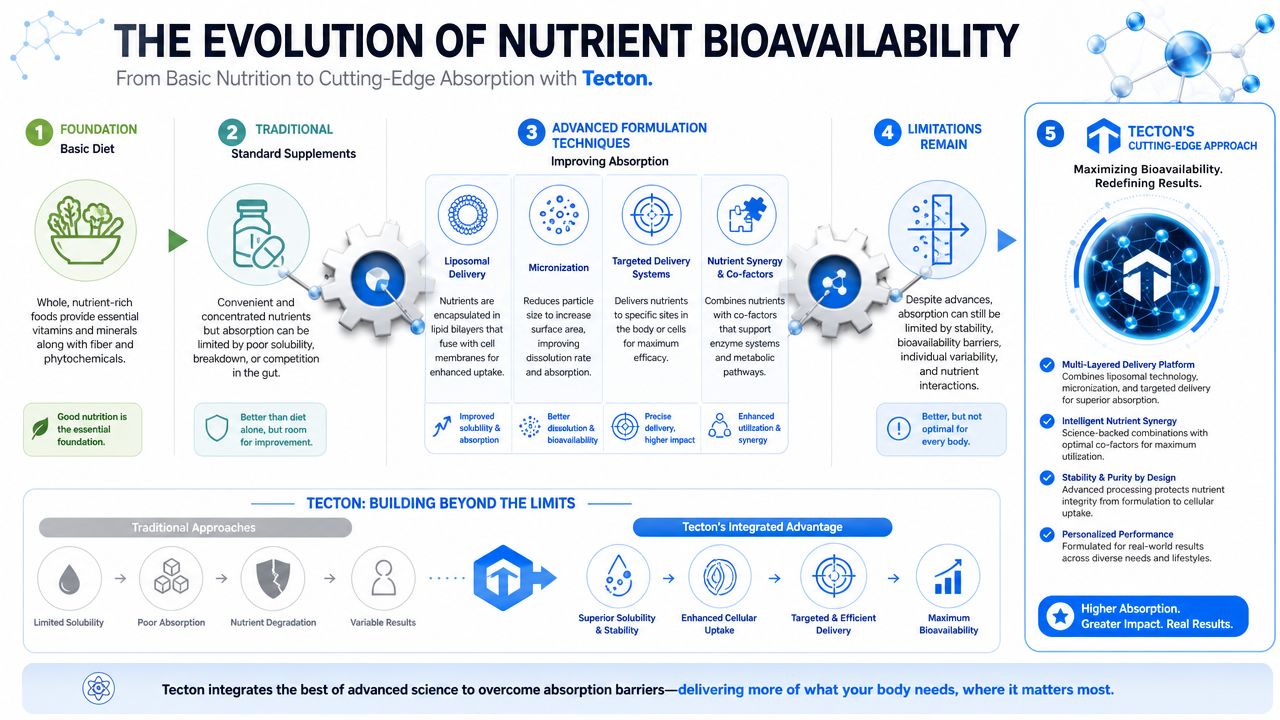
Why standard delivery often underperforms
Many conventional supplements rely on the assumption that swallowing a compound is close enough to using it. That assumption breaks down quickly when the nutrient is fragile, poorly soluble, structurally mismatched, or delivered in a format that creates digestive burden.
Better forms matter. Chelated minerals, methylated vitamins, and bioidentical substrates often perform better in real bodies because they align more closely with transport and utilization pathways. The same logic applies to ketones. Structure matters, and so does the vehicle carrying that structure.
Where liposomal delivery fits
A liposomal system acts like a protective transport layer. It can help shield active ingredients from harsh digestive conditions and improve how consistently they reach absorptive surfaces. For practitioners focused on nutrient absorption, that's not a small formulation detail. It's often the difference between theoretical efficacy and usable delivery.
I think of liposomes as a more disciplined handoff mechanism. Instead of asking the gut to manage an exposed compound under less-than-ideal conditions, the formulation gives the ingredient a better shot at arriving intact.
A useful comparison:
| Approach | Main limitation | Practical consequence |
|---|---|---|
| Basic powder or capsule | Exposed to digestion and formulation instability | Greater variability in uptake |
| Poorly matched molecule | Lower transporter preference | Less efficient absorption or use |
| Liposomal delivery | Designed to support protection and transport | Better alignment with absorption goals |
For readers who want a broader look at how delivery changes results, this article on bioavailability and protein form differences is worth reviewing.
Why this is the next frontier
Food quality still matters. Meal composition still matters. Gut health still matters. But once those basics are handled, formulation science becomes the next meaningful lever.
That's the context in which Tecton Ketones™ becomes relevant. The company's approach centers on liposomal delivery and bioidentical ketone structure, which is a more clinically informed way to think about exogenous ketones than counting grams on a label. In categories where people want direct metabolic effects, delivery isn't secondary. It is the intervention.
Why This Matters for Ketone Based Fueling
Ketone physiology gets oversimplified fast. There are three separate contexts, and they shouldn't be conflated.
Nutritional ketosis comes from diet.
Endogenous ketone production is what your liver generates under those conditions or during fasting.
Exogenous ketone supplementation delivers ketones directly from outside the body.
That distinction matters because performance outcomes depend on timing, structure, and metabolic demand, not just whether someone is “keto.”
What BHB is doing metabolically
Beta-hydroxybutyrate, or BHB, is a usable fuel substrate. Once absorbed, it can support mitochondrial ATP production in tissues with high oxidative demand. Human clinical literature also shows ketone ester ingestion can shift energy metabolism in the heart and skeletal muscle, supporting β-hydroxybutyrate use as an alternative fuel in oxidative tissues, as described in Frontiers in Molecular Biosciences.
That's the practical basis for ketone fueling during periods of glucose shortage, training stress, fasting windows, or sustained cognitive work. The point isn't that ketones replace all glucose use. The point is that they expand metabolic flexibility, giving the body another efficient substrate to oxidize.
Why form and delivery matter here more than most categories
Oral D-BHB is absorbed rapidly and raises blood ketones to millimolar levels more effectively than other ketone sources. It also directly crosses the blood-brain barrier and supports neural energy metabolism, according to human data on D-beta-hydroxybutyrate supplementation. That makes the bioidentical D-isomer different from formulations that include ineffective L-isomers or rely on heavy mineral loads.
The trade-offs become obvious:
- Ketone salts: often come with substantial mineral burden
- Mixed isomer products: may include forms the body does not use as efficiently
- Precursors: depend on additional metabolic conversion before usable ketones are available
- Bioidentical D-BHB: provides a more direct path to circulating ketone fuel
BHB also does more than provide substrate. Human cell research shows exogenous β-hydroxybutyrate can influence signaling pathways and post-translational biology, including histone lysine β-hydroxybutyrylation and other amino acid modification pathways, indicating that ketones participate in cellular signaling beyond simple energy provision.
Why This Matters
For the athlete or high-output professional, this biochemistry translates into practical outcomes:
- Steadier energy: less dependence on repeated stimulant input
- Cognitive endurance: direct support for brain energy utilization
- Workout performance: another fuel option during demanding sessions
- Metabolic efficiency: better flexibility between glucose and ketone pathways
If you're already using a lower-carb strategy, pairing it with high-quality fats can help support that broader metabolic context. This guide on optimizing your keto diet with olive oil is a practical example of how to think about substrate quality on the diet side.
Your Practical Nutrient Absorption Framework
Use this as a working checklist.
Daily decisions that usually pay off
- Pair intelligently: Take fat-soluble nutrients with dietary fat. Pair iron-containing meals with vitamin C sources when appropriate.
- Reduce blockers when needed: If a meal is very high in phytate-rich plant foods, assume some minerals may be less available.
- Respect age-related changes: Low stomach acid with aging can impair absorption of B12, iron, calcium, and protein, and targeted approaches such as B12 injections or pairing D3 with K2 for calcium utilization may work better than standard oral supplementation in some aging adults, as discussed in this review of how nutrient absorption changes by age.
- Choose forms, not just labels: Bioidentical structures and clinically informed delivery systems usually outperform generic delivery.
- Time fuel to demand: Use exogenous ketones when cognitive load is high, meals are spaced out, training is prolonged, or you want an alternative fuel source without relying solely on glucose or stimulants.
- Watch response, not marketing: Better digestion, steadier output, cleaner training energy, and more reliable focus are the signs that absorption is improving.
True performance nutrition is not about what you swallow. It's about what your body can use.
If you want a cleaner way to apply these principles, Tecton Ketones™ offers bioidentical exogenous ketone formulations built around liposomal delivery and D-BHB fueling. For people focused on steadier energy, cognitive endurance, and metabolic flexibility, that makes it a practical option to evaluate through the lens that matters most, usable absorption.


