


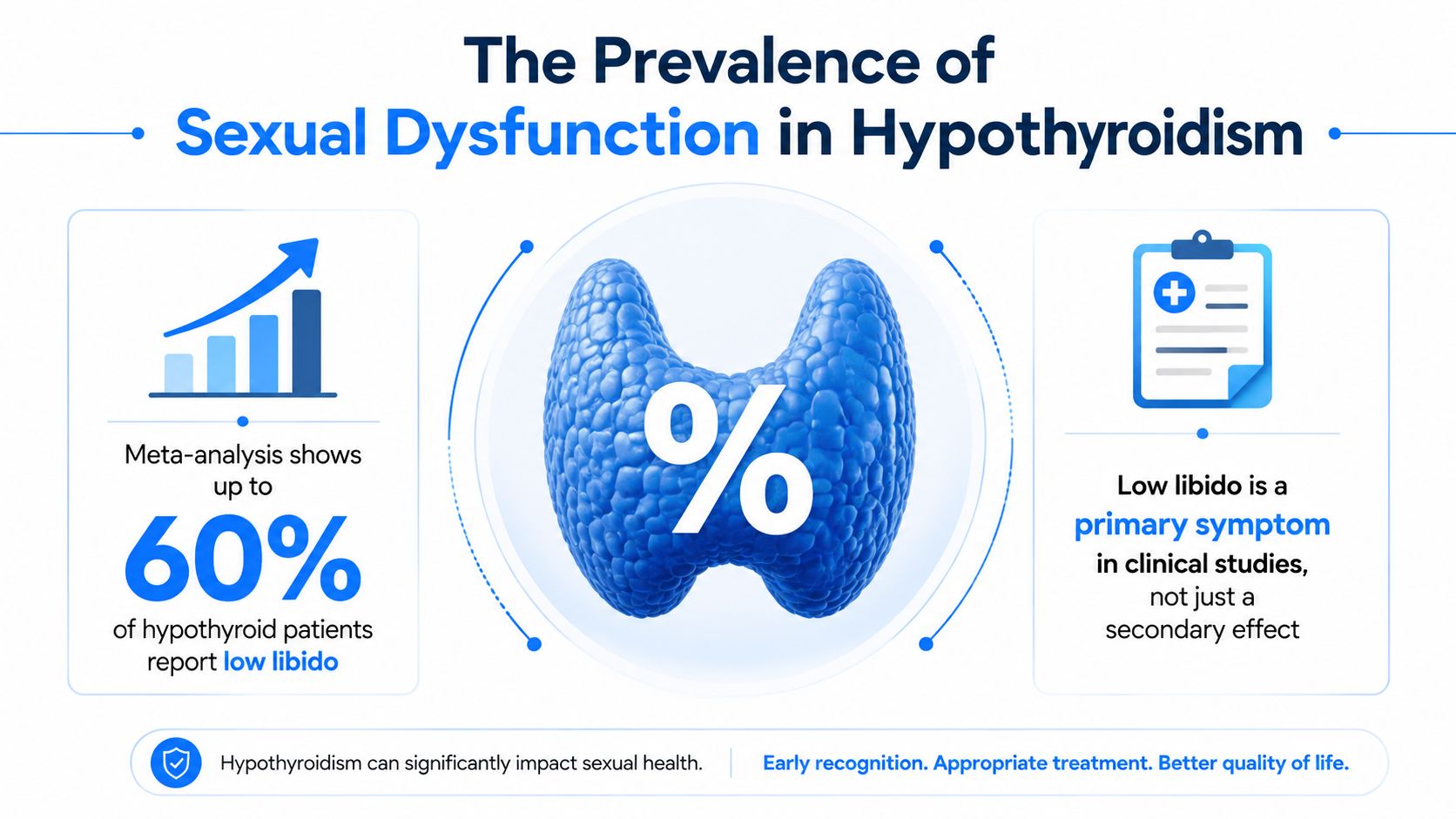
A 2024 meta-analysis found that sexual dysfunction affected 44.8% of women with thyroid disorders, including 41.8% of women with hypothyroidism (BMC Endocrine Disorders). In men, a separate 2024 meta-analysis estimated sexual dysfunction in 59.1% of hypothyroid participants (Sexual and Mental Health). These findings reframe hypothyroidism low libido as a measurable clinical problem, not a personal failing, relationship defect, or symptom that should automatically be dismissed as psychological.
Thyroid replacement remains central, but it isn't always the complete answer. Desire can remain low after laboratory values improve because sexual function also depends on androgen or estrogen availability, mood, sleep, pain, vaginal comfort, erectile function, medications, and relationship context. A useful evaluation therefore treats thyroid correction as an important foundation, not a guarantee of immediate recovery.
The Prevalence of Sexual Dysfunction in Hypothyroidism
The evidence is strongest when sexual symptoms are considered part of the broader hypothyroid picture. In women, the 2024 meta-analysis included nine studies and 1,013 participants and found an overall sexual-dysfunction prevalence of 44.8%, with a 41.8% prevalence in hypothyroidism specifically (BMC Endocrine Disorders). The same evidence base associated overt hypothyroidism with a relative risk of 2.39 for sexual dysfunction in women.
That doesn't mean every person with low thyroid hormone will experience low desire. It does mean the symptom deserves the same clinical seriousness as fatigue, constipation, cold intolerance, or changes in mood. Libido may be the complaint that brings an underlying endocrine problem into focus.
What the evidence says about men
Men show a similarly substantial burden. A 2024 systematic review and meta-analysis of 17 studies with 501 participants estimated sexual dysfunction in thyroid-gland-disorder cases at 51.5%, rising to 59.1% among those with hypothyroidism (Sexual and Mental Health). The symptoms may include reduced desire, erectile difficulty, and delayed ejaculation rather than libido loss alone.
The distinction between overt and subclinical disease matters. Evidence summarized in a review of thyroid disease and sexual dysfunction indicates that overt hypothyroidism is associated with sexual dysfunction in both sexes, while subclinical hypothyroidism often isn't. A mildly abnormal laboratory result may therefore require clinical context rather than automatic attribution of every sexual symptom to the thyroid.
Clinical perspective: Your symptoms are legitimate, but a legitimate symptom still needs a careful differential diagnosis.
Fatigue and low mood can reduce sexual interest through separate pathways. If you're also dealing with persistent exhaustion, appetite changes, or low energy, the relationship between hunger, fatigue, and metabolic health may offer useful background, but it shouldn't replace a thyroid and sexual-health evaluation. For people seeking a separate discussion of hormone-focused care, low libido treatment DFW may also provide context about treatment conversations.
How Thyroid Hormones Control Sexual Desire
Sexual desire depends on communication between the brain, thyroid, reproductive organs, blood vessels, and emotional systems. Thyroid hormone deficiency can interrupt that communication at several points.
The endocrine sequence
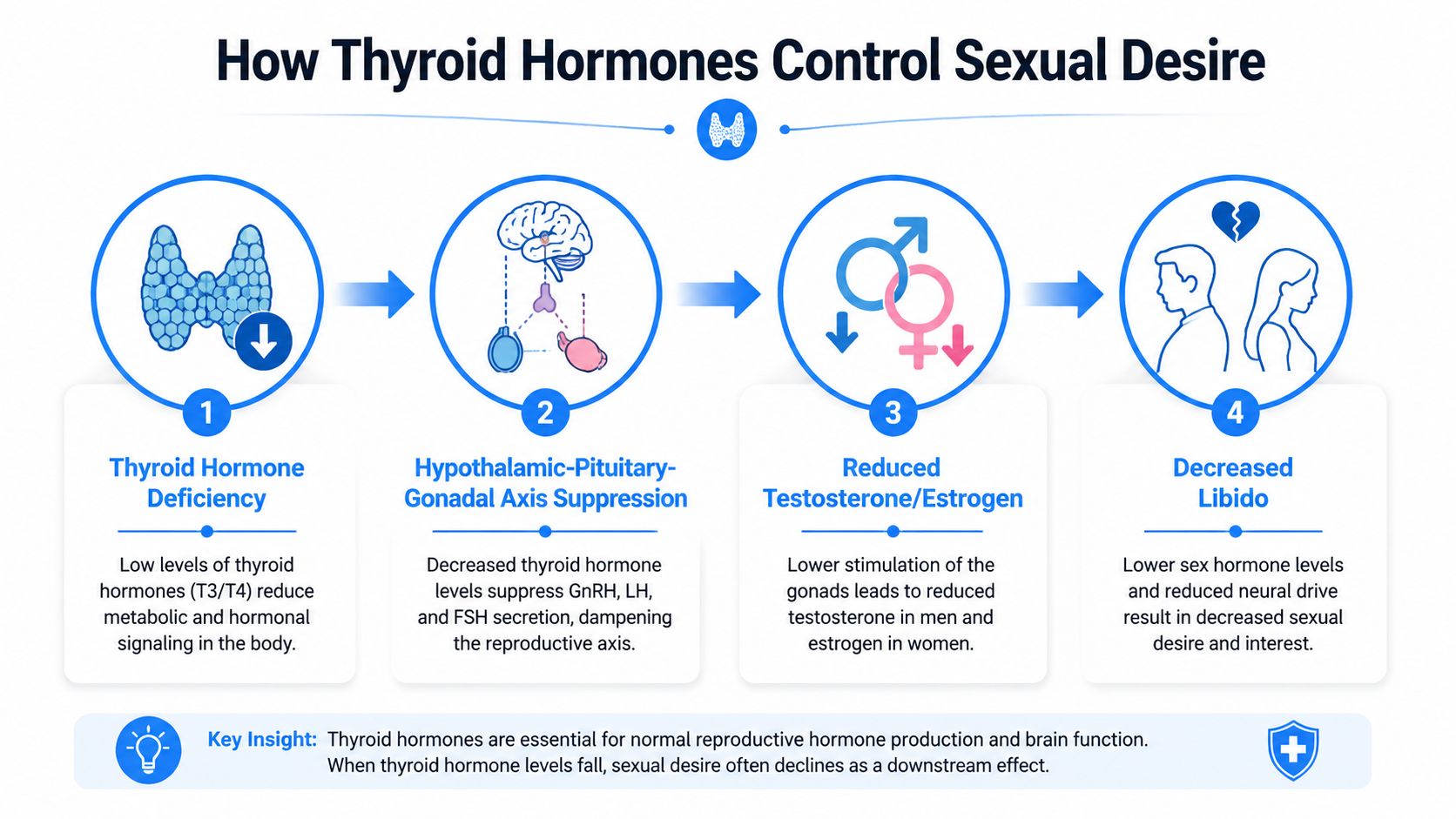
- Low thyroid signaling changes hypothalamic and pituitary communication. The hypothalamus and pituitary help regulate the hypothalamic-pituitary-gonadal axis, which controls reproductive hormone production. In hypothyroidism, this signaling can become less efficient.
- Gonadotropin patterns may become disrupted. Altered pituitary signaling can affect luteinizing hormone and follicle-stimulating hormone, the messengers that support testicular and ovarian function.
- Sex-hormone availability can fall. In men, this may reduce free testosterone. In women, thyroid-related changes may interact with estrogen balance, menstrual function, lubrication, and arousal. Sex hormone-binding globulin also participates in the amount of hormone available to tissues.
- Desire and sexual response can decline. The result may be low libido, reduced arousal, erectile dysfunction, delayed ejaculation, vaginal dryness, pain, or difficulty reaching orgasm.
In men with primary hypothyroidism, one study reported low free testosterone of 161 ± 62 pmol/L during the hypothyroid phase. After thyroxine replacement, free testosterone rose to 315 ± 141 pmol/L, with P < 0.001, alongside normalization of gonadotropins and sex hormone-binding globulin (PubMed). This supports a biologically measurable connection between thyroid deficiency, androgen availability, and desire.
The mechanism isn't just "low thyroid equals low testosterone." Thyroid hormones also influence energy production, mood, sleep, vascular function, and cellular signaling. The body may have adequate circulating hormone in one compartment while another part of the sexual-response system remains affected.
For a readable explanation of how cells convert substrates into usable energy, see cellular energy production. Metabolic support products should be considered separately from thyroid treatment. For example, the GLP-1 Shot is described as a liposomal R3HBG ketone product with 5-HTP and prebiotic fiber for routines involving spaced meals, fasting windows, or midday energy dips. It isn't a thyroid medication and shouldn't be used as a substitute for endocrine care.
Gender Differences in Hypothyroid Sexual Symptoms
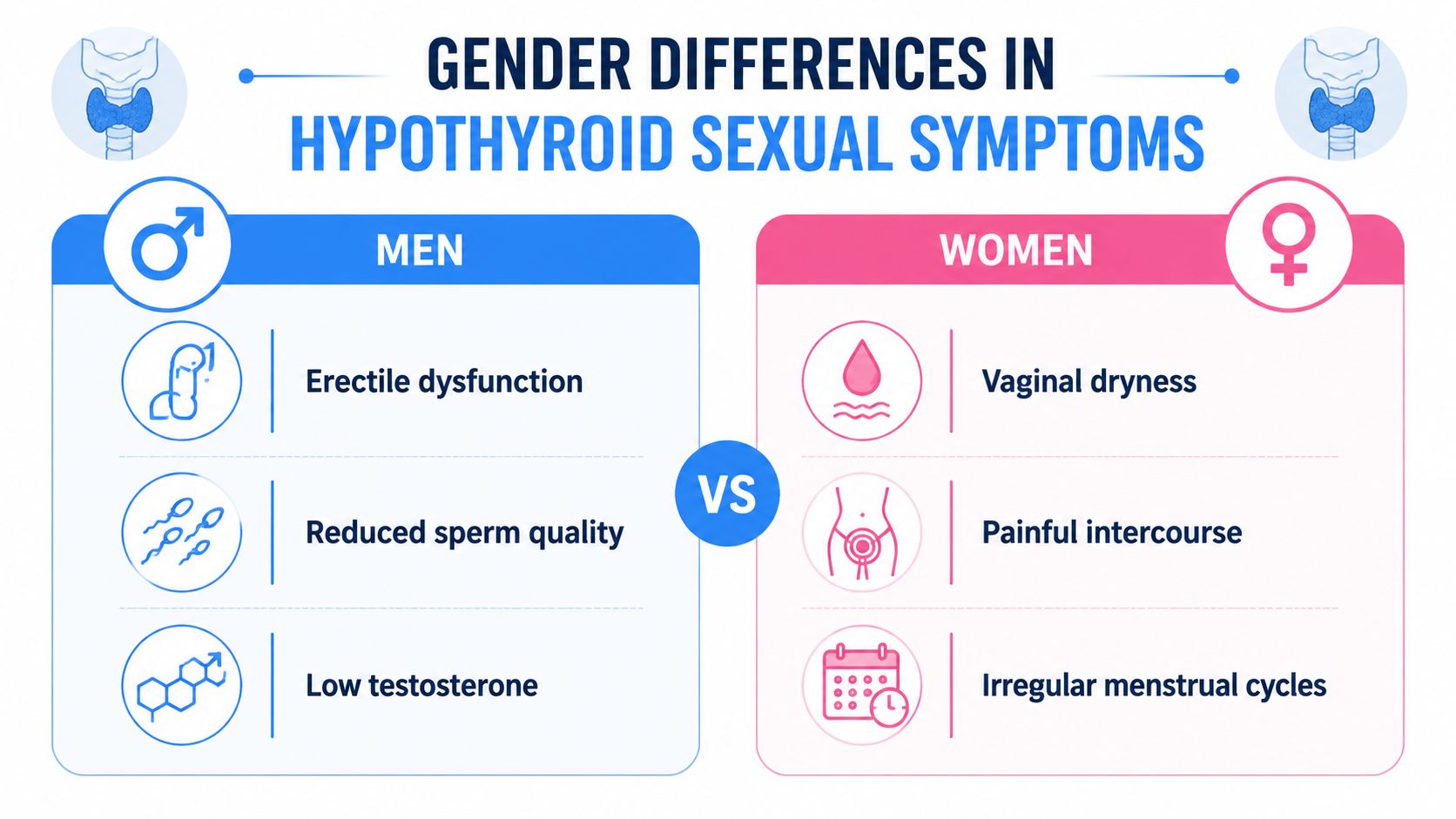
Hypothyroidism can affect sexual function in everyone, but the dominant complaint often differs by sex and by the part of the sexual response affected.
In men, desire may decline alongside erectile or ejaculatory symptoms. Older clinical data cited in reviews found that among 14 men with hypothyroidism, 64.3% had low sexual desire syndrome, and the same 64.3% had delayed ejaculation and erectile dysfunction, compared with much lower rates in hyperthyroid controls (Sexual and Mental Health). These findings are historical and drawn from a small clinical group, so they shouldn't be treated as a universal prediction. They do, however, illustrate why a man reporting low libido may need assessment of testosterone and erectile function together.
Women often experience a wider symptom pattern
In women, low desire commonly appears with problems in other domains. A meta-analysis found lower scores in every Female Sexual Function Index domain among women with hypothyroidism compared with healthy controls, with the strongest impairment in lubrication (PMC). That matters clinically because increasing desire alone won't solve pain or dryness that makes sexual activity uncomfortable.
| Men | Women |
|---|---|
| Reduced desire | Reduced desire |
| Erectile difficulty | Vaginal dryness |
| Delayed ejaculation | Arousal difficulty |
| Possible androgen deficiency | Pain or reduced lubrication |
These patterns can affect relationships in different ways. A partner may interpret avoidance as rejection, while the person with hypothyroidism may be coping with fatigue, pain, diminished arousal, or fear of disappointing someone. Clear communication and symptom-specific treatment can prevent the entire problem from being reduced to a single hormone result.
Depression, anxiety, sleep disruption, medications, and relationship strain can coexist with thyroid disease. Addressing those factors isn't an admission that symptoms are “all in your head.” It recognizes that sexual function is a coordinated process rather than an isolated laboratory value.
Why Normal Thyroid Labs Don't Always Restore Libido
Normal thyroid laboratories show that replacement is on target, but they do not guarantee that sexual desire will return immediately. Sexual dysfunction can persist after TSH normalization, a pattern that matches many patients' experience: the report improves while intimacy still feels different.
Several mechanisms may coexist. Tissue responses can lag behind blood-test changes. T4 conversion to T3 may not feel equivalent for every patient, although routine combination therapy is not automatically appropriate. Depression, pain, vaginal dryness, erectile dysfunction, medication effects, poor sleep, and relationship stress can each suppress desire.
Thyroid normalization also does not reverse every downstream effect of illness. Fatigue may reduce sexual interest, discomfort may create avoidance, and anxiety about performance can continue after hormone levels are stable. Those factors require their own assessment rather than repeated changes to thyroid dosing.
Desire and erection are not interchangeable
A clinical study of euthyroid men with persistent hypothyroid symptoms found that switching from levothyroxine alone to levothyroxine/liothyronine improved sexual desire but did not significantly change erectile function, intercourse satisfaction, orgasmic function, or overall satisfaction. The improvement in desire correlated with increased triiodothyronine levels (Endokrynologia Polska).
The trade-off is clinically important. Interest in sex may improve without better erections, or erections may improve while desire remains low. Treatment should target the affected domain instead of assuming one intervention will correct every component.
Practical rule: If libido remains low after thyroid values normalize, do not repeatedly escalate thyroid medication without reviewing the wider sexual-health picture.
A clinician may assess mood, sleep, pelvic pain, vaginal comfort, medication effects, testosterone or estrogen context, prolactin when indicated, and relationship factors. Information about non-surgical hormone therapy options can clarify broader hormonal evaluation, but treatment should follow individualized medical assessment.
Metabolic Support Strategies for Thyroid Patients
Thyroid replacement addresses hormone deficiency. It doesn't automatically restore conditioning, sleep, muscle efficiency, mood, or confidence. Those systems can support sexual function, so treatment often works best when endocrine care is paired with sustainable metabolic habits.
Understand the energy pathways
With nutritional ketosis, carbohydrate restriction and dietary conditions encourage endogenous ketone production in the liver. The liver converts fatty acids into ketone bodies, including beta-hydroxybutyrate, or BHB, which tissues can oxidize for energy.
Exogenous ketone supplementation is different. It provides ketones directly without requiring the same degree of dietary carbohydrate restriction or fasting. BHB can enter tissues, be converted into acetyl-CoA, and support mitochondrial ATP production through the tricarboxylic acid cycle and electron transport chain. Glucose follows a different route through glycolysis before entering mitochondrial oxidation.
This doesn't make ketones a thyroid treatment or a cure for hypothyroidism. It may offer an alternate fuel pathway for people who experience energy variability, provided their clinician agrees that supplementation fits their health status and medications. Metabolic flexibility means being able to use both glucose and ketones according to availability and demand, not eliminating glucose entirely.

Choose support based on the problem
- For inconsistent daily energy: Regular meals, adequate protein, gradual exercise, and sleep consistency are foundational.
- For training demands: A ketone product with electrolytes may be more relevant than a stimulant when hydration and sustained output are the priority.
- For cognitive endurance: Ketones can serve as an alternate brain fuel, but they shouldn't be marketed as a treatment for cognitive or thyroid disease.
- For vaginal dryness or discomfort: Hormonal context deserves separate evaluation. A practical overview of low estrogen signs and treatments may help frame questions for a qualified clinician.
Tecton Ketones™ uses bioidentical R3HBG ketone in liposomal formulations. Its product range distinguishes performance, cognition, electrolyte, and appetite-support use cases. The appropriate choice depends on the person's goals, tolerance, medical history, and clinician guidance, not on the assumption that more ketones will resolve low libido.
When to Seek Evaluation and What to Ask For
Arrange a medical appointment when low libido persists, causes distress, or occurs with fatigue, low mood, cold intolerance, constipation, menstrual changes, vaginal dryness, erectile difficulty, or delayed ejaculation. Evaluation also makes sense when thyroid disease is treated but sexual desire has not improved. Thyroid normalization may help, yet libido can remain limited by sleep, mood, pain, medication effects, reproductive hormones, or relationship factors.
Bring a clear timeline. Record when libido changed, whether symptoms followed a thyroid-dose adjustment, and which domain changed first: desire, arousal, orgasm, erection, lubrication, or pain. Note sleep, mood, exercise, menstrual or reproductive changes, and medicines such as antidepressants, hormonal contraception, opioids, or other drugs that may affect sexual function.
Questions to take into the appointment
- “Are my thyroid results consistent with appropriate treatment?” Ask how TSH and free T4 fit the treatment plan. Free T3 or thyroid antibodies may be useful when clinically indicated.
- “Could another hormone be contributing?” Men with persistent low desire or erectile symptoms may need context-appropriate testosterone assessment. Prolactin matters when symptoms suggest high prolactin or significant hypothyroidism.
- “Could pain, dryness, mood, sleep, or medication effects be maintaining the problem?” These contributors may need treatment at the same time, rather than waiting for thyroid correction alone.
- “What outcome are we measuring?” Define whether improvement means more spontaneous desire, easier arousal, less pain, better erections, improved orgasm, or greater satisfaction.
A symptom diary can reveal patterns that one appointment misses. Track changes without turning intimacy into a performance test. Thyroid results and sexual recovery may improve on different timelines, and one sexual domain may change before another.
For questions about nutrient status and laboratory discussions, review blood-test nutrition guidance, then discuss specific findings with your clinician. Seek urgent care for chest pain, severe palpitations, fainting, shortness of breath, or a very fast or irregular heartbeat. Pregnancy, postpartum symptoms, persistent depressed mood, or thoughts of self-harm require prompt professional attention.
Tecton Ketones™ provides bioidentical exogenous BHB through liposomal formulations for people seeking support for steadier energy, cognitive endurance, or structured fasting alongside medical care. Visit Tecton Ketones™ to review the available formulas and consider whether ketone support fits your broader metabolic routine.


