


Only 21% of Americans say they experience an afternoon slump, yet the people who do report that it begins at 3:00 p.m. on average and lasts almost 29 minutes.2024 survey data That timing matters because the afternoon energy slump isn't a failure of discipline, poor motivation, or an unfortunate lunch choice. It often reflects a predictable interaction between your circadian rhythm, accumulated sleep pressure, meal composition, hydration, and the quality of your nighttime sleep.
The practical question is whether you're experiencing a normal alertness trough or persistent daytime sleepiness that deserves medical attention. Nutrition and movement can help, but they won't compensate for chronically short sleep, social jetlag, long work hours, or possible sleep-disordered breathing. A sound strategy starts by identifying which problem you're solving, then choosing the least disruptive intervention that fits your physiology.
The Biology Behind Your 2 PM Crash
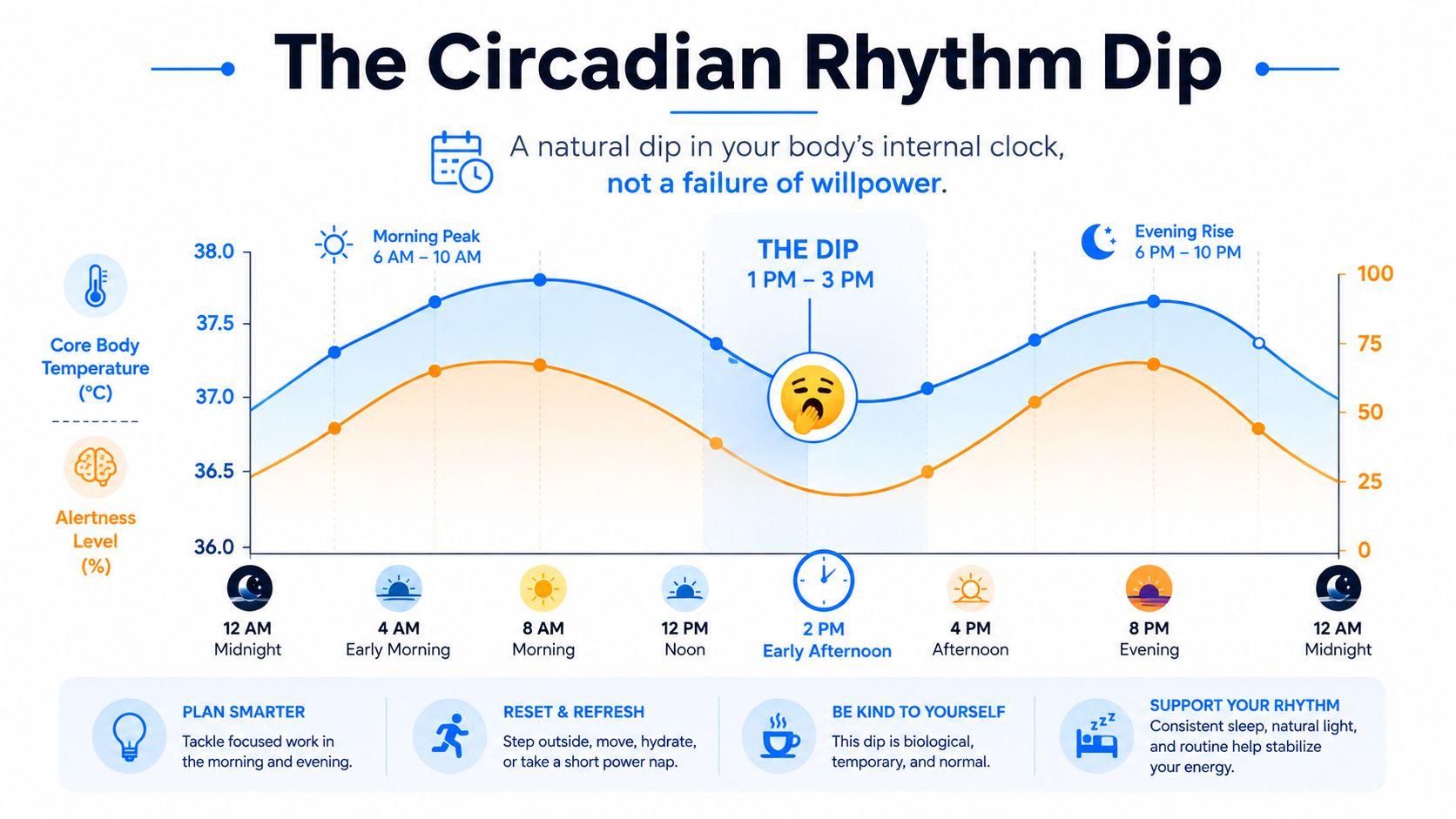
Consumer reports place the average daily energy low point at 2:06 p.m., close to the early-afternoon vulnerability window described in chronobiology research.survey summary Controlled and field research also identifies performance declines around 13:00 to 15:00, although the exact timing varies with the task and the individual.PubMed review
Two biological pressures converge
Your sleep-wake system reflects two interacting processes. Homeostatic sleep pressure builds from the moment you wake, while the circadian system changes signals that affect alertness, body temperature, hormone timing, and the tendency to sleep. By early afternoon, rising sleep pressure can overlap with a circadian decline in alertness.
The combined effect may reduce vigilance, reaction time, perceived energy, and resistance to distraction. It does not depend entirely on lunch. The review cited above describes performance dips even when participants had not eaten lunch and were unaware of the time.
Willpower may help you finish a task, but it does not remove accumulated sleep pressure or reset the internal clock. That distinction separates a normal alertness trough from persistent daytime sleepiness that may require clinical assessment.
Timing differs between people
The vulnerable period is individual rather than fixed. Its timing relates partly to the phase of a person's circadian components. The research discussed above found that people who experienced the dip had a later-peaking 12-hour circadian component. That finding helps explain why one person struggles soon after lunch while another remains functional later in the afternoon.
Meal structure remains one practical input. Protein, fiber, fluids, and minimally processed carbohydrate sources can support steadier energy, but the right balance depends on the cognitive and physical demand that follows. The scientifically backed energy foods resource offers practical examples for applying those principles.
Nighttime recovery also shapes the afternoon response. Reviewing sleep architecture clarifies why alertness at your desk reflects more than the current meal or task. Sleep quality, waking time, light exposure, and the day's cognitive load all influence how strongly the normal circadian dip is felt.
Why Quick Fixes Often Fail
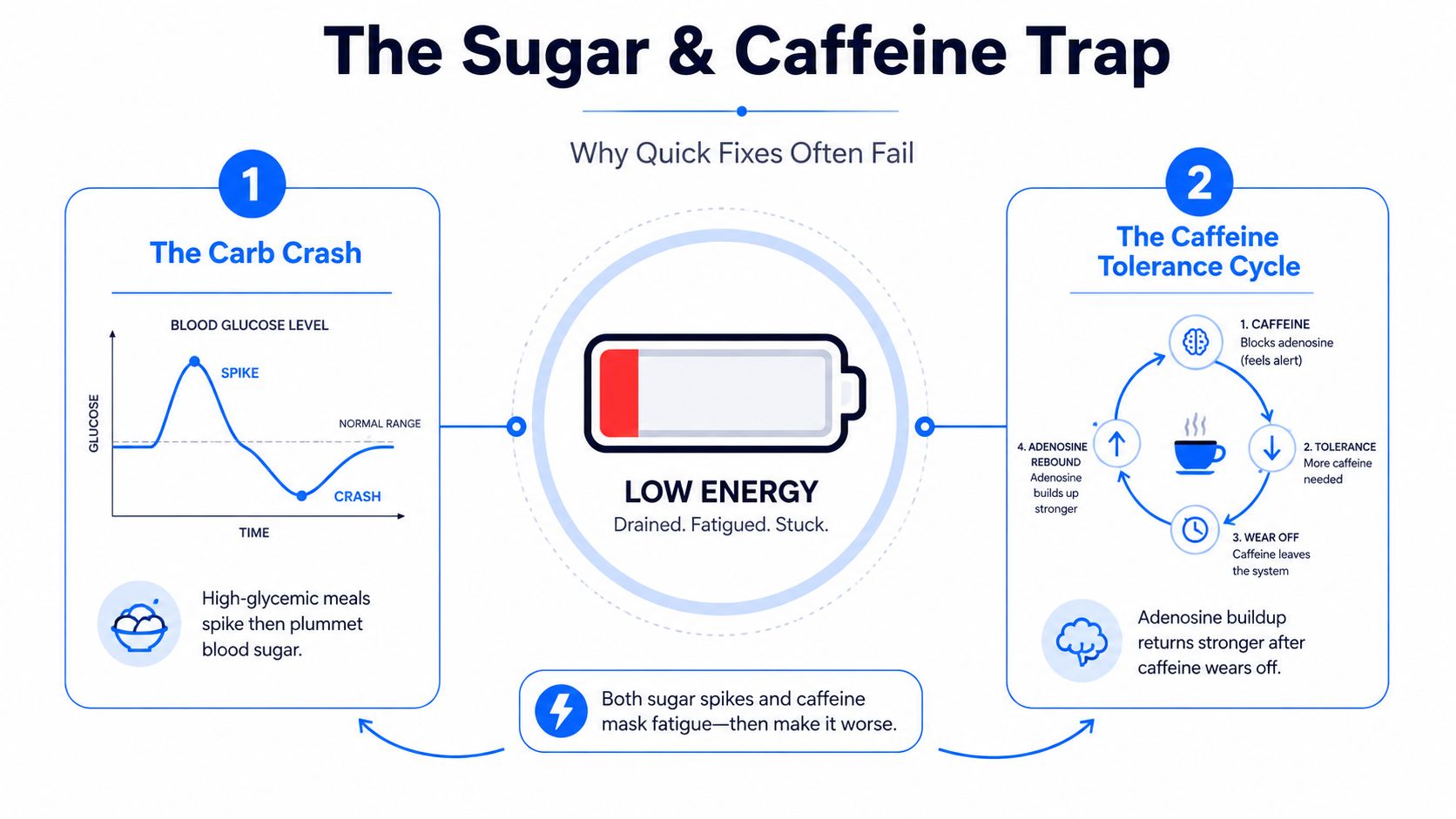
A lighter lunch can help, but it does not address every cause of afternoon fatigue. A carbohydrate-heavy meal, especially one low in protein or fiber, can amplify the normal circadian dip through a postprandial response. Rapid glucose and insulin changes may increase drowsiness and make the trough feel more pronounced, which is why clinical guidance emphasizes lunch composition rather than eating less. clinical guidance
Food is one lever, not the whole system
“Eat less carbs” is too crude to guide performance. Carbohydrates can provide useful fuel, particularly around physical training, while a rapidly digested, carbohydrate-heavy lunch may create a sharper post-meal shift than a meal containing protein, fiber, vegetables, and adequate fluids. The practical target is matching meal structure to the cognitive and physical demand that follows.
Caffeine has a similar limitation. It can increase alertness, but it supplies no macronutrient energy, does not restore inadequate sleep, and cannot correct dehydration. Repeated use to override fatigue may hide a pattern that needs attention and, depending on sensitivity and timing, make nighttime sleep more difficult.
Practical rule: Use caffeine as a deliberate performance tool, not as evidence that recovery and fueling are working.
Sleep-related causes are frequently missed
Persistent daytime sleepiness may reflect sleep quality rather than lunch. A 2025 study of 17,963 daytime workers found that subjective daytime sleepiness was associated with worse presenteeism and absenteeism. Correlates included psychiatric disease, habitual snoring or witnessed apnea, shorter workday sleep, long working hours, living alone, and greater social jetlag. PubMed study
That evidence changes the response. Fatigue limited to the normal early-afternoon window and improved by adequate sleep may reflect an ordinary circadian dip. Sleepiness that continues across the day, persists despite reasonable lifestyle changes, or occurs with loud snoring and unrefreshing sleep deserves medical assessment. Another stimulant is unlikely to correct that underlying problem.
Immediate Interventions That Actually Work
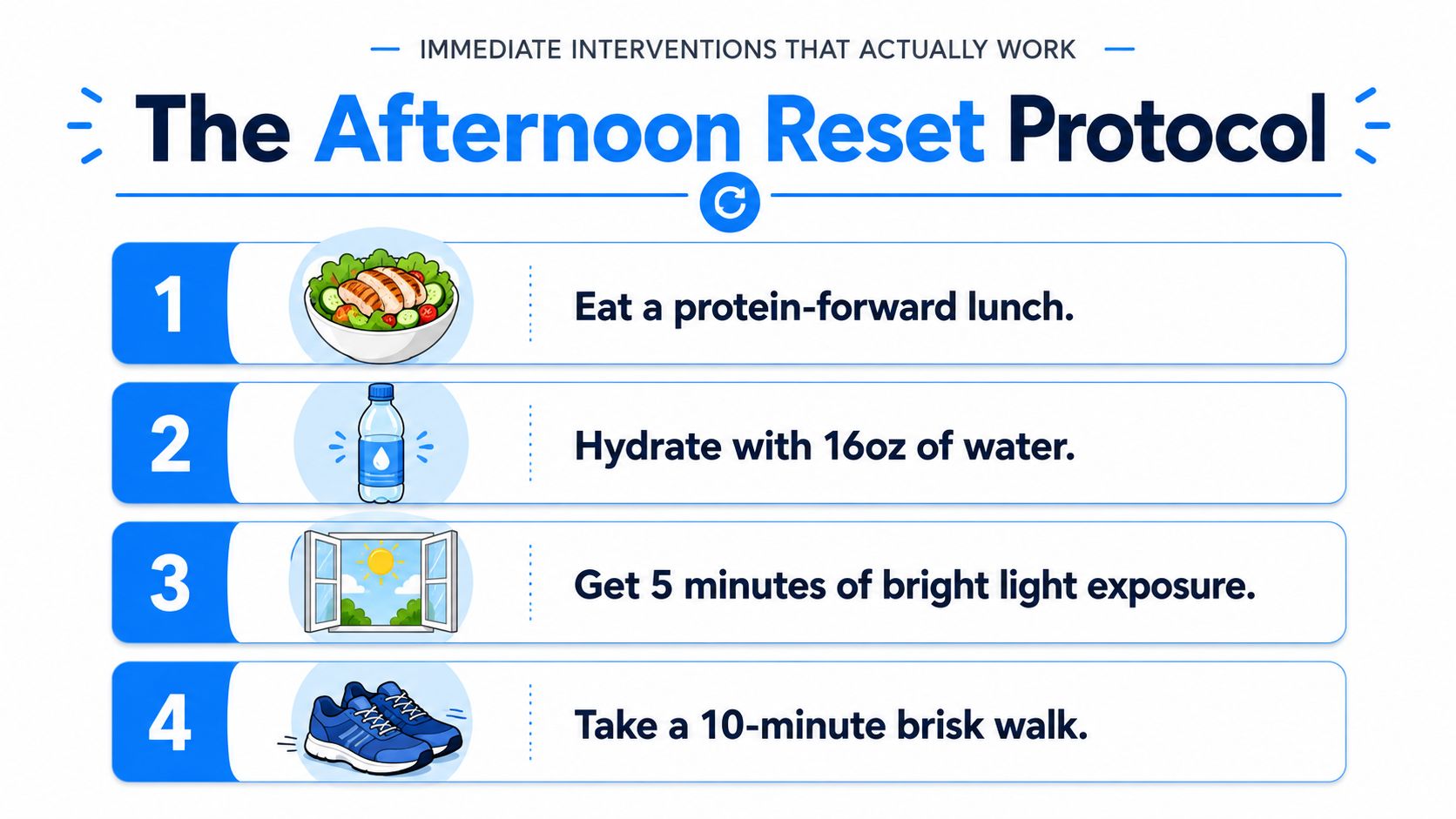
The most reliable afternoon reset combines several modest inputs rather than relying on one dramatic fix. Clinical guidance supports improving lunch composition with protein, fiber, and hydration, then using brief movement or light exposure to counter the alertness trough.RWJBarnabas Health guidance
Build the reset around your next demand
Start before the slump becomes overwhelming. Structure lunch around a meaningful protein source, vegetables or another fiber-rich component, a suitable carbohydrate portion, and water. This approach slows digestion and reduces the likelihood that a rapid post-meal glucose and insulin response will compound the circadian dip.
Then add movement. A brisk walk, a short mobility sequence, or a standing work interval can interrupt sedentary monotony and increase alertness without imposing the sleep disruption associated with repeated stimulant use. Keep the intervention easy enough to repeat on ordinary workdays.
Light exposure is another practical input. Spending time in bright outdoor light or near a bright window can provide an alerting signal, especially when your work environment is dim. The aim isn't to “reset” your entire circadian system in one session. It's to give the nervous system a stronger daytime cue during a predictable low-alertness period.
Use this four-part sequence
- Eat a protein-forward lunch. Pair protein with fiber and fluids rather than treating carbohydrate restriction as the only solution.
- Drink water before reaching for caffeine. If thirst, headache, or mental heaviness accompanies the slump, hydration may be part of the problem.
- Get bright light exposure. Step outdoors or move into a brighter environment during the early-afternoon window.
- Walk briskly. Use a short walk to create a transition between meals and demanding cognitive work.
A short nap may also help selected people, provided it doesn't interfere with nighttime sleep. The 20-minute nap guide offers a practical way to think about duration and timing without turning every afternoon dip into a sleep session.
For active days, Tecton EDGE™ Performance Shot + Electrolytes combines liposomal R3HBG™ ketone with sodium, potassium, and magnesium for routines involving training, movement, or physically demanding work. It can fit an energy strategy that prioritizes ketone fuel and hydration without caffeine, but it shouldn't replace sleep, food, or medical evaluation when those are the limiting factors.
Metabolic Tools and Ketone Supplementation
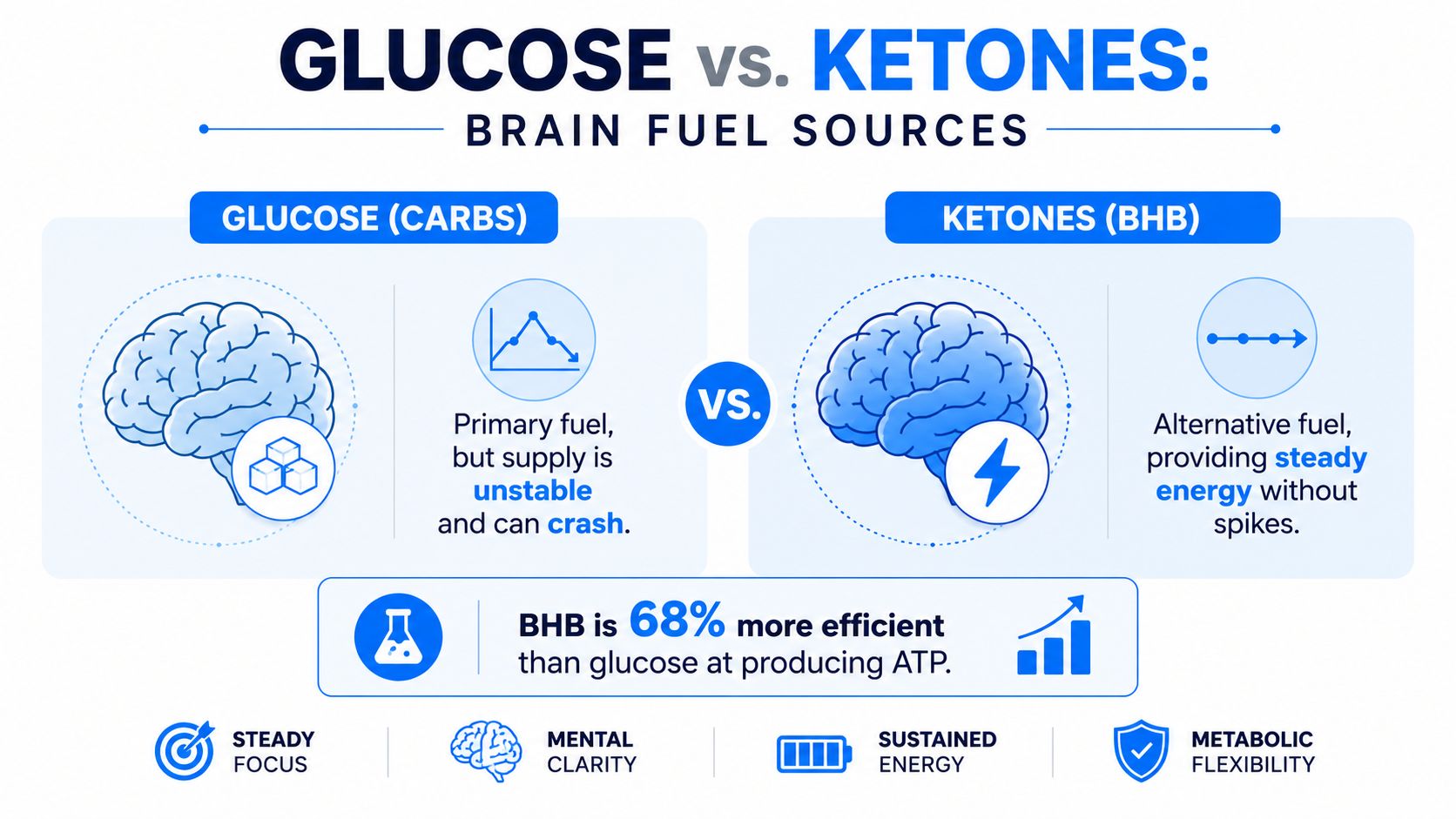
Exogenous ketones approach the afternoon energy slump through a different pathway than caffeine. They supply beta-hydroxybutyrate, or BHB, directly, so the body can access an alternative circulating fuel without first relying on carbohydrate restriction or fasting to increase endogenous ketone production.
The terms describe different processes:
- Nutritional ketosis develops when diet and energy availability shift the body toward producing ketones.
- Endogenous ketones are made mainly by the liver from fatty acids.
- Exogenous ketones come from a supplement and raise circulating BHB directly.
BHB enters tissues, converts to acetyl-CoA, and moves through the mitochondrial tricarboxylic acid cycle to support ATP production. Glucose takes another route, beginning with glycolysis before its carbon enters mitochondrial oxidation. Neither fuel is universally superior. The practical target is metabolic flexibility, the capacity to use different fuels according to context, availability, and demand.
What human studies show
In a controlled human study, ketone ester and ketone salt drinks both raised blood D-BHB. The ester reached a peak concentration of 2.8 mM, while the salt reached 1.0 mM, and concentrations returned to baseline within 3 to 4 hours. The salt also contained 50% L-BHB, which remained elevated for more than 8 hours.controlled human study
Tracer and imaging findings indicate that exogenous D-BHB is absorbed and metabolized quickly. The heart and kidneys were among the major tissues using the fuel. D-BHB raised blood ketones above 1 mM and produced concentrations about 1.7-fold higher than the same dose of D+L-BHB or MCT, despite a lower caloric load.human tracer and imaging study
A systematic review and meta-analysis found that acute exogenous ketone ingestion increased blood BHB by a mean difference of 1.73 mM and decreased mean blood glucose by 0.54 mM.systematic review and meta-analysis These results support a fuel-shift mechanism. They do not establish improved concentration or productivity for every user.
Choosing a format
Ketone esters generally produce a more direct BHB response, but taste and gastrointestinal tolerance can limit use. Ketone salts combine BHB with minerals and may produce a lower or more prolonged mixed-isomer profile, depending on the formulation. Precursors such as MCTs depend more heavily on the body's conversion processes and do not provide the same direct BHB delivery.
Bioidentical structures and liposomal delivery systems are formulation details, not proof of superior results. A bioidentical D-BHB structure matches the ketone form the body naturally produces. Liposomal systems are intended to support delivery and absorption. Evaluate the product's ingredient transparency, tolerable dosing, and human evidence for the intended use.
For people using fasting windows or dealing with inconsistent meal timing, this guide to using a ketone IQ shot provides context for treating exogenous ketones as a targeted metabolic tool rather than a replacement for a complete diet.
The Tecton GLP-1 Shot is described as a metabolic support ketone shot containing liposomal R3HBG™ ketone, 5-HTP, and prebiotic fiber for routines involving appetite patterns, fasting windows, or mid-day energy dips. It is not a prescription GLP-1 medication, and the product name should not be confused with drug therapy.
Tolerability sets the boundary
A 28-day human safety study found that ketone monoester taken three times daily raised blood βHB from 0.1 to 4.1 mM without changing body weight, fasting glucose, cholesterol, triglycerides, electrolytes, blood gases, or kidney function. Mild nausea occurred in 6 of 2,016 drinks in that study of healthy adults.28-day human safety study
Those findings apply to the studied population and protocol, not to every user or product. People with metabolic conditions, those taking glucose-lowering medication, pregnant individuals, and anyone with significant kidney, liver, or cardiovascular concerns should discuss supplementation with a qualified clinician.
When Afternoon Fatigue Signals a Deeper Problem
A normal circadian dip usually follows a recognizable pattern and remains limited to the early afternoon. Clinically meaningful daytime sleepiness is broader, more persistent, and more disruptive. Coffee, a snack, or a ketone drink may improve alertness for a while, yet the underlying sleep problem can remain untreated.
A 2025 study of 17,963 people found associations between subjective sleepiness and both presenteeism and absenteeism among daytime workers. Snoring, witnessed apnea, short sleep on workdays, long working hours, psychiatric disease, and social jetlag were among the strongest correlates.PubMed study These findings do not establish a diagnosis, but they give you reasons to investigate factors beyond lunch composition.
Signs that deserve evaluation
Arrange a professional assessment if you regularly experience:
- Unrefreshing sleep, despite allowing enough time in bed.
- Loud habitual snoring or observed pauses in breathing.
- Sleepiness throughout the day, rather than only during the early afternoon.
- Concentration or reaction problems affecting work, driving, training, or safety.
- Persistent fatigue despite reasonable sleep, hydration, balanced meals, movement, and light exposure.
A separate 2025 review described daytime sleepiness as functionally important. Its workplace research linked fatigue with sleep deprivation, while a global survey summary reported that 51% of people experienced excessive daytime sleepiness after poor sleep, alongside concentration problems.PubMed review
If you track fasting or meal timing, use a step-by-step fasting tracker 2026 to see whether fatigue clusters around long gaps between meals. Tracking should guide decisions, not postpone medical evaluation when breathing symptoms, severe sleepiness, or safety concerns are present.
Your Personal Energy Management Framework
Treat the afternoon energy slump as a decision problem. First identify whether the pattern is predictable and limited to the circadian window, or whether it reflects generalized sleepiness that needs clinical attention.
Start with the foundation
For several workdays, record your bedtime, wake time, perceived sleep quality, lunch composition, fluid intake, caffeine timing, movement, and the exact time fatigue begins. Don't chase perfect precision. Look for repeatable relationships.
If the pattern follows a heavy meal, test a lunch with more protein and fiber. If it follows prolonged sitting, add a walk and bright light. If it follows short or irregular sleep, prioritize schedule consistency before adding supplements.
Add tools selectively
Use caffeine cautiously if it doesn't disrupt nighttime sleep. Consider exogenous ketones when you want direct BHB availability during a fasting window, training session, or demanding work period, but evaluate the response by function rather than sensation alone. Useful outcomes include steadier task completion, fewer unplanned snack breaks, sustained training quality, and no deterioration in nighttime sleep.
People navigating hormonal transitions may need a more individualized approach to sleep, nutrition, training load, and recovery. The perimenopause energy planning guide provides a helpful framework for adapting energy management rather than assuming one schedule works for everyone.
Practical takeaway
- Rule out the basics. Check sleep duration and quality, hydration, meal structure, and movement.
- Use a layered reset. Combine protein-forward nutrition, water, bright light, and a brisk walk.
- Test one metabolic tool at a time. Give yourself enough observation time to distinguish a useful effect from expectation.
- Escalate appropriately. Persistent sleepiness, snoring, witnessed apnea, concentration impairment, or safety risk warrants clinical guidance.
Tecton Ketones™ offers liposomal R3HBG™ exogenous ketone nutrition designed to provide direct BHB fuel for performance, cognition, fasting windows, and physically demanding days without requiring a strict ketogenic diet. Visit Tecton Ketones™ to review the science-led product options and choose a metabolic strategy that complements, rather than replaces, sleep, nutrition, movement, and appropriate medical care.


