


An 18 mg iron supplement matches the U.S. Recommended Dietary Allowance for women ages 19 to 50 and provides the U.S. Daily Value used on many women's multivitamins. It isn't a universal adult dose, however, because adult men and women aged 51 and older have an iron RDA of 8 mg per day.
Why does a bottle labeled “100% Daily Value” sometimes make people assume that everyone needs the same amount of iron? The answer depends on sex, life stage, menstrual status, diet, absorption, and laboratory results. An 18 mg product can be a reasonable maintenance supplement for some menstruating adults, but it may be unnecessary for someone after menopause, and it's usually far too low to treat confirmed iron-deficiency anemia.
What an 18 mg Iron Supplement Actually Is
An 18 mg iron supplement provides 18 mg of elemental iron, meaning the amount of iron available from the compound in the capsule or tablet. The total weight of the iron salt can be higher. For example, ferrous sulfate, ferrous fumarate, and ferrous gluconate contain different proportions of elemental iron, so the useful number to compare on labels is the elemental iron amount, not the name or total compound weight.
The number has a specific nutritional context. The NIH Office of Dietary Supplements iron fact sheet identifies 18 mg per day as the RDA for women ages 19 to 50 and 8 mg per day for adult men and women aged 51 and older. The same U.S. guidance lists 45 mg per day as the adult tolerable upper intake level, which places an 18 mg supplement below that ceiling, although total intake from food and other products still matters.
Three questions to ask before buying
An 18 mg product should answer three practical questions:
- Does the dose fit your life stage? It aligns most closely with the average daily requirement for premenopausal women, not every adult.
- Can you absorb enough of it? Meal timing, vitamin C, calcium, coffee, tea, and certain medicines can change absorption and tolerance.
- Are you trying to maintain iron status or correct a deficiency? Those are different goals. A daily-value supplement is not automatically a treatment dose.
For shoppers comparing labels, a product such as Supplemynts Inc iron supplement can be evaluated by checking its elemental iron amount, serving directions, and other ingredients. The label still needs to be interpreted alongside your dietary pattern and iron status.
How the 18 mg Dose Was Set and Why It Targets Adult Women
The U.S. RDA wasn't chosen as a universal wellness target. It was built around population needs, including ordinary iron losses and the lower absorption of non-heme iron from many plant foods.
The National Academies' Dietary Reference Intake framework estimated baseline iron losses, added menstrual losses for women who menstruate, accounted for the fact that only a fraction of dietary iron is absorbed, and then set the recommendation high enough to cover the population. The resulting U.S. RDA for women ages 19 to 50 is 18 mg per day, a figure that remains in current U.S. nutrition guidance and appears in academic reference material from the National Center for Biotechnology Information.
Why the recommendation changes
Menstruation increases regular iron loss, which is why the premenopausal female target differs from the adult male target. Once menstruation stops, that recurring loss generally ends, and the RDA falls to 8 mg per day for women aged 51 and older. Adult men also have an RDA of 8 mg per day.
Pregnancy is a separate physiological state. The RDA rises to 27 mg per day because iron needs support expanded maternal blood volume and fetal development. An 18 mg supplement therefore shouldn't be treated as the pregnancy target without guidance from an obstetric or nutrition professional.
International references provide useful context without making the U.S. figure appear more exact than it is. EFSA's population reference intake is 16 mg per day for premenopausal women, while WHO and FAO guidance is broadly similar, reflecting the same underlying concern, adequate iron replacement in people with menstrual losses and variable absorption.
| Group | U.S. RDA (mg/day) | Upper Intake Level (mg/day) |
|---|---|---|
| Women ages 19 to 50 | 18 | 45 |
| Adult men | 8 | 45 |
| Women aged 51 and older | 8 | 45 |
| Pregnancy | 27 | 45 |
The table describes population guidance, not a personal prescription. Your requirement can differ because of blood loss, diet, gastrointestinal conditions, medications, or an existing diagnosis.
Who an 18 mg Iron Supplement Is Designed For
The best fit for an 18 mg iron supplement is usually a person whose daily needs are higher than average but who hasn't been shown to need clinical repletion. That often means a menstruating adult with a mixed diet and no evidence of anemia, although even this group shouldn't assume that fatigue automatically means low iron.
Situations where the dose may fit
- Menstruating women with light or moderate periods: Regular blood loss helps explain why an 18 mg maintenance target is used for this life stage.
- Vegetarians and flexitarians: Plant foods provide non-heme iron, which is generally less readily absorbed than heme iron from animal foods. Meal composition becomes especially important.
- Female athletes: Training can coexist with marginal iron intake or additional losses, but an athlete's symptoms still need assessment rather than automatic supplementation.
- Routine blood donors: Donation can reduce iron stores, so a clinician may recommend a maintenance product or testing based on donation frequency and laboratory results.
An adolescent athlete or a vegetarian adult may also be considered for an 18 mg product, but the appropriate choice depends on age, diet, growth, menstrual pattern, and lab findings. The dose is a starting point for discussion, not proof that supplementation is needed.
Situations that need more careful evaluation
Pregnant people, those with heavy menstrual bleeding, people with diagnosed iron-deficiency anemia, and patients who have had bariatric surgery often need individualized assessment. The resource on iron needs in pregnancy is useful background, but pregnancy supplementation should follow prenatal and medical guidance.
Anyone with hemochromatosis, hemosiderosis, chronic liver disease, or repeated transfusions shouldn't start iron independently. The same caution applies after menopause unless testing or a clinician identifies a reason for supplementation.
For active people, Tecton EDGE™ Performance Shot + Electrolytes is a separate ketone and electrolyte product designed for training, movement, or physically demanding days. It doesn't replace iron, and it shouldn't be used to interpret or treat an iron concern.
When 18 mg Is Not Enough and Treatment Dosing Begins
An 18 mg supplement is best understood as a maintenance-level amount. Treatment for confirmed iron deficiency anemia commonly uses approximately 100 to 200 mg of elemental iron per day, under clinical supervision, as described in the WebMD iron supplement guide.
That difference matters. Maintenance aims to support adequate intake when stores are sufficient. Treatment aims to replenish depleted stores and support recovery from a diagnosed problem. Taking more isn't automatically better, because higher doses can worsen gastrointestinal symptoms and may not be absorbed efficiently.
| Parameter | 18 mg Maintenance | Treatment Dose (100 to 200 mg) |
|---|---|---|
| Main purpose | Support routine intake | Replete deficiency under supervision |
| Typical user | Person matched to a life-stage need | Person with confirmed low iron or anemia |
| Testing | May guide decisions | Hemoglobin and ferritin usually matter |
| Monitoring | Watch tolerance and ongoing risk | Follow-up testing and cause assessment |
Clinicians may use daily or alternate-day schedules. The right schedule depends on the severity of deficiency, tolerance, ongoing losses, and the chosen formulation. Ferritin is particularly important because it reflects stored iron, while hemoglobin helps evaluate the oxygen-carrying red-cell compartment.
Persistent fatigue, shortness of breath, pallor, chest discomfort, unexplained weight loss, or unusual bleeding shouldn't be self-treated indefinitely. These symptoms can have causes other than iron deficiency, and supplementation can delay investigation of blood loss or impaired absorption.
How to Take 18 mg Iron for Better Absorption
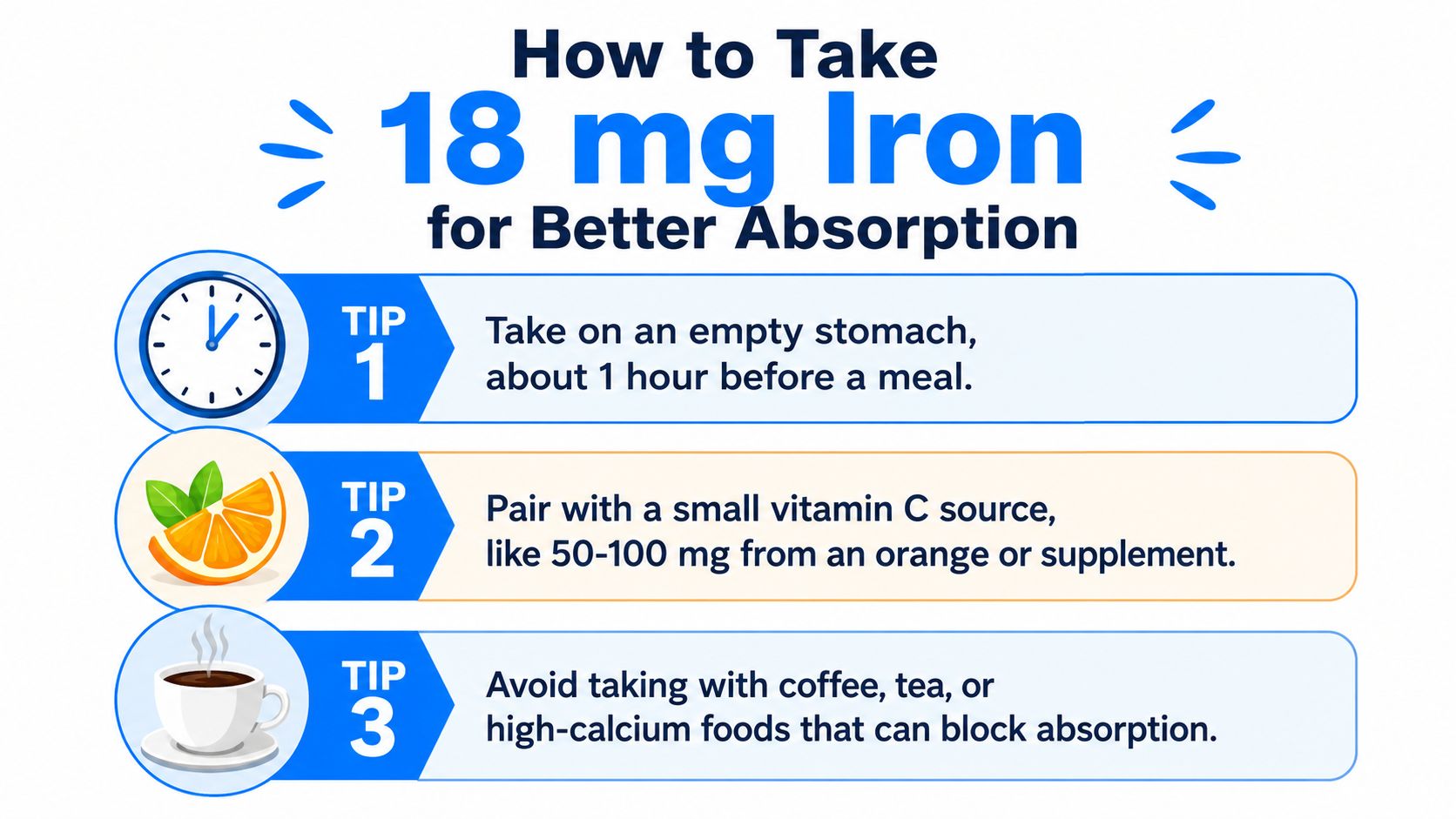
The amount on the label isn't the same as the amount your body absorbs. Iron absorption can improve when the supplement is taken away from common inhibitors, although an empty stomach may also increase nausea.
A practical routine is to take the capsule about one hour before a meal, with water and a small vitamin C source. A citrus serving, strawberries, or approximately 50 to 100 mg of vitamin C can support absorption of non-heme iron. The plant based iron snacks Gym Snack resource can help build food pairings around iron-rich plant foods.
A simple absorption routine
- Choose a consistent time. Morning can work if you don't take interacting medicines then.
- Pair it thoughtfully. Use water and a modest vitamin C source rather than a calcium-rich smoothie.
- Separate inhibitors. Keep coffee, black tea, dairy, calcium supplements, and high-dose zinc or magnesium away from the dose.
- Adjust for tolerance. If nausea occurs, take iron with a small snack. Absorption may be lower, but a tolerable routine is more useful than one you abandon.
Some evidence supports alternate-day dosing because fractional absorption can be higher when doses aren't taken on consecutive days. Don't change a prescribed treatment schedule without asking your clinician.
For a broader explanation of how food combinations affect nutrient uptake, see nutrient absorption. A metabolic support product such as GLP-1 Shot is also separate from iron supplementation and shouldn't be used as a substitute for regular meals or iron testing.
Safety Limits and the 45 mg Upper Intake Ceiling
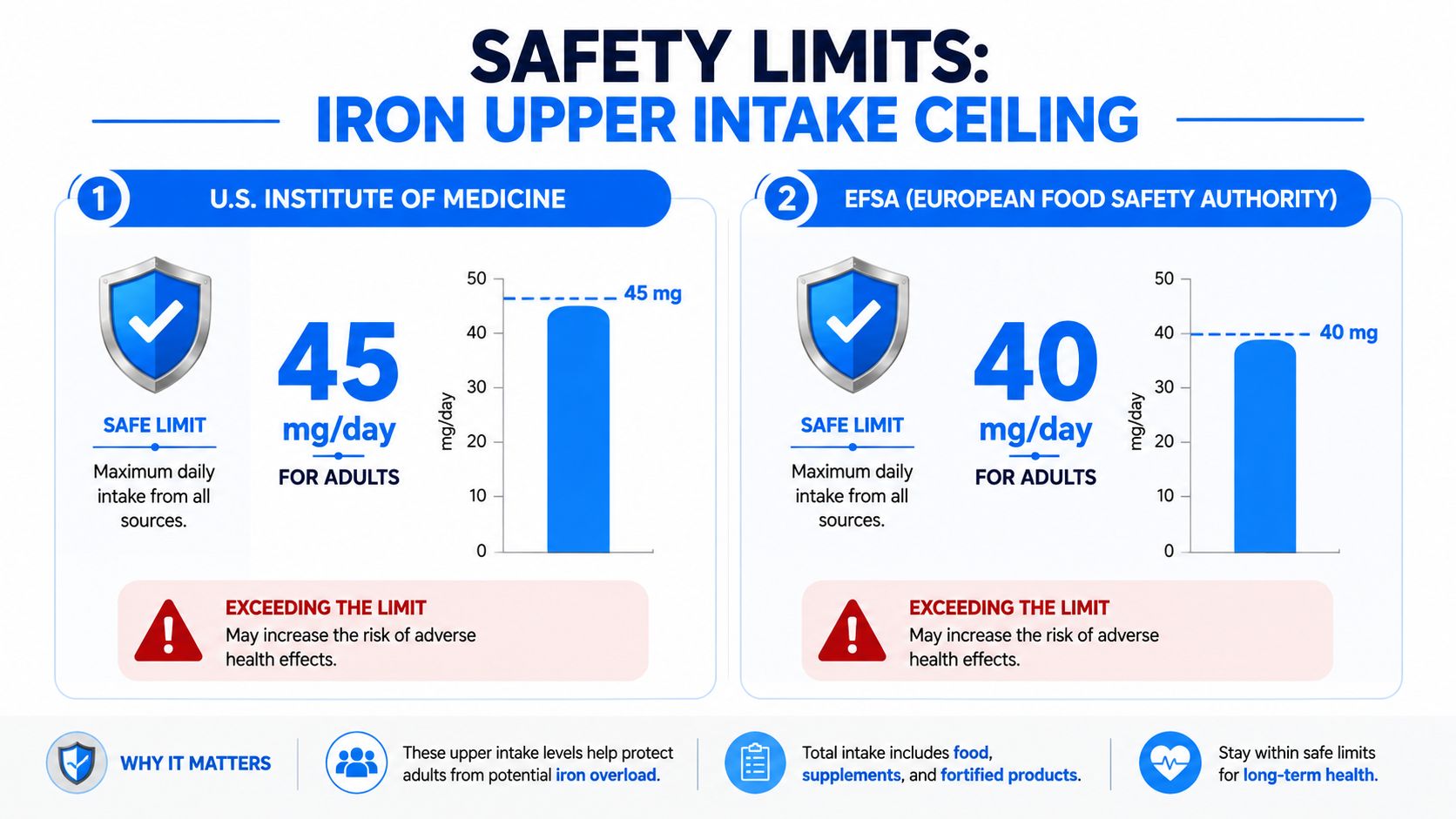
The U.S. Institute of Medicine and NIH Office of Dietary Supplements set the adult tolerable upper intake level for iron at 45 mg per day, counting food, fortified products, and supplements, as outlined in the NIH iron guidance. EFSA's 2024 opinion concluded that a total intake of 40 mg per day from diet plus supplements isn't expected to cause adverse effects in the general adult population, as explained in its scientific opinion on iron intake.
These limits aren't targets. They're boundaries intended to reduce the risk of excess exposure and dose-related gastrointestinal effects. An 18 mg supplement may fit within routine intake for some adults, but adding an iron-containing multivitamin, fortified foods, and a separate iron product can move total exposure closer to the upper range.
Practical rule: Add the iron from every supplement and fortified product before deciding that an 18 mg capsule is a small amount.
Medical treatment doses can exceed ordinary supplement amounts, but that doesn't make them appropriate for self-care. Clinicians use higher doses when the potential benefit is clear and monitor the response.
People with hemochromatosis, hemosiderosis, chronic liver disease, or repeated transfusions face special risks from iron accumulation. They shouldn't self-supplement, even when a label presents the amount as a Daily Value. Product quality and identity also matter, which is why third-party verification is a useful concept when evaluating supplements, although verification doesn't determine whether iron is appropriate for you.
Medications and Nutrients That Interact With Iron
Iron can bind with other compounds in the digestive tract, while some medicines reduce stomach acidity and make iron less soluble. The result can be less absorption of iron, the other medicine, or both.
Common examples include proton pump inhibitors such as omeprazole, H2 blockers such as famotidine, and antacids containing aluminum, magnesium, or calcium carbonate. Levothyroxine needs separation because iron can reduce thyroid-hormone absorption. Tetracyclines, fluoroquinolones, and bisphosphonates can also interact with iron.
| Interacting Agent | Minimum Separation | Why It Matters |
|---|---|---|
| Antacids | 2 hours | Minerals and altered acidity can reduce iron availability |
| Levothyroxine | 2 hours | Iron can lower thyroid-hormone absorption |
| Tetracyclines, fluoroquinolones, bisphosphonates | 2 to 4 hours | Iron can bind the medicine in the gut |
| Coffee and black tea | 1 hour | Polyphenols can inhibit absorption |
| High-phytate foods | 1 hour | Phytates can bind non-heme iron |
| Calcium-rich foods and supplements | Separate from dose | Calcium can compete with iron absorption |
Medication instructions vary, so the prescribing label takes priority. If your medicine has a stricter spacing requirement, follow that schedule rather than applying a general rule.
The practical default is simple: take iron alone or with vitamin C, and keep it away from calcium, coffee, tea, antacids, and medicines listed above. If you also use mineral supplements, review the timing with a pharmacist, including the details covered in this guide to magnesium and calcium.
A Practical Framework for Using an 18 mg Iron Supplement
Use the dose as a decision point, not as an automatic prescription.
Step 1 Match the goal to the dose
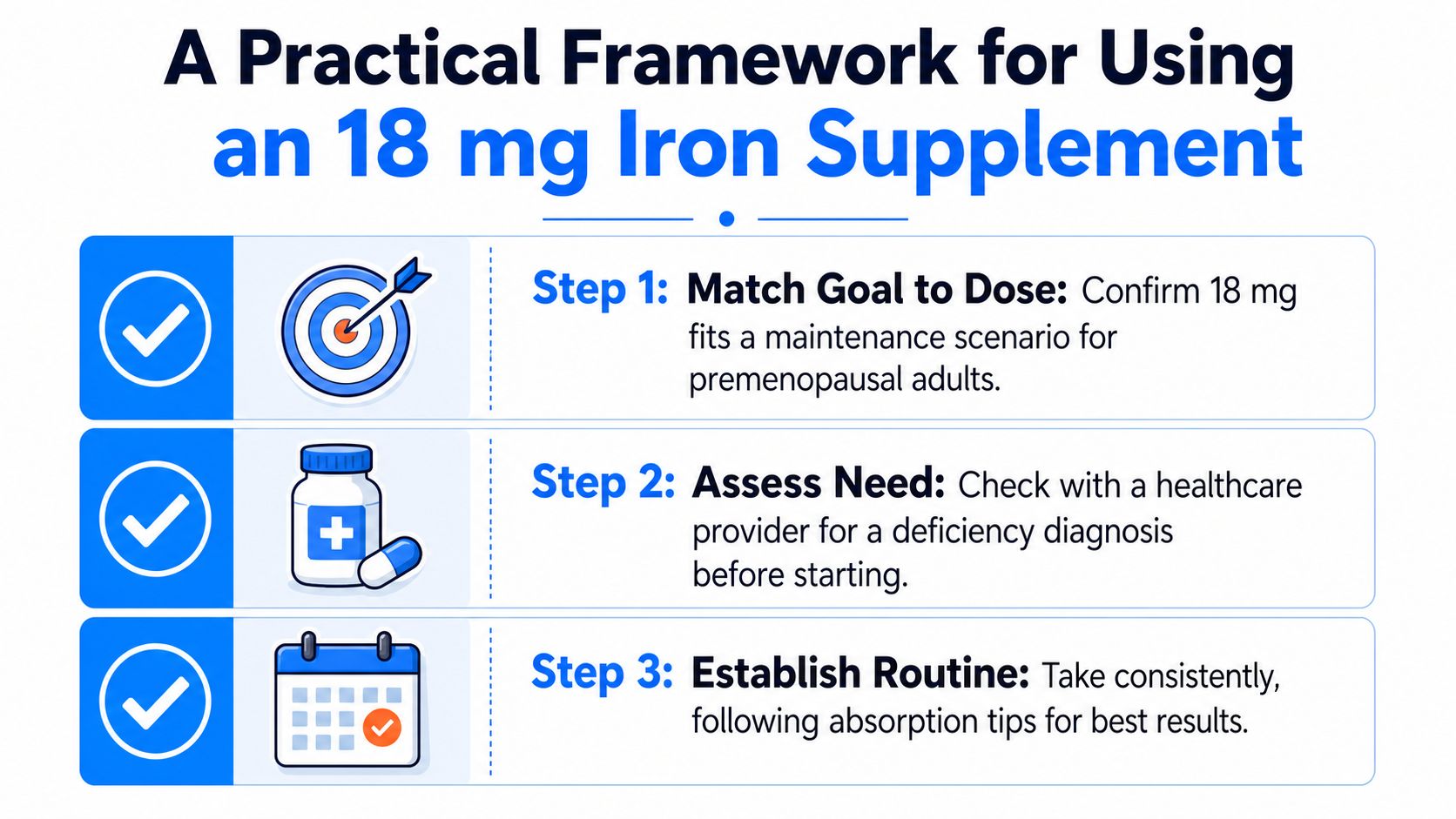
An 18 mg product may fit maintenance for a menstruating adult, an adolescent athlete, or a vegetarian adult when there's no confirmed deficiency and the person's overall intake is inadequate. It doesn't replace evaluation when hemoglobin is low, ferritin is below 30 ng/mL, or symptoms suggest a more serious problem.
Step 2 Build a routine you can tolerate
Choose a consistent time, potentially on alternate days if that approach suits your situation and hasn't been ruled out by your clinician. Pair the dose with 50 to 100 mg of vitamin C, keep it away from calcium, coffee, tea, and interacting medicines, and track nausea, constipation, abdominal discomfort, or other changes for two weeks.
If an empty-stomach dose causes nausea, use a small snack instead. Lower absorption with food is preferable to repeatedly skipping the supplement, but ongoing side effects deserve a medication or formulation review.
Step 3 Know when to stop self-care
Request medical assessment instead of increasing the dose if fatigue persists after four weeks, if you develop black or tarry stools or new abdominal pain, or if you have a history of hemochromatosis or repeated transfusions. Black stools can occur with oral iron, but tarry stools, pain, or other concerning changes shouldn't be dismissed.
Bring these questions to an appointment:
- What are my current ferritin and recent hemoglobin results?
- How does my menstrual pattern affect iron loss?
- Does my vegetarian or flexitarian diet change the absorption plan?
- Could a medicine or gastrointestinal condition be limiting absorption?
- Is an 18 mg maintenance dose appropriate, or do I need supervised treatment?
Iron and exogenous ketones address different nutritional questions. Tecton Ketones™ offers bioidentical BHB-based products, including formulations for performance, cognition, and structured fasting routines, but these products don't provide iron or replace iron testing. Visit Tecton Ketones™ to evaluate whether direct ketone fuel fits your performance routine while keeping iron decisions anchored to life stage, laboratory data, and clinical guidance.


