


A traumatic brain injury doesn't just injure the brain. It can push the whole body into a metabolic crisis, and when nutrition is delayed for 5 to 7 days, mortality rises by 2 to 4-fold according to data summarized in this review of TBI nutrition strategies. That fact changes the conversation. Nutrition after brain injury isn't a wellness extra. It is part of acute care.
In practice, families often focus first on scans, surgery, swelling, and neurologic exams. Those matter. But so does energy delivery. An injured brain and body require fuel, substrate for repair, and a feeding strategy that respects how quickly catabolism can take over if support is inadequate.
For patients and caregivers dealing with mild concussion symptoms, severe TBI, or the long tail of recovery, it helps to separate phases. Acute hospital nutrition is one problem. Long-term cognitive fatigue is another. The principles overlap, but the tools differ.
If you're trying to understand symptom patterns and recovery expectations after head injury, Orange Neurosciences has a useful guide for effective concussion management. It's a practical companion to the more intensive nutrition issues discussed here.
Introduction The Critical Role of Nutrition in Brain Recovery
Nutrition deserves a place near the top of the treatment plan after traumatic brain injury because the injured brain is trying to recover during a period of unstable energy supply.
From a neurosurgical perspective, this is not a side issue. I can control bleeding, relieve pressure, and track the neurologic exam, but recovery also depends on whether the patient is receiving enough energy and protein to limit muscle loss, support immune defense, and provide substrate for repair. Poor intake in the wrong patient can subtly worsen weakness, delay rehabilitation, and complicate the course.
That is the practical frame for traumatic brain injury nutrition. The job is to match metabolic stress with a feeding strategy that is realistic for the phase of care. In the ICU, that usually means structured clinical nutrition, not general healthy eating advice. Later in recovery, the priorities often shift toward appetite, tolerance, cognition, fatigue, and consistency.
A second question has gained attention for good reason. After TBI, the brain may have difficulty using glucose efficiently even when blood sugar looks acceptable. Ketones may offer an alternate fuel during that mismatch. I view them as a potential adjunct to standard nutrition, not a replacement for calories, protein, or clinician-guided medical care.
For patients with concussion or those caring for someone earlier in the recovery process, Orange Neurosciences offers a useful guide for effective concussion management. It complements the hospital-based and post-acute nutrition decisions discussed here.
Understanding the Metabolic Crisis After Brain Injury
Within hours of a moderate to severe TBI, the body can shift into a high-stress metabolic state. From a neurosurgical perspective, this matters because the injury is no longer only structural. It becomes a fuel problem as well.
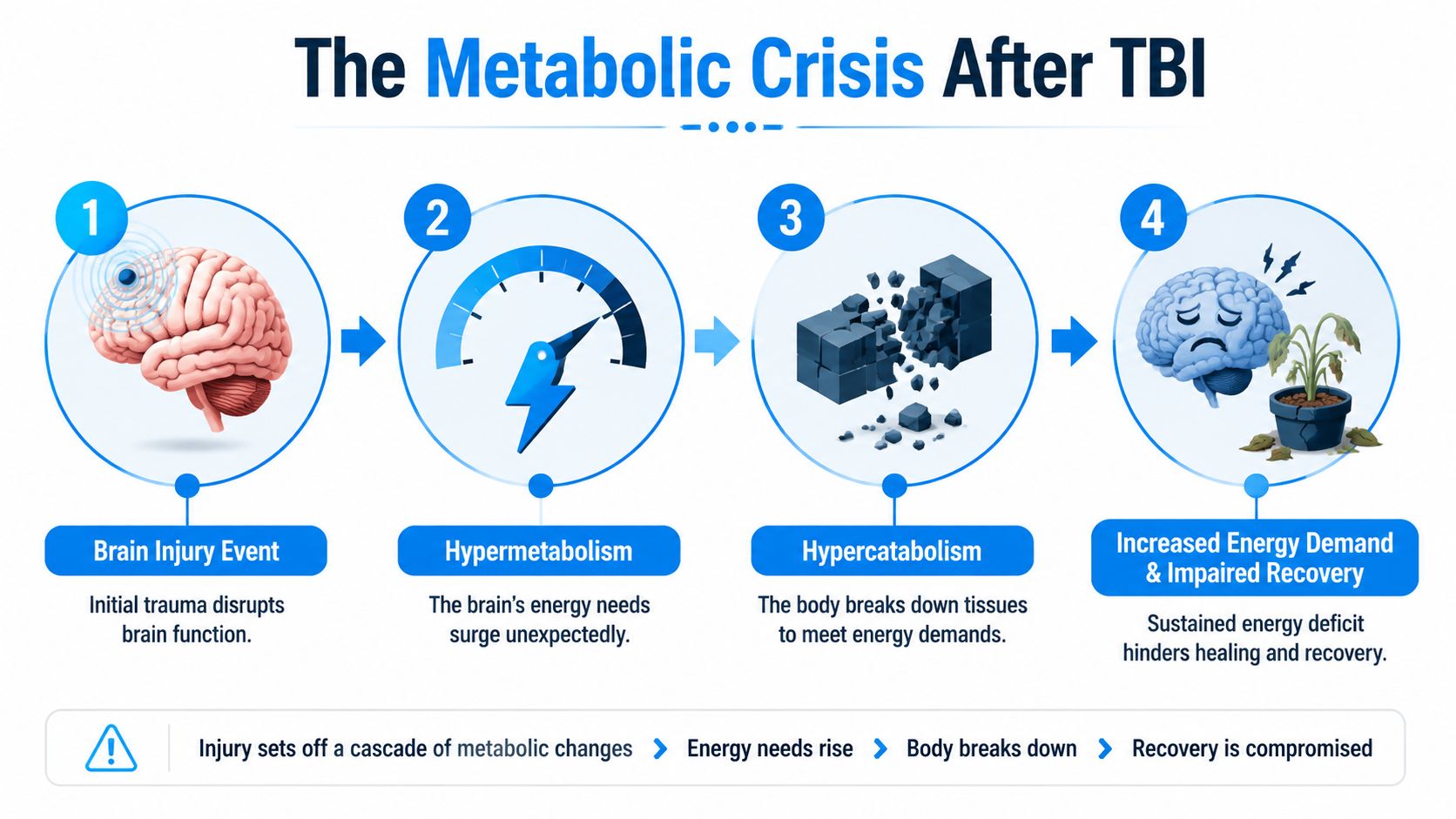
After TBI, systemic inflammation, catecholamine release, immobilization, infection risk, and the work of healing all push energy use upward. At the same time, intake often falls for practical reasons. The patient may be sedated, intubated, nauseated, dysphagic, agitated, or cognitively unable to eat enough. That combination creates the core problem. Demand rises while delivery becomes less reliable.
What hypermetabolism means at the bedside
In the ICU, hypermetabolism shows up as a patient who is consuming reserves faster than families expect. Weight can drop. Muscle mass falls. Nitrogen losses increase. Wound healing, immune defense, and rehabilitation tolerance all become harder to maintain if feeding is delayed or consistently under target.
The clinical consequence is straightforward. The body starts using its own tissue to cover the gap.
Several problems tend to appear together:
- Higher energy expenditure: Stress physiology raises baseline caloric needs.
- Accelerated protein breakdown: Amino acids are pulled from skeletal muscle to support acute survival.
- Reduced functional reserve: Strength, cough, mobility, and therapy participation can all worsen.
- Greater complication risk: Poor nutritional status and severe illness often reinforce each other.
Severity still shapes the feeding plan. A patient with a lower injury burden and intact swallowing presents a very different nutritional problem than a ventilated ICU patient with impaired consciousness. For families who want a plain-language explanation of neurologic severity scoring, this overview of the gcs is a useful reference.
Why hypercatabolism is so dangerous
Hypercatabolism is the more destructive part of this response. The body is not merely burning more calories. It is actively dismantling lean tissue to obtain substrate for immune activity, gluconeogenesis, and repair. In practice, that means loss of muscle, slower recovery of physical function, and less margin for complications such as pneumonia or prolonged immobilization.
This is one of the drivers of poor recovery.
Patients and caregivers often focus on whether enough calories are going in. That matters, but protein loss is often the sharper problem early on. A patient can look “fed” on paper while still losing meaningful lean mass if the regimen is delayed, interrupted, or poorly matched to the severity of illness.
There is also a brain-specific problem layered on top of the whole-body stress response. Injured neural tissue may struggle to use glucose efficiently even when systemic glucose is available. Cerebral blood flow can be uneven. Mitochondrial function may be impaired. Transport across injured interfaces can also change. If you want a clearer picture of that interface, this article explains how the blood-brain barrier works.
That mismatch helps explain why standard nutrition is necessary but may not fully solve the brain's energy shortfall in every phase of recovery. It is also why ketones have drawn attention as an adjunct. They may offer an alternate fuel source when glucose handling is impaired, which is a clinically interesting idea, especially from the standpoint of protecting vulnerable tissue while the broader nutrition plan catches up.
For physically active people later in recovery, hydration and fuel delivery still matter on demanding days. A product such as Tecton EDGE™ Performance Shot + Electrolytes is designed for active individuals seeking steady energy during training, movement, or physically demanding days, using liposomal R3HBG™ ketone with sodium, potassium, and magnesium. That is a different use case from hospital feeding, but the underlying principle is the same. Fuel strategy has to match physiologic demand.
Foundational Nutrition for TBI Recovery The Clinical Standard
Up to the first week after a serious brain injury is often the period when missed nutrition does the most damage. From a neurosurgical standpoint, that matters because secondary injury is not driven by the scan alone. It is shaped by whether the brain and the rest of the body receive enough substrate to support repair, immune function, and basic metabolic stability.
The clinical standard is straightforward. Start enteral feeding early if the gut is working, aim to cover baseline energy needs within the first several days, and reassess often because ordered calories and delivered calories are rarely the same.
Core targets clinicians use
In the ICU, indirect calorimetry is the preferred way to estimate resting energy expenditure. If it is not available, clinicians use predictive equations or weight-based estimates. In practice, the target is not a static number. Fever, agitation, infection, sedation changes, ventilator weaning, and rehabilitation intensity can all shift energy needs over a short period.
Protein deserves equal attention. Patients with TBI lose lean mass quickly if intake falls behind catabolic demand, and that loss affects wound healing, immune defense, mobility, and the ability to participate in therapy later. Calories matter, but calories without enough protein do not solve the problem.
A practical framework looks like this:
- Feed early: Enteral nutrition is preferred when the gastrointestinal tract is functional.
- Match current demand: Energy provision often needs to reflect the hypermetabolic stress response rather than pre-injury needs.
- Use the route the patient can tolerate: Continuous tube feeding is often easier to deliver consistently in critically ill patients.
- Audit delivery, not just orders: Procedures, high gastric residuals, vomiting, constipation, aspiration precautions, and tube dislodgement all reduce actual intake.
- Recalculate often: Nutrition plans should change with clinical status, not stay fixed on day-one assumptions.
That last point is where many families get tripped up. A feeding order in the chart does not guarantee adequate nutrition at the bedside.
Why enteral usually beats parenteral
If the intestine works, enteral nutrition is usually the better first option. It supports gut integrity, is generally more physiologic, and often carries fewer complications than parenteral feeding. Parenteral nutrition still has a role, especially when enteral delivery is not possible or remains inadequate, but it is usually a backup strategy rather than the opening move.
The trade-off is practical. Enteral feeding is preferred, but it can be interrupted repeatedly. Parenteral nutrition bypasses some of those barriers, yet it introduces its own risks and monitoring burden. Good care means choosing the route that gets enough nutrition in safely, then revisiting that choice as the patient changes.
Bedside question to ask: How much nutrition was actually received in the last 24 hours?
Micronutrients and meal quality after the ICU
Once the immediate calorie and protein deficit is under better control, food quality matters more. I look for a pattern that supports recovery rather than a single miracle nutrient. That usually means adequate hydration, regular protein intake, foods that provide magnesium and B vitamins, and a meal structure that does not worsen glucose volatility or crowd out nutrient-dense choices.
For caregivers planning meals after discharge, the hard part is often consistency. Fatigue, poor appetite, swallowing difficulty, nausea, sensory overload, and dependence on others for shopping or cooking can all lower intake. A practical home-focused resource like this caregiver's essential guide to senior nutrition can help families organize meals when recovery at home becomes a daily logistics problem.
Clinicians are also paying closer attention to alternative brain fuels. For readers who want a clear primer on the category, this overview of what exogenous ketones are explains the basics. They do not replace standard nutrition. The clinical job is to get the foundation right first, then consider whether adjuncts can help address the persistent cerebral energy mismatch seen in some patients.
| Clinical priority | Why it matters |
|---|---|
| Early calories | Reduces worsening energy deficit during acute recovery |
| Adequate protein | Preserves lean tissue and supports healing |
| Enteral route when possible | Improves the chance of physiologic feeding and gut use |
| Ongoing monitoring | Detects underdelivery, intolerance, and changing needs |
The Brains Energy Gap and the Ketone Solution
One of the more important ideas in modern brain metabolism is that the injured brain may not handle glucose normally. It still needs energy, but its primary fuel pathway can become less efficient. That creates what many clinicians describe as an energy gap.
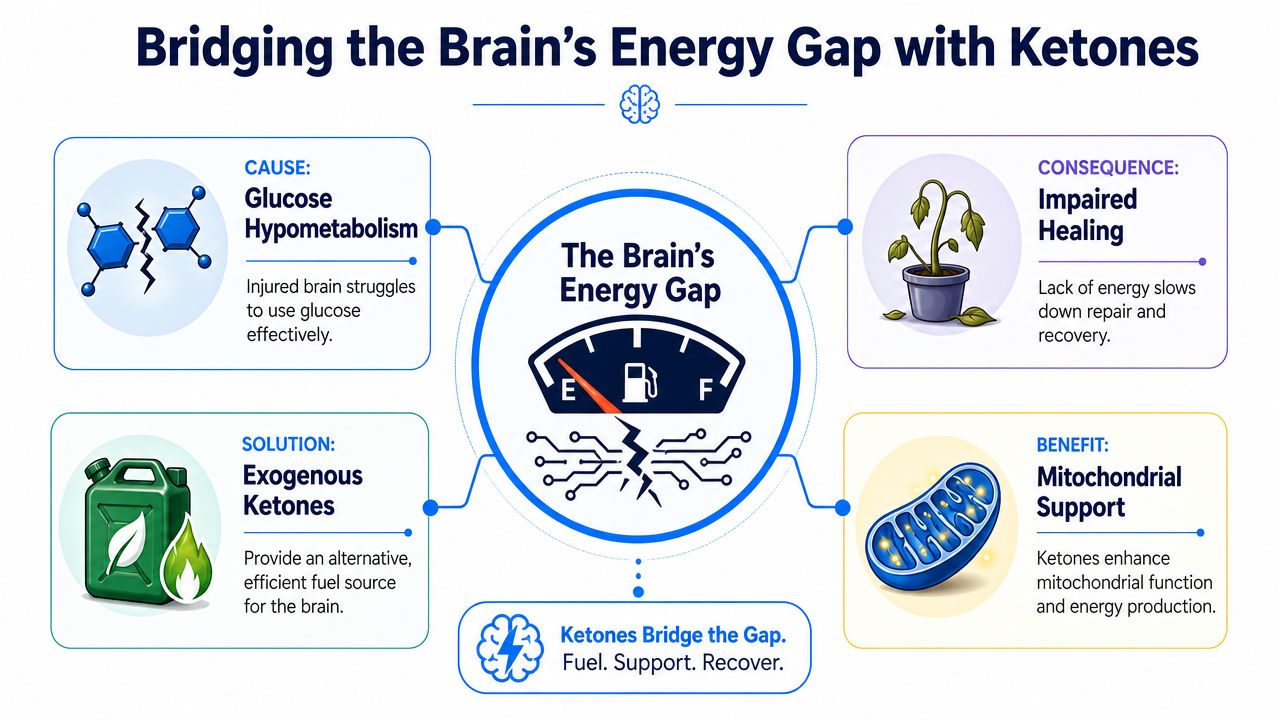
Glucose isn't the whole story
Under ordinary conditions, the brain relies heavily on glucose. After injury, that dependence becomes a vulnerability if glucose uptake or utilization is impaired. The consequence isn't abstract. Cells still need to maintain membrane gradients, run repair processes, support neurotransmission, and generate ATP.
Ketones offer a different route.
Beta-hydroxybutyrate, or BHB, is the main circulating ketone body used in nutritional ketosis and in most exogenous ketone strategies. It can serve as an alternative fuel substrate for mitochondria, where ATP production occurs. That matters because mitochondria are the energy factories that determine whether a cell has the resources to maintain function or slide deeper into stress.
A useful primer on this category is Tecton's explanation of what exogenous ketones are.
Endogenous ketosis vs exogenous ketones
These terms often get mixed together, but they're not the same:
- Nutritional ketosis: A metabolic state usually achieved through carbohydrate restriction, fasting, or both.
- Endogenous ketone production: The body's own production of ketones in the liver.
- Exogenous ketone supplementation: Delivering ketones directly from outside the body, without requiring the full dietary transition first.
That distinction matters in TBI. A patient or caregiver may not be able to implement a strict ketogenic diet, especially during acute recovery or when appetite, routine, and tolerance are unstable. Exogenous ketones create a different option. They don't replace foundational nutrition, but they may provide direct ketone availability without waiting for full endogenous adaptation.
Here is a helpful visual overview of the concept:
BHB is fuel and signal
BHB isn't just a calorie source. It also behaves as a signaling metabolite. In Cell Communication and Signaling, BHB is described as antagonizing FFAR3, which reduces sympathetic activity and is associated with measurable decreases in heart rate, body temperature, and overall metabolic rate.
That's interesting in the context of brain recovery because post-injury physiology often includes autonomic disruption, metabolic inefficiency, and persistent stress signaling. It doesn't mean ketones “treat” TBI. It means they may influence the broader physiologic environment in ways that are relevant to energy use and resilience.
The mechanistic appeal of ketones in brain recovery usually comes down to five features:
- Alternative fuel availability when glucose handling is impaired.
- Support for mitochondrial ATP production through ketone oxidation.
- Metabolic flexibility, meaning the system has more than one usable fuel pathway.
- Brain energy utilization that doesn't depend entirely on glucose.
- Cellular signaling effects that extend beyond calories alone.
Endothelial function and blood-brain barrier dynamics are also part of the discussion, because brain recovery depends on more than neuronal metabolism in isolation. Vascular function, transport, and inflammatory signaling all shape the terrain in which recovery occurs.
Why This Matters Exogenous Ketones for Brain Fuel
After traumatic brain injury, the question I hear from families is rarely about biochemistry in the abstract. It is whether a patient can get through therapy, hold attention longer, and avoid the sharp crashes that follow mental or physical effort. That is where exogenous ketones become clinically interesting, not as a cure, but as a tool that may help cover part of the brain's post-injury energy shortfall.
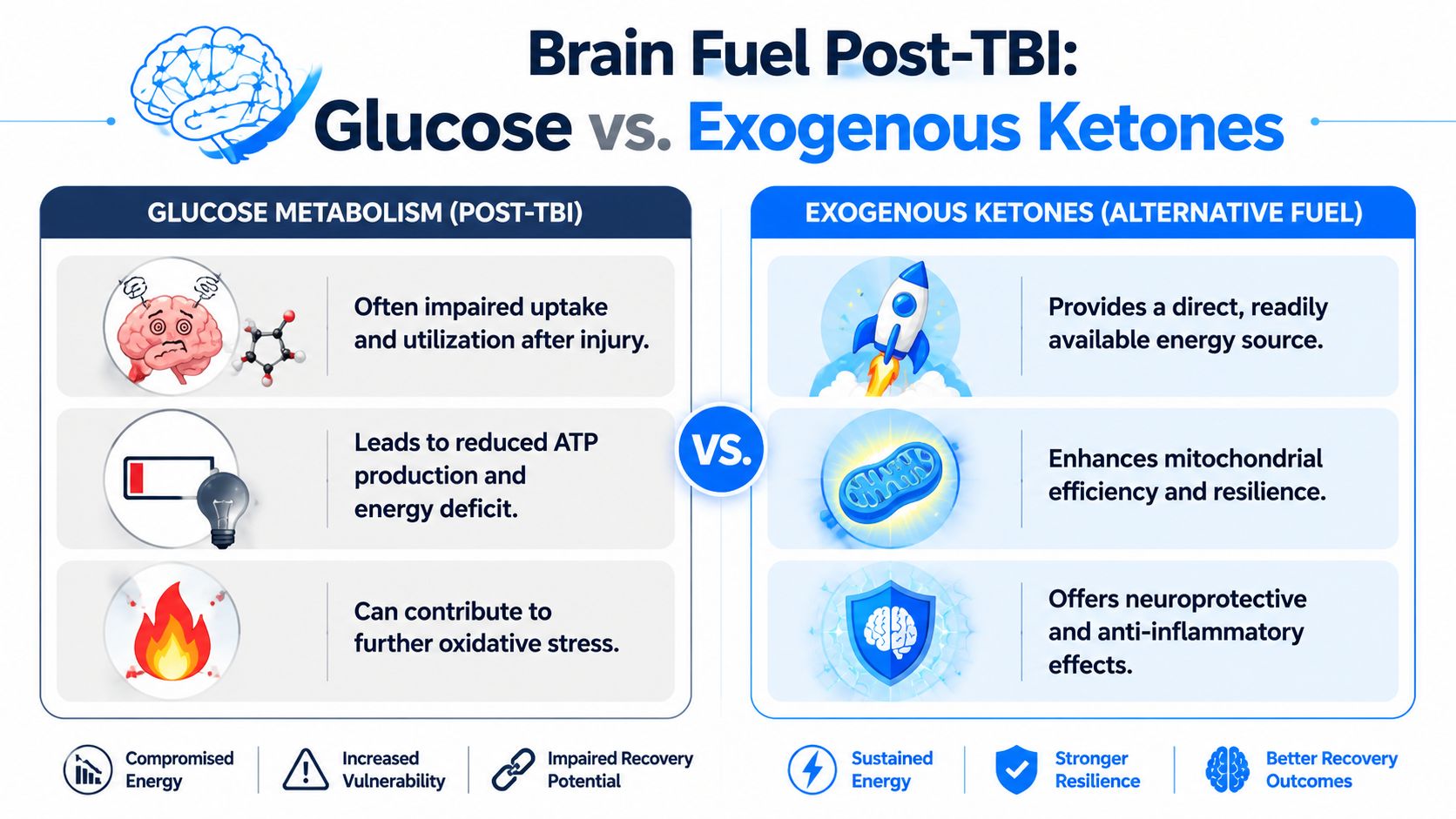
From a neurosurgical perspective, this matters because recovery is limited by function, not theory. A patient may be medically stable and still have poor cognitive stamina, erratic appetite, and low tolerance for long rehabilitation sessions. In that setting, an alternative fuel source can be worth considering if it supports energy availability without worsening glucose volatility or gastrointestinal tolerance.
Why This Matters
- Steadier day-to-day fuel: Ketones may provide usable energy during gaps in eating, which is relevant when appetite and meal timing are unreliable.
- Support for cognitive workload: Some patients are trying to sustain attention, processing speed, and therapy participation, not chase a stimulant effect.
- Physical reconditioning without depending on caffeine: During rehab, some individuals want another fuel option for exertion and recovery.
- A practical fit for inconsistent intake: Exogenous ketones may be useful when nausea, fasting periods, or poor appetite make standard meal-based fueling harder.
Measuring ketosis matters
Ketosis should be measured, not guessed. Frontiers in Nutrition defines nutritional ketosis by plasma BHB concentration, which is why blood testing is more useful than relying on subjective impressions alone.
In practice, capillary blood BHB testing helps answer a simple question. Did the diet or supplement meaningfully raise circulating ketones, or did it only sound good on the label?
Not all exogenous ketones are the same
Form matters. Ketone salts, ketone esters, and precursor-based products differ in absorption, tolerability, mineral burden, and the amount of ketone delivered.
| Format | Practical limitation or feature |
|---|---|
| Ketone salts | Often carry enough sodium, calcium, or magnesium to limit dosing |
| Ketone esters | Tend to raise ketones more directly, but palatability and cost can be barriers |
| Precursors | Require conversion and may produce a different metabolic response than direct BHB delivery |
Tecton's platform centers on bioidentical R3HBG, described by the company as a ketone structure that delivers D-BHB, paired with a liposomal delivery system intended to support absorption and consistency. For a patient or caregiver, that is not a marketing detail. It affects tolerability, dosing practicality, and what was delivered.
The useful questions are straightforward:
- What ketone form does the product contain?
- Is it designed to deliver the body's native D-BHB?
- How much mineral load comes with it?
- Is the dose realistic for repeated use?
- Can the response be tracked objectively with BHB testing?
Used this way, exogenous ketones are not a replacement for meals, protein targets, or formal medical nutrition therapy. They are one option for selected patients trying to smooth out the energy instability that often follows brain injury.
Exogenous ketones make the most sense when they serve a defined metabolic goal and are judged by tolerance, function, and measured response.
A Phased Application Framework for Ketone Supplementation
The right use of ketones depends on where the patient is in recovery. Acute ICU care is not the same as outpatient rehabilitation. Chronic cognitive fatigue is not the same as early post-injury instability.
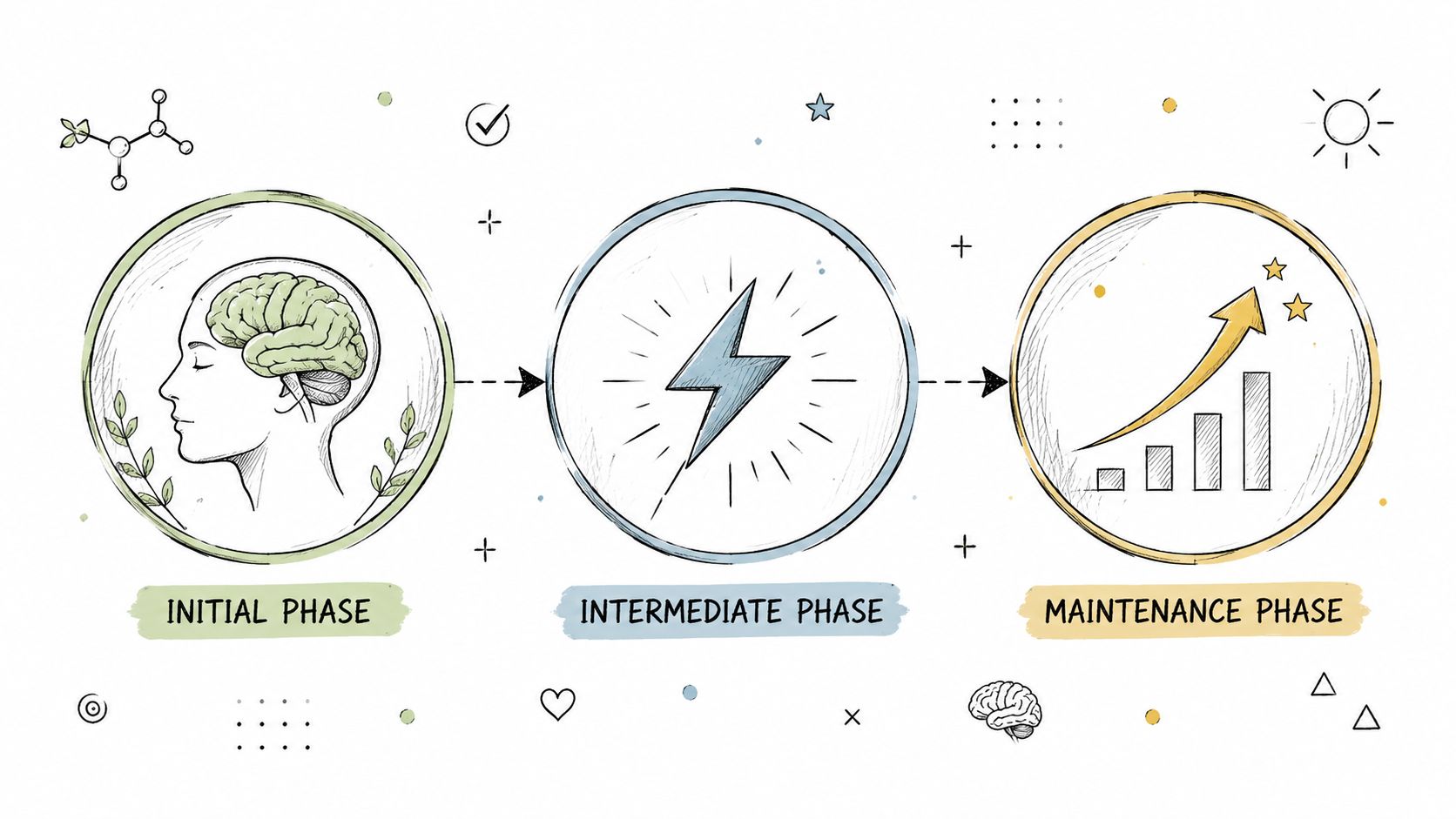
Initial phase
In the immediate period after injury, nutrition strategy belongs inside formal medical care. Calorie delivery, protein adequacy, route of feeding, glucose management, aspiration risk, hemodynamics, and neurologic status all take priority.
In this phase, any use of exogenous ketones should be considered only under direct clinical supervision. The patient may be intubated, sedated, unstable, or unable to report tolerance. This is not the phase for self-directed supplementation.
Intermediate phase
As the patient stabilizes, the focus often shifts toward rehabilitation, swallowing recovery, mobility, and tolerance of oral intake. Appetite may still be poor. Meal timing may be erratic. Cognitive fatigue often becomes more visible.
Questions to ask in this phase include:
- Can the patient maintain consistent intake?
- Do mentally demanding therapy sessions trigger a crash afterward?
- Is physical reconditioning limited by low energy or poor meal timing?
Clinicians may then begin thinking more broadly about fuel options, including whether ketone-based support fits the patient's larger plan.
Maintenance phase
Long-term recovery is where many motivated patients start looking for practical tools. They're back at work, studying again, training lightly, or trying to increase cognitive endurance without feeling overstimulated.
A reasonable application framework looks like this:
- Who may benefit: People dealing with cognitive fatigue, inconsistent appetite, spaced-out meals, or demanding mental work.
- When to use exogenous ketones: Before concentrated cognitive tasks, during long work blocks, around light to moderate physical training, or on days when meal timing is disrupted.
- What to expect physiologically: A shift in fuel availability, often described as steadier energy rather than a stimulant-like surge.
Patients recovering from brain injury usually do better with stable inputs than with aggressive swings in caffeine, fasting, and missed meals.
For many, the best use case isn't dramatic. It's practical. Support a demanding morning. Help bridge a long gap between meals. Reduce the mismatch between energy demand and available fuel.
Safe Practices and Essential Clinician Collaboration
Any discussion of traumatic brain injury nutrition has to end with the same principle. Advanced nutritional strategies support care. They do not replace it.
Patients with TBI should discuss meaningful diet changes, ketogenic strategies, or exogenous ketone use with the clinicians managing their recovery. That usually means some combination of neurologist, neurosurgeon, primary care physician, physiatrist, speech therapist if swallowing is affected, and a registered dietitian. The more complex the injury, the more important the team approach becomes.
This matters for several reasons:
- Medication interactions and tolerance: Recovery plans often include drugs that affect appetite, alertness, GI function, or autonomic symptoms.
- Feeding limitations: Dysphagia, nausea, delayed gastric emptying, and poor intake can change what's realistic.
- Monitoring needs: Blood glucose patterns, hydration, weight trends, and symptom response all influence decision-making.
If you're considering supplementation, it also helps to review common tolerability questions in a clinically grounded resource like Tecton's guide to exogenous ketones side effects.
The safest mindset is collaborative. Bring your clinician a clear question. Describe your goals. Ask whether the intervention fits your stage of recovery, your medications, and your overall nutrition plan.
If you want a cleaner way to think about ketone supplementation in daily life, Tecton Ketones™ focuses on bioidentical exogenous ketone nutrition built around R3HBG and liposomal delivery. For patients, caregivers, and performance-minded users, the value is in having a science-literate framework for when ketones may fit, how they differ from diet-induced ketosis, and how to use them as one part of a broader recovery or energy-support strategy.


