


It's commonly believed that lactate is something you need to “get rid of” after hard exercise. That framing is too simple, and it leads athletes to chase the wrong target. Lactate clearance matters, but not because lactate is garbage. It matters because lactate is a moving fuel, a transportable intermediate, and a readout of how well your metabolism is handling work in real time.
If you coach athletes or train seriously yourself, the better question isn't “How do I stop making lactate?” It's “How well can I move, use, and recycle it?” That shift changes how you think about endurance, recovery, and even nutrition. It also opens the door to a more nuanced conversation about metabolic flexibility, including where exogenous ketones fit in.
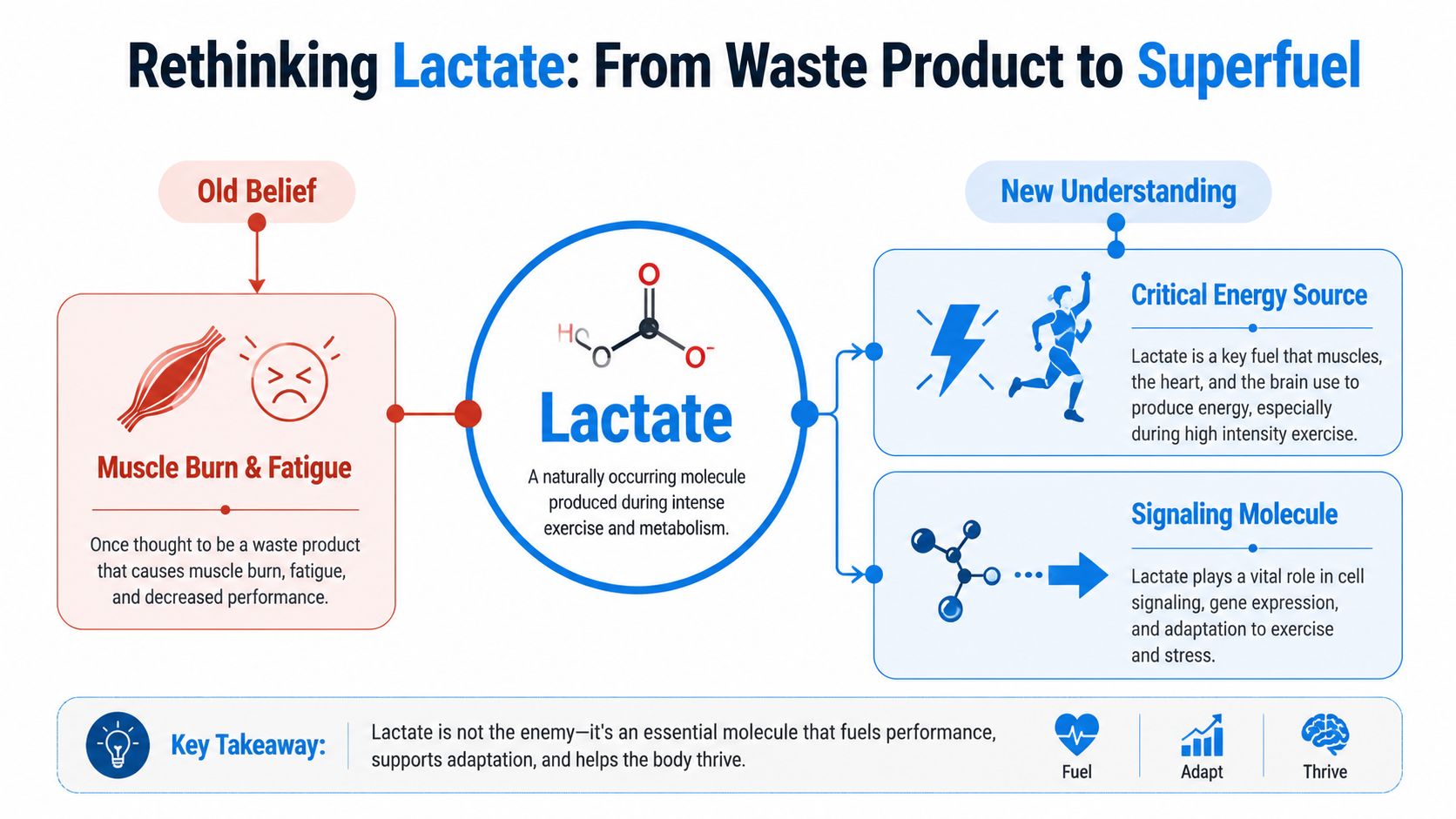
Rethinking Lactate From Waste Product to Superfuel
Lactate is more accurately described as a metabolic courier than a waste product. It moves energy between tissues that can use it, store it, or convert it into something else. In classic physiology, the body's lactate handling is dominated by metabolic use, not simple disposal, with the liver clearing about 70% of lactate, and the kidneys, skeletal muscle, and heart handling the rest for energy, while less than 5% is lost through urine (BJA Education review).
That broader picture explains why lactate is so easy to misunderstand. It is not just something that appears after a hard interval or a finishing kick. The body produces it continuously, even at rest, and it remains part of normal fuel traffic throughout the day. A historical human study reported resting lactate production of 1.38 ± 0.16 mol per 70-kg person per 24 hours, with lactate clearance measured at 17.9 ± 1.1 mL/kg/min in normal subjects, and both clearance and production unchanged after a 36-hour fast in four subjects (PubMed). That places lactate handling inside baseline metabolism, not only inside exercise stress.
Why the “burn” story misses the point
Lactate accumulation usually appears when production rises faster than removal. That does not mean lactate is the problem. It means the system is under load.
The liver can convert lactate back into glucose, and working muscle and the heart can oxidize it for fuel. So when athletes talk about “clearing lactate,” they are really talking about improving the body's ability to process energy efficiently under demand. The point is not to erase lactate, but to move it, use it, and recycle it quickly enough to keep output steady.
Practical rule: If an effort feels unsustainably hard, do not assume lactate is the enemy. Read it as a sign that production, transport, and disposal are out of balance.
For a wider map of how fuel systems interact, the core energy pathways are laid out in this overview of energetic systems of the body. Lactate belongs in that same conversation, not outside it.
Why Lactate Clearance Defines Athletic Performance
Performance isn't only about how much lactate you make, it's about how fast you can clear and reuse it while still holding the pace. That's why lactate threshold and related markers matter. They reflect the intensity at which the system starts to lose its easy balance. The faster an athlete can dispose of lactate while maintaining output, the longer they can sustain hard work before fatigue builds.
Clearance capacity is part of the threshold story
A key caution from exercise physiology is that lactate clearance is not a single process. It's the balance of lactate appearance and disposal, and at steady state the metabolic clearance rate is mathematically confounded by blood lactate concentration because both change together (PMC review). In plain language, that means you can't treat a clearance number as if it's a simple on-off switch. It's one piece of a dynamic system.
That's still useful for coaches. Elite athletes don't always produce less lactate. They're often better at moving it through the system and keeping work sustainable. In practice, that shows up as a higher ability to hold pace, recover between efforts, and repeat hard outputs without falling apart.
How to read the numbers without overinterpreting them
Lactate testing can be done with handheld meters, lab testing, or graded exercise protocols. The point is not to worship a single value. The point is to see the curve. If lactate rises quickly at a relatively modest workload, the athlete may be underdeveloped aerobically, under-recovered, or just not yet adapted to that intensity. If it stays steadier at a higher workload, the athlete has usually built a more durable metabolic base.
Coaching lens: Track lactate alongside pace, heart rate, and perceived exertion. Numbers make more sense when you look at the whole picture, not one marker in isolation.

For athletes who want a ketone-based support option around demanding sessions, Tecton EDGE™ Performance Shot + Electrolytes is described as a liposomal R3HBG™ ketone shot with sodium, potassium, and magnesium, designed for training days where steady energy and hydration matter.
Training Protocols to Improve Lactate Clearance
Training is still the most reliable way to improve lactate handling because the body adapts to the work it repeats. A controlled study in men found that short-term endurance training increased metabolic clearance rate from 36.8 ± 4.8 to 51.4 ± 6.8 mL/kg/min, showing that training can raise the body's capacity to process lactate during exercise (Journal of Applied Physiology).
Build the aerobic base first
Low-intensity aerobic work strengthens the downstream machinery that handles lactate, especially the mitochondria that take up and use it. That is why Zone 2 stays central in endurance programming. A strong aerobic base does more than make easy sessions feel smoother. It gives the rest of the system more room before bottlenecks appear.
Add targeted intensity, not random suffering
Higher-intensity intervals matter too, because they train the body to manage lactate production under load. Exercise physiology research has shown that apparent lactate clearance rose 2.83 ± 0.76-fold from rest to moderate exercise and 1.96 ± 0.61-fold from rest to heavy exercise, which helps explain why rising blood lactate reflects both greater production and changes in disposal at higher intensity (Journal of Applied Physiology). Coaches who mix easy volume with threshold or interval work are working with that physiology instead of against it.
Use active recovery on purpose
Active recovery is not just busy movement after hard work. In sports-recovery research, active recovery near 80% of lactate threshold produced the fastest clearance, and one study reported 50% of lactate removed within 10 minutes and about 90% within 90 minutes under active recovery conditions (Exercise and Sport Sciences Reviews). Easy movement keeps circulation and oxidative metabolism working, while complete stopping can leave the system processing fuel more slowly.
If you are programming this for a demanding event block, EVMT's elite Murph plan is a useful example of how structured intensity, volume, and recovery can be organized around a hard effort.
The practical rule is straightforward. Build enough easy work to support the engine, enough hard work to raise the ceiling, and enough recovery movement to keep lactate moving through the system.
For a clear progression example, this 300 workout plan shows how conditioning blocks can be arranged around repeated effort and recovery.
The Link Between Nutrition and Metabolic Flexibility
Training adapts the system, but nutrition sets the metabolic background it operates in. Metabolic flexibility means your body can shift between fuels without getting stuck on one pathway. That matters for lactate because lactate handling is tied to overall fuel state, not just exercise load. Early physiological research linked lactate clearance patterns with pre-infusion concentrations of ketone bodies and alanine, which points to lactate handling as part of a broader fuel network rather than an isolated event.
Why fuel context changes lactate behavior
A body that is already under metabolic stress handles lactate differently from one that is well-fueled and well-recovered. That is why fasting, low-carb intake, and hard training blocks can feel very different from each other. The fuel background changes the work asked of the muscles, liver, and heart, so the same lactate level does not always mean the same recovery state.
A useful resource for the fat-derived side of this picture is benefits and types of MCT oil. MCTs are not ketones, but they sit close to that pathway because they can support ketone production through diet and may help explain why some athletes use them as part of a broader fuel strategy.
Nutritional ketosis, endogenous ketones, and exogenous ketones are different
These terms get mixed up often, so keep them separate:
- Nutritional ketosis means the body is making ketones through diet or fasting.
- Endogenous ketone production is your own liver generating ketones.
- Exogenous ketone supplementation means ketones are provided from outside the body.
That distinction matters because the mechanism is different even if the outcome, available ketone fuel, can look similar on the surface. For people whose appetite patterns, fasting windows, or midday energy dips make routine eating less predictable, the GLP-1 Shot is described as a liposomal R3HBG™ ketone shot with 5-HTP and prebiotic fiber that fits structured routines without relying on stimulants.
The question for athletes is not whether one fuel is always better. It is whether the fuel mix matches the work being asked of the body. If repeat-output training is the priority, consistency in carbohydrate and overall energy intake shapes how well the system handles lactate. If a fat-adapted phase is the goal, ketone availability may matter more. If you want a closer look at how ketone use fits into performance routines, the article on how exogenous ketones work gives a useful framework for that discussion. When the aim is steadier daily energy, the benefits and types of MCT oil resource is a practical place to start.
Exogenous Ketones A Tool for Metabolic Efficiency
Exogenous ketones work as a parallel fuel source, not a magic trick. Beta-hydroxybutyrate, or BHB, is the main circulating ketone, and the brain, heart, and working muscle can use it. Human PET imaging showed that exogenous D-BHB is rapidly absorbed and metabolized, with the heart and kidneys identified as major sites of ketone metabolism (PMC PET study). That matters because it shows ketones are not abstract chemistry, they are used by real tissues under real conditions.
The practical question is how that changes the fuel mix when glucose is being taxed. To understand the applied side, it helps to look at do exogenous ketones work in different performance and daily-energy settings.
Why the form of ketone matters
The cleanest way to discuss this is through chemistry, not hype. Bioidentical D-BHB is the biologically relevant form the body uses for energy. Ketone salts add extra mineral load, and many precursors still depend on the body to convert them before they become usable ketone fuel. Liposomal delivery is used to support absorption and consistency, which is part of why some formulations are built for more predictable use in daily routines.
A closer look at athlete use cases and understanding metabolic flexibility for athletes helps place ketone use in context. The useful question is not whether ketones are better than carbohydrates in every setting. It is whether the fuel source matches the work demand, the recovery window, and the athlete's current metabolic state.
BHB is fuel and signal
BHB is more than a substrate for ATP production. A NIH review notes that it also has signaling functions, and later work described effects on pathways related to cellular homeostasis and stress response (PMC review). Ketone biology sits at the intersection of fuel delivery and cell signaling, which is why it matters in both performance and recovery contexts.
Useful framing: Exogenous ketones do not replace training. They change the fuel environment so the athlete or worker has a different energy substrate available when glucose demand is high or eating is not practical.
For mentally demanding days, Locked Cognition™ Shot pairs liposomal R3HBG™ with Alpha GPC and Lion's Mane in a format intended for steady workday use rather than stimulant-heavy output.
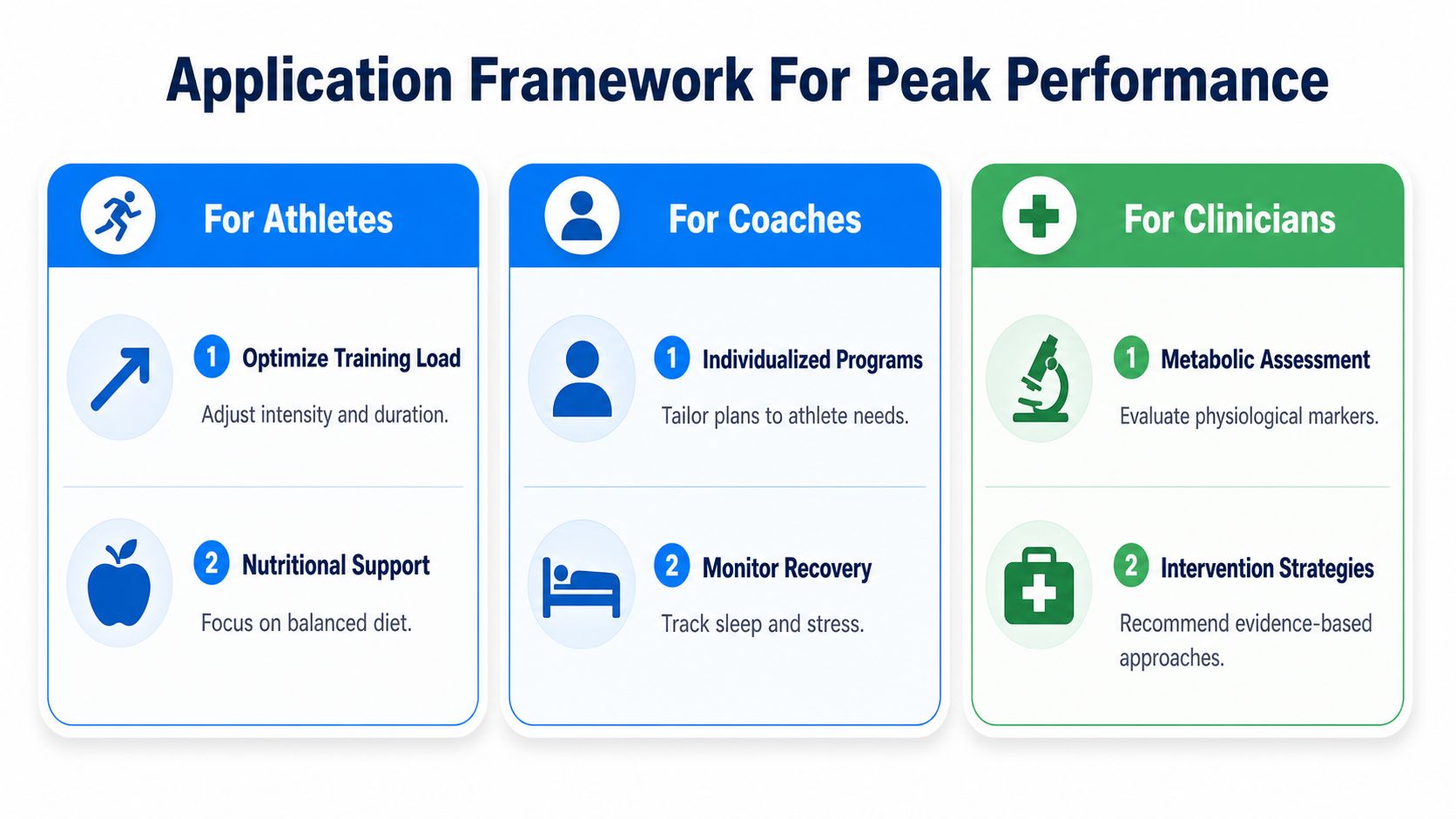
Application Framework For Peak Performance
For Athletes
- Optimize Training Load: Keep easy days easy, then place harder threshold or interval work where you can recover from it.
- Support Fuel Availability: Use consistent meals when training volume is high, and consider ketone support when you want a different fuel source available.
- Watch the Trend: Don't obsess over one lactate reading. Look for how your pace, effort, and recovery change over time.
For Coaches
- Individualize the Curve: Two athletes can hit the same pace with different lactate responses, so program from the athlete, not the spreadsheet.
- Monitor Recovery: Heart rate, sleep, and how quickly an athlete can repeat work all matter when you're judging clearance capacity.
- Use Purposeful Recovery: Active recovery is not filler. It can help the system keep clearing after demanding efforts.
For Clinicians
- Assess in Context: A low or high lactate value only makes sense when you know timing, workload, and metabolic state.
- Use Serial Observation: Repeated measurements are more informative than a single snapshot when you're evaluating response to therapy or stress.
- Interpret Carefully: Lactate reflects both production and removal, so it should never be used as a simplistic proxy for one cause.
The key takeaways are straightforward. Lactate clearance is a marker of metabolic handling, not a punishment for training hard. Better clearance comes from training, recovery, and a fuel system that can switch efficiently when demands change. BHB adds a useful parallel fuel pathway, and it also acts as a signaling metabolite that may shape how the body responds to stress.
If you want a more rigorous approach to energy, start with the basics, then choose the tool that fits the goal. Read the research, match fuel to demand, and test what changes your own output in practice. Tecton Ketones™ is worth exploring if you want a clinically informed ketone option that fits into training, work, or fasting routines without changing the rest of your plan.


