


Most advice on ketones and inflammation collapses two different things into one bucket. That's the first mistake.
Diet-induced ketosis and exogenous ketone supplements can both raise circulating ketones, but they do not reliably produce the same inflammatory response. If you miss that distinction, the science looks contradictory. If you keep that distinction front and center, the literature starts to make sense.
From a practitioner's perspective, this matters because people often expect any ketone product to reproduce the same signaling effects they'd see during fasting or a ketogenic diet. That isn't a safe assumption. The molecule, the isomer, the delivery system, and the surrounding metabolic context all matter.
Ketones are not just backup fuel. Beta-hydroxybutyrate, or BHB, is both a fuel substrate and a signaling metabolite. It affects mitochondrial energy production, brain fuel availability, endothelial biology, and inflammatory pathways. But whether those effects are helpful, neutral, or mixed depends on how ketones are generated and delivered.
Understanding Ketone Metabolism and Fuel Pathways
What ketones are and why the body makes them
Ketones are small energy molecules produced when carbohydrate availability drops and the liver starts converting fat into alternative fuel. The main circulating ketone is beta-hydroxybutyrate, or BHB.
Under ordinary mixed-diet conditions, most cells rely heavily on glucose. Glucose enters cells, moves through glycolysis, and ultimately feeds the mitochondria to generate ATP. Ketones enter that same broad energy system from a different route. They bypass part of the usual glucose-dependent setup and give tissues another way to make usable energy.
That matters most when energy demand is high, fuel timing is inconsistent, or glucose handling is less efficient than usual.
For a practical primer on supplement-based ketosis, this overview of what exogenous ketones are is a useful starting point.
Glucose and ketones are different fuels, not interchangeable experiences
The body can run on both glucose and ketones, but it doesn't experience them identically.
Glucose is fast, familiar, and tightly regulated. Ketones are more likely to rise when insulin is lower and fat oxidation is higher, such as during fasting, carbohydrate restriction, or prolonged exercise. In those settings, BHB becomes a meaningful fuel for muscle, heart, and brain tissue.
Inside mitochondria, both fuels support ATP production. But ketones also change the signaling environment around energy production. That includes shifts in redox state, substrate preference, and cell-level communication that can affect resilience under stress.
Clinical view: Metabolic flexibility is not about choosing one fuel forever. It's about being able to switch fuels cleanly when demand changes.
Endogenous ketosis versus exogenous supplementation
It helps to separate three concepts:
- Endogenous ketone production: Your liver makes ketones from stored or dietary fat.
- Nutritional ketosis: A metabolic state usually reached through fasting or carbohydrate restriction, where endogenous ketone production rises.
- Exogenous ketone supplementation: You consume ketones directly, or consume compounds designed to raise ketone levels.
That distinction matters because raising a blood ketone number is not the same as reproducing the whole physiology of nutritional ketosis. Diet-induced ketosis involves coordinated changes in insulin, fatty acid flux, substrate use, and cellular signaling. A supplement may raise BHB without recreating all of that.
Why the brain and circulation care about this
The brain is especially relevant here because it has high energy demand and limited fuel tolerance. BHB can cross into the brain and support energy production when glucose availability is lower or when glucose use is less efficient.
Endothelial cells and vascular tissue also respond to metabolic signals, not just calories. That's part of why ketones keep showing up in conversations about energy, recovery, and inflammatory tone. The conversation shouldn't be “glucose bad, ketones good.” It should be more precise than that.
How Ketones Influence Inflammatory Signaling
BHB isn't just burned for energy. It also acts like a molecular signal that changes how cells behave.
One of the best-studied examples involves the NLRP3 inflammasome, a cellular danger-sensing complex tied to inflammatory signaling. A useful way to think about it is as an alarm system. When the alarm is activated, cells increase inflammatory output. When BHB inhibits that alarm, the downstream inflammatory response can quiet down.
BHB as a signaling metabolite
Research shows that BHB functions as a signaling molecule that inhibits the NLRP3 inflammasome, reducing production of interleukin-1β and interleukin-18, while also promoting macrophage and microglial polarization toward a more anti-inflammatory M2 phenotype through HCA2 activation and NF-κB signaling inhibition in neuroinflammatory contexts, as reviewed in this NIH-indexed paper on BHB and neuroinflammation.
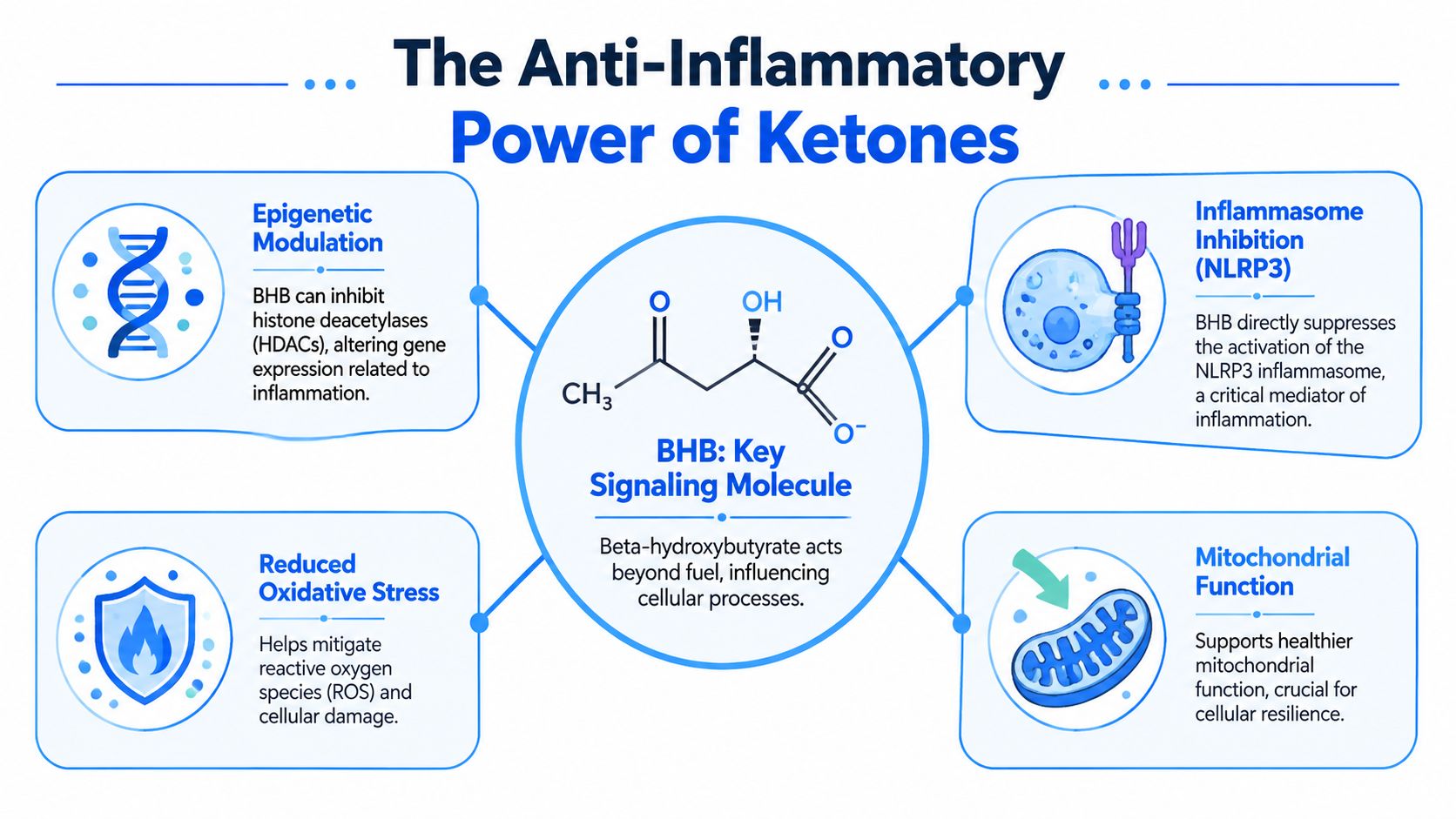
That's the mechanistic reason so many people associate ketones and inflammation with a favorable relationship. In the right context, BHB can reduce inflammatory signaling rather than amplify it.
For a consumer-friendly discussion of that broader question, this article on a natural supplement for inflammation adds practical context.
The inflammatory effects are not only about fuel
The reason this field is interesting is that ketones may influence inflammation even when the effect cannot be explained only by calories or weight change.
BHB also appears to influence mitochondrial function, oxidative stress handling, and gene regulation. Some discussions include histone deacetylase, or HDAC, inhibition as part of that story. Clinically, the key point is simpler. A ketone signal can change the environment around the cell, not just the fuel inside the cell.
That's why some active people use products such as Tecton EDGE™ Performance Shot + Electrolytes on training or physically demanding days. In factual terms, it's designed for active individuals seeking steady energy, hydration support, and metabolic efficiency, with liposomal R3HBG™ ketone plus sodium, potassium, and magnesium.
A practical analogy
Think of glucose as fuel delivered to a power plant. Think of BHB as fuel plus a set of instructions for the control room.
That doesn't mean the instructions are always beneficial in every form or every situation. It means ketones can alter inflammation through signaling pathways, not only by supplying ATP.
Ketones don't just change what the cell burns. They can change what the cell says, senses, and amplifies.
Decoding the Research on Ketones and Inflammation
The most common public message is too simple: “ketones reduce inflammation.” That statement is incomplete.
A more accurate version is this: nutritional ketosis often shows anti-inflammatory signaling, while some oral ketone supplements have produced mixed or opposite findings in human trials.
Why the confusion persists
The central problem is that many articles talk about ketone levels as though all roads to those levels are biologically identical. They are not.
The gap is especially clear in recent commentary that notes nutritional ketosis consistently inhibits NLRP3, while recent peer-reviewed human clinical trials from 2024 to 2025 found that specific oral ketone supplements activated NLRP3. That distinction is summarized in this discussion of ketone supplements versus ketone levels.
What the human trials actually challenge
Two separate randomized, controlled human clinical trials in healthy young adults aged 18 to 35 found that oral ketone supplements significantly activated the NLRP3 inflammasome in stimulated blood samples rather than suppressing it, according to this research review on oral ketone supplements and inflammation.
That's not a small footnote. It directly challenges the assumption that every exogenous ketone product will mimic the anti-inflammatory effects often associated with fasting or keto diets.
A few practical issues likely matter here:
- Isomer quality: Some products use racemic mixtures that include forms the body may not use the same way.
- Mineral burden: Ketone salts can carry a high mineral load.
- Acute testing conditions: Some trials examine stimulated immune responses rather than day-to-day baseline physiology.
What still appears consistent
The contradiction doesn't mean ketones are useless for inflammatory regulation. It means the delivery format matters.
Chronic ketone elevation in heart failure models abolished proinflammatory signaling and macrophage infiltration in the heart, while also improving diastolic filling properties without changing glucose levels or body weight, according to this Circulation Heart Failure paper. That supports the idea that ketones can influence inflammatory biology directly, independent of weight loss.
Interpretation: Don't ask only whether ketones help inflammation. Ask which ketone, in what form, over what time frame, and under what metabolic conditions.
The Role of Ketones in Brain Health and Neuroinflammation
The brain is one of the clearest places where ketone physiology becomes practical.
It needs continuous energy. It doesn't store much. When energy delivery is unstable, cognitive output usually drops fast. BHB gives the brain another fuel option, and that matters during intense mental work, fasting, or periods when glucose use is less efficient.
A useful primer on that metabolic rationale appears in this article about the keto diet and brain health.
Fuel first, signaling second
People often discuss brain ketones as if the only benefit is “more energy.” That misses half the story.
BHB can support mitochondrial ATP production in the brain, but it may also influence neuroinflammatory tone. That combination matters because brain performance depends on both. A well-fueled neuron inside an inflammatory environment still won't perform normally.
Animal data adds an important layer here. Exogenous ketone supplementation has been shown to increase plasma BHB, suppress LPS-induced inflammatory responses, and reduce striatal wave discharge numbers by approximately 40% in absence seizure models, as summarized by Ketone Nutrition.
Why this is relevant outside the lab
That doesn't justify disease claims, and it doesn't mean every supplement reproduces those effects in every person. It does support a useful structure-function idea: ketones may help support brain energy utilization while modulating inflammatory processes that influence excitability and resilience.
Here's a short explainer that expands on the brain-fuel concept:
Practical interpretation for demanding days
For athletes, surgeons, shift workers, founders, and students, its practical relevance is straightforward. If the brain has access to a stable alternative fuel, people often notice fewer energy swings and better cognitive endurance.
That doesn't mean ketones replace sleep, carbohydrate periodization, or basic nutrition. It means they can fill a specific gap when brain demand is high and energy stability matters.
A Guide to Exogenous Ketone Types and Quality
Not all ketone products are built the same. That's the main practical lesson.
If you ignore the form, you'll miss the trade-offs. If you understand the form, product selection becomes much easier.
Ketone salts, esters, and precursors
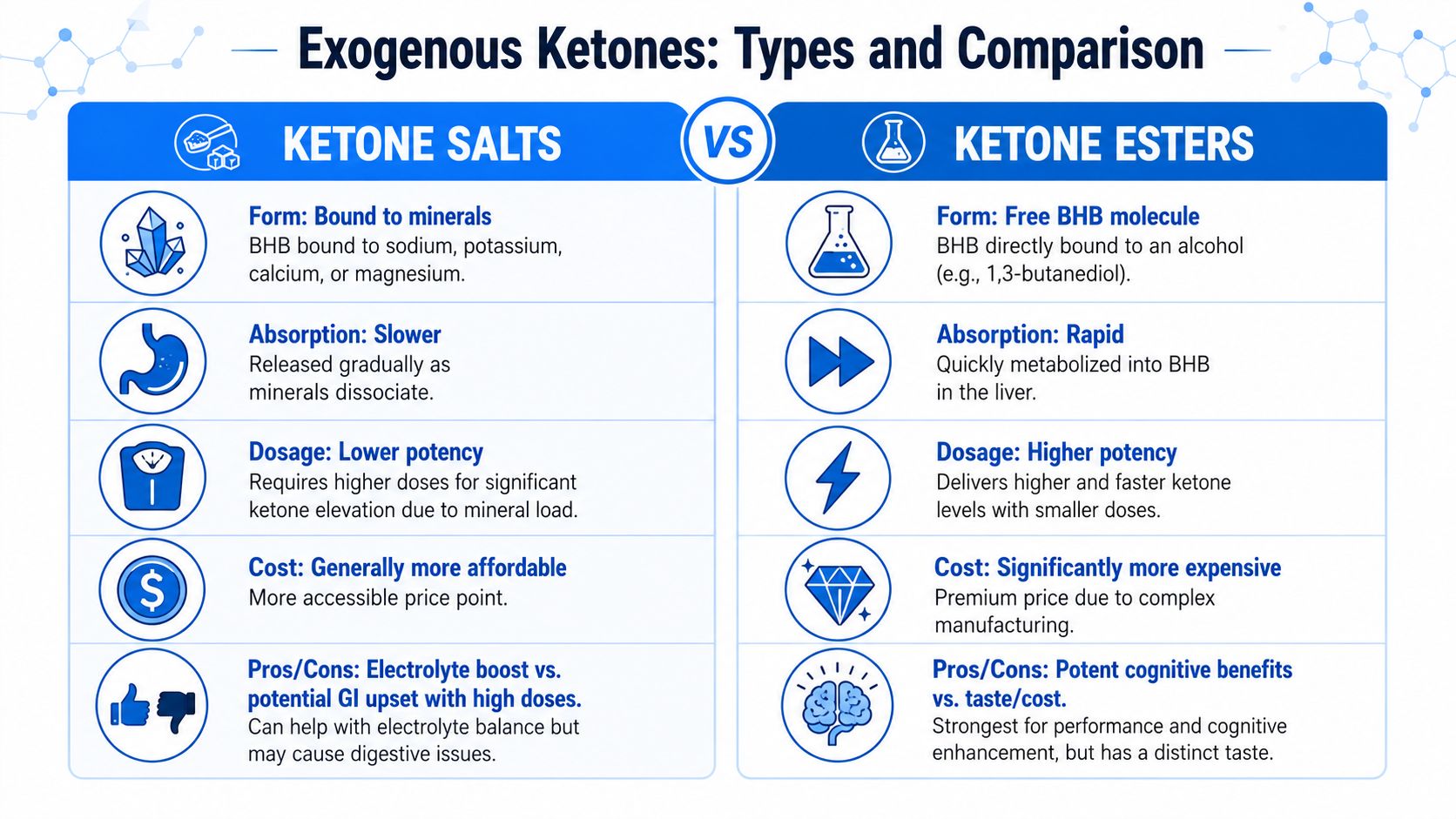
Ketone salts bind BHB to minerals such as sodium, potassium, calcium, or magnesium. They're common and generally more accessible, but the mineral load can limit how much BHB you can comfortably consume.
Ketone esters usually deliver ketone molecules in a more concentrated form. They tend to raise ketones more efficiently, though many people notice a harder taste profile or tolerance issues depending on the formula.
Precursors such as MCTs don't contain BHB directly. They rely on the body to convert substrate into ketones, which makes their effects less direct and less predictable for immediate use.
Why the D-isomer matters
Many formulations separate at this point.
Exogenous D-beta-hydroxybutyrate supplementation has been shown to raise blood ketone levels above 1 mM in humans, reaching a concentration approximately 1.7-fold greater than the same dose of racemic D+L-BHB or medium-chain triglycerides, despite a lower caloric load, according to Frontiers in Nutrition.
That finding matters because the body naturally produces the D-form of BHB. A bioidentical structure is more aligned with normal ketone metabolism than a mixed D+L approach.
A practical comparison
| Type | Main advantage | Common limitation | Best use case |
|---|---|---|---|
| Ketone salts | Simpler entry point, may add electrolytes | Mineral load can become limiting | Lighter use, hydration-focused contexts |
| Ketone esters | More potent ketone elevation | Taste, cost, and tolerance issues | Performance or cognitive precision |
| Precursors like MCTs | Familiar and widely available | Slower, indirect ketone generation | Broader metabolic support |
What quality looks like in practice
When I evaluate exogenous ketones clinically, I look for a few things:
- Bioidentical structure: Prefer the form that matches physiological D-BHB.
- Delivery system: Liposomal delivery can matter when consistency and tolerability matter.
- No unnecessary burden: Heavy mineral loads and mixed isomers often create trade-offs people don't anticipate.
- Use-case fit: A fasting-support formula is not identical to an endurance formula.
Those details explain why one ketone product feels clean and useful, while another feels heavy, flat, or irritating.
Why This Matters for Your Energy and Performance
The biochemistry matters because it changes what people feel during work, training, and recovery.
When BHB is used well, the value isn't dramatic hype. It's steadier output. That's usually what people are after.
Four practical outcomes
- Steadier energy: Ketones provide a non-glycemic fuel source, which may help support output without the same rise-and-fall pattern people often notice with fast carbohydrate intake.
- Cognitive endurance: The brain can use BHB as fuel, which is why ketones often fit well before long meetings, study blocks, or mentally repetitive work.
- Workout support: In sustained efforts, an additional fuel pathway can help when people want energy support without leaning on stimulants.
- Metabolic efficiency: BHB also functions as a signaling metabolite. That means the effect is not only “more fuel,” but potentially a more resilient cellular environment.
Research also suggests BHB suppresses age-associated inflammation and senescence by inhibiting NLRP3 and decreasing the senescence-associated secretory phenotype in vascular cells, as described in Cellular and Molecular Life Sciences coverage of BHB and vascular aging.
Practical context for readers comparing options
If you're trying to sort through broader consumer options, a resource such as this energy boost supplement overview can be useful as a comparison point for how the category is positioned. The more important question, though, is still formulation quality and metabolic logic, not packaging language.
A good ketone strategy should feel boring in the best way. Stable energy. Less drift. Fewer crashes. Better repeatability.
Practical Takeaways for Using Ketones
Ketones work best when they solve a specific problem. Random use usually leads to mixed impressions.
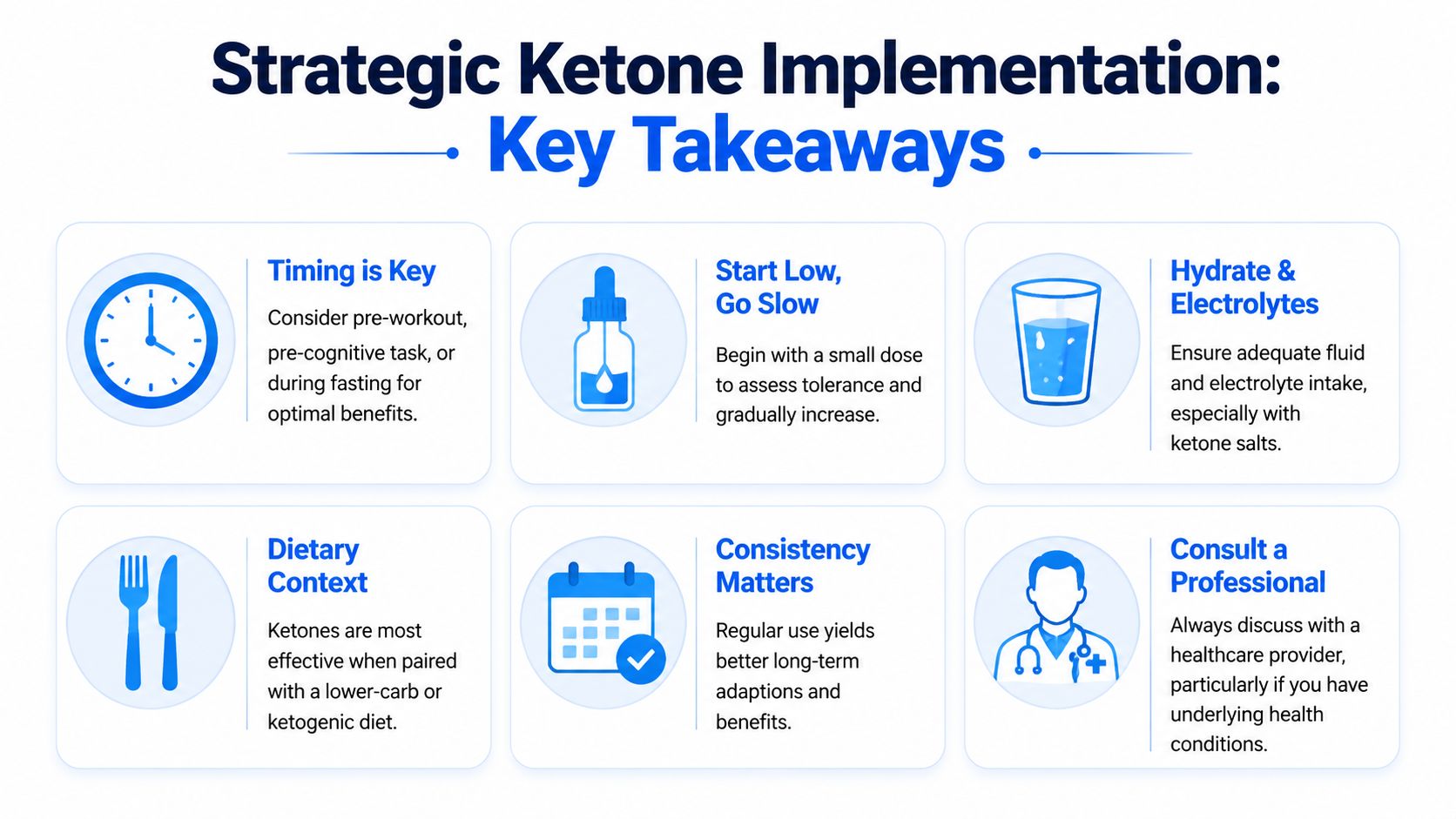
When to use exogenous ketones
A simple framework works well:
- Before cognitively heavy work If the goal is mental stamina, take them before a deep-work block, travel day, exam session, or long sequence of meetings.
- Before training or competition This is most relevant for longer sessions, repeated efforts, or days when you want energy support without relying only on caffeine.
- During fasting windows Some people use ketones when meals are spaced out and they want a steadier transition through the day.
- During physically demanding schedules Shift work, travel, and long event days often create the kind of unstable energy pattern where ketones fit well.
Who may benefit most
Different groups tend to use ketones for different reasons:
- Endurance athletes: for fuel flexibility and long-session support
- Busy professionals: for steadier cognitive output
- People experimenting with lower-carb routines: to support the transition
- Adults focused on healthy aging: to support metabolic resilience
- People managing fasting windows: to reduce friction around long gaps between meals
If nutrition structure is part of the plan, a tool like an AI-powered ketovore plan can help people organize a lower-carbohydrate approach around real meals instead of guesswork.
What to expect physiologically
Set expectations correctly.
You may notice clearer energy, smoother focus, and less dependence on constant snacking. You should not expect a supplement to recreate every metabolic feature of a well-executed ketogenic diet. That's the core lesson from the inflammation literature.
For people whose goals include appetite awareness or more stable fasting windows, the GLP-1 Shot is one example of a metabolic support ketone shot built for routines with spaced-out meals, reduced calories, or inconsistent daily patterns, using liposomal R3HBG™ ketone with 5-HTP and prebiotic fiber.
Application Framework
- Choose the use case first: focus, endurance, fasting, or hydration support.
- Prefer bioidentical forms: the D-form matters.
- Respect formulation trade-offs: salts, esters, and precursors behave differently.
- Don't confuse blood ketones with full nutritional ketosis: the number alone doesn't tell the whole story.
- Track subjective response: energy stability, GI tolerance, focus, and workout feel are usually more useful than marketing claims.
- Talk to a clinician when appropriate: especially if you have a complex metabolic or medical history.
If you want a cleaner, more clinically reasoned way to think about exogenous ketones, explore Tecton Ketones™. The key advantage is not hype. It's a tighter focus on bioidentical ketone structure, liposomal delivery, and practical use cases that respect what the science says about ketones and inflammation.


