


Most advice about energy and focus starts with a stimulant. Feeling tired? Drink coffee. Losing concentration? Add more caffeine. That approach can raise alertness, but alertness isn't the same as sustained mental output. A stimulant can make you feel more awake while leaving the underlying question unanswered: what fuel is available to the brain during a demanding task?
The brain represents roughly 2% of body weight yet uses about 20% of the body's resting energy. That makes fuel availability a central part of cognition, not a minor detail. Sleep, meals, hydration, movement, and metabolic flexibility all influence how reliably the brain can maintain work.

This article separates stimulation from substrate. It explains how glucose and beta-hydroxybutyrate support mitochondrial ATP production, how nutritional, endogenous, and exogenous ketosis differ, why ketone format affects blood BHB exposure, and where the clinical evidence remains conditional. It also turns that biology into a practical routine for steadier output, without treating ketones as a guaranteed cognitive enhancer.
Why Energy and Focus Is a Fuel Problem, Not a Stimulus Problem
Caffeine changes how tired you feel. It doesn't automatically provide the brain with a different fuel. That distinction matters because a person can experience sharper alertness for a short period while still struggling with the stamina required for reading, planning, writing, or making careful decisions.
Focus is a work-capacity problem. Neurons need a continuous supply of energy to maintain electrical gradients, communicate with one another, and manage the demands of attention. Glucose is the usual circulating fuel in the fed state, but the brain can also use ketones when they become available.
A mid-afternoon slump may reflect several interacting factors, including meal composition, insufficient sleep, long sedentary periods, stress, and a mismatch between energy demand and available substrate. If breakfast and lunch leave you hungry, foggy, or dependent on repeated coffee, reviewing how to stop the 2 PM crash can help you improve the nutritional foundation before adding another supplement.
Practical rule: Don't judge an energy strategy only by how quickly it makes you feel awake. Judge it by whether you can maintain accurate, composed work without a later rebound.
The global environment also makes this issue more relevant. Electricity demand rose 4.3% in 2024, an increase of approximately 1,080 to 1,100 TWh, according to the International Energy Agency's electricity analysis. Modern work increasingly depends on computers, communication systems, cooling, transportation, and digital infrastructure, but human concentration still depends on biological energy production.
The sections ahead build the model in sequence. First comes the cellular pathway, then the three forms of ketosis, followed by sleep, nutrition, caffeine, and ketone formats. The research section distinguishes measurable physiological effects from uncertain cognitive outcomes, and the final sections turn those distinctions into a trial you can evaluate with real performance and recovery metrics. For a related explanation of avoiding a crash, see Tecton's guide to energy without a crash.
The Biology of Sustained Mental Energy
The simplest useful analogy is a car. Glucose and ketones are fuels, mitochondria are the engines, and ATP is the spendable energy that powers the work. The brain doesn't experience a molecule as “focus” directly. It uses metabolic pathways to produce ATP, and neurons spend that ATP on signaling and cellular maintenance.
In a normal fed state, glucose is the primary fuel. Cells break it down into smaller molecules, which eventually provide acetyl-CoA for the tricarboxylic acid cycle, also called the TCA cycle. The resulting reducing equivalents drive oxidative phosphorylation in mitochondria, where most ATP is produced.
BHB enters the same broad energy economy through a different route. After uptake, beta-hydroxybutyrate is converted into acetoacetate and then into acetyl-CoA. That acetyl-CoA enters the TCA cycle and supports mitochondrial ATP production. BHB isn't a stimulant. It's an alternative oxidative substrate.
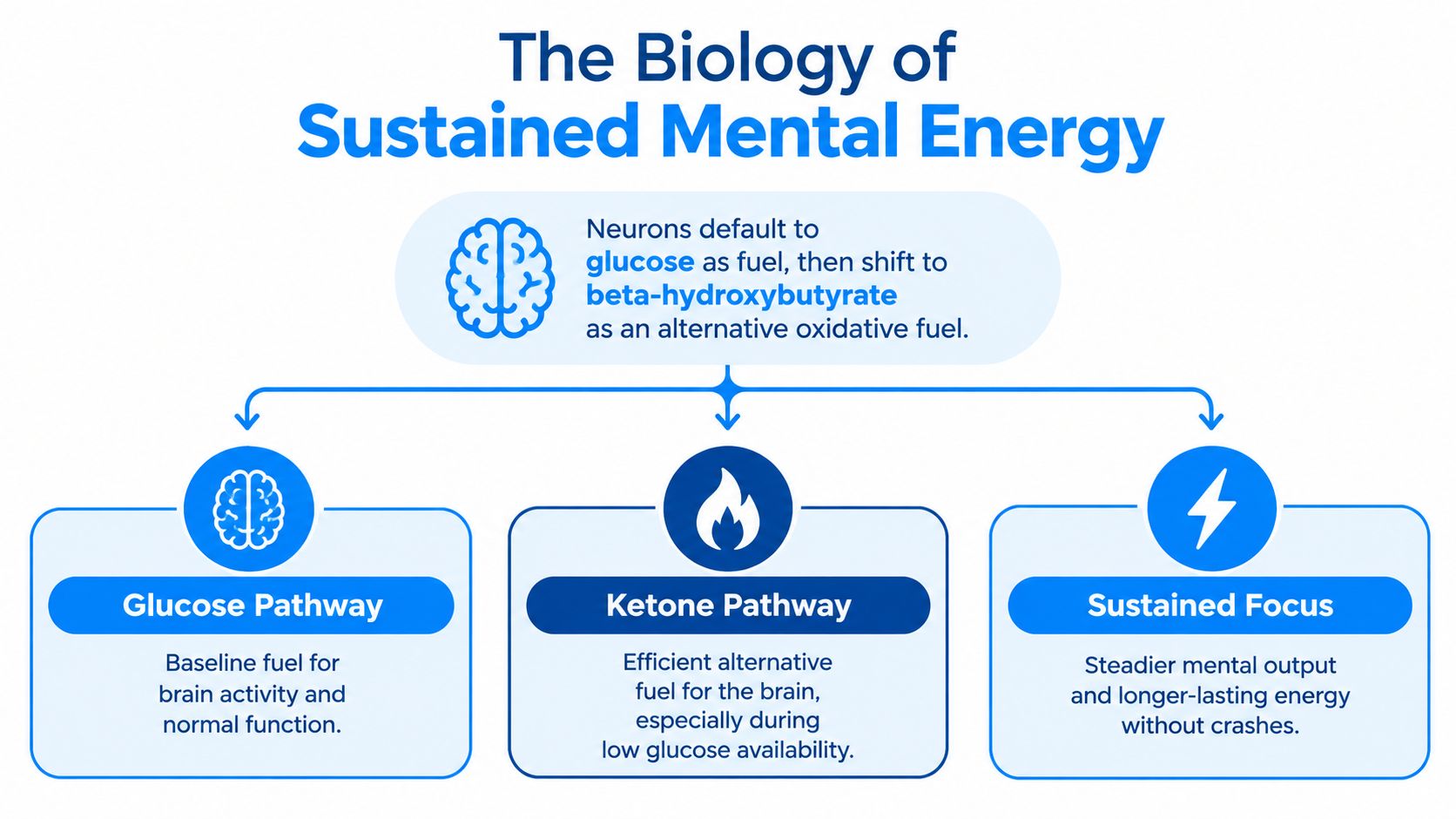
Fuel switching and mental work
Metabolic flexibility means the body can shift between available fuels instead of relying on one substrate under every condition. During fasting, prolonged exercise, or reduced carbohydrate availability, the liver produces ketones from fatty acids. When circulating BHB rises, the brain can increase ketone use while reducing some glucose oxidation.
In healthy middle-aged adults, an acute BHB infusion reduced cerebral glucose consumption by approximately 14%, while cerebral oxygen use stayed unchanged, showing that the brain oxidized ketones without reducing total oxygen-supported energy production (human cerebral ketone metabolism research). This finding demonstrates fuel substitution, not universal cognitive enhancement.
That distinction is important when discussing what sustained attention means. Remaining engaged with a task isn't identical to improving memory, reaction time, judgment, or creativity. A fuel may support the energetic conditions for work without producing a dramatic improvement on every test.
BHB also acts as a signaling metabolite. Human research has measured vascular responsiveness, while cellular studies have examined inflammatory signaling pathways. These effects should be discussed as structure and function findings, not as proof that ketones prevent or treat disease. A practical overview of cellular energy production can help connect mitochondrial chemistry to everyday performance.
For mentally demanding days, the Locked Cognition™ Shot combines liposomal R3HBG™, Alpha GPC, and Lion's Mane in a workday-oriented formula. Its stated use case is steady readiness during desk work, meetings, presentations, and other situations where composed attention matters more than intensity.
Nutritional Ketosis, Endogenous Ketones, and Exogenous Ketones
Ketosis is a fuel shift, not a single condition. Nutritional ketosis usually develops from a low-carbohydrate dietary pattern that lowers insulin signaling and increases the liver's conversion of fatty acids into ketones. Because food intake drives the process, the change generally develops over time rather than immediately after one meal.
Endogenous ketones are produced inside the body. Fasting, prolonged exercise, and carbohydrate restriction can increase hepatic ketogenesis, supplying the brain with an alternative substrate. During prolonged starvation, ketones can provide 60% or more of the brain's energy demand, while contributing almost none in the fed state, according to this review of human ketone metabolism.
Exogenous ketones take a different route. A supplement delivers BHB, a ketone ester, or a related precursor from outside the body. The brain can oxidize BHB directly, so the aim is a measurable fuel exposure during a defined work, training, or fasting period. The response still depends on dose, meal timing, tolerance, and individual metabolism.
| Ketone State | Typical Source | Time to Peak BHB | Approx. Peak BHB | Best Use Case |
|---|---|---|---|---|
| Nutritional ketosis | Low-carbohydrate dietary pattern | Develops gradually | Lower than a large ester dose | Ongoing dietary strategy |
| Endogenous ketosis | Fasting or prolonged exercise | Builds as the state continues | Rises with fasting duration and metabolic conditions | Fasting or extended endurance |
| Exogenous ketosis | Ketone ester or related supplement | Acute exposure | Can be measured after ingestion | A defined performance or focus window |
A single oral dose of approximately 25 to 30 grams of ketone ester has been reported to raise plasma BHB as high as 4 mmol/L. Those concentrations are similar to levels reported after at least two weeks of complete starvation and roughly four times the levels typically produced by several weeks of a low-carbohydrate, high-fat diet. The comparison describes the speed and size of BHB exposure, not an equivalent physiological state. Exogenous ketones do not recreate starvation.
For people managing fasting windows or irregular meal timing, the GLP-1 Shot is described as containing liposomal R3HBG™, 5-HTP, and prebiotic fiber. Treat it as a formulation for a structured routine, not as medical care or disease treatment. A plain-language guide to what exogenous ketones are explains how these externally supplied fuels differ from ketones generated through diet or fasting.
Sleep, Nutrition, and Caffeine as the Foundation
Stimulants cannot compensate for chronically poor sleep. Sleep deprivation can impair endurance, force, speed, and skill control while making effort feel harder, according to a 2025 systematic review of sleep deprivation and performance. If sleep is fragmented or unrefreshing, investigate the cause before judging a supplement's effect. Otherwise, a temporary rise in alertness may hide the biological limit on sustained focus.
Heavy snoring, waking with gasping, or persistent exhaustion despite enough time in bed warrants clinical assessment. Information about a non-invasive treatment for sleep apnea offers background, but a qualified clinician should handle diagnosis and treatment.
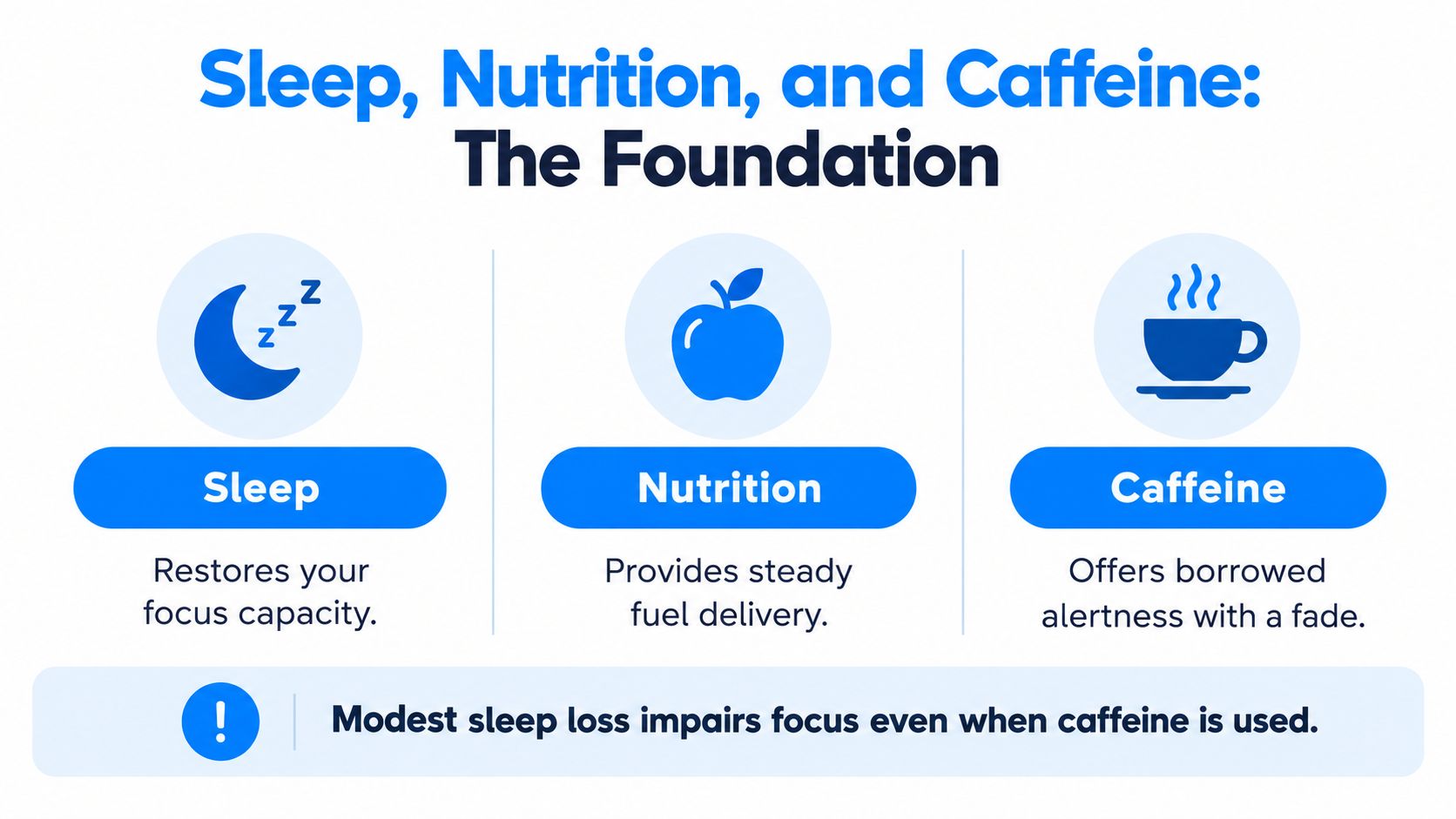
Build the base before adding stimulation
Nutrition should make energy easier to predict. Meals centered on protein, fiber-rich carbohydrates or vegetables, and useful fats usually release fuel more gradually than meals dominated by rapidly absorbed sugar. The appropriate balance varies with training, health, appetite, and dietary preference. Irregular eating, however, makes it harder to tell whether a focus intervention is helping or merely covering a fluctuating fuel supply.
Caffeine can improve attention, but it changes alertness more directly than it creates mental endurance. A 2025 meta-analysis of 31 trials involving 1,455 participants found improvements in attention accuracy and reaction time, with standardized mean differences of approximately 0.27 and 0.28, respectively (caffeine attention meta-analysis). Doses of at least 200 mg produced larger improvements, while accuracy followed a curved response pattern and declined at the upper end of dosing.
A quicker response is not automatically a better decision. Anxiety, restlessness, tolerance, and sleep disruption can cancel the benefit of a short alertness increase. Ketones should therefore be evaluated by measurable output and tolerability, not by the feeling of stimulation alone.
Use this order of operations:
- Protect sleep: Set a stable schedule, manage light exposure, limit alcohol, address stress, and investigate possible breathing disorders.
- Stabilize meals: Choose a pattern that supports consistent appetite and energy rather than sharp swings.
- Use caffeine deliberately: Define the dose, account for habitual intake, and do not equate stronger stimulation with better focus.
- Add ketones strategically: Test them only after the basic routine is sufficiently stable.
Ketone Formats, Bioidentical BHB, and Liposomal Delivery
“Exogenous ketones” describes a category, not a single chemical format. Ketone salts attach BHB to mineral cations such as sodium, potassium, calcium, or magnesium. That mineral load can limit how much BHB a serving delivers and may affect gastrointestinal tolerability.
Ketone esters chemically connect a ketone body or precursor to an alcohol backbone. They can deliver a greater proportion of the active ketone signal without relying on an equivalent mineral load. A precursor, such as R-1,3-butanediol, takes another route. The body must convert it into ketones, so the timing and size of the BHB response may differ from a product that supplies BHB more directly.
A controlled human comparison using 12 g and 24 g doses found a peak blood BHB of 2.8 mmol/L after a ketone monoester, compared with 1.0 mmol/L after a similar ketone-salt dose. The study also reported fewer gastrointestinal or systemic side effects with the monoester under the tested conditions (human comparison of ketone formats).
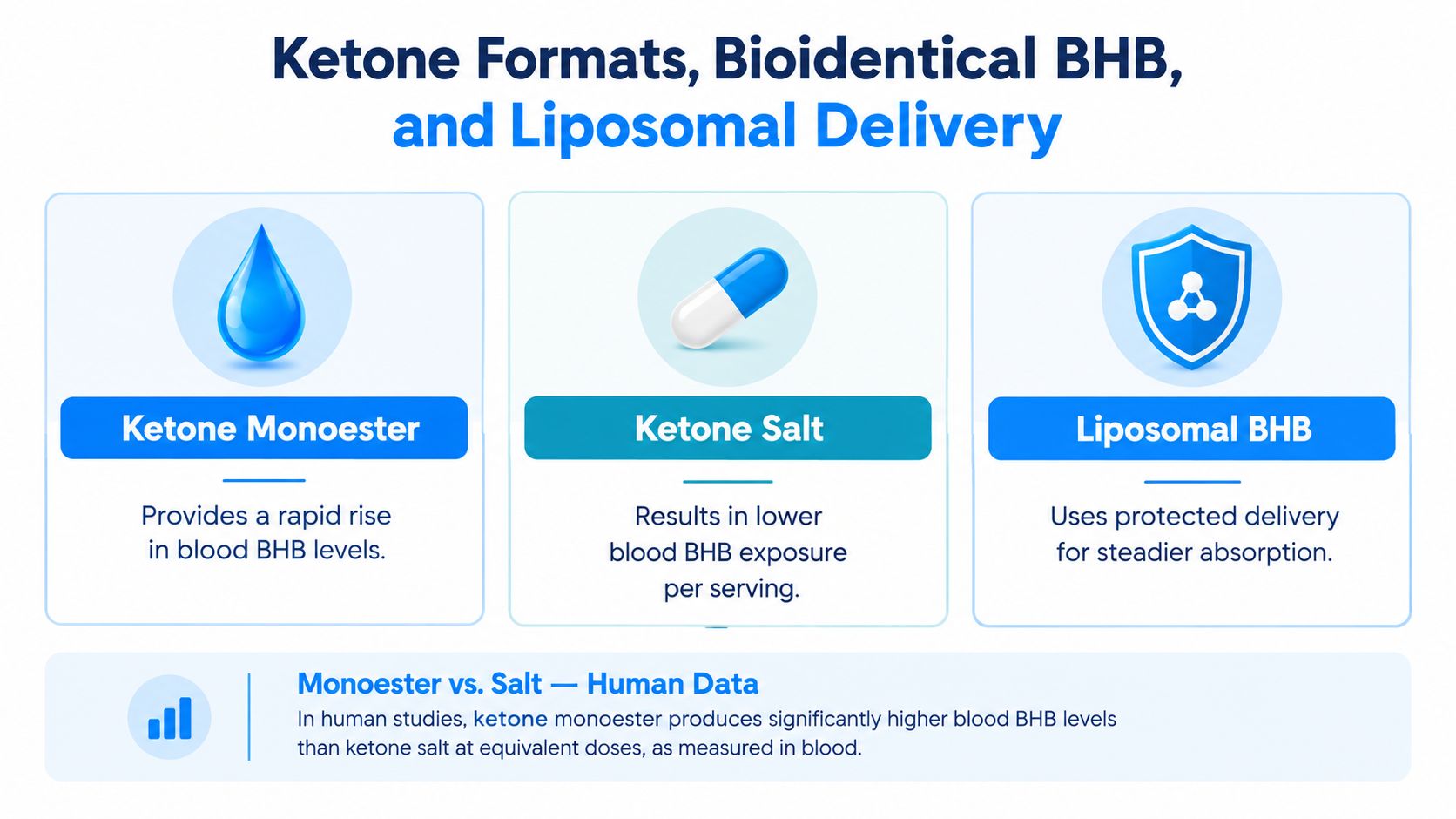
Why structure and delivery matter
Tecton's R3HBG is described as a tri-ester that bonds three D-BHB molecules to a glycerol backbone. The intended result is delivery of bioidentical D-BHB, the form the body naturally produces and oxidizes, rather than a mixture that includes the less-used L-isomer. That structural distinction is relevant when the goal is measurable substrate exposure rather than just a ketone-related label.
Liposomal delivery is presented as a way to protect and disperse an ingredient to support more consistent absorption. It doesn't eliminate individual variation, and it doesn't prove a product will improve cognition. The meaningful questions remain practical: how much BHB reaches the blood, how well the person tolerates it, and whether a defined task improves without harming sleep or digestion.
Market alternatives also differ in their evidence. A salt may be easier to formulate but deliver less BHB per mineral burden. An ester may produce a stronger exposure but have a distinctive taste or tolerability profile. A precursor may require conversion before the body can use the resulting ketones. Format is part of the intervention, so labels should identify the actual compound and amount rather than relying on broad “keto energy” language.
What the Research Actually Shows for Steady Energy
The strongest interpretation of ketone research is not “more ketones always improve focus.” It is that BHB can change substrate availability, vascular responses, and metabolic signaling, with effects shaped by the person and the task.
In adults with obesity, consuming a ketone monoester before meals for 14 days increased brachial-artery flow-mediated dilation from 6.2 ± 1.5% to 8.9 ± 3.3%, an absolute improvement of approximately 2.7 percentage points, with a reported effect size of 1.05. The same intervention lowered postprandial glucose area under the curve and improved 24-hour mean glucose during the supplementation period (randomized human study of ketone monoester and endothelial function). These findings support structure/function language involving vascular responsiveness and glucose handling. They don't establish cardiovascular or metabolic disease treatment.
A JACC review describes intravenous BHB increasing myocardial blood flow by approximately 75% and producing vasodilation in clinical studies. The review also notes increased local cerebral and renal blood flow during human BHB administration (JACC review of ketone bodies and cardiovascular physiology). Blood flow and substrate use are meaningful physiological outcomes, but they aren't interchangeable with better performance in every setting.
The cognitive question remains conditional
The most useful question is: does ketone energy help this person perform this task under these conditions?
A systematic review covering 38 studies and 1,602 participants reported a modest overall cognitive benefit from exogenous ketones, but between-study heterogeneity was very high, with I² = 91% (systematic review of exogenous ketones and cognition). That variation indicates that dose, baseline metabolic health, exercise stress, population, and task design matter.
A 2025 randomized trial found that ketone monoester supplementation during 90 minutes of moderate exercise didn't improve memory, attention, or inhibitory control in healthy young men. Its main benefit was preserving global motion perception after exercise. A person who is already rested and metabolically healthy may not experience a dramatic improvement in an ordinary desk task. Someone facing fasting, prolonged exertion, sleep loss, or unusually high cognitive demand may be more interested in preventing deterioration than in exceeding normal performance.
How to Use Bioidentical Ketones in Real Routines
Exogenous ketones fit best into a defined window, not as an automatic response to every dip in mood. Reasonable test cases include a fasting period, morning training with low glycogen, a long focus block, travel, or a physically demanding day when caffeine isn't desirable.
Potentially relevant users include professionals pursuing sustained desk work, athletes wanting a non-stimulant fuel, and adults who find that carbohydrate restriction or fasting changes their energy pattern. The response remains individual, so the product should be treated as a measurable trial rather than a promise.
Expect a transient rise in blood BHB. Subjectively, some people may notice steadier energy or less perceived effort, while others may notice little change or experience gastrointestinal discomfort. A ketone supplement shouldn't feel like a stimulant spike, and the absence of a dramatic sensation isn't evidence that no substrate was absorbed.
Track the response for a consistent period:
- Task accuracy: Use writing errors, reaction-time tasks, or completed work reviewed later.
- Session duration: Record how long you can work before attention meaningfully drops.
- Recovery: Note sleep quality, next-day energy, and rebound fatigue.
- Metabolic context: If you monitor fasting glucose or use relevant medication, review the trial with a clinician.
People managing blood glucose, pregnant or breastfeeding individuals, and anyone taking medications that affect metabolism should seek professional guidance before using exogenous ketones. The right endpoint isn't the highest BHB reading. It's useful output with acceptable tolerability and recovery.
A Practical Framework for Steady Energy and Focus
Energy and focus operate across a full day. A supplement may provide another fuel source, but it cannot replace lost sleep, and late stimulation can interfere with the recovery that supports tomorrow's attention.
Use this sequence:
- Protect the sleep window. Keep a consistent wake time, reduce caffeine after early afternoon, and make the bedroom dark and cool. As noted earlier, sleep loss can degrade physical and cognitive performance (2025 sleep deprivation review).
- Anchor meals to steady fuel. Build meals around adequate protein, fiber, fluids, and a carbohydrate pattern suited to your activity and tolerance.
- Layer caffeine with precision. Use the lowest effective dose, judge accuracy as well as speed, and stop early enough to protect sleep.
- Use bioidentical ketones strategically. Consider them during fasting, extended training, travel, or a long cognitive block when another oxidizable substrate may be useful.
- Measure the whole day. Track focus duration, task quality, perceived energy, sleep, and rebound fatigue rather than relying on an immediate sensation.
Exogenous ketones can supply an alternative fuel and signaling input, but they are not universal cognitive enhancers. Results depend on dose, format, metabolic state, task demands, and the individual. A practical trial asks whether direct brain fuel supports repeatable output with acceptable tolerability and recovery.
Tecton Ketones™ offers bioidentical R3HBG-based exogenous ketone nutrition in liposomal formulations for focus, training, fasting, and endurance routines. Visit Tecton Ketones™ to review the formulas and choose a measurable starting point.


