


Individuals asking about a 4 day fast are really asking the wrong question. They ask, “How much weight will I lose?” when the more important questions are, “What is this doing to my energy systems?” and “How do I do it without turning dehydration, headaches, and poor judgment into a self-inflicted problem?”
A 4 day fast isn’t a casual weight-loss trick. It’s a short-term metabolic intervention. If you use it well, it can improve metabolic flexibility, give the digestive system a break, and push the body into a deeper ketone-producing state than is typically achieved with ordinary dieting. If you use it poorly, it becomes a miserable four days of under-hydration, electrolyte loss, sleep disruption, and an aggressive rebound meal at the end.
In practice, the difference comes down to preparation, monitoring, and restraint. The physiology is real. The trade-offs are real too. That’s why I treat prolonged fasting less like a wellness challenge and more like a protocol.
Goals and Contraindications of a 4-Day Fast
A 4 day fast works best when the goal is metabolic reset, structured ketosis exposure, appetite recalibration, or a deliberate break from constant feeding. It works poorly when the goal is punishment, rapid cosmetic weight loss, or “detox.” Those motives usually produce bad decisions before, during, and after the fast.
The first question is safety. A large clinical fasting study involving 1,422 participants undergoing fasts from 4 to 21 days found the practice to be safe and well tolerated, with adverse effects reported in less than 1% of participants. Among those who entered with pre-existing health complaints, 84.4% reported measurable improvements (clinical fasting study). That doesn’t mean a 4 day fast is risk-free. It means that under a structured protocol, it can be done safely in appropriate people.
Good reasons to do a 4 day fast
A well-selected fast usually has one of these aims:
- Improve metabolic flexibility so the body can move more smoothly between glucose and fat-based fuel use
- Enter a sustained ketotic state without strict dietary micromanagement
- Interrupt constant snacking patterns and regain awareness of true hunger
- Create a short, structured reset after periods of dietary drift or excessive intake
- Explore fasting response before considering longer or repeated protocols
These are performance and metabolic reasons. They’re different from crash dieting.
Who should not do this
Some people shouldn’t attempt a 4 day fast outside direct medical oversight, and some shouldn’t do it at all. The common contraindications are practical and absolute:
- Pregnant or breastfeeding individuals
- Anyone with a history of disordered eating
- People who are underweight or already struggling with low energy availability
- People with diabetes treated with medication, especially when blood glucose can fall unpredictably
- Anyone with significant kidney, liver, or cardiovascular disease
- People taking medications that affect blood pressure, glucose, or fluid balance
- Anyone currently ill, recovering from surgery, or already dehydrated
Practical rule: If your health depends on medication timing, stable blood glucose, or tightly regulated fluid balance, a prolonged fast is a medical decision, not a self-experiment.
What success actually looks like
A successful 4 day fast doesn’t mean white-knuckling your way through maximal suffering. It means:
- You complete the fast without significant dizziness, confusion, vomiting, or loss of function.
- You maintain hydration and electrolytes.
- You keep activity modest rather than forcing hard training.
- You break the fast calmly and deliberately.
If those boxes aren’t checked, the protocol wasn’t well run, even if the scale moved.
The Science of Fasting and Ketone Energy
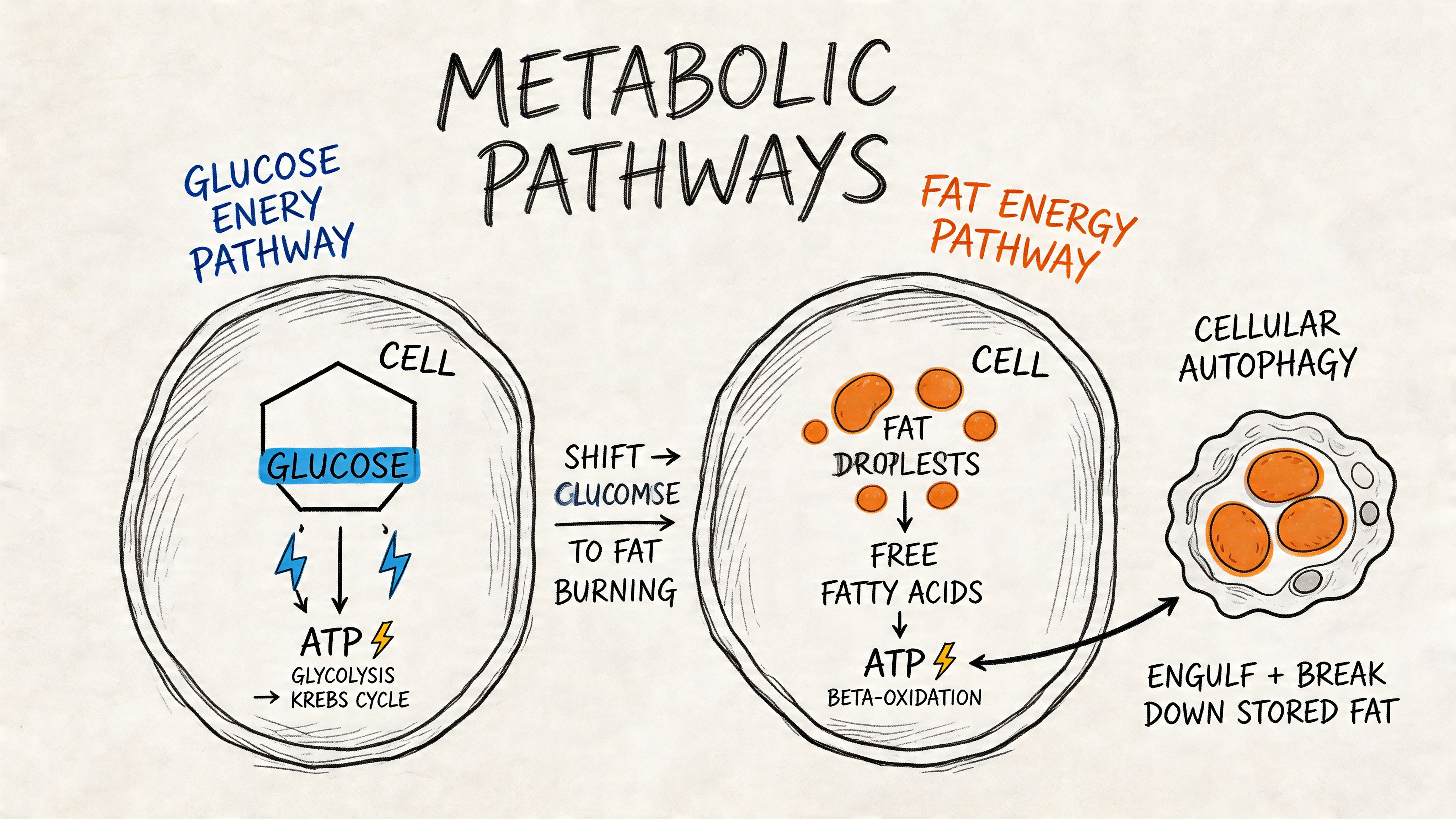
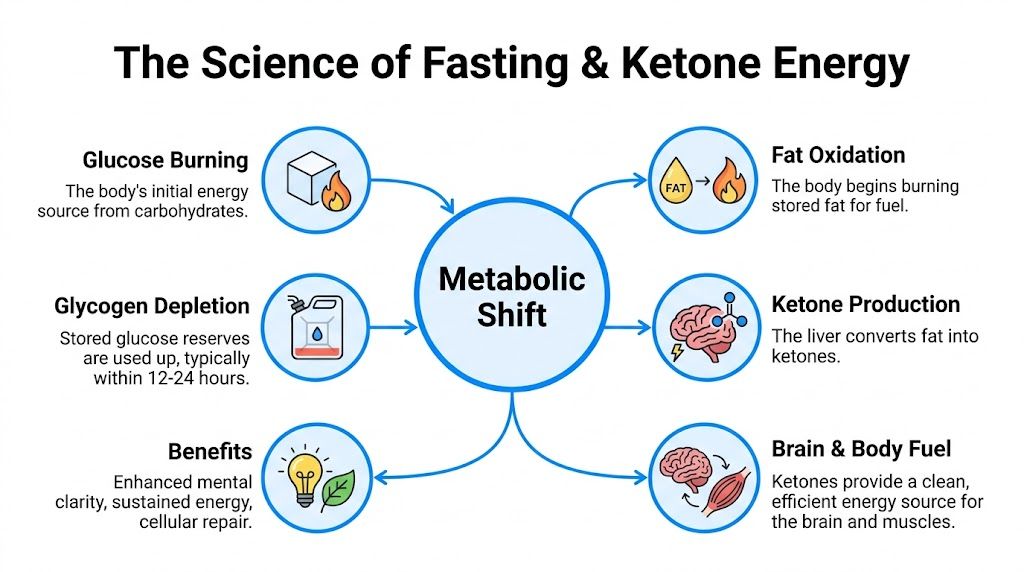
The core event in a 4 day fast is a fuel transition. At baseline, the body runs primarily on glucose derived from carbohydrate intake and stored glycogen. Once food stops and glycogen begins to fall, the body shifts toward fat oxidation. The liver then increases production of endogenous ketones, especially beta-hydroxybutyrate or BHB.
BHB matters because it’s not just a starvation byproduct. It’s a usable energy substrate. The brain, heart, and skeletal muscle can all use ketones under the right conditions. During fasting, BHB becomes one of the main tools the body uses to preserve function while glucose availability falls.
From glucose to ketones
The shift usually follows a familiar sequence:
- Glucose use dominates early. The body relies on circulating glucose and stored glycogen.
- Glycogen falls. Hunger often rises, mood can dip, and exercise tolerance may worsen.
- Fat oxidation increases. Fatty acids become a larger fuel source.
- Ketone production rises. The liver converts fat-derived substrate into ketones, including BHB.
- The brain adapts. As ketone availability climbs, many people report steadier mental energy.
This transition is why the first two days often feel harder than the latter part of the fast.
Why BHB is useful fuel
BHB supports mitochondrial ATP production by serving as a high-value oxidative fuel. That matters in practical terms because ATP is the immediate energy currency cells use for work. When people describe ketone-based energy as “cleaner,” the more useful way to phrase it is this: ketones often provide steadier energy availability with less dependence on repeated feeding.
BHB also matters for brain energy utilization. The brain doesn’t run exclusively on ketones during a fast, but ketones become an important supplemental fuel source as fasting progresses. That’s one reason some people notice improved focus once they’re past the early transition period.
BHB is also involved in broader cellular signaling. That includes pathways relevant to metabolic adaptation and stress response. In other words, ketones aren’t just calories. They’re part of the signaling environment created by fasting.
Three different ketosis states
Many readers lump all ketosis together. Clinically, it helps to separate them.
| State | How it happens | Main feature |
|---|---|---|
| Nutritional ketosis | Low-carbohydrate intake over time | Diet-driven ketone production |
| Fasting-induced ketosis | No caloric intake for a defined period | Endogenous ketones rise as glycogen falls |
| Exogenous ketosis | Ketones consumed directly | Blood ketones can rise without waiting for full dietary adaptation |
This distinction matters because the experience is different in each state.
A ketogenic diet asks for sustained carbohydrate restriction. Fasting-induced ketosis asks for complete abstinence from food. Exogenous ketones supply ketones directly, which can support ketone availability even when someone isn’t fully keto-adapted. If you want a deeper overview of how this differs in practice, Tecton has a useful explainer on exogenous ketone benefits.
Not all exogenous ketones are the same
From a formulation standpoint, there are meaningful differences between ketone salts, ketone esters, and precursors.
- Ketone salts pair BHB with minerals. They can raise ketones, but the mineral load can become a limiting factor.
- Ketone esters are designed to deliver ketone substrate more directly.
- Precursors require additional metabolic conversion and don’t behave the same way as direct BHB delivery.
Tecton’s platform is built around bioidentical R3HBG delivered in a liposomal system. The practical argument for that design is straightforward: it aims to provide direct D-BHB delivery in a format intended for efficient use, without relying on a strict keto diet to generate ketones first.
Ketone biology is most useful when you treat it as fuel physiology, not as a trend. The question isn’t whether ketones are magical. It’s whether they solve a real energy problem in a given context.
Why This Matters
Biochemistry matters only if it changes real-world function. In fasting, that usually means:
- Steadier energy when blood sugar swings would otherwise drive fatigue
- Cognitive endurance during work blocks that fall in the harder middle of the fast
- Workout management through smarter intensity control, not heroic training
- Metabolic efficiency by improving the body’s ability to access fat-derived fuel
Those are the practical reasons people pursue a 4 day fast. The mistake is assuming those benefits appear automatically. They don’t. They show up when the fast is structured well.
Phase 1 Pre-Fast Preparation Protocol
The worst way to start a 4 day fast is to eat heavily, train hard, stay under-hydrated, and begin on a stressful workweek. That setup creates avoidable friction. Most of the suffering people call “fasting” is poor preparation.
The setup window
Use the final few days before the fast to reduce the shock of transition.
- Lower carbohydrate intake gradually. This softens the drop from glucose dependence and usually makes the early shift into ketosis more tolerable.
- Simplify meals. Eat whole-food meals with protein, vegetables, and fats rather than a final run of refined snacks.
- Reduce alcohol. It interferes with hydration, sleep, and appetite regulation.
- Taper caffeine if you’re sensitive to withdrawal. Otherwise the first headache may have more to do with coffee than fasting.
If you want supportive tools around fasting windows more broadly, Tecton’s guide to the best supplements for intermittent fasting is a practical place to compare options.
Environmental preparation
Preparation isn’t only nutritional. It’s logistical.
A 4 day fast goes better when you remove decision fatigue ahead of time. I tell clients to treat the calendar, kitchen, and household as part of the protocol.
- Choose lower-friction days. Don’t start before travel, late nights, or a social weekend centered on food.
- Tell the people you live with. Not for accountability theater. For fewer food prompts and fewer misunderstandings.
- Clear visual triggers. Put snack foods away. Don’t leave convenience foods on the counter.
- Plan low-intensity movement only. Walking, mobility, light work.
What to have ready
Before the fast starts, gather what you’ll use so you don’t improvise when you’re tired.
| What to prepare | Why it matters |
|---|---|
| Water plan | Prevents under-drinking and random intake patterns |
| Electrolytes | Reduces dizziness, headaches, and low blood pressure symptoms |
| Symptom log | Helps separate normal discomfort from a stop signal |
| A refeed plan | Prevents the common mistake of breaking fast with a heavy meal |
The people who complete a 4 day fast most smoothly usually do less, not more. They don’t stack hard workouts, social dinners, and stimulant overuse on top of a major fuel transition.
Pre-fast mindset
Go in with a narrow objective. “I want to see how my body handles a structured 96-hour fast” is useful. “I’m going to become a different person in four days” is not.
The body responds well to clarity and badly to chaos. Start calm, not dramatic.
The 4-Day Fast A Day-by-Day Guide
Expectations matter significantly. A 4 day fast has a rhythm. The experience on day 1 and day 4 often differs, and consistency should not be anticipated.
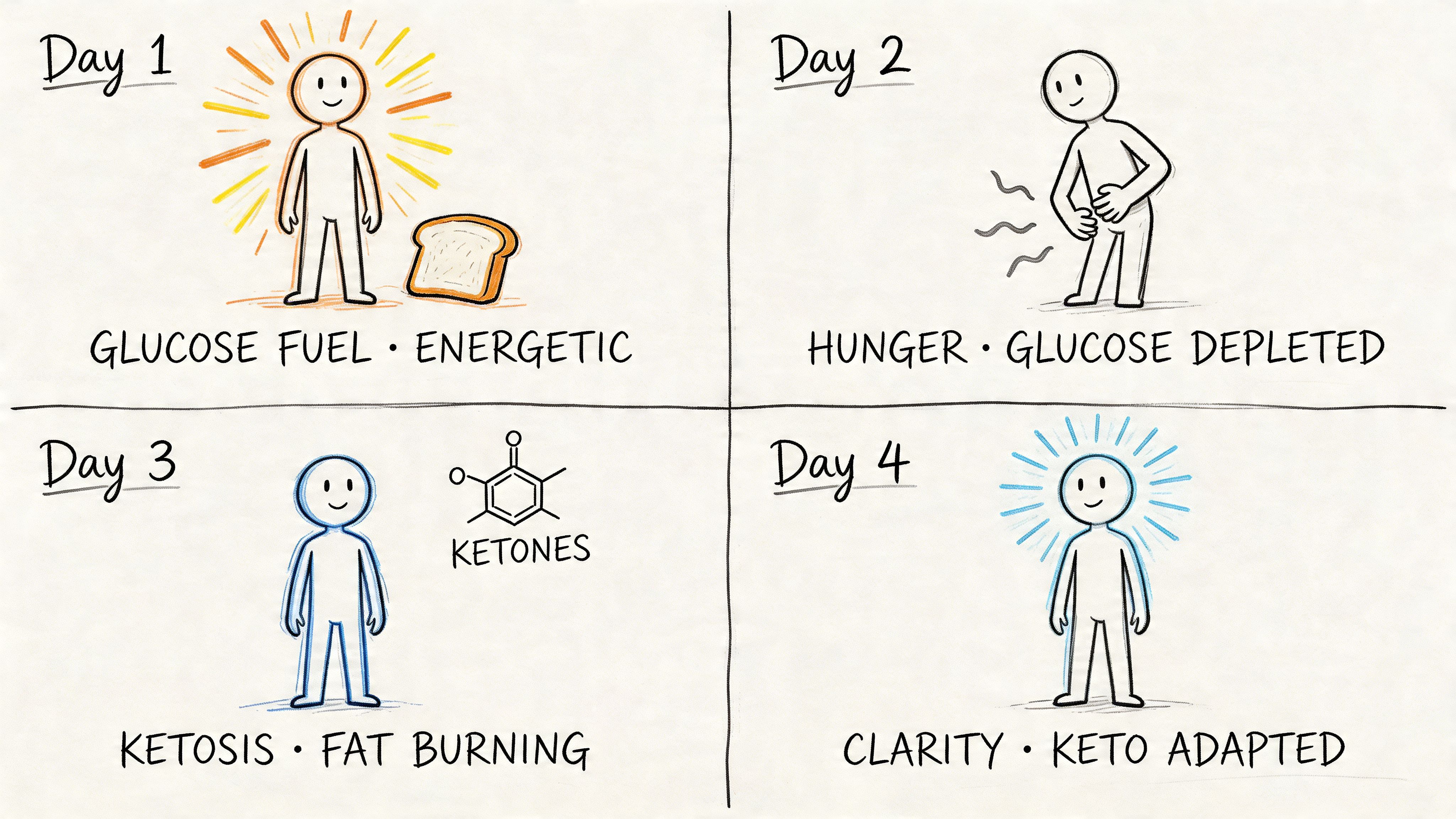
Data from controlled self-experiments and reviews suggest that during a 4 day fast, people typically lose 4 to 10 pounds, with endogenous ketones often peaking around 5.4 to 6.0 mmol/L by day 4. The same source notes that up to 50% of people experience mild side effects such as headaches or insomnia, especially on days 1 and 2 (4 day fast review).
Day 1 The challenge
Day 1 is less about metabolism than behavior. Hunger tends to arrive at the times you normally eat. Many people interpret that as a crisis when it’s often just conditioned timing plus falling insulin and a changing routine.
Common day 1 features:
- Meal-time hunger waves
- Mild irritability or restlessness
- Reduced training drive
- A strong urge to negotiate with yourself
What works on day 1 is structure. Keep work simple. Walk. Hydrate early. Avoid food content, grocery trips, and social environments built around eating.
What doesn’t work is trying to overpower the fast with caffeine, hard intervals, or constant distraction.
Day 2 The transition
Day 2 is where many people feel the rough edge of glycogen depletion. Energy can flatten out. Headaches may show up. Some people feel cold, mentally flat, or mildly lightheaded if they’ve neglected sodium and fluids.
This is also the stage where people quit unnecessarily. They assume the discomfort means fasting is failing. Usually it means the transition is happening.
A useful principle on day 2 is to lower demand. Don’t schedule your hardest workout, your hardest negotiation, and your hardest family obligation here if you can avoid it.
For a visual walkthrough of the transition, this short video is helpful:
If symptoms improve after fluids, sodium, and rest, you’re usually dealing with transition stress. If symptoms escalate despite those steps, stop and reassess.
Day 3 The shift
Day 3 is often the turning point. Hunger frequently becomes less dominant. Energy may still be lower for explosive work, but many people report a steadier mental state and less preoccupation with food.
That doesn’t mean everyone feels amazing. Some still feel flat. Sleep can remain uneven. Standing up quickly can still expose low blood pressure tendencies.
This is also when discipline matters most. Feeling better on day 3 doesn’t mean it’s the right time for a hard training session or a “test” of willpower around food. The fast is going well precisely because demand is controlled.
Day 4 The peak
By day 4, the physiology is more established. Ketone levels are often at their highest point of the fast. People who tolerate the protocol well often notice the cleanest separation between physical restraint and mental steadiness here.
Expected day 4 themes include:
| Day 4 feature | Practical meaning |
|---|---|
| Deep ketosis | More established fat-derived fuel use |
| Lower hunger than day 1 | Appetite often becomes more manageable |
| Sharper cognitive periods | Best used for focused, low-stress work |
| Physical caution still required | Fasted intensity is still a poor idea |
The most common mistake on day 4 is becoming overconfident. You may feel mentally clear and still be physiologically depleted. Move slowly. Keep hydration steady. Start thinking about refeeding before the fast ends, not after.
Stop signs that matter
A 4 day fast should feel challenging, not unsafe. Break the fast and get medical input if you develop:
- Persistent vomiting
- Fainting or near-fainting
- Chest pain
- Marked confusion
- Severe weakness that doesn’t improve with rest and fluids
A supervised fasting literature review includes a rare case of a 67-year-old woman hospitalized on day 4 for vomiting, which is a useful reminder that “generally safe” still requires judgment. I discuss the practical meaning of that in the refeeding section below.
Essential Hydration and Electrolyte Strategy
Most 4 day fast guides fail in the same place. They tell people to “drink water” and stop there. That’s incomplete advice.
A key gap in common fasting content is practical electrolyte management. Research and practitioner summaries note that sodium and magnesium can drop during fasting, contributing to dizziness and low blood pressure symptoms, while popular water-only approaches often offer little guidance on mineral replacement (discussion of the electrolyte gap in 4-day fasting guidance).
Why electrolytes matter more than people think
When food stops, insulin falls. As that happens, the kidneys tend to release more sodium and water. This is one reason early weight loss during fasting is driven heavily by glycogen and fluid shifts.
The practical result is familiar:
- Headache
- Dizziness when standing
- Low exercise tolerance
- Muscle cramping
- “Brain fog” that’s often really under-replacement
Many people blame ketosis when the actual problem is poor electrolyte management.
Daily Electrolyte Supplementation Schedule for a 4-Day Fast
The following schedule reflects practical targets described in the verified fasting protocol material.
| Electrolyte | Daily Target | Common Sources |
|---|---|---|
| Sodium | NaCl 1 tsp per liter of water, providing 2.3 g sodium | Salt dissolved in water |
| Magnesium | 400 mg at night | Magnesium glycinate |
| Potassium | 99 mg, 3 times per day | Potassium citrate |
These aren’t decorative add-ons. They’re often the difference between a manageable fast and an unnecessarily rough one.
How to apply this without overcomplicating it
I prefer a simple operating rule.
- Start early in the day. Don’t wait until you’re dizzy to begin replacing sodium.
- Distribute intake. Spacing minerals across the day is easier to tolerate than taking everything at once.
- Use symptoms as feedback. Lightheadedness, headache, and fatigue often improve when fluid and sodium are corrected.
- Be careful with training. Heavy sweating plus fasting multiplies the problem.
If you want a broader primer on formulation options and use cases, this overview of an electrolyte supplement for fasting is a helpful comparison resource.
Clinical lens: “Water only” sounds pure, but for many people it’s just under-supported fasting with a higher chance of avoidable symptoms.
What does not work
Several habits predict a bad fasting experience:
- Only drinking plain water
- Doing cardio to speed fat loss
- Ignoring orthostatic symptoms
- Trying to “push through” persistent dizziness
- Assuming fatigue always means lack of willpower
In practice, electrolyte negligence is one of the fastest ways to turn a reasonable 4 day fast into a poor protocol.
Phase 2 How to Break Your Fast Safely
Ending the fast is part of the fast. People who handle the refeed well usually feel stable the next day. People who break it impulsively often end up bloated, nauseated, uncomfortable, or ashamed of the rebound.
A supervised fasting analysis found adverse events were uncommon, but they did occur, including a very small number of serious problems. One reported example involved a 67-year-old woman hospitalized on day 4 for vomiting, which is a good reminder that symptom escalation is a real stop signal, not a character test. That same body of data supports caution even when fasting is broadly well tolerated, as noted earlier in the article.
First meal back
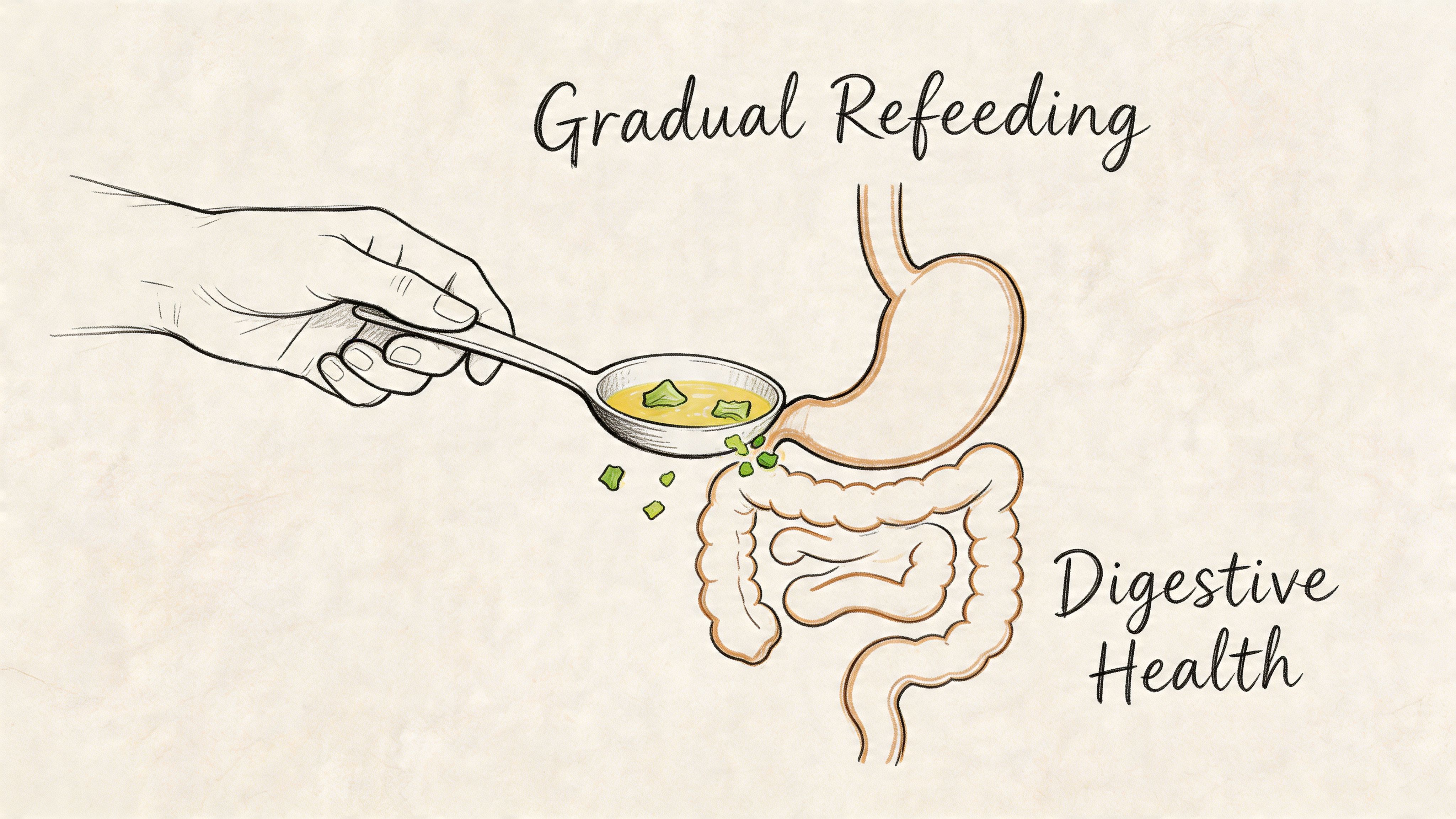
Your digestive system doesn’t need a reward meal. It needs an easy landing.
Good first options include:
- Broth or a light soup
- A small portion of avocado
- Soft, easy-to-digest foods in modest amounts
Avoid a large mixed meal right away. High-sugar, heavy dairy, and large portions of nuts or dense restaurant food are common triggers for digestive blowback.
A simple refeeding progression
Use the next couple of days to rebuild gradually rather than snapping back to full volume.
| Refeeding stage | Best approach |
|---|---|
| First intake | Broth, then wait and assess |
| Later that day | Small, gentle meal with simple whole foods |
| Next day | Add cooked non-starchy vegetables and a moderate protein source |
| Following day | Resume a more normal whole-food pattern if digestion feels stable |
A more general food reintroduction guide is available in Tecton’s piece on what to eat after fasting for 24 hours, and the same logic applies here with more caution because the fast is longer.
The key mistake to avoid
Don’t confuse “I finished” with “I can eat anything.” That usually turns a disciplined protocol into a GI event.
Break the fast the way you’d restart training after time off. Gradually, not emotionally.
Application Framework Practical Takeaways
A 4 day fast is best viewed as a short, structured metabolic intervention. It’s not for everyone, and it’s not something to improvise.
Keep the framework simple:
- Use it for the right reason. Metabolic reset, ketosis exposure, and appetite recalibration make sense. Crash dieting doesn’t.
- Screen yourself thoroughly. If you have medical complexity, medication dependence, pregnancy, low body weight, or a history of disordered eating, don’t self-direct this.
- Prepare before day 1. Reduce friction, lower carbohydrate intake, and get hydration and electrolyte support ready.
- Expect the hard window. Days 1 and 2 are usually the most uncomfortable. That doesn’t mean the process is off track.
- Protect electrolytes. This is the most common operational failure.
- Refeed slowly. A calm finish preserves more of the value than a rebound binge.
The larger takeaway is straightforward. Fasting works best when it’s handled like physiology, not ideology. If you want the benefits of ketone-based energy with more precision and less friction, direct ketone support can be a useful tool alongside, or instead of, aggressive dietary restriction.
Tecton Ketones™ is built for that exact use case. Their bioidentical ketone platform is designed to deliver usable BHB energy with a clinically informed approach to performance, cognition, and metabolic flexibility. If you want support around fasting windows, steady energy, or clean ketone delivery without relying on a strict keto diet, Tecton is worth exploring.


